Opel Senator A 3.0 E: Opel’s Flagship Executive Sedan
The Opel Senator A 3.0 E represents a significant chapter in the history of German automotive engineering, particularly for Opel, then a subsidiary of General Motors. Launched in 1978, the Senator A was Opel’s ambitious entry into the highly competitive European executive car segment, aiming to challenge established luxury brands like Mercedes-Benz and BMW. As Opel’s largest and most luxurious model, it was designed to offer a blend of comfort, performance, and practicality, primarily targeting the discerning European market for long-distance travel and executive transport. The “A” designation signifies the first generation of the Senator line, which was produced until 1982. The 3.0 E variant, with its potent 180 horsepower engine, stood out as the performance-oriented flagship of the range, embodying Opel’s aspirations for high-speed cruising and refined driving dynamics.
Engine and Performance of the Opel Senator A 3.0 E
At the heart of the Opel Senator A 3.0 E was its robust 3.0-liter (2969 cm³, 181.18 cu. in.) inline-six engine, designated with the code “30E.” This naturally aspirated powerplant was a testament to Opel’s engineering prowess, delivering a respectable 180 horsepower at 5800 rpm. Torque output was equally impressive for its era, peaking at 182.92 lb.-ft. at 4500 rpm, providing ample pulling power across the rev range. The engine featured a multi-port manifold injection system, a sophisticated technology for the late 1970s that ensured precise fuel delivery and improved efficiency compared to carbureted setups.
A notable characteristic of this engine was its CIH (Cam-in-Head) valvetrain, a design that positioned the camshaft directly above the valves, allowing for a more compact cylinder head and efficient valve operation. With two valves per cylinder and a compression ratio of 9.4:1, the 3.0 E engine was engineered for smooth power delivery and durability. Mated to a four-speed manual transmission, the powertrain directed its output to the rear wheels, a classic configuration for executive sedans emphasizing driving engagement and balanced handling.
The performance figures for the Opel Senator A 3.0 E were genuinely impressive for a large sedan of its time. It could accelerate from 0 to 60 mph in a brisk 8.6 seconds, making it one of the faster cars in its class. The top speed was rated at 130.49 mph (210 km/h), allowing it to comfortably cruise at high speeds on the German Autobahns. While performance was a strong suit, fuel economy reflected the technology of the era: a combined average of 20.6 US mpg (11.4 l/100 km) was typical for a large-displacement, performance-oriented sedan. The engine’s substantial 5.5 US quarts oil capacity and 10.67 US quarts coolant capacity underscored its design for sustained high-speed operation and reliability.
Design and Features
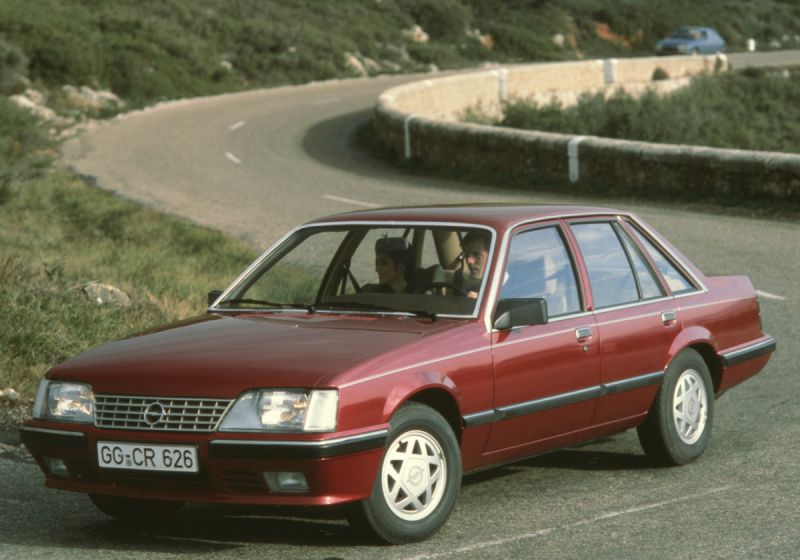
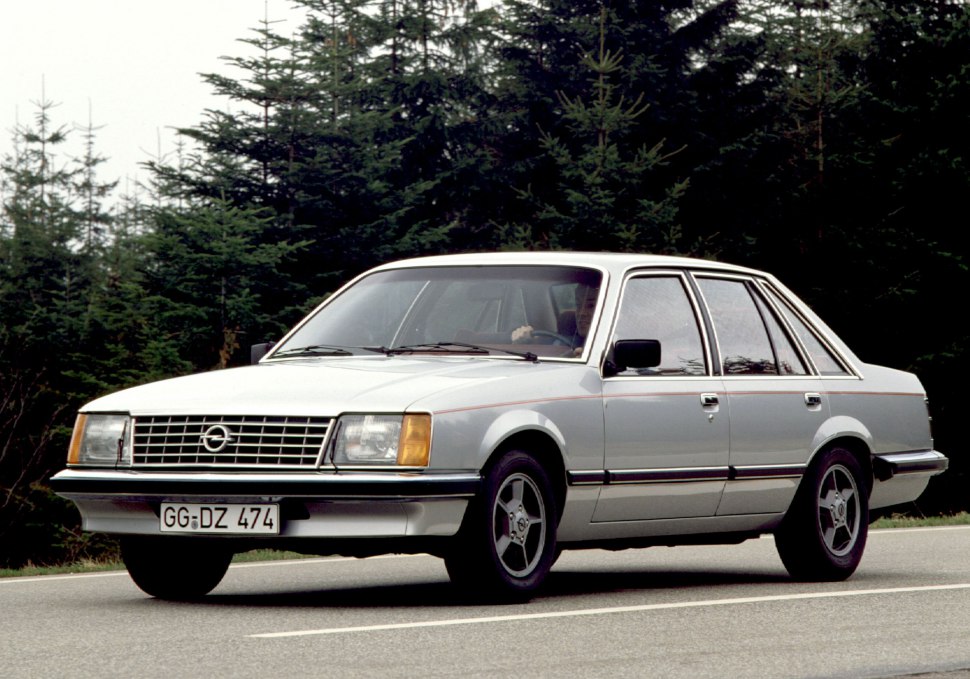
The Opel Senator A presented a dignified and somewhat understated design, characteristic of European executive cars of the late 1970s. Its four-door sedan body offered a spacious and comfortable cabin for five occupants. With an overall length of 189.41 inches, a width of 68.03 inches, and a height of 55.71 inches, the Senator commanded a significant road presence. The styling was clean and functional, featuring a distinctive grille and rectangular headlights that lent it an authoritative look. Despite its boxy appearance by modern standards, the Senator A achieved a drag coefficient (Cd) of 0.45, which was competitive for its size and era.
Inside, the Senator A was designed to provide a luxurious and ergonomic environment. While specific interior features varied by market and optional extras, typical offerings included comfortable velour or optional leather upholstery, wood trim accents, and a comprehensive instrument cluster. The focus was on driver and passenger comfort for long journeys, with well-padded seats and ample legroom. Cargo capacity was generous, with a trunk space of 25.25 cu. ft. (715 liters), making it highly practical for family trips or executive duties.
Mechanically, the Senator A featured an independent suspension system both front and rear. The front utilized a McPherson strut setup with coil springs and an anti-roll bar, providing a good balance of comfort and handling. The rear suspension consisted of independent coil springs with a transverse stabilizer and trailing arms, designed to ensure stable and predictable road manners. Braking power was supplied by ventilated discs at the front and solid discs at the rear, offering confident stopping performance. Hydraulic power steering, utilizing a cone worm with recirculation balls type, made maneuvering the large sedan manageable, even in urban environments. The car rode on 195/70 R14 tires mounted on 6J x 14-inch wheels, a common setup for ensuring a smooth ride and adequate grip.
Technical Specifications
| Category | Specification |
|---|---|
| Brand | Opel |
| Model | Senator A |
| Type (Engine) | 3.0 E (180 Hp) |
| Production Years | 1978 – 1982 |
| Body Type | Sedan |
| Seats / Doors | 5 / 4 |
| Fuel Type | Petrol (Gasoline) |
| Acceleration 0-60 mph | 8.6 sec |
| Maximum Speed | 130.49 mph (210 km/h) |
| Fuel Economy (Combined) | 20.6 US mpg (11.4 l/100 km) |
| Engine Power | 180 Hp @ 5800 rpm |
| Torque | 182.92 lb.-ft. @ 4500 rpm |
| Engine Layout | Front, Longitudinal |
| Engine Model/Code | 30E |
| Engine Displacement | 3.0 liters (181.18 cu. in.) |
| Number of Cylinders | 6, Inline |
| Valvetrain | CIH (Cam-in-Head) |
| Fuel Injection System | Multi-port manifold injection |
| Compression Ratio | 9.4:1 |
| Engine Oil Capacity | 5.81 US qt (5.5 l) |
| Coolant Capacity | 10.67 US qt (10.1 l) |
| Kerb Weight | 3020.33 lbs (1370 kg) |
| Maximum Weight | 4188.78 lbs (1900 kg) |
| Trunk Space (Minimum) | 25.25 cu. ft. (715 l) |
| Fuel Tank Capacity | 19.81 US gal (75 l) |
| Length | 189.41 in (4811 mm) |
| Width | 68.03 in (1728 mm) |
| Height | 55.71 in (1415 mm) |
| Wheelbase | 105.63 in (2683 mm) |
| Ground Clearance | 5.51 in (140 mm) |
| Drag Coefficient (Cd) | 0.45 |
| Minimum Turning Circle | 35.43 ft (10.8 m) |
| Drive Wheel | Rear-wheel drive |
| Gearbox | 4-speed manual transmission |
| Front Suspension | Independent, McPherson with coil spring and anti-roll bar |
| Rear Suspension | Independent coil spring, Transverse stabilizer, Trailing arm |
| Front Brakes | Ventilated discs |
| Rear Brakes | Disc |
| Tires Size | 195/70 R14 |
| Wheel Rims Size | 6J x 14 |
Legacy and Market Impact
The Opel Senator A, particularly the 3.0 E variant, played a crucial role in Opel’s strategy to compete in the demanding European executive car market. It was positioned as a more accessible, yet still highly capable, alternative to the pricier offerings from Mercedes-Benz (such as the W123 and early W126 models) and BMW (the E12 and later E28 5 Series, and E23 7 Series). The Senator offered a compelling package of performance, comfort, and build quality that often exceeded expectations for a non-premium brand.
In its primary markets, the Senator A was well-regarded for its robust engineering, spacious interior, and comfortable ride, making it an ideal vehicle for long-distance travel across Europe’s burgeoning highway networks. Its strong inline-six engine provided ample power for effortless cruising, while its conventional rear-wheel-drive layout and independent suspension contributed to predictable and engaging handling. Competitors also included the Ford Granada, another popular executive model, and various offerings from Volvo, such as the 200 Series, though the Senator often offered a sportier driving experience with its larger engines.
While it may not have achieved the same iconic status or sales volumes as its more prestigious German rivals, the Opel Senator A established Opel as a credible player in the executive segment. It paved the way for its successor, the Senator B, which continued to refine Opel’s luxury offerings. Today, the Opel Senator A 3.0 E is appreciated by classic car enthusiasts for its blend of period-correct German engineering, understated styling, and a driving experience that harks back to an era of robust, no-nonsense executive sedans. It stands as a testament to Opel’s ambition and capability during a pivotal period in the European automotive landscape, embodying a practical yet potent approach to luxury motoring.