The Opel Senator A 3.0 E (180 Hp) Automatic: A European Executive Sedan
The Opel Senator A 3.0 E (180 Hp) Automatic represents a significant chapter in Opel’s history as a German automaker, particularly within the European executive car segment. Introduced in 1978, the Senator A was Opel’s ambitious foray into the full-size luxury sedan market, designed to compete with established rivals from Mercedes-Benz and BMW. As a flagship model for the General Motors subsidiary in Europe, the Senator A was based on a stretched version of the Opel Rekord E platform, offering a more luxurious and powerful alternative to its mid-size stablemate. The 3.0 E variant, produced from 1978 to 1982, stood out as the top-tier offering, featuring a potent fuel-injected inline-six engine paired with a smooth automatic transmission, embodying the blend of comfort, performance, and robust engineering that defined Opel’s strategy in this competitive class. While never officially sold in the United States, the Senator played a crucial role in Opel’s brand image and market positioning across Europe, offering a distinctly European interpretation of executive motoring with a touch of American influence from its GM parentage. Its development and market presence underscore Opel’s commitment to offering a comprehensive range of vehicles, from compacts to high-end luxury sedans, to meet the diverse demands of the European automotive landscape during a period of significant change and technological advancement.
Engine and Performance: The Heart of the Opel Senator A 3.0 E (180 Hp) Automatic
At the core of the Opel Senator A 3.0 E (180 Hp) Automatic’s appeal was its robust and capable powertrain. This particular model was equipped with Opel’s well-regarded 3.0-liter (2969 cm3 or 181.18 cu. in.) inline-six engine, designated by the “30E” engine code. The “E” proudly signified “Einspritzung,” or fuel injection, a relatively advanced feature for mass-market vehicles of the late 1970s. This multi-port manifold injection system allowed for more precise fuel delivery compared to carbureted engines, contributing to better efficiency and responsiveness, especially critical during the energy crises of the decade. The naturally aspirated inline-six powerplant delivered a healthy 180 horsepower at 5800 rpm, a substantial figure for its era and segment. This output placed it squarely in contention with executive sedans from rival brands, offering a compelling blend of power and refinement.
Torque output was equally impressive, peaking at 182.92 lb.-ft. (248 Nm) at 4500 rpm, providing ample pulling power for highway cruising and confident acceleration. This broad torque band, characteristic of larger displacement inline-six engines, ensured that the Senator felt effortless in various driving conditions, from urban commuting to high-speed autobahn runs. This engine utilized a distinctive Cam-in-Head (CIH) valvetrain, a design characteristic of many Opel engines from that period, which offered a compromise between the simplicity of pushrod designs and the performance benefits of overhead camshafts. The CIH design allowed for a relatively compact cylinder head while maintaining good valve actuation, contributing to the engine’s durability and smooth operation. The compression ratio of 9.4:1 was also typical for the period, balancing performance with fuel quality requirements.
Power was sent to the rear wheels via a three-speed automatic transmission, a common choice for luxury vehicles prioritizing smooth operation over ultimate performance in that era. While modern transmissions boast many more gears, the robust nature of the 3.0-liter engine meant that a three-speed unit was sufficient to provide a relaxed and comfortable driving experience. The transmission was well-matched to the engine’s torque curve, allowing the Senator to achieve a 0-60 mph acceleration time of approximately 10 seconds. This was a respectable performance figure for a large executive sedan of its time, especially one equipped with an automatic transmission. Its top speed was a notable 127.38 mph (205 km/h), making it a capable performer on the newly developing autobahn network and other European highways, where sustained high speeds were not uncommon. The car’s weight-to-power ratio stood at 7.9 kg/Hp (126.3 Hp/tonne), reflecting its executive sedan stature and the solid engineering beneath its skin. Fuel economy, while not a primary selling point for luxury cars of the late 70s, was rated at a combined 18.7 US mpg (12.6 l/100 km), which was competitive for its class and engine size at the time, especially given the fuel injection system’s benefits.
Design and Features: European Elegance and Practicality
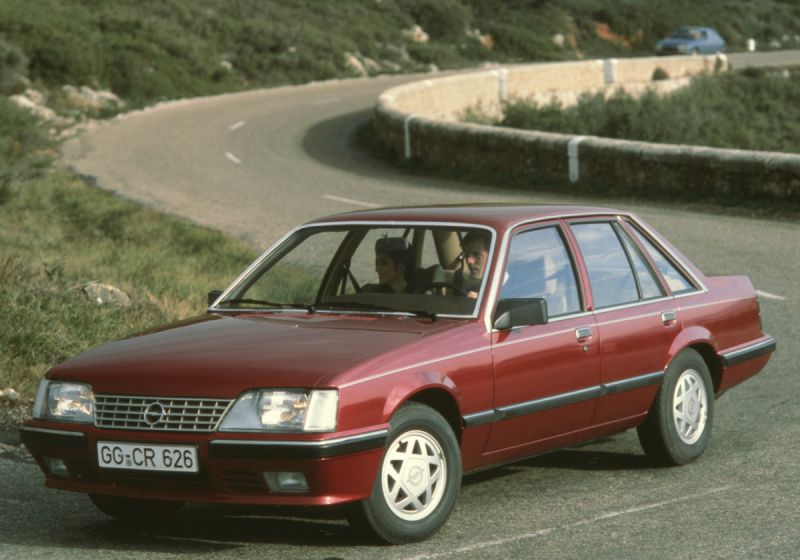
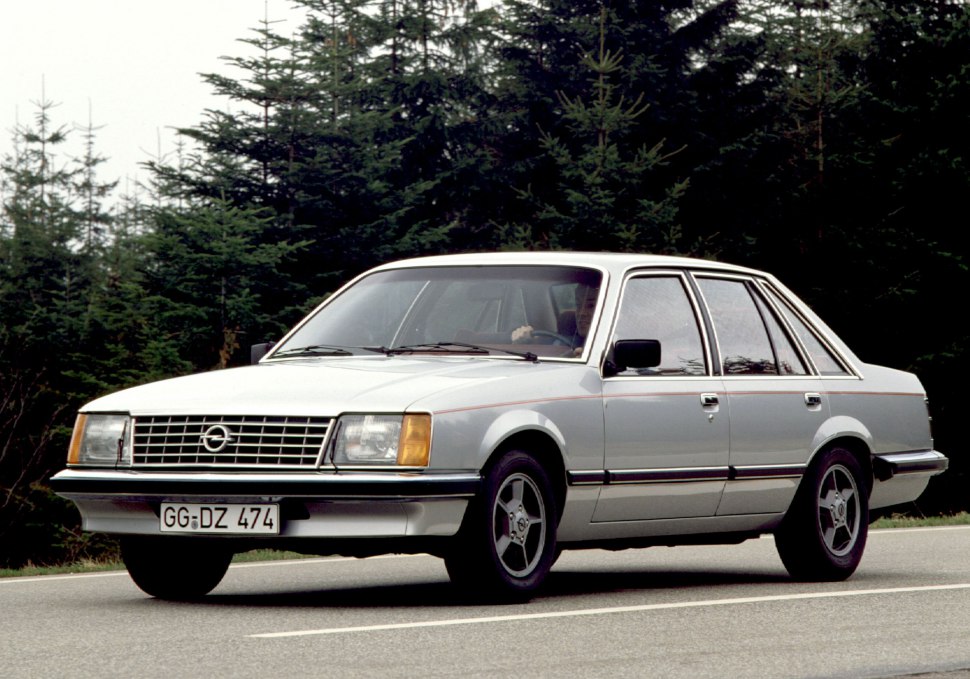
The Opel Senator A presented a classic three-box sedan silhouette, embodying the design language prevalent in European executive cars of the late 1970s. Its styling was conservative yet elegant, characterized by clean lines, a relatively upright grille, and large glass areas that contributed to excellent visibility. With a length of 189.41 inches, a width of 68.03 inches, and a height of 55.71 inches, the Senator offered a commanding road presence without being overtly flashy. The design prioritized spaciousness and comfort, evident in its generous 105.63-inch wheelbase, which allowed for ample legroom for five occupants. The understated aesthetic was a deliberate choice, aiming for a timeless appeal rather than fleeting trends, which allowed it to age gracefully.
Inside, the Senator A focused on providing a comfortable and well-appointed cabin. Features common for a car of its segment and era would have included plush seating, often upholstered in velour or optional leather, and quality trim materials that conveyed a sense of luxury. The dashboard layout was functional and driver-oriented, with clear instrumentation and logically placed controls. While specifics varied by market and options, typical amenities might have encompassed power windows, central locking, a sophisticated heating and ventilation system, and potentially air conditioning as an optional extra, a desirable feature for a car targeting the premium segment. The emphasis was on creating a serene and comfortable environment for long-distance travel, a hallmark of European executive cars. The trunk space was particularly impressive for a sedan of its time, offering a cavernous 25.25 cubic feet (715 liters) of cargo capacity, underscoring its practicality for long journeys, family use, or business trips.
Underneath its dignified exterior, the Senator A featured a well-engineered chassis designed for comfortable cruising and stable handling. It employed an independent McPherson strut front suspension with coil springs and an anti-roll bar, paired with an independent coil spring rear suspension featuring a transverse stabilizer and trailing arms. This sophisticated setup, especially the independent rear suspension, provided a compliant ride quality suitable for varied European road conditions, from smooth autobahns to winding country roads, while maintaining predictable handling characteristics. Braking duties were handled by ventilated discs at the front and solid discs at the rear, a competent system for the period that offered strong and reliable stopping power. Hydraulic power steering, utilizing a cone worm with recirculation balls, ensured relatively light and precise steering effort, enhancing the driving experience and making the large sedan feel manageable in urban settings. The car rode on 195/70 R14 tires mounted on 6J x 14 wheel rims, a sensible choice balancing ride comfort and grip. With a drag coefficient (Cd) of 0.45, the Senator A’s aerodynamic profile, while not revolutionary by modern standards, was characteristic of its time and contributed to its highway stability and reduced wind noise. Safety features were rudimentary by today’s measures but included robust body construction, front and rear crumple zones, and seatbelts for all occupants, aligning with the safety standards of the late 1970s.
Technical Specifications
| Category | Specification |
|---|---|
| General Information | |
| Brand | Opel |
| Model | Senator |
| Generation | Senator A |
| Type (Engine) | 3.0 E (180 Hp) Automatic |
| Production Start | 1978 year |
| Production End | 1982 year |
| Powertrain Architecture | Internal Combustion engine |
| Body Type | Sedan |
| Seats | 5 |
| Doors | 4 |
| Performance Specs | |
| Fuel Consumption (Urban) | 15.6 l/100 km (15.1 US mpg) |
| Fuel Consumption (Extra Urban) | 9.8 l/100 km (24 US mpg) |
| Fuel Consumption (Combined) | 12.6 l/100 km (18.7 US mpg) |
| Fuel Type | Petrol (Gasoline) |
| Acceleration 0 – 60 mph | 10 sec |
| Maximum Speed | 127.38 mph (205 km/h) |
| Weight-to-Power Ratio | 7.9 kg/Hp, 126.3 Hp/tonne |
| Weight-to-Torque Ratio | 5.7 kg/Nm, 174 Nm/tonne |
| Engine Specs | |
| Power | 180 Hp @ 5800 rpm |
| Power per Liter | 60.6 Hp/l |
| Torque | 182.92 lb.-ft. (248 Nm) @ 4500 rpm |
| Engine Layout | Front, Longitudinal |
| Engine Model/Code | 30E |
| Engine Displacement | 3.0 l (2969 cm3 / 181.18 cu. in.) |
| Number of Cylinders | 6 |
| Engine Configuration | Inline |
| Cylinder Bore | 3.74 in. (95 mm) |
| Piston Stroke | 2.75 in. (69.8 mm) |
| Compression Ratio | 9.4:1 |
| Valves per Cylinder | 2 |
| Fuel Injection System | Multi-port manifold injection |
| Engine Aspiration | Naturally aspirated engine |
| Valvetrain | CIH |
| Engine Oil Capacity | 5.81 US qt (5.5 l) |
| Coolant Capacity | 10.67 US qt (10.1 l) |
| Space, Volume and Weights | |
| Kerb Weight | 3141.59 lbs. (1425 kg) |
| Max. Weight | 4243.9 lbs. (1925 kg) |
| Max. Load | 1102.31 lbs. (500 kg) |
| Trunk (Boot) Space – Minimum | 25.25 cu. ft. (715 l) |
| Fuel Tank Capacity | 19.81 US gal (75 l) |
| Max. Roof Load | 176.37 lbs. (80 kg) |
| Permitted Trailer Load with Brakes (12%) | 3747.86 lbs. (1700 kg) |
| Permitted Trailer Load without Brakes | 1543.24 lbs. (700 kg) |
| Dimensions | |
| Length | 189.41 in. (4811 mm) |
| Width | 68.03 in. (1728 mm) |
| Height | 55.71 in. (1415 mm) |
| Wheelbase | 105.63 in. (2683 mm) |
| Front Track | 57.32 in. (1456 mm) |
| Rear Track | 57.87 in. (1470 mm) |
| Front Overhang | 35.43 in. (900 mm) |
| Rear Overhang | 48.35 in. (1228 mm) |
| Ground Clearance | 5.71 in. (145 mm) |
| Turning Circle | 34.45 ft (10.5 m) |
| Drivetrain, Chassis and Suspension | |
| Drivetrain Architecture | Front-engine, Rear-wheel drive |
| Transmission Type | Automatic transmission |
| Number of Gears (Automatic transmission) | 3 |
| Front Suspension | Independent, McPherson strut, Coil springs, Anti-roll bar |
| Rear Suspension | Independent, Coil springs, Transverse stabilizer, Trailing arm |
| Front Brakes | Ventilated disc |
| Rear Brakes | Disc |
| Steering Type | Hydraulic power steering, Cone worm with recirculation balls |
| Power steering | Yes |
| Tires Size | 195/70 R14 |
| Wheel Rims Size | 6J x 14 |
| Drag coefficient (Cd) | 0.45 |
Legacy and Market Impact of the Opel Senator A
The Opel Senator A, particularly in its potent 3.0 E automatic guise, carved out a significant niche in the European executive car market during its production run from 1978 to 1982. Positioned as Opel’s flagship model, it was a direct challenger to the established dominance of Mercedes-Benz (with models like the W123 and later W126 S-Class) and BMW (E12 and E28 5 Series, and E23 7 Series). While it might not have carried the same prestige badge as its Stuttgart and Munich rivals, the Senator offered a compelling value proposition, combining robust engineering, a comfortable ride, and generous equipment levels at a more accessible price point. Its reputation was built on reliability, spaciousness, and a smooth, powerful inline-six engine, which were highly valued attributes in the European market.
The Senator A’s mechanical impact stemmed from its blend of traditional Opel durability with more sophisticated features. The adoption of multi-port fuel injection in the “E” models was a forward-thinking move for a mass-market manufacturer, contributing to better performance and efficiency compared to many carbureted competitors. The independent rear suspension, while not unique, underscored Opel’s commitment to ride comfort and handling prowess befitting an executive sedan. It also shared its platform with the Opel Monza coupe, a stylish two-door variant that further extended Opel’s reach into the premium segment.
Competitors in its region included not only Mercedes-Benz and BMW but also other European offerings such as the Ford Granada Mk2, Peugeot 604, and Volvo 264. The Senator often held its own in comparison tests, praised for its refinement and straight-line performance. Its appeal extended to both private buyers seeking a comfortable and capable family car for long journeys and corporate fleets looking for a cost-effective yet impressive executive vehicle.
Despite never being officially imported into the United States, the Opel Senator A played a vital role in shaping Opel’s image in Europe. It demonstrated that Opel, often seen as a producer of more utilitarian vehicles, could also deliver a credible and competitive luxury product. The Senator series continued with the Senator B in 1987, which built upon the A-generation’s foundations. Today, the Opel Senator A 3.0 E is regarded as a classic European executive sedan, appreciated by enthusiasts for its understated elegance, mechanical integrity, and the distinct driving experience it offers. It stands as a testament to Opel’s engineering capabilities and its ambition to compete at the highest levels of the European automotive market during a pivotal era. Its relative rarity outside of its primary European markets only adds to its classic appeal for collectors and admirers of vintage German automobiles.