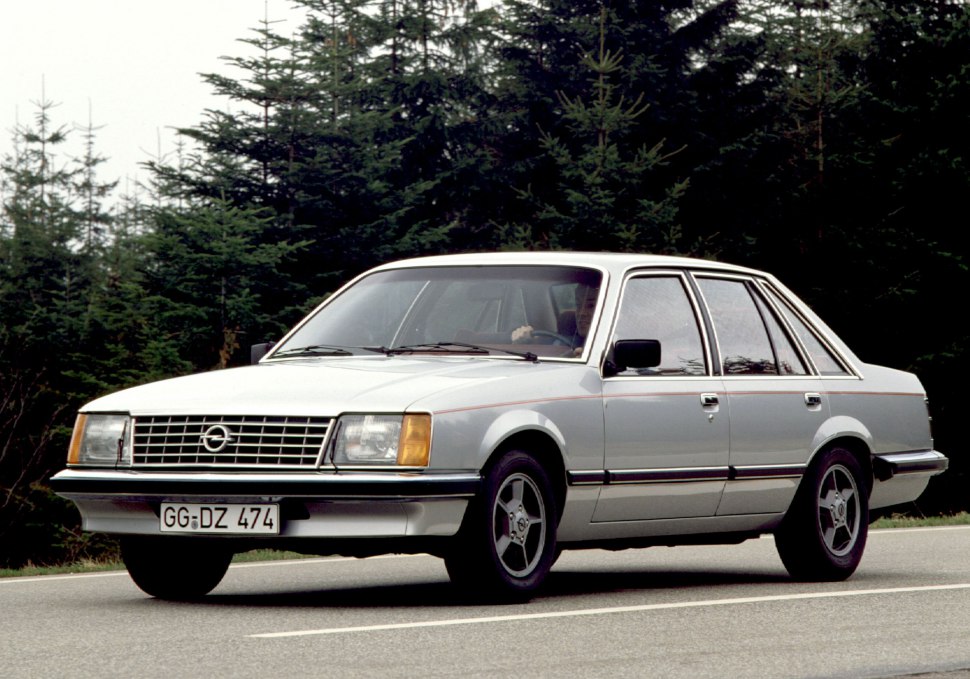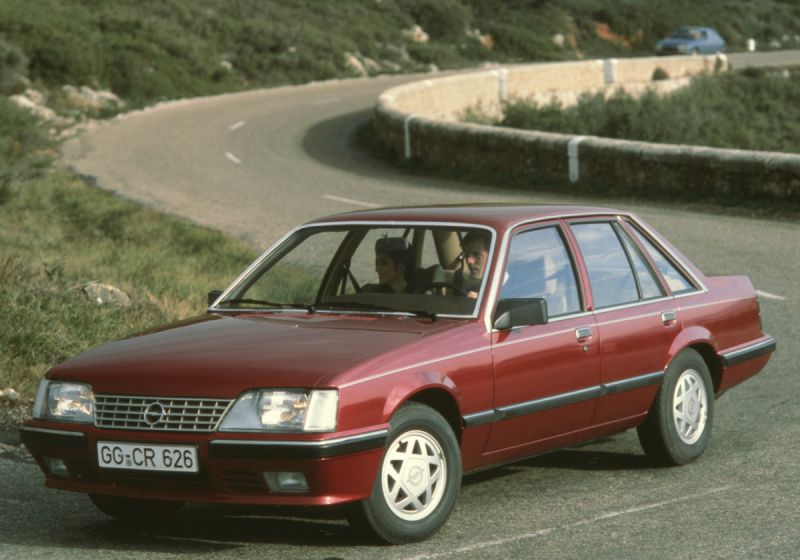
The Opel Senator A (facelift 1982) 2.0 E Automatic: A European Executive Sedan
The Opel Senator A (facelift 1982) represented Opel’s ambitious foray into the executive car segment, primarily serving the European market. Launched in 1978, the Senator A was a larger, more luxurious derivative of the Opel Rekord E, designed to compete with established premium offerings from brands like Mercedes-Benz and BMW. The variant under review, the 2.0 E Automatic, specifically refers to a model produced between 1983 and 1984, incorporating the refinements of the 1982 facelift. This iteration aimed to modernize its aesthetics and enhance its appeal, continuing the Senator’s role as Opel’s flagship sedan. As a product of General Motors’ European division, the Senator exemplified Opel’s engineering philosophy of robust construction, comfortable ride quality, and practical luxury for its target audience across the continent.
Engine and Performance of the Opel Senator A (facelift 1982)
At the heart of the Opel Senator A (facelift 1982) 2.0 E Automatic lay a capable, if not overtly sporty, inline four-cylinder engine. With an engine displacement of 1,979 cubic centimeters (approximately 2.0 liters or 120.77 cubic inches), this naturally aspirated powerplant delivered a respectable 115 horsepower at 5,600 rpm. Torque output was rated at 160 Nm (118.01 lb.-ft.) at a relatively accessible 4,200 rpm, providing adequate pulling power for comfortable cruising. The engine featured a Single Overhead Camshaft (SOHC) valvetrain with two valves per cylinder, a common and reliable configuration for the era, and utilized a multi-port manifold injection system for efficient fuel delivery. Its compression ratio of 9.4:1 was typical for a gasoline engine of the early 1980s.
Power was transferred to the rear wheels via a three-speed automatic transmission, a common choice for executive sedans prioritizing smooth, effortless driving over outright performance. While modern transmissions boast many more ratios, this setup provided a comfortable and predictable driving experience for its time. Performance figures reflected its executive cruiser nature rather than that of a sport sedan: the 0 to 60 mph acceleration was measured at approximately 14.3 seconds, with a top speed of 108.74 mph (175 km/h). These numbers positioned the 2.0 E as a relaxed, capable long-distance cruiser, perfectly suited for autobahn journeys or comfortable city driving. The vehicle’s weight-to-power ratio stood at 11.7 kg/Hp (85.2 Hp/tonne), indicating a balanced approach to power and mass for its intended purpose. Fuel economy for the combined cycle was rated at 10 liters per 100 km, which translates to a practical 23.5 US mpg, a reasonable figure for a large sedan of its vintage and engine size. The 75-liter (19.81 US gallon) fuel tank ensured a substantial cruising range.
Design and Features
The Opel Senator A (facelift 1982) presented a classic, stately sedan profile that was characteristic of European executive cars of its time. Measuring 190.51 inches (4839 mm) in length, 67.8 inches (1722 mm) in width, and 55.71 inches (1415 mm) in height, the Senator was a substantial vehicle, offering ample interior space. The 105.63-inch (2683 mm) wheelbase contributed to a smooth ride and generous legroom for all five occupants. The 1982 facelift introduced subtle but effective changes, typically including revised grille designs, updated headlamp and taillamp clusters, and potentially refreshed interior trim, all aimed at keeping the car’s appearance contemporary without radical departure from its established identity.
As a four-door sedan, practicality was paramount. The trunk offered an impressive 715 liters (25.25 cubic feet) of cargo space, making it highly suitable for business travel or family vacations. The interior, while not explicitly detailed in the provided data, would have featured comfortable seating, durable materials, and a focus on ergonomics typical for an Opel of that era. Standard features would have included power steering, a robust heating and ventilation system, and possibly options like air conditioning or power windows, depending on the trim level for the European market.
From a chassis perspective, the Senator A utilized a rear-wheel-drive architecture, which was standard for executive cars of its generation, offering predictable handling characteristics. The braking system was advanced for its class, featuring ventilated discs at the front and solid discs at the rear, providing confident stopping power for a vehicle with a curb weight of 2,976.24 lbs. (1350 kg). The minimum turning circle of 35.43 feet (10.8 m) indicated reasonable maneuverability for a car of its size. Aerodynamically, the drag coefficient (Cd) of 0.39 was a respectable figure for a large sedan in the early 1980s, contributing to both fuel efficiency and reduced wind noise at higher speeds.
Technical Specifications: Opel Senator A (facelift 1982) 2.0 E (115 Hp) Automatic
| Category | Specification | US/Imperial Equivalent |
|---|---|---|
| General Information | ||
| Brand | Opel | |
| Model | Senator A (facelift 1982) | |
| Type (Engine) | 2.0 E (115 Hp) Automatic | |
| Start of Production | 1983 year | |
| End of Production | 1984 year | |
| Powertrain Architecture | Internal Combustion engine | |
| Body type | Sedan | |
| Seats | 5 | |
| Doors | 4 | |
| Performance Specs | ||
| Fuel consumption (combined) | 10 l/100 km | 23.5 US mpg |
| Fuel Type | Petrol (Gasoline) | |
| Acceleration 0 – 60 mph | 14.3 sec | |
| Maximum speed | 175 km/h | 108.74 mph |
| Weight-to-power ratio | 11.7 kg/Hp | 85.2 Hp/tonne |
| Weight-to-torque ratio | 8.4 kg/Nm | 118.5 Nm/tonne |
| Engine Specs | ||
| Power | 115 Hp @ 5600 rpm | |
| Power per liter | 58.1 Hp/l | |
| Torque | 160 Nm @ 4200 rpm | 118.01 lb.-ft. @ 4200 rpm |
| Engine displacement | 1979 cm3 | 120.77 cu. in. |
| Number of cylinders | 4 | |
| Engine configuration | Inline | |
| Cylinder Bore | 95 mm | 3.74 in. |
| Piston Stroke | 69.8 mm | 2.75 in. |
| Compression ratio | 9.4:1 | |
| Number of valves per cylinder | 2 | |
| Fuel injection system | Multi-port manifold injection | |
| Engine aspiration | Naturally aspirated engine | |
| Valvetrain | SOHC | |
| Engine oil capacity | 3.8 l | 4.02 US qt |
| Space, Volume and Weights | ||
| Kerb Weight | 1350 kg | 2976.24 lbs. |
| Max. weight | 1885 kg | 4155.71 lbs. |
| Max load | 535 kg | 1179.47 lbs. |
| Trunk (boot) space – maximum | 715 l | 25.25 cu. ft. |
| Fuel tank capacity | 75 l | 19.81 US gal |
| Dimensions | ||
| Length | 4839 mm | 190.51 in. |
| Width | 1722 mm | 67.8 in. |
| Height | 1415 mm | 55.71 in. |
| Wheelbase | 2683 mm | 105.63 in. |
| Front track | 1447 mm | 56.97 in. |
| Rear (Back) track | 1472 mm | 57.95 in. |
| Ride height (ground clearance) | 140 mm | 5.51 in. |
| Drag coefficient (Cd) | 0.39 | |
| Minimum turning circle (turning diameter) | 10.8 m | 35.43 ft. |
| Drivetrain, Brakes and Suspension Specs | ||
| Drivetrain Architecture | The Internal combustion engine (ICE) drives the rear wheels of the vehicle. | |
| Drive wheel | Rear wheel drive | |
| Number of gears and type of gearbox | 3 gears, automatic transmission | |
| Front brakes | Ventilated discs | |
| Rear brakes | Disc | |
Legacy and Market Impact
The Opel Senator A played a crucial role in Opel’s strategy to capture a share of the lucrative European executive car market. While Opel was widely known for its reliable and affordable mainstream vehicles, the Senator aimed to elevate the brand’s image and offer a more premium product. In its primary markets, the Senator competed with a diverse range of vehicles, from the Ford Granada (later Scorpio) and Volvo 700 series to the entry-level variants of the BMW 5 Series and Mercedes-Benz E-Class. It carved out a niche for itself by offering a solid, comfortable, and well-equipped sedan that often presented better value than its more prestigious German rivals, without compromising significantly on build quality or road manners.
The Opel Senator A (facelift 1982) was particularly popular among business executives, government officials, and families seeking a spacious and comfortable vehicle for long-distance travel. Its understated elegance, coupled with Opel’s reputation for reliability and robust engineering, made it a sensible choice for those who appreciated refinement without overt flamboyance. The 2.0 E Automatic, in particular, catered to a segment that prioritized smooth, relaxed driving and ease of use, making it an ideal daily driver in urban environments and on highways alike.
It is important to note that the Opel Senator was not officially sold in the United States under the Opel badge. During this period, General Motors often rebadged Opel models for sale in North America (e.g., some Opel Kadett models were sold as Buick Opels), but the Senator, as a full-size executive car, was deemed unsuitable for direct import or was not positioned within GM’s domestic brand hierarchy. Its legacy, therefore, remains firmly rooted in Europe and other international markets where Opel had a strong presence. The Senator A, especially in its facelifted guise, is remembered as a testament to Opel’s ambition and capability in producing a competitive and respected executive sedan, laying the groundwork for its successor, the Senator B, and influencing subsequent large Opel models. Today, these cars are appreciated by enthusiasts for their classic European styling, comfortable ride, and a certain nostalgic charm that harks back to an era of straightforward, well-engineered automobiles.