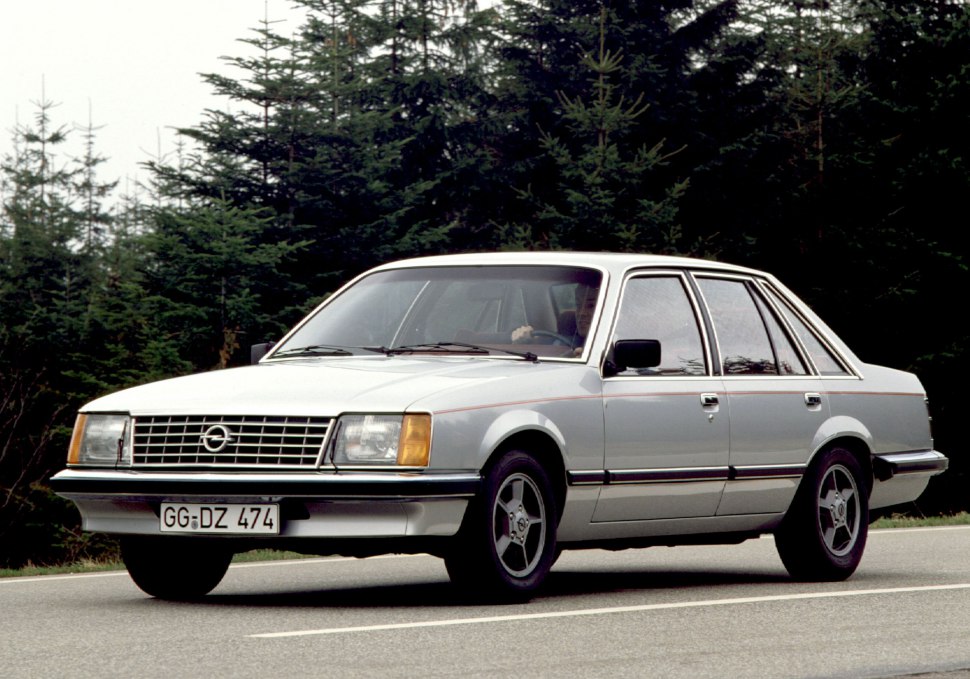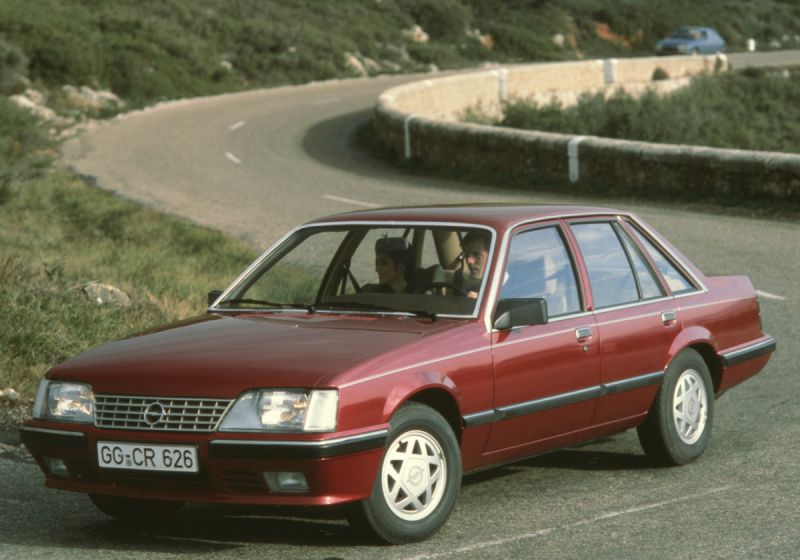
Opel Senator A (facelift 1982) 2.2i (115 Hp) Automatic: A European Executive Sedan
The Opel Senator A (facelift 1982) represents a significant chapter in the history of European executive sedans. Produced by the German automaker Opel, a subsidiary of General Motors, the Senator A was the brand’s flagship model, positioned to compete in a highly competitive segment dominated by premium brands like Mercedes-Benz and BMW. This particular variant, the 2.2i (115 Hp) Automatic, was a mid-range offering from the facelifted ‘A’ generation, manufactured between 1984 and 1986. While never officially sold in the United States, the Senator was Opel’s attempt to provide a comfortable, spacious, and well-appointed rear-wheel-drive sedan for the discerning European buyer, often at a more accessible price point than its direct German rivals. It embodied the automotive engineering philosophies of its era, emphasizing smooth performance, robust construction, and a refined driving experience tailored for long-distance cruising.
The Evolution of the Opel Senator A (facelift 1982)
The Opel Senator first debuted in 1978, sharing its platform with the Opel Rekord E and the sporty Monza coupe. The ‘A’ generation quickly established itself as a credible contender in the executive class. The significant facelift in 1982 brought a refreshed exterior design, incorporating a more modern front fascia, updated taillights, and subtle aerodynamic improvements that aimed to keep the Senator competitive through the mid-1980s. This update also often included interior refinements and engine enhancements. The 2.2i engine, introduced as part of the facelifted range, offered a balance of power and efficiency, making it a popular choice for buyers seeking a capable yet economical executive car. Its role in the European market was crucial for Opel, demonstrating the brand’s capability to produce large, comfortable vehicles that could stand alongside more prestigious marques.
Engine and Performance: The Heart of the Opel Senator A (facelift 1982)
Under the hood of the Opel Senator A (facelift 1982) 2.2i Automatic lay a robust and dependable powertrain designed for smooth, effortless driving. The engine was an Inline 4-cylinder unit with a displacement of 2.2 liters (2197 cm³ or 134.07 cu. in.). This naturally aspirated engine featured a Single Overhead Camshaft (SOHC) valvetrain with two valves per cylinder, a common and reliable configuration for the era. Fuel delivery was managed by a multi-port manifold injection system, providing more precise fuel metering than older carburetor setups, leading to improved efficiency and responsiveness.
The engine produced a respectable 115 horsepower at 4800 rpm, delivering a power-to-liter ratio of 52.3 Hp/l. Torque output was a solid 134.24 lb.-ft. (182 Nm) peaking at a relatively low 2800 rpm, which contributed to the car’s relaxed cruising demeanor and good low-end pull. Power was sent to the rear wheels via a 4-speed automatic transmission, a popular choice for executive sedans of the time, emphasizing comfort and ease of driving over outright performance. The car’s drivetrain architecture, with the internal combustion engine driving the rear wheels, was a classic layout for sedans in this class, offering predictable handling characteristics.
In terms of performance, the Senator A 2.2i Automatic was not built for blistering acceleration but rather for steady, composed progress. It could accelerate from 0 to 60 mph in a calculated 12.4 seconds (0-100 km/h in 13 seconds) and reach a maximum speed of 110.6 mph (178 km/h). These figures placed it firmly in the realm of comfortable cruisers, capable of maintaining highway speeds with ease. Fuel economy was rated at a combined 26.4 US mpg (8.9 l/100 km), which was competitive for a large sedan of its size and engine capacity in the mid-1980s, especially considering it was equipped with an automatic transmission.
Design and Features: Executive Comfort and Practicality
The Opel Senator A (facelift 1982) presented a classic four-door sedan body type, embodying the design language of the early 1980s with its clean lines and somewhat formal appearance. Measuring 190.51 inches (4839 mm) in length, 67.8 inches (1722 mm) in width, and 55.71 inches (1415 mm) in height, it was a substantial vehicle for the European market, offering ample interior space for five occupants. The wheelbase of 105.63 inches (2683 mm) contributed to a smooth ride and stable handling.
The facelift brought subtle but effective styling updates, including a more integrated front grille and headlamp design, giving it a more contemporary look. Aerodynamics were a consideration, with a drag coefficient (Cd) of 0.39, which was decent for a sedan of its size and era, contributing to both fuel efficiency and reduced wind noise at higher speeds. Inside, the Senator was designed with comfort and practicality in mind. The spacious cabin provided comfortable seating for five, with good legroom and headroom, particularly in the rear. The trunk space was a generous 25.25 cu. ft. (715 liters), making it highly practical for families or business use, capable of swallowing a significant amount of luggage.
For its time, the Senator offered a range of features aimed at enhancing the driving and passenger experience. While specific trim levels and optional equipment are not detailed in the provided data, a car of this caliber in the 1980s would typically include power steering, central locking, and potentially power windows, an advanced audio system, and comfortable cloth or velour upholstery. Safety features, typical for the era, would have included robust body construction and three-point seatbelts. The braking system comprised ventilated discs at the front and disc brakes at the rear, providing adequate stopping power for a vehicle of its weight and performance.
Technical Specifications: Opel Senator A (facelift 1982) 2.2i (115 Hp) Automatic
| Category | Specification | US Equivalent (where applicable) |
|---|---|---|
| General Information | ||
| Brand | Opel | |
| Model | Senator | |
| Generation | Senator A (facelift 1982) | |
| Type (Engine) | 2.2i (115 Hp) Automatic | |
| Start of Production | 1984 year | |
| End of Production | 1986 year | |
| Powertrain Architecture | Internal Combustion engine | |
| Body Type | Sedan | |
| Seats | 5 | |
| Doors | 4 | |
| Performance Specs | ||
| Fuel Consumption (combined) | 8.9 l/100 km | 26.4 US mpg |
| Fuel Type | Petrol (Gasoline) | |
| Acceleration 0 – 60 mph | 12.4 sec | |
| Acceleration 0 – 100 km/h | 13 sec | |
| Maximum Speed | 178 km/h | 110.6 mph |
| Weight-to-Power Ratio | 11.6 kg/Hp | 86.1 Hp/tonne |
| Weight-to-Torque Ratio | 7.3 kg/Nm | 136.3 Nm/tonne |
| Engine Specs | ||
| Power | 115 Hp @ 4800 rpm | |
| Power per liter | 52.3 Hp/l | |
| Torque | 182 Nm @ 2800 rpm | 134.24 lb.-ft. @ 2800 rpm |
| Engine Displacement | 2197 cm³ | 2.2 Liters / 134.07 cu. in. |
| Number of Cylinders | 4 | |
| Engine Configuration | Inline | |
| Cylinder Bore | 95 mm | 3.74 in. |
| Piston Stroke | 77.5 mm | 3.05 in. |
| Compression Ratio | 9.4:1 | |
| Number of Valves per Cylinder | 2 | |
| Fuel Injection System | Multi-port manifold injection | |
| Engine Aspiration | Naturally aspirated engine | |
| Valvetrain | SOHC | |
| Space, Volume and Weights | ||
| Kerb Weight | 1335 kg | 2943.17 lbs. |
| Max. Weight | 1885 kg | 4155.71 lbs. |
| Max Load | 550 kg | 1212.54 lbs. |
| Trunk (boot) Space – Maximum | 715 l | 25.25 cu. ft. |
| Fuel Tank Capacity | 75 l | 19.81 US gal |
| Dimensions | ||
| Length | 4839 mm | 190.51 in. |
| Width | 1722 mm | 67.8 in. |
| Height | 1415 mm | 55.71 in. |
| Wheelbase | 2683 mm | 105.63 in. |
| Front Track | 1447 mm | 56.97 in. |
| Rear (Back) Track | 1472 mm | 57.95 in. |
| Ride Height (Ground Clearance) | 140 mm | 5.51 in. |
| Drag Coefficient (Cd) | 0.39 | |
| Minimum Turning Circle (Turning Diameter) | 10.8 m | 35.43 ft. |
| Drivetrain, Brakes and Suspension Specs | ||
| Drivetrain Architecture | The Internal combustion engine (ICE) drives the rear wheels of the vehicle. | |
| Drive Wheel | Rear wheel drive | |
| Number of Gears and Type of Gearbox | 4 gears, automatic transmission | |
| Front Brakes | Ventilated discs | |
| Rear Brakes | Disc |
Legacy and Market Impact of the Opel Senator A
The Opel Senator A (facelift 1982) played a crucial role in Opel’s strategy to maintain a presence in the lucrative European executive car segment. Its primary competitors included the Mercedes-Benz W123 and later W124 E-Class, the BMW E28 5 Series, and the Ford Granada/Scorpio. While often lacking the outright prestige of its Mercedes and BMW rivals, the Senator carved out a niche for itself as a robust, comfortable, and well-equipped alternative that offered significant value for money. It appealed to buyers who desired executive-level comfort and space without necessarily needing the premium badge or the higher price tag that came with it.
The Senator A was praised for its comfortable ride, spacious interior, and decent build quality. Its rear-wheel-drive platform provided predictable handling, a characteristic valued by many drivers. The 2.2i engine, paired with the automatic transmission, reinforced its image as a smooth and refined cruiser, ideal for long journeys across the continent. Its large trunk capacity also made it a favorite among those who needed practical space for family or business travel.
Historically, the Opel Senator lineage continued with the Senator B, which further refined the concept. The Senator A, however, remains a classic example of early 1980s European executive motoring. It demonstrated Opel’s engineering prowess and its commitment to offering a full range of vehicles, from compact cars to large, comfortable sedans. Today, surviving examples of the Senator A are appreciated by enthusiasts for their classic styling, comfortable ride, and a certain understated elegance that was characteristic of Opel’s approach to the executive segment. It stands as a testament to an era when German engineering prioritized durability and practicality alongside comfort and style.