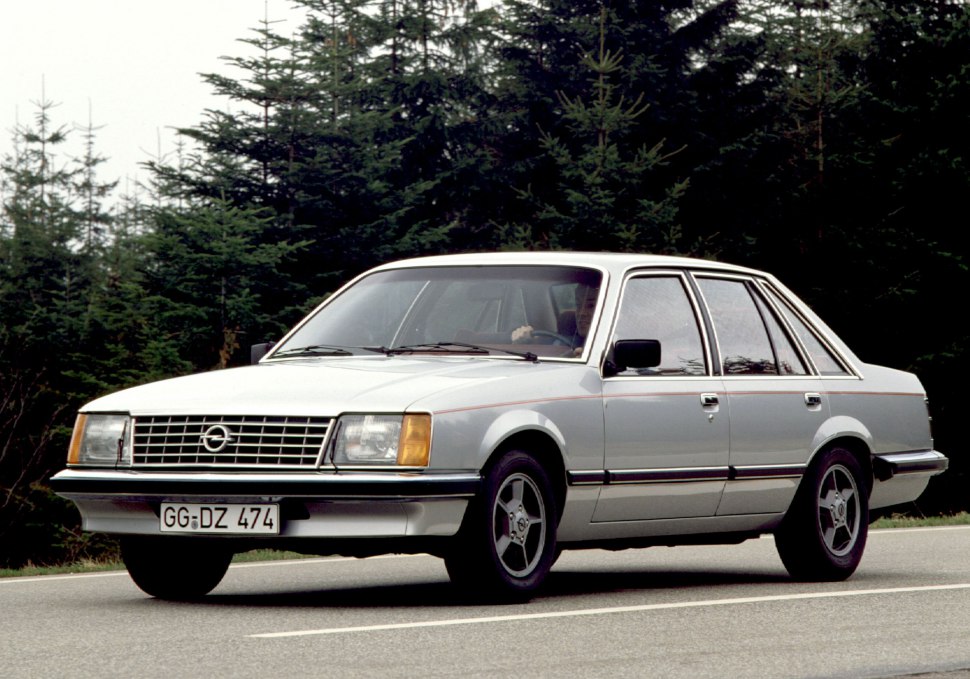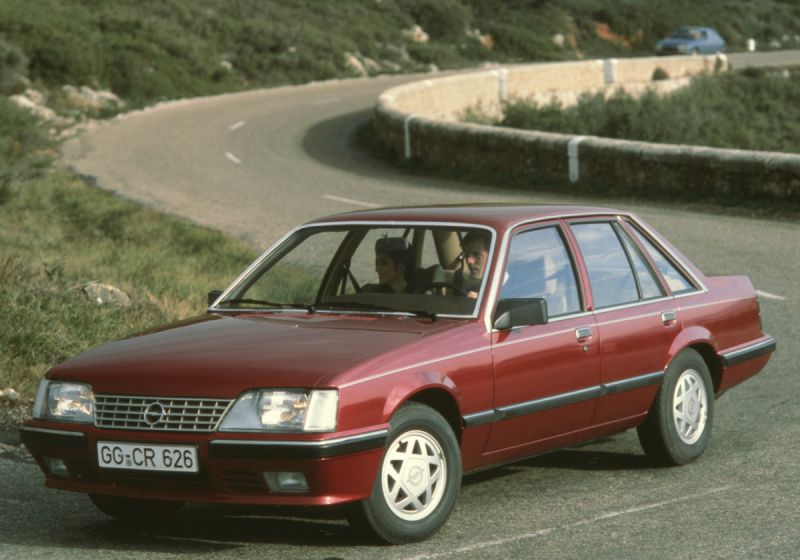
The Opel Senator A (facelift 1982) 2.3 TD (86 Hp): A German Executive for the European Roads
The Opel Senator, a prominent executive car from the German automaker Opel, represented the brand’s flagship offering in the European market during its production run. The specific variant, the Opel Senator A (facelift 1982) 2.3 TD (86 Hp), was part of the updated A2 generation, introduced in 1982 and produced from 1984 to 1986. While never officially sold in the United States, the Senator played a crucial role in Opel’s strategy to compete in the luxury and executive segments across Europe, offering a blend of comfort, robust engineering, and a then-modern approach to powertrain options. This particular model, with its 2.3-liter turbocharged diesel engine, highlighted Opel’s commitment to fuel efficiency and torque in a market increasingly conscious of operating costs, even for larger sedans. The Senator A (facelift 1982) was a four-door, five-seat sedan, embodying the classic rear-wheel-drive architecture favored for its driving dynamics and spacious interior.
Engineering and Performance of the Opel Senator A (facelift 1982) 2.3 TD (86 Hp)
Under the hood of the Opel Senator A (facelift 1982) 2.3 TD (86 Hp) lay a robust 2.3-liter (2260 cm3 or 137.91 cubic inches) inline four-cylinder diesel engine. This unit was a significant offering for its time, featuring a turbocharger to boost performance and efficiency, a relatively advanced feature for a diesel passenger car in the mid-1980s. The engine produced 86 horsepower at 4200 rpm, which, while not a powerhouse by today’s standards, was respectable for a diesel of its era. More importantly, the turbocharged engine delivered a healthy 139.4 lb.-ft. (189 Nm) of torque, available between 2200 and 2400 rpm. This broad torque band was instrumental in providing strong pulling power and relaxed cruising, characteristic of a diesel engine.
Power was delivered to the rear wheels via a five-speed manual transmission, a common and preferred choice in Europe for its direct engagement and efficiency. The Senator A 2.3 TD could accelerate from 0 to 60 mph in a calculated 15.7 seconds (0-100 km/h in 16.5 seconds), and reach a top speed of 103.77 mph (167 km/h). These figures positioned it as a comfortable cruiser rather than an outright performance machine, prioritizing fuel economy and longevity. Speaking of efficiency, the combined fuel consumption was rated at an impressive 30.9 US mpg (7.6 liters per 100 km), a key selling point for executive car buyers looking to mitigate the higher running costs often associated with larger vehicles.
The engine’s technical specifications included a high compression ratio of 23:1, indicative of its precombustion chamber injection system, a common design for indirect injection diesels of the period. With two valves per cylinder and a SOHC (Single Overhead Camshaft) valvetrain, it was designed for reliability and ease of maintenance. Its bore and stroke measured 92 mm (3.62 inches) and 85 mm (3.35 inches), respectively, contributing to its balanced characteristics.
Design and Features
The Opel Senator A (facelift 1982) adopted a more aerodynamic and modernized aesthetic compared to its initial 1978 release. The facelift, often referred to as the Senator A2, brought revised front and rear styling, including a new grille, headlights, and taillights, along with improved bumpers. These changes contributed to a lower drag coefficient of 0.39, a respectable figure for a large sedan of the period, aiding both fuel economy and high-speed stability. The body type remained a classic four-door sedan, offering ample space and comfort for five occupants.
With a length of 190.51 inches (4839 mm), a width of 67.8 inches (1722 mm), and a height of 55.71 inches (1415 mm), the Senator commanded a significant road presence. Its wheelbase of 105.63 inches (2683 mm) provided a stable ride and generous interior room, a hallmark of executive sedans. The trunk space was particularly impressive, offering a maximum of 25.25 cubic feet (715 liters), making it highly practical for long journeys and family use. The vehicle’s kerb weight stood at 3108.52 lbs (1410 kg), contributing to its solid, planted feel on the road.
In terms of driver dynamics, the Senator A featured ventilated disc brakes at the front and standard disc brakes at the rear, providing capable stopping power. The rear-wheel-drive architecture, combined with a relatively tight minimum turning circle of 35.43 feet (10.8 meters), offered a blend of traditional handling characteristics and maneuverability for its size. For its era, the Senator was well-regarded for its comfortable ride, a crucial attribute for a car designed for long-distance European highway travel.
Technical Specifications: Opel Senator A (facelift 1982) 2.3 TD (86 Hp)
| Category | Specification |
|---|---|
| General Information | |
| Brand | Opel |
| Model | Senator |
| Generation | Senator A (facelift 1982) |
| Type (Engine) | 2.3 TD (86 Hp) |
| Start of Production | 1984 year |
| End of Production | 1986 year |
| Powertrain Architecture | Internal Combustion engine |
| Body Type | Sedan |
| Seats | 5 |
| Doors | 4 |
| Performance Specs | |
| Fuel Consumption (combined) | 7.6 l/100 km (30.9 US mpg) |
| Fuel Type | Diesel |
| Acceleration 0 – 60 mph (Calculated) | 15.7 sec |
| Acceleration 0 – 100 km/h | 16.5 sec |
| Maximum Speed | 103.77 mph (167 km/h) |
| Weight-to-Power Ratio | 16.4 kg/Hp (61 Hp/tonne) |
| Weight-to-Torque Ratio | 7.5 kg/Nm (134 Nm/tonne) |
| Engine Specs | |
| Power | 86 Hp @ 4200 rpm |
| Power per liter | 38.1 Hp/l |
| Torque | 139.4 lb.-ft. (189 Nm) @ 2200-2400 rpm |
| Engine Displacement | 2260 cm3 (137.91 cu. in.) |
| Number of Cylinders | 4 |
| Engine Configuration | Inline |
| Cylinder Bore | 92 mm (3.62 in.) |
| Piston Stroke | 85 mm (3.35 in.) |
| Compression Ratio | 23:1 |
| Number of Valves per Cylinder | 2 |
| Fuel Injection System | Precombustion chamber injection |
| Engine Aspiration | Turbocharger |
| Valvetrain | SOHC |
| Space, Volume and Weights | |
| Kerb Weight | 3108.52 lbs (1410 kg) |
| Max. Weight | 4321.06 lbs (1960 kg) |
| Max Load | 1212.54 lbs (550 kg) |
| Trunk (boot) Space – Maximum | 25.25 cu. ft. (715 l) |
| Fuel Tank Capacity | 19.81 US gal (75 l) |
| Dimensions | |
| Length | 190.51 in. (4839 mm) |
| Width | 67.8 in. (1722 mm) |
| Height | 55.71 in. (1415 mm) |
| Wheelbase | 105.63 in. (2683 mm) |
| Front Track | 56.97 in. (1447 mm) |
| Rear (Back) Track | 57.95 in. (1472 mm) |
| Ride Height (Ground Clearance) | 5.51 in. (140 mm) |
| Drag Coefficient (Cd) | 0.39 |
| Minimum Turning Circle | 35.43 ft. (10.8 m) |
| Drivetrain, Brakes and Suspension Specs | |
| Drivetrain Architecture | Internal combustion engine drives the rear wheels. |
| Drive Wheel | Rear wheel drive |
| Number of Gears and Type of Gearbox | 5 gears, manual transmission |
| Front Brakes | Ventilated discs |
| Rear Brakes | Disc |
Legacy and Market Impact of the Opel Senator A (facelift 1982)
The Opel Senator A (facelift 1982) 2.3 TD (86 Hp), despite its relatively short production run for this specific diesel variant (1984-1986), was an important player in the European executive car segment. It competed directly with other established models like the Ford Granada/Scorpio, as well as premium offerings such as the Mercedes-Benz W123 (and later W124) E-Class and the BMW E28 5 Series. While perhaps not possessing the same aspirational cachet as its German luxury rivals, the Senator offered a compelling value proposition: a spacious, comfortable, and well-engineered rear-wheel-drive sedan at a more accessible price point.
The introduction of a turbocharged diesel engine in a car of this class underscored a growing trend in Europe towards more efficient, yet still capable, executive transport. Diesel engines, with their superior fuel economy and torque characteristics, were becoming increasingly popular, especially for high-mileage drivers and company fleets. The 2.3 TD variant of the Senator A provided a practical and economical alternative to the thirstier gasoline engines, without sacrificing too much in terms of refinement or cruising ability. Its reputation was built on reliability, solid build quality, and a comfortable ride, making it a favorite among those who valued substance over pure brand prestige.
Today, the Opel Senator A (facelift 1982) is regarded as a classic European executive car, appreciated by enthusiasts for its straightforward engineering, comfortable interior, and distinctive 1980s styling. The diesel variants, while less common than their gasoline counterparts, represent an interesting historical footnote in the evolution of the European executive car, demonstrating Opel’s foresight in offering efficient powertrains long before they became ubiquitous in the segment. Its legacy is one of a dependable, understated executive sedan that capably served its market, reflecting a period of significant change and adaptation in the European automotive landscape.