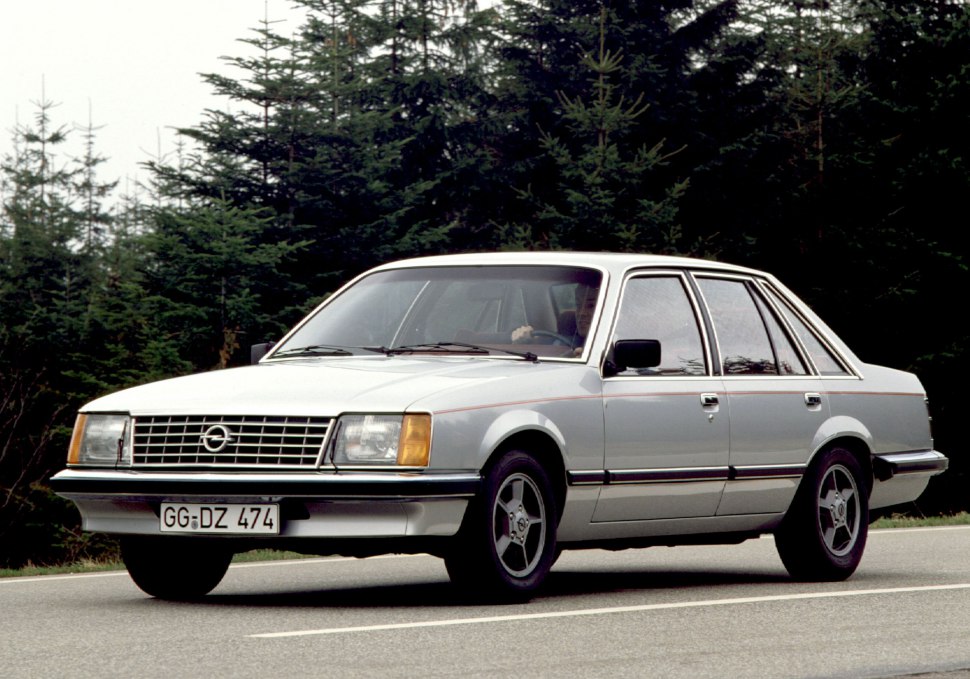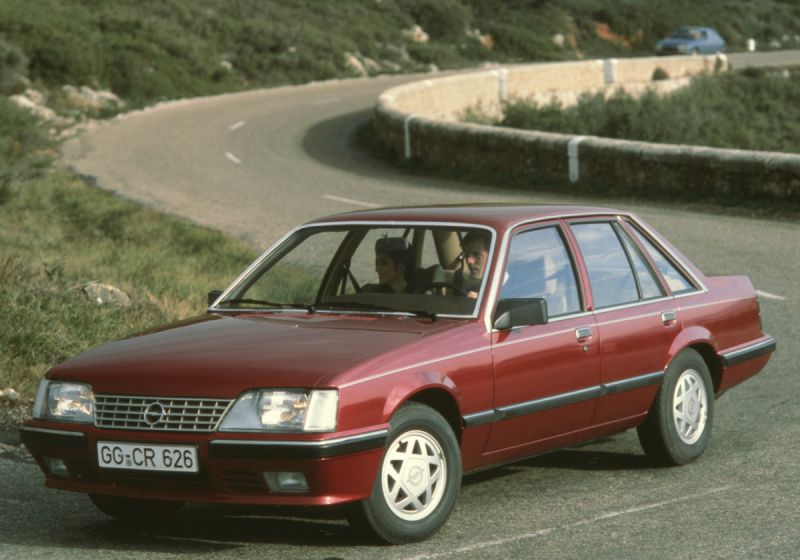
Introduction to the Opel Senator A (facelift 1982) 2.3 TD (86 Hp) Automatic
The Opel Senator, a distinguished full-size executive car, represented Opel’s flagship offering in the European market during its production run. Positioned above the Rekord and Omega models, the Senator was designed to compete with established premium sedans from manufacturers like BMW and Mercedes-Benz, offering a blend of comfort, space, and a dignified presence. The first generation, known as the Senator A, was initially launched in 1978. The specific variant under discussion, the Opel Senator A (facelift 1982) 2.3 TD (86 Hp) Automatic, represents a crucial period in the model’s evolution, benefiting from a significant mid-cycle refresh that modernized its aesthetics and refined its engineering. Produced between 1984 and 1986, this particular iteration with its turbocharged diesel engine and automatic transmission targeted buyers seeking fuel efficiency and robust torque for long-distance cruising, without compromising on the comfort and luxury expected of an executive sedan.
While never officially sold in the United States, the Opel Senator A played a vital role in Opel’s strategy to capture a share of the competitive European executive car segment. Its introduction marked Opel’s serious commitment to offering a compelling alternative to more expensive German rivals, particularly for customers who valued understated elegance, practicality, and solid engineering. The 2.3-liter turbo diesel engine, a relatively advanced offering for its time in this segment, underscored a growing emphasis on fuel economy and the long-term cost of ownership, a significant consideration for business fleets and private owners alike in the mid-1980s. This article will delve into the specific details of this classic European executive sedan, focusing on its mechanical prowess, design characteristics, and its enduring legacy.
Powertrain and Performance of the Opel Senator A (facelift 1982) 2.3 TD (86 Hp) Automatic
At the heart of the Opel Senator A (facelift 1982) 2.3 TD (86 Hp) Automatic lies a robust 2.3-liter (2260 cm³ or 137.91 cu. in.) inline four-cylinder turbocharged diesel engine. This powerplant, designated as an Internal Combustion Engine (ICE), was a notable feature for an executive car in the mid-1980s, offering a compelling blend of fuel economy and usable torque. The engine employed a Single Overhead Camshaft (SOHC) valvetrain with two valves per cylinder, a common and reliable configuration for diesel engines of that era. Fuel delivery was managed by a precombustion chamber injection system, contributing to smoother operation and reduced diesel clatter compared to direct injection systems of the time, enhancing the executive driving experience.
This turbocharged unit produced a respectable 86 horsepower at 4200 rpm, which was a solid figure for a diesel engine in its class during the mid-80s. More importantly for an executive cruiser, it delivered a substantial 189 Nm (139.4 lb.-ft.) of torque across a broad and accessible rev range of 2200-2400 rpm. This ample torque, available at relatively low engine speeds, made for relaxed driving and confident overtaking, particularly on highways – a key requirement for a car designed for long-distance travel. The engine’s compression ratio stood at a high 23:1, typical for a diesel, ensuring efficient combustion.
Power was delivered to the rear wheels via a 4-speed automatic transmission, emphasizing comfort and ease of driving over outright performance. While the automatic gearbox provided smooth shifts, the vehicle’s acceleration figures reflected its focus on economy and comfort rather than sporty dynamics. The Senator A 2.3 TD accelerated from 0 to 60 mph in approximately 17.6 seconds, with 0 to 62 mph (100 km/h) taking 18.5 seconds. The maximum speed was rated at 101.9 mph (164 km/h), making it perfectly capable of sustained highway cruising at European speeds.
One of the core strengths of this diesel variant was its fuel efficiency. The combined fuel consumption was an impressive 7.6 liters per 100 kilometers, translating to approximately 30.9 US miles per gallon. This efficiency was a significant selling point, offering considerable savings on fuel costs, especially for high-mileage drivers. The vehicle’s weight-to-power ratio stood at 16.6 kg/Hp (60.4 Hp/tonne), and its weight-to-torque ratio was 7.5 kg/Nm (132.6 Nm/tonne), indicating a well-balanced package for its intended purpose. The 75-liter (19.81 US gallon) fuel tank further enhanced its long-range capabilities, allowing for extended journeys between fill-ups.
Design and Features
The Opel Senator A (facelift 1982) presented itself as a classic four-door, five-seat sedan, embodying the conservative yet refined design language prevalent in executive cars of its era. The facelift introduced more contemporary styling cues, including revised front and rear fascias, updated lighting, and a generally smoother aesthetic that subtly improved its aerodynamic profile, evidenced by a drag coefficient (Cd) of 0.39. While not revolutionary, this design ensured the Senator remained competitive and appealing in its segment.
Measuring 190.51 inches (4839 mm) in length, 67.8 inches (1722 mm) in width, and 55.71 inches (1415 mm) in height, the Senator A was a substantial vehicle, providing ample interior space for five occupants. The generous wheelbase of 105.63 inches (2683 mm) contributed significantly to ride comfort and stability, particularly important for long-distance travel. Inside, the cabin was designed for comfort and functionality, featuring plush seating and a well-appointed dashboard with clear instrumentation. While specific luxury features like power accessories or climate control are not detailed in the raw data, it is reasonable to assume that as a flagship executive model, the Senator offered a comprehensive list of comfort and convenience features for its time, likely including power steering, central locking, and quality upholstery.
Practicality was another strong suit. The trunk space was remarkably generous, offering a maximum capacity of 715 liters (25.25 cu. ft.), making it highly suitable for business travelers or families requiring significant luggage capacity. The vehicle’s kerb weight was 3141.59 lbs (1425 kg), with a maximum permissible weight of 4321.06 lbs (1960 kg), allowing for a substantial payload of 1179.47 lbs (535 kg).
From a chassis perspective, the Senator A featured a sophisticated setup for its time. It was equipped with ventilated disc brakes at the front and disc brakes at the rear, providing effective stopping power for a vehicle of its size and weight. The rear-wheel-drive architecture, typical of executive sedans, offered balanced handling and a classic driving feel. The minimum turning circle of 35.43 feet (10.8 m) ensured reasonable maneuverability despite its considerable length. The ride height of 5.51 inches (140 mm) provided sufficient ground clearance for varied European road conditions.
Technical Specifications
| Category | Specification | Value |
|---|---|---|
General Information |
||
| Brand | Opel | Senator |
| Model Generation | Senator A (facelift 1982) | |
| Type (Engine) | 2.3 TD (86 Hp) Automatic | |
| Start of Production | 1984 year | |
| End of Production | 1986 year | |
| Powertrain Architecture | Internal Combustion engine | |
| Body type | Sedan | |
| Seats | 5 | |
| Doors | 4 | |
Performance Specifications |
||
| Fuel Consumption (combined) | 7.6 l/100 km (30.9 US mpg) | |
| Fuel Type | Diesel | |
| Acceleration 0 – 60 mph | 17.6 sec | |
| Acceleration 0 – 62 mph (0-100 km/h) | 18.5 sec | |
| Maximum Speed | 101.9 mph (164 km/h) | |
| Weight-to-Power Ratio | 16.6 kg/Hp (60.4 Hp/tonne) | |
| Weight-to-Torque Ratio | 7.5 kg/Nm (132.6 Nm/tonne) | |
Engine Specifications |
||
| Power | 86 Hp @ 4200 rpm | |
| Power per liter | 38.1 Hp/l | |
| Torque | 189 Nm (139.4 lb.-ft.) @ 2200-2400 rpm | |
| Engine Displacement | 2260 cm³ (2.3 Liters / 137.91 cu. in.) | |
| Number of Cylinders | 4 | Inline |
| Cylinder Bore | 92 mm (3.62 in.) | |
| Piston Stroke | 85 mm (3.35 in.) | |
| Compression Ratio | 23:1 | |
| Number of Valves per Cylinder | 2 | |
| Fuel Injection System | Precombustion chamber injection | |
| Engine Aspiration | Turbocharger | |
| Valvetrain | SOHC | |
Space, Volume and Weights |
||
| Kerb Weight | 1425 kg (3141.59 lbs) | |
| Max. Weight | 1960 kg (4321.06 lbs) | |
| Max Load | 535 kg (1179.47 lbs) | |
| Trunk (boot) Space – maximum | 715 l (25.25 cu. ft.) | |
| Fuel Tank Capacity | 75 l (19.81 US gal) | |
Dimensions |
||
| Length | 4839 mm (190.51 in.) | |
| Width | 1722 mm (67.8 in.) | |
| Height | 1415 mm (55.71 in.) | |
| Wheelbase | 2683 mm (105.63 in.) | |
| Front Track | 1447 mm (56.97 in.) | |
| Rear (Back) Track | 1472 mm (57.95 in.) | |
| Ride Height (ground clearance) | 140 mm (5.51 in.) | |
| Drag Coefficient (Cd) | 0.39 | |
| Minimum Turning Circle (turning diameter) | 10.8 m (35.43 ft.) | |
Drivetrain, Brakes and Suspension |
||
| Drivetrain Architecture | The Internal combustion engine (ICE) drives the rear wheels of the vehicle. | |
| Drive Wheel | Rear wheel drive | |
| Number of Gears and Type of Gearbox | 4 gears, automatic transmission | |
| Front Brakes | Ventilated discs | |
| Rear Brakes | Disc | |
Legacy and Market Impact
The Opel Senator A (facelift 1982) 2.3 TD (86 Hp) Automatic, during its brief production run from 1984 to 1986, carved out a distinct niche in the European executive car market. It was not designed to be the sportiest or the most overtly luxurious offering, but rather a reliable, comfortable, and highly practical long-distance cruiser. Its reputation was built on its robust engineering, spacious interior, and the compelling economy offered by its turbocharged diesel powertrain. For many European buyers, especially business executives and those who covered extensive mileage, the Senator A diesel represented a smart, understated choice.
In the competitive landscape of the mid-1980s, the Opel Senator faced formidable rivals. Its primary competitors included the BMW 5 Series (E28), the Mercedes-Benz W123 and the nascent W124 E-Class, the Ford Granada (later Scorpio), and the Audi 100 (C3). While the BMW and Mercedes-Benz often commanded higher prestige and price points, the Senator offered a strong value proposition, providing comparable levels of comfort, space, and build quality at a more accessible price. The Ford Granada/Scorpio was arguably its closest direct competitor in terms of market positioning, both offering a more mainstream executive experience. The Volvo 700 series also competed for similar buyers, emphasizing safety and practicality.
The 2.3 TD variant specifically highlighted Opel’s foresight in recognizing the growing demand for efficient diesel engines in larger vehicles. While diesel engines in executive cars were not entirely new, the turbocharging added a layer of refinement and performance that made it a more viable alternative to gasoline engines for many. This focus on efficiency and torque made the Senator a popular choice in countries with higher fuel taxes or those where long-distance driving was common. Its robust and straightforward mechanicals also contributed to a reputation for reliability and ease of maintenance, further appealing to practical-minded consumers.
Historically, the Senator A’s legacy is that of a solid, dependable executive sedan that perhaps didn’t receive the same level of enthusiast adoration as some of its rivals but earned respect for its competence. It successfully upheld Opel’s image as a manufacturer capable of producing sophisticated and well-engineered cars, even if they often prioritized utility and value over outright flair. The Senator line eventually gave way to the Omega-based Senator B, continuing Opel’s presence in the executive segment, but the A-generation, especially in its facelifted diesel guise, remains a significant chapter in the brand’s history, showcasing its commitment to offering diverse and practical options to the discerning European market. It stands as a testament to the era’s engineering, balancing comfort, performance, and efficiency in a dignified package.