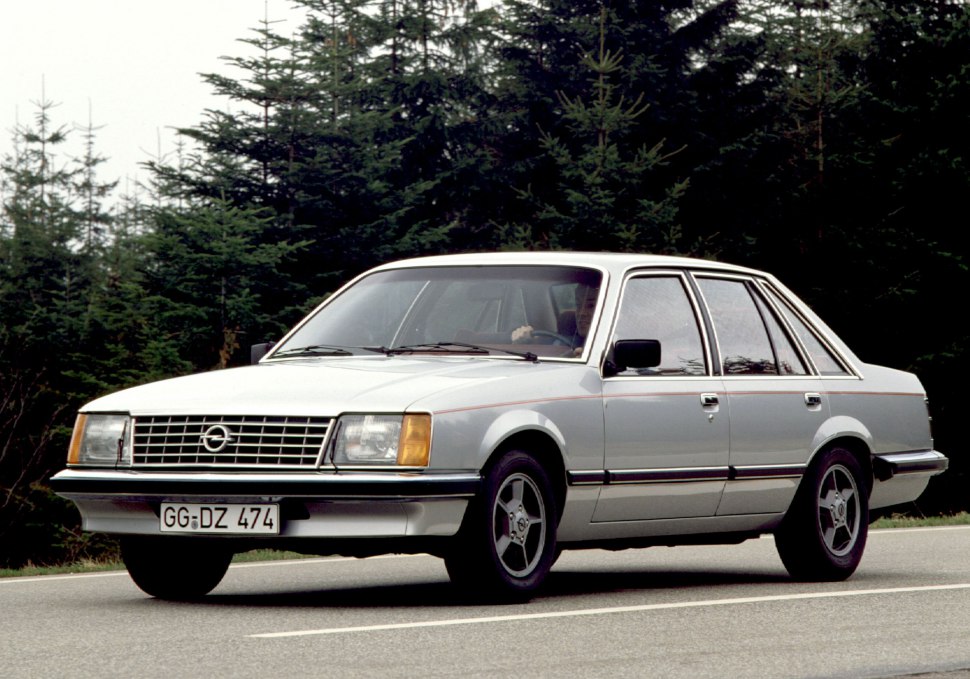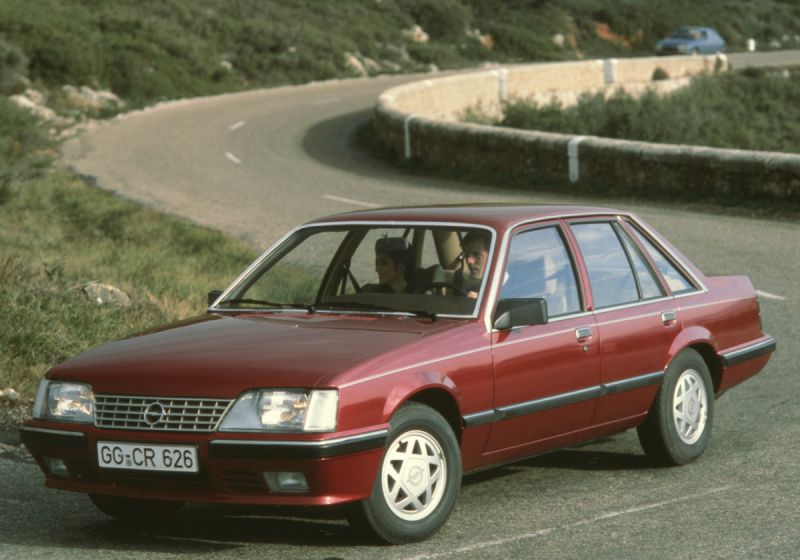
The Opel Senator A (facelift 1982): A European Executive Sedan
The Opel Senator A (facelift 1982) represents a significant chapter in the history of European executive automobiles. Produced by the German automaker Opel, a long-standing subsidiary of General Motors, the Senator was Opel’s flagship model, positioned to compete in the demanding luxury and executive car segment primarily across Europe. While not officially sold in the United States, the Senator embodied the engineering prowess and design sensibilities that were characteristic of German automotive manufacturing in the late 1970s and early 1980s. The “A” generation, launched in 1978, shared its platform with the Opel Rekord E and the sporty Monza coupe, establishing a robust and capable foundation for Opel’s top-tier offering. The 1982 facelift introduced subtle but impactful refinements, ensuring the Senator remained competitive and visually fresh in a rapidly evolving market, with the 2.5 E variant standing out for its balanced blend of performance and economy.
At its core, the Opel Senator was conceived as a comfortable, spacious, and well-appointed sedan designed for long-distance cruising and executive transport. Its rear-wheel-drive architecture, a common setup for premium cars of the era, promised predictable handling and a refined driving experience. The 1982 facelift, which is the focus here, brought updated styling cues, improved aerodynamics, and often, enhanced interior appointments, solidifying its position as a serious contender against established rivals. The 2.5 E model, with its inline-six engine, was a popular choice, offering a smooth power delivery that was highly valued by its target audience.
Engine and Performance: The Heart of the Opel Senator A (facelift 1982)
Powering the Opel Senator A (facelift 1982) 2.5 E was a robust 2.5-liter (2490 cm3 or 151.95 cu. in.) inline-six gasoline engine, designated with the model code H25E. This naturally aspirated unit was a hallmark of Opel’s engineering at the time, renowned for its inherent balance and smooth operation. Featuring a Single Overhead Camshaft (SOHC) valvetrain with two valves per cylinder, the engine was designed for durability and consistent performance rather than outright aggression. Its multi-port manifold injection system was a relatively advanced feature for the early 1980s, contributing to more precise fuel delivery compared to older carbureted designs, enhancing both efficiency and responsiveness.
The 2.5 E engine produced a respectable 136 horsepower (Hp) at 5600 revolutions per minute (rpm), paired with a healthy 136.45 lb.-ft. (185 Nm) of torque peaking at 4600 rpm. This output was channeled to the rear wheels via a 4-speed manual transmission, a common setup for European cars in this segment during that period. Performance figures for the 1370 kg (3020.33 lbs) sedan were competitive for its class: acceleration from 0 to 60 mph was achieved in a brisk 10.9 seconds, while the top speed reached 118.06 mph (190 km/h). These figures underscored the Senator’s capability as a competent cruiser, capable of maintaining high speeds on Germany’s autobahns and other European motorways with ease.
Fuel economy, while not the primary focus for an executive sedan of this era, was rated at 20.6 US mpg (11.4 l/100 km) combined, which was a reasonable figure for a large, six-cylinder car in the early 1980s. The engine’s compression ratio of 9.2:1 allowed it to run on regular unleaded gasoline, making it a practical choice for everyday use. With a 19.81 US gallon (75 l) fuel tank, the Senator offered a substantial cruising range, further cementing its credentials as a long-distance tourer.
Design and Features: Executive Comfort and Timeless Aesthetics
The Opel Senator A (facelift 1982) retained the classic three-box sedan silhouette that was popular for executive cars of its generation. Its design was characterized by clean lines, a relatively upright stance, and a dignified presence. The facelift introduced subtle changes, such as revised grilles, headlamps, and taillights, which modernized its appearance without radically departing from the original design ethos. The overall length of 190.08 inches (4828 mm) and a width of 68.03 inches (1728 mm) provided a commanding road presence, while the 105.63-inch (2683 mm) wheelbase ensured a spacious cabin.
Inside, the Senator A was designed to offer a comfortable and functional environment for five occupants. The four-door body style provided easy access to both front and rear seating. While specific interior features varied by market and trim, common amenities for executive cars of this vintage would include comfortable cloth or optional leather upholstery, power steering, and a comprehensive instrument cluster. For its era, the Senator boasted excellent trunk space, offering a generous 25.25 cu. ft. (715 l), making it highly practical for executive travel or family vacations.
In terms of chassis and safety, the Senator A featured a conventional setup for its time. Ventilated disc brakes at the front and disc brakes at the rear provided ample stopping power for a vehicle of its size and performance. The rear-wheel-drive architecture, combined with an independent front suspension and a robust rear axle, contributed to a comfortable ride and stable handling characteristics. While modern electronic safety aids like ABS were not standard on many cars of this period, the Senator’s solid construction and predictable dynamics offered a good level of passive safety for its time.
Technical Specifications: Opel Senator A (facelift 1982) 2.5 E (136 Hp)
| Category | Specification | Value |
|---|---|---|
| General Information | Brand | Opel |
| Model | Senator A (facelift 1982) | |
| Type (Engine) | 2.5 E (136 Hp) | |
| Start of Production | 1981 | |
| End of Production | 1982 | |
| Powertrain Architecture | Internal Combustion Engine | |
| Body Type | Sedan | |
| Seats | 5 | |
| Doors | 4 | |
| Performance Specs | Fuel Consumption (Combined) | 20.6 US mpg (11.4 l/100 km) |
| Fuel Type | Petrol (Gasoline) | |
| Acceleration 0 – 60 mph | 10.9 sec | |
| Maximum Speed | 118.06 mph (190 km/h) | |
| Weight-to-Power Ratio | 10.1 kg/Hp, 99.3 Hp/tonne | |
| Weight-to-Torque Ratio | 7.4 kg/Nm, 135 Nm/tonne | |
| Engine Specs | Power | 136 Hp @ 5600 rpm |
| Torque | 136.45 lb.-ft. (185 Nm) @ 4600 rpm | |
| Engine Model/Code | H25E | |
| Engine Displacement | 2.5 liters (2490 cm3 / 151.95 cu. in.) | |
| Number of Cylinders | 6 | |
| Engine Configuration | Inline | |
| Cylinder Bore | 3.43 in. (87 mm) | |
| Piston Stroke | 2.75 in. (69.8 mm) | |
| Compression Ratio | 9.2:1 | |
| Number of Valves per Cylinder | 2 | |
| Fuel Injection System | Multi-port manifold injection | |
| Engine Aspiration | Naturally aspirated engine | |
| Valvetrain | SOHC | |
| Engine Oil Capacity | 5.81 US qt (5.5 l) | |
| Coolant Capacity | 10.57 US qt (10 l) | |
| Dimensions & Weights | Kerb Weight | 3020.33 lbs (1370 kg) |
| Max. Weight | 4188.78 lbs (1900 kg) | |
| Max Load | 1168.45 lbs (530 kg) | |
| Trunk (Boot) Space – Maximum | 25.25 cu. ft. (715 l) | |
| Fuel Tank Capacity | 19.81 US gal (75 l) | |
| Length | 190.08 in. (4828 mm) | |
| Width | 68.03 in. (1728 mm) | |
| Height | 55.71 in. (1415 mm) | |
| Wheelbase | 105.63 in. (2683 mm) | |
| Front Track | 56.81 in. (1443 mm) | |
| Rear Track | 57.95 in. (1472 mm) | |
| Ride Height (Ground Clearance) | 5.51 in. (140 mm) | |
| Drag Coefficient (Cd) | 0.44 | |
| Minimum Turning Circle (Diameter) | 35.43 ft. (10.8 m) | |
| Drivetrain, Brakes & Suspension | Drivetrain Architecture | Internal Combustion engine drives the rear wheels. |
| Drive Wheel | Rear-wheel drive | |
| Number of Gears and Type of Gearbox | 4 gears, manual transmission | |
| Front Brakes | Ventilated discs | |
| Rear Brakes | Disc |
Legacy and Market Impact: The Opel Senator’s Place in European Automotive History
The Opel Senator A (facelift 1982) carved out a significant niche in the highly competitive European executive car market. As Opel’s flagship, it stood as a testament to the brand’s ability to produce sophisticated and comfortable vehicles. While it often lacked the overt prestige of its more expensive German rivals like the BMW 5-Series or the Mercedes-Benz E-Class of the same era, the Senator offered a compelling package of value, robust engineering, and understated elegance. Its primary competitors also included the Ford Granada and, to some extent, the Volvo 200 series, all vying for the attention of business executives and affluent families seeking a reliable and comfortable long-distance cruiser.
Opel, under General Motors’ umbrella, aimed to provide a more accessible entry into the executive segment without compromising on essential qualities. The Senator delivered on this promise with its smooth inline-six engines, comfortable ride, and spacious interior. Its reputation was built on reliability and a straightforward, no-nonsense approach to luxury, appealing to buyers who prioritized substance over flash. The 1982 facelift helped to maintain its contemporary appeal during its relatively short production run, bridging the gap to the next generation.
In retrospect, the Opel Senator A, particularly the refined facelift model, is remembered as a capable and dignified executive sedan that played a crucial role in Opel’s lineup. It demonstrated that Opel could compete effectively at the higher end of the market, offering a credible alternative to more premium brands. While its direct impact on the American market was negligible due to its non-import status, its engineering and design philosophies were indicative of the broader trends in European automotive development, influencing subsequent models both within Opel and across the General Motors global portfolio. Today, well-preserved examples of the Opel Senator A are appreciated by enthusiasts for their classic German engineering, comfortable ride, and a touch of early 1980s executive motoring charm.