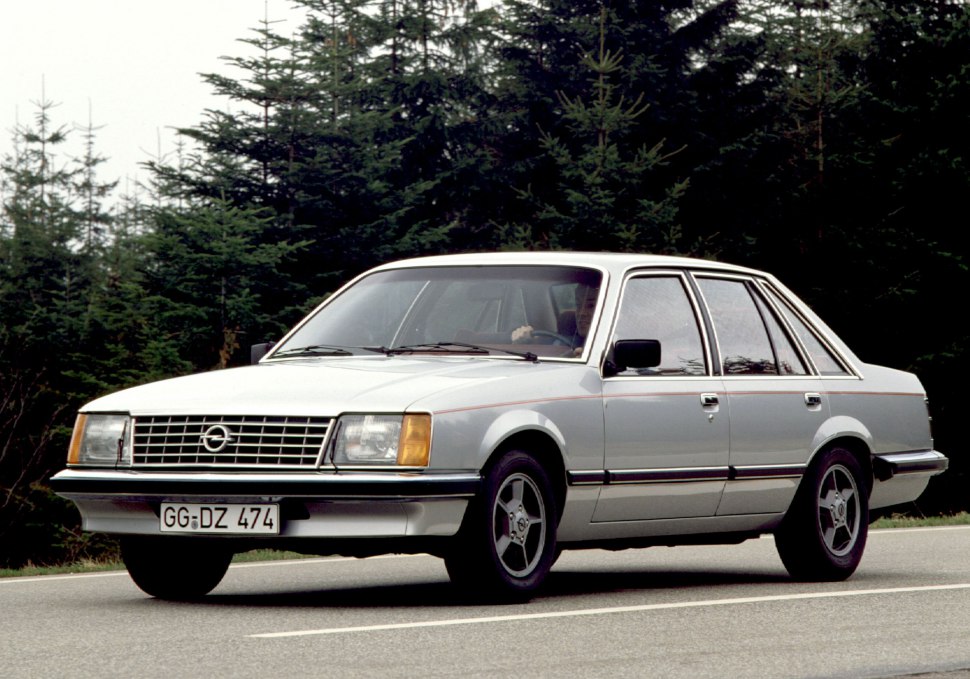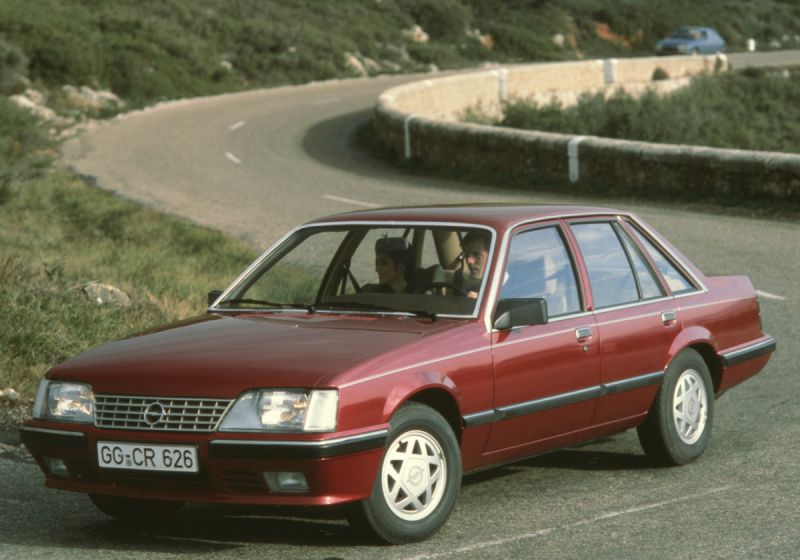
The Opel Senator A (facelift 1982) 2.5 E (136 Hp) Automatic: A European Executive Classic
The Opel Senator, a prominent nameplate in the European executive car segment, represented Opel’s flagship offering designed to compete with established luxury marques. The Opel Senator A, introduced in 1978, shared its platform with the Opel Rekord E and the sporty Monza coupe, positioning it as a sophisticated, comfortable, and well-equipped sedan. The model under review, the Opel Senator A (facelift 1982) 2.5 E (136 Hp) Automatic, represents a key evolutionary step for the first generation, benefiting from updates that refined its aesthetics and improved its mechanical package for the early 1980s market. Produced for a brief period between 1981 and 1982, this particular variant highlights Opel’s commitment to delivering a robust, six-cylinder powered, rear-wheel-drive sedan that offered a compelling blend of performance, space, and comfort for discerning European buyers. While never officially sold in the United States, the Senator played a crucial role in Opel’s strategy to capture a share of the continent’s lucrative executive car market, building on a reputation for engineering solidity and value.
Powertrain and Performance of the Opel Senator A (facelift 1982) 2.5 E (136 Hp) Automatic
At the heart of the Opel Senator A (facelift 1982) 2.5 E (136 Hp) Automatic lies a naturally aspirated inline-six gasoline engine, designated by the code H25E. This powerplant, with an engine displacement of 2490 cubic centimeters (151.95 cubic inches), was a testament to Opel’s traditional engineering prowess. The inline-six configuration was a hallmark of smooth operation and balanced power delivery, qualities highly valued in executive sedans of the era. Featuring a Single Overhead Camshaft (SOHC) valvetrain with two valves per cylinder, the engine was designed for reliable performance and ease of maintenance.
Fuel delivery was managed by a multi-port manifold injection system, a significant advancement over carburetion, offering improved fuel efficiency, better throttle response, and reduced emissions. This setup allowed the 2.5 E engine to produce a respectable 136 horsepower at 5600 rpm. Torque output peaked at 185 Nm (136.45 lb.-ft.) at 4600 rpm, providing ample pulling power for a vehicle of its size and class.
Power was transmitted to the rear wheels via a 3-speed automatic transmission. While modern automatics boast many more gears, a 3-speed unit was common for executive cars in the early 1980s, prioritizing smooth shifts and relaxed cruising over outright acceleration. This configuration resulted in a 0-60 mph acceleration time of 12.4 seconds, with a top speed of 114.95 mph (185 km/h). These figures were competitive for a large automatic sedan of its time, designed more for comfortable long-distance travel than outright sportiness. Fuel economy was rated at approximately 19.6 US mpg (12 l/100 km) in a combined cycle, which was typical for a six-cylinder engine of this displacement and vintage. The engine oil capacity stood at 5.5 liters (5.81 US quarts), and the cooling system required 10 liters (10.57 US quarts) of coolant.
Design, Features, and Dimensions
The Opel Senator A adopted a classic four-door sedan body style, exuding an understated elegance characteristic of European executive cars from the late 1970s and early 1980s. The facelift in 1982 brought subtle refinements to the exterior, typically involving updated grille designs, revised headlamp or taillight treatments, and minor trim changes to keep the model fresh. These updates aimed to modernize the Senator’s appearance while retaining its dignified presence.
With an overall length of 190.08 inches (4828 mm), a width of 68.03 inches (1728 mm), and a height of 55.71 inches (1415 mm), the Senator A was a substantial vehicle, offering generous interior space for five occupants. The 105.63-inch (2683 mm) wheelbase contributed to a comfortable ride and stable handling characteristics. The trunk capacity was particularly impressive for the era, offering a maximum of 715 liters (25.25 cubic feet) of cargo space, making it highly practical for long journeys and family use. The fuel tank capacity of 19.81 US gallons (75 liters) ensured a decent cruising range.
The vehicle’s kerb weight was 3020.33 lbs. (1370 kg), with a maximum permissible weight of 4188.78 lbs. (1900 kg), allowing for a substantial payload. The drag coefficient (Cd) was 0.44, which, while not as aerodynamic as modern vehicles, was a reasonable figure for a large sedan in the early 1980s. The Senator A featured ventilated disc brakes at the front and disc brakes at the rear, providing adequate stopping power for its performance capabilities. The rear-wheel-drive architecture, combined with a turning circle of 35.43 feet (10.8 meters), provided a balanced driving experience and good maneuverability for a car of its size.
Technical Specifications: Opel Senator A (facelift 1982) 2.5 E (136 Hp) Automatic
| Category | Specification | US Equivalent (where applicable) |
|---|---|---|
| General Information | ||
| Brand | Opel | |
| Model | Senator | |
| Generation | Senator A (facelift 1982) | |
| Type (Engine) | 2.5 E (136 Hp) Automatic | |
| Start of production | 1981 year | |
| End of production | 1982 year | |
| Powertrain Architecture | Internal Combustion engine | |
| Body type | Sedan | |
| Seats | 5 | |
| Doors | 4 | |
| Performance Specs | ||
| Fuel consumption (combined) | 12 l/100 km | 19.6 US mpg |
| Fuel Type | Petrol (Gasoline) | |
| Acceleration 0 – 100 km/h | 13 sec | |
| Acceleration 0 – 62 mph | 13 sec | |
| Acceleration 0 – 60 mph | 12.4 sec | |
| Maximum speed | 185 km/h | 114.95 mph |
| Weight-to-power ratio | 10.1 kg/Hp | 99.3 Hp/tonne |
| Weight-to-torque ratio | 7.4 kg/Nm | 135 Nm/tonne |
| Engine Specs | ||
| Power | 136 Hp @ 5600 rpm | |
| Power per liter | 54.6 Hp/l | |
| Torque | 185 Nm @ 4600 rpm | 136.45 lb.-ft. @ 4600 rpm |
| Engine Model/Code | H25E | |
| Engine displacement | 2490 cm3 | 151.95 cu. in. |
| Number of cylinders | 6 | |
| Engine configuration | Inline | |
| Cylinder Bore | 87 mm | 3.43 in. |
| Piston Stroke | 69.8 mm | 2.75 in. |
| Compression ratio | 9.2:1 | |
| Number of valves per cylinder | 2 | |
| Fuel injection system | Multi-port manifold injection | |
| Engine aspiration | Naturally aspirated engine | |
| Valvetrain | SOHC | |
| Engine oil capacity | 5.5 l | 5.81 US qt |
| Coolant | 10 l | 10.57 US qt |
| Space, Volume and Weights | ||
| Kerb Weight | 1370 kg | 3020.33 lbs. |
| Max. weight | 1900 kg | 4188.78 lbs. |
| Max load | 530 kg | 1168.45 lbs. |
| Trunk (boot) space – maximum | 715 l | 25.25 cu. ft. |
| Fuel tank capacity | 75 l | 19.81 US gal |
| Dimensions | ||
| Length | 4828 mm | 190.08 in. |
| Width | 1728 mm | 68.03 in. |
| Height | 1415 mm | 55.71 in. |
| Wheelbase | 2683 mm | 105.63 in. |
| Front track | 1443 mm | 56.81 in. |
| Rear (Back) track | 1472 mm | 57.95 in. |
| Ride height (ground clearance) | 140 mm | 5.51 in. |
| Drag coefficient (Cd) | 0.44 | |
| Minimum turning circle | 10.8 m | 35.43 ft. |
| Drivetrain, Brakes and Suspension Specs | ||
| Drivetrain Architecture | The Internal combustion engine (ICE) drives the rear wheels of the vehicle. | |
| Drive wheel | Rear wheel drive | |
| Number of gears and type of gearbox | 3 gears, automatic transmission | |
| Front brakes | Ventilated discs | |
| Rear brakes | Disc | |
Legacy and Market Impact in Europe
The Opel Senator A, especially in its facelifted 1982 guise with the 2.5 E automatic powertrain, occupied an important niche in the European automotive landscape. It was Opel’s direct competitor to premium offerings from other German manufacturers, such as the Ford Granada, the Mercedes-Benz W123 E-Class, and the BMW 5 Series (E28), as well as the Audi 100 (C2/C3). While it might not have always matched the perceived prestige of its more expensive rivals from Mercedes-Benz or BMW, the Senator carved out its own reputation for offering robust engineering, a comfortable ride, and excellent value.
Opel’s strategy with the Senator was to provide a large, capable, and well-appointed sedan that was often more affordable to purchase and maintain than its direct competitors. The inline-six engine, a staple of Opel’s larger vehicles, was known for its durability and smooth character, making the Senator a popular choice for business executives, government fleets, and families desiring a spacious and refined vehicle. The automatic transmission further enhanced its appeal as a comfortable cruiser for autobahn travel and urban commuting alike.
The Senator A’s significance lies in its role as a workhorse executive car. It provided a reliable and comfortable platform, capable of handling long distances with ease. Its generous interior and trunk space made it practical, while its rear-wheel-drive layout offered predictable handling. The facelift models, like the 1982 2.5 E, helped keep the design contemporary during its production run, ensuring it remained competitive against evolving rivals. While the Senator line eventually concluded with the Omega-based Senator B in 1993, the A-generation, particularly its six-cylinder variants, is remembered as a sturdy, comfortable, and often overlooked classic that represented Opel’s ambition in the executive segment. Today, these models are appreciated by enthusiasts for their classic lines, robust mechanics, and a driving experience that harks back to an era of straightforward, well-engineered European sedans.