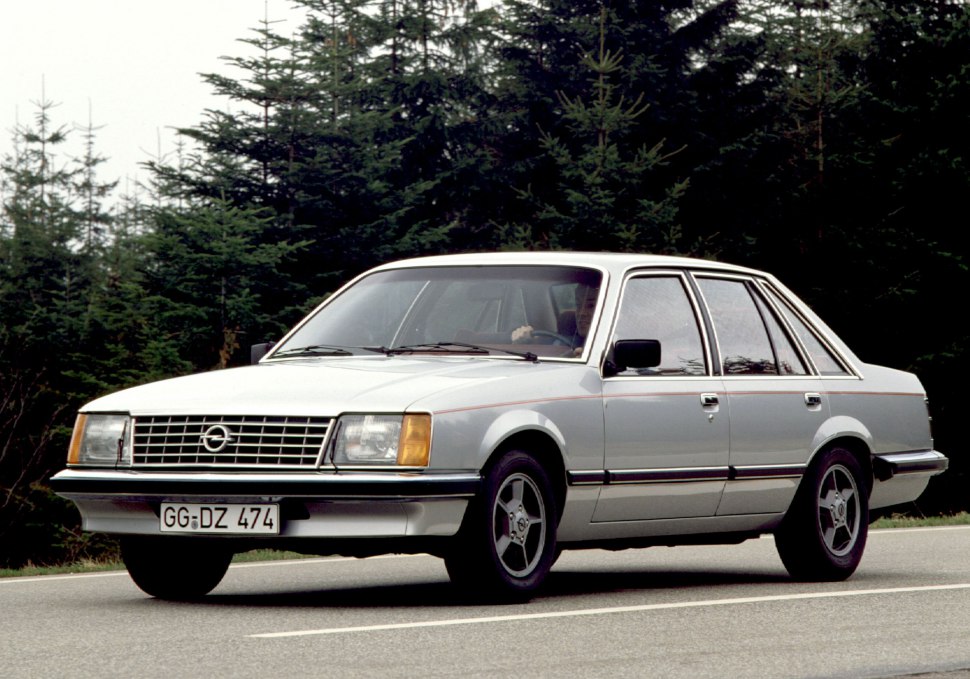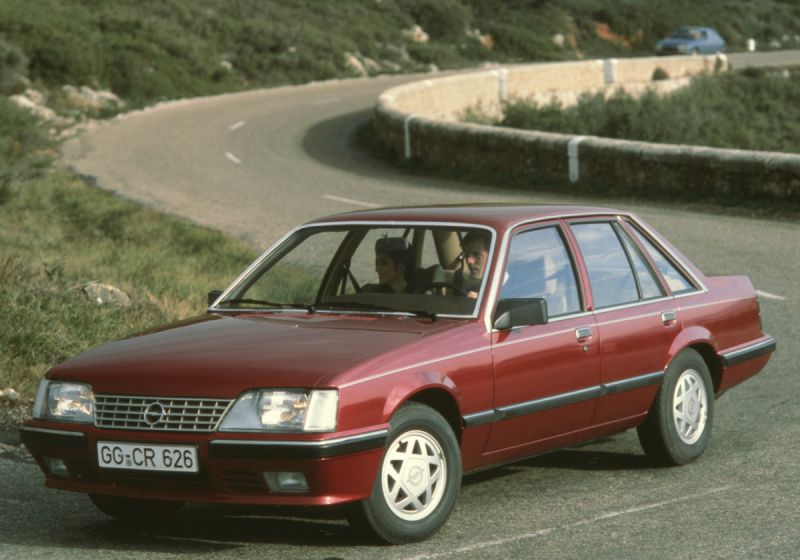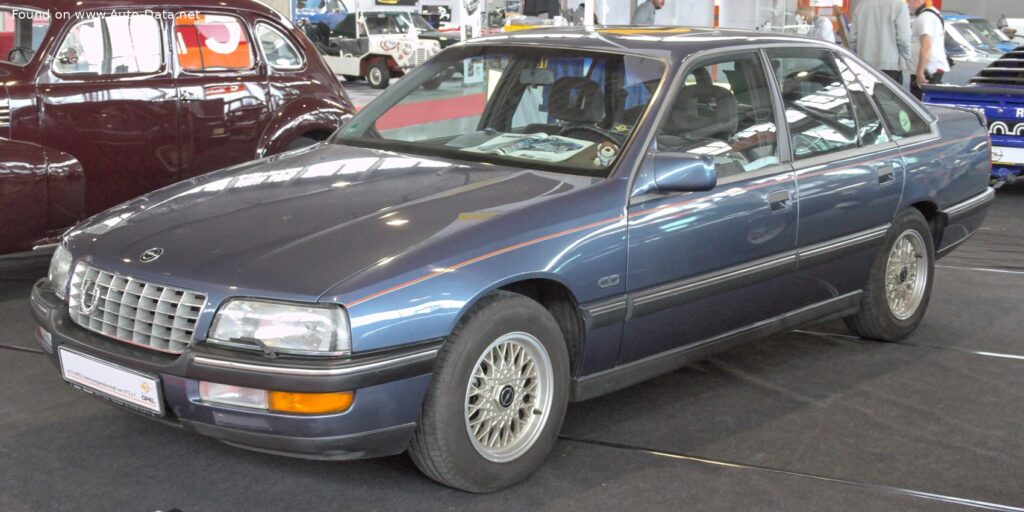
The Opel Senator B 2.3 TD (90 Hp) represents a significant chapter in Opel’s history, serving as the brand’s flagship executive sedan during the late 1980s. Produced from 1987 to 1988, this particular variant, equipped with a 2.3-liter turbo-diesel engine, was a key offering for European buyers seeking a blend of comfort, space, and fuel efficiency in a full-size package. While never officially sold in the United States, the Opel Senator B was a prominent competitor in the European executive segment, battling rivals from Ford, BMW, and Mercedes-Benz. It was designed to provide a more accessible yet sophisticated option for business executives and discerning families, embodying Opel’s engineering prowess and design language of the era. The Senator B was an evolution of its predecessor, the Senator A, introducing a more aerodynamic design and refined mechanicals, positioning it as a comfortable and capable long-distance cruiser.
The Opel Senator B 2.3 TD: Engineering and Performance
At the heart of the Opel Senator B 2.3 TD lies its robust 2.3-liter (2,260 cm³ or 137.91 cubic inches) inline-four turbo-diesel engine. This powerplant, while not designed for blistering performance, was engineered for durability and economical operation, which were crucial attributes for executive cars in the European market during the late 1980s. It produced a respectable 90 horsepower at 4200 rpm and a healthy 140.14 lb.-ft. (190 Nm) of torque at a low 2200 rpm. The engine featured a Single Overhead Camshaft (SOHC) valvetrain and utilized a precombustion chamber injection system, a common technology for diesel engines of its time, known for its smoother operation compared to direct injection systems of the future.
Power was delivered to the rear wheels via a five-speed manual transmission, offering drivers a direct and engaging connection to the powertrain. This rear-wheel-drive architecture, shared with the contemporary Opel Omega, provided balanced handling characteristics and a traditional feel favored by many drivers. In terms of performance, the Senator B 2.3 TD was capable of accelerating from 0 to 60 mph in approximately 13.8 seconds, with a top speed of 109.36 mph (176 km/h). While these figures may seem modest by today’s standards, they were competitive for a large, comfortable diesel sedan of its era, emphasizing relaxed cruising rather than outright speed.
Fuel economy was a strong suit for this diesel variant, with a combined consumption rating of 29.4 US mpg (8 liters per 100 km). This efficiency, coupled with a generous 19.81 US gallon (75-liter) fuel tank, afforded the Opel Senator B an impressive cruising range, making it an ideal choice for inter-city travel across Europe. The engine’s low-end torque also contributed to a relaxed driving experience, particularly in urban environments and during highway overtaking maneuvers, despite the car’s considerable curb weight of 3042.38 lbs (1380 kg).
Design and Features of the Opel Senator B
The Opel Senator B, launched in 1987, represented a significant styling departure from its more angular predecessor. Its design embraced the aerodynamic trends of the late 1980s, featuring smoother lines, a more raked windshield, and flush-fitting headlights, which contributed to a lower drag coefficient and improved fuel efficiency. As a four-door, five-seat sedan, the Senator B was designed with passenger comfort and executive presence in mind. Its substantial dimensions, measuring 190.75 inches in length, 68.62 inches in width, and 57.09 inches in height, ensured a commanding road presence and a spacious interior. The generous 107.48-inch wheelbase further contributed to a smooth ride and ample legroom for all occupants.
Inside, the Senator B offered a cabin typical of an executive car of its time, focusing on ergonomics, quality materials, and a sense of refinement. While specific luxury features varied by trim level, the emphasis was on comfortable seating for five adults and a well-appointed dashboard. The trunk space was impressive, offering a minimum of 18.72 cubic feet (530 liters), which could be expanded to a cavernous 30.72 cubic feet (870 liters) with the rear seats folded down, making it highly practical for long journeys or business trips.
Safety features for the era included a robust body structure and four-wheel disc brakes, with ventilated discs at the front for improved stopping power and fade resistance. The standard tire size of 205/65 R15 on 15-inch wheels provided a good balance of grip, comfort, and durability. The car’s suspension system, likely featuring independent suspension at both ends, was tuned for a comfortable ride, soaking up road imperfections while maintaining stable handling at higher speeds. The minimum turning circle of 35.93 feet (10.95 meters) was respectable for a car of its size, aiding maneuverability in tighter urban spaces.
Technical Specifications
| Opel Senator B 2.3 TD (90 Hp) – Full Specifications | |
|---|---|
| General Information | |
| Brand | Opel |
| Model | Senator |
| Generation | Senator B |
| Type (Engine) | 2.3 TD (90 Hp) |
| Start of production | 1987 year |
| End of production | 1988 year |
| Powertrain Architecture | Internal Combustion engine |
| Body type | Sedan |
| Seats | 5 |
| Doors | 4 |
| Performance Specs | |
| Fuel consumption (economy) – combined | 29.4 US mpg (8 l/100 km) |
| Fuel Type | Diesel |
| Acceleration 0 – 60 mph | 13.8 sec |
| Acceleration 0 – 62 mph (0 – 100 km/h) | 14.5 sec |
| Maximum speed | 109.36 mph (176 km/h) |
| Weight-to-power ratio | 15.3 kg/Hp, 65.2 Hp/tonne |
| Weight-to-torque ratio | 7.3 kg/Nm, 137.7 Nm/tonne |
| Engine Specs | |
| Power | 90 Hp @ 4200 rpm |
| Power per liter | 39.8 Hp/l |
| Torque | 140.14 lb.-ft. @ 2200 rpm (190 Nm) |
| Maximum engine speed | 4600 rpm |
| Engine displacement | 2.3 liters (2260 cm³, 137.91 cu. in.) |
| Number of cylinders | 4 |
| Engine configuration | Inline |
| Cylinder Bore | 3.62 in. (92 mm) |
| Piston Stroke | 3.35 in. (85 mm) |
| Compression ratio | 23:1 |
| Number of valves per cylinder | 2 |
| Fuel injection system | Precombustion chamber injection |
| Engine aspiration | Turbocharger |
| Valvetrain | SOHC |
| Space, Volume and Weights | |
| Kerb Weight | 3042.38 lbs (1380 kg) |
| Trunk (boot) space – minimum | 18.72 cu. ft. (530 l) |
| Trunk (boot) space – maximum | 30.72 cu. ft. (870 l) |
| Fuel tank capacity | 19.81 US gal (75 l) |
| Permitted trailer load with brakes (12%) | 2866.01 lbs (1300 kg) |
| Permitted trailer load without brakes | 1322.77 lbs (600 kg) |
| Dimensions | |
| Length | 190.75 in. (4845 mm) |
| Width | 68.62 in. (1743 mm) |
| Height | 57.09 in. (1450 mm) |
| Wheelbase | 107.48 in. (2730 mm) |
| Front track | 57.09 in. (1450 mm) |
| Rear (Back) track | 57.8 in. (1468 mm) |
| Ride height (ground clearance) | 5.51 in. (140 mm) |
| Minimum turning circle (turning diameter) | 35.93 ft. (10.95 m) |
| Drivetrain, Brakes and Suspension Specs | |
| Drivetrain Architecture | The Internal combustion engine (ICE) drives the rear wheels of the vehicle. |
| Drive wheel | Rear wheel drive |
| Number of gears and type of gearbox | 5 gears, manual transmission |
| Front brakes | Ventilated discs |
| Rear brakes | Disc |
| Tires size | 205/65 R15 |
| Wheel rims size | 15 |
Legacy and Market Impact of the Opel Senator B
The Opel Senator B, particularly in its 2.3 TD guise, carved out a distinct niche in the European executive car market. It was positioned as a reliable, comfortable, and cost-effective alternative to more premium German rivals such as the BMW 5 Series (E34) and Mercedes-Benz E-Class (W124), as well as competitors like the Ford Scorpio and Volvo 760. While it may not have possessed the same brand cachet as its Bavarian counterparts, the Senator B offered a compelling value proposition, especially for fleet operators and business users who prioritized spaciousness, durability, and low running costs.
The 2.3-liter turbo-diesel engine, with its emphasis on fuel efficiency and robust torque, was a popular choice in markets where diesel power was heavily favored for long-distance driving and commercial applications. Its reputation for straightforward mechanics and ease of maintenance further cemented its appeal among pragmatic buyers. The Senator B was often praised for its smooth ride quality, quiet cabin, and stable highway manners, making it an excellent choice for extended journeys across the continent.
Historically, the Opel Senator B represented Opel’s continued ambition to compete in the upper echelons of the automotive market. It showcased the brand’s ability to produce a sophisticated, rear-wheel-drive sedan that could hold its own against established luxury marques, albeit with a more understated approach. Its design, while contemporary for its time, has aged gracefully, and today, well-preserved examples are appreciated by enthusiasts for their classic lines, comfortable interiors, and robust engineering. The Senator B’s legacy is that of a dependable workhorse executive car, a testament to Opel’s engineering philosophy of providing practical luxury and performance that resonated deeply with its target audience in Europe. Its production run was relatively short for this specific diesel variant, only lasting from 1987 to 1988 before engine updates and model revisions occurred, making this particular iteration a noteworthy snapshot of late 1980s European automotive engineering.