
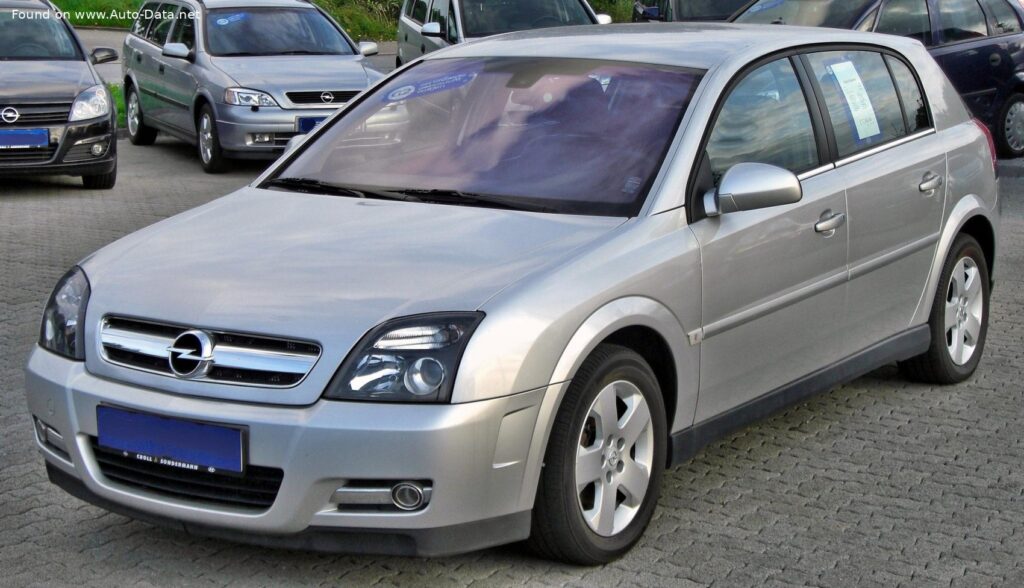
Overview of the Opel Signum 1.9 CDTI (150 Hp)
The Opel Signum, a distinctive and often misunderstood vehicle in the European automotive landscape, represented Opel’s ambitious foray into a niche segment combining executive car comfort with enhanced versatility. Launched in 2003, the Signum was based on the long-wheelbase platform of the Opel Vectra C, specifically sharing its underpinnings with the Vectra Estate (wagon). This particular variant, the Opel Signum 1.9 CDTI (150 Hp), was introduced in May 2004 and produced through 2005, offering a compelling blend of diesel efficiency and robust performance for its time.
Positioned above the traditional D-segment sedan, the Signum aimed to attract buyers seeking more interior space and flexibility than a conventional sedan, without resorting to a full-sized wagon or a bulky multi-purpose vehicle (MPV). It was marketed primarily in Europe, where its unique ‘extended hatchback’ body style and refined diesel powertrains appealed to both private and corporate customers looking for a sophisticated, comfortable, and practical vehicle. While never officially sold in the United States, the Signum showcased Opel’s innovative approach to packaging and interior design, characteristic of European market demands for efficiency and intelligent space utilization.
Opel Signum: Powertrain and Performance
Engine Technology and Output
At the heart of this particular Opel Signum variant was a robust 1.9-liter (1910 cm3) CDTI (Common Rail Diesel Turbo Injection) inline four-cylinder engine, designated by the code Z19DTH. This powerplant was a prime example of the advanced diesel technology prevalent in Europe during the mid-2000s, offering a compelling combination of power, torque, and fuel economy. It featured a DOHC (Double Overhead Camshaft) valvetrain with four valves per cylinder, ensuring efficient breathing and combustion. The engine was further enhanced by a turbocharger and an intercooler, crucial for boosting power output and improving efficiency across the rev range.
The 1.9 CDTI engine generated a healthy 150 horsepower at 4000 rpm, a substantial figure for a diesel engine of its size at the time. More impressively, it delivered a peak torque of 236.02 lb.-ft. (320 Nm) at a low 2000 rpm. This ample torque, available from low engine speeds, provided excellent drivability and strong acceleration, making the Signum feel responsive and capable in various driving conditions, from city traffic to highway cruising. The engine’s high compression ratio of 17.5:1 was typical for a direct-injection diesel, contributing to its efficiency.
Driving Dynamics and Efficiency
Power was delivered to the front wheels via a precise 6-speed manual transmission, offering drivers engaging control over the engine’s output. This setup allowed the Opel Signum 1.9 CDTI (150 Hp) to accelerate from 0 to 60 mph in a respectable 10 seconds, with a top speed of 129.87 mph. These performance figures were competitive within its segment, especially for a vehicle emphasizing comfort and versatility.
Fuel economy was a strong suit for this diesel variant, a critical factor for European buyers. The urban fuel consumption was rated at 7.8 liters per 100 km, equivalent to approximately 30.2 US mpg. On the extra-urban cycle, it achieved an impressive 5.1 liters per 100 km, or about 46.1 US mpg. These figures highlighted the efficiency benefits of modern diesel technology, making the Signum an economical choice for long-distance travel. The 16.11 US gallon fuel tank capacity further contributed to its impressive range.
Design Philosophy and Interior Versatility
Body Style and Dimensions
The Opel Signum adopted a unique five-door hatchback body style, though its extended wheelbase and elongated rear section gave it a profile closer to a luxury wagon or a large liftback. Measuring 182.52 inches in length, 70.79 inches in width, and 57.48 inches in height, the Signum commanded a significant road presence. Its most distinguishing feature was its generous 111.42-inch wheelbase, which was identical to that of the Vectra wagon and considerably longer than the Vectra sedan. This extended wheelbase was central to the Signum’s design philosophy, allowing for an exceptionally spacious and flexible interior.
Despite its substantial size, the Signum maintained a decent aerodynamic profile with a drag coefficient (Cd) of 0.33, contributing to both fuel efficiency and reduced wind noise at higher speeds. The exterior design shared its front fascia with the contemporary Vectra, featuring Opel’s characteristic grille and headlight treatment, but diverged significantly from the B-pillar rearward with its distinctive, sloping roofline and large tailgate.
Interior Features and Flexibility
The Signum was designed as a five-seater, but its real innovation lay in its rear seating arrangement, known as the “FlexSpace” system. Unlike conventional rear benches, the Signum featured two individual rear seats that could slide forward and backward, recline, and even be removed, offering unparalleled flexibility for passenger comfort or cargo capacity. A smaller central jump seat or a multi-functional storage console could be fitted between the two main rear seats. This modularity was a key selling point, allowing owners to prioritize legroom, luggage space, or a combination of both.
With all five seats in place, the trunk (boot) offered a respectable 12.89 cubic feet (365 liters) of cargo space. When the rear seats were folded or removed, this expanded dramatically to an impressive 49.79 cubic feet (1410 liters), rivaling many dedicated wagons and small SUVs. Standard features for the era included a hydraulic power steering system with rack and pinion steering, ventilated disc brakes at the front, and solid discs at the rear, complemented by an Anti-lock Braking System (ABS) for enhanced safety. The suspension system utilized coil springs both front and rear, tuned for a comfortable yet composed ride. The vehicle rode on 215/55 R16 tires mounted on 6.5J x 16-inch wheel rims.
Technical Specifications
| Category | Specification |
|---|---|
| Brand | Opel |
| Model | Signum |
| Generation | Signum |
| Type (Engine) | 1.9 CDTI (150 Hp) |
| Start of Production | May, 2004 |
| End of Production | 2005 |
| Powertrain Architecture | Internal Combustion engine |
| Body Type | Hatchback |
| Seats | 5 |
| Doors | 5 |
| Fuel Consumption (Urban) | 7.8 l/100 km (30.2 US mpg) |
| Fuel Consumption (Extra Urban) | 5.1 l/100 km (46.1 US mpg) |
| Fuel Type | Diesel |
| Acceleration 0 – 60 mph | 10 seconds |
| Maximum Speed | 129.87 mph (209 km/h) |
| Weight-to-Power Ratio | 10.4 kg/Hp |
| Weight-to-Torque Ratio | 4.9 kg/Nm |
| Power | 150 Hp @ 4000 rpm |
| Power per liter | 78.5 Hp/l |
| Torque | 236.02 lb.-ft. (320 Nm) @ 2000 rpm |
| Engine Layout | Front, Transverse |
| Engine Model/Code | Z19DTH |
| Engine Displacement | 1.9 liters (1910 cm3 / 116.56 cu. in.) |
| Number of Cylinders | 4 |
| Engine Configuration | Inline |
| Cylinder Bore | 3.23 in. (82 mm) |
| Piston Stroke | 3.56 in. (90.4 mm) |
| Compression Ratio | 17.5:1 |
| Number of Valves per Cylinder | 4 |
| Fuel Injection System | Diesel Commonrail |
| Engine Aspiration | Turbocharger, Intercooler |
| Valvetrain | DOHC |
| Engine Oil Capacity | 4.54 US qt (4.3 l) |
| Coolant Capacity | 7.4 US qt (7 l) |
| Kerb Weight | 3450.23 lbs. (1565 kg) |
| Max. Weight | 4695.85 lbs. (2130 kg) |
| Max Load | 1245.61 lbs. (565 kg) |
| Trunk (Boot) Space – Minimum | 12.89 cu. ft. (365 l) |
| Trunk (Boot) Space – Maximum | 49.79 cu. ft. (1410 l) |
| Fuel Tank Capacity | 16.11 US gal (61 l) |
| Length | 182.52 in. (4636 mm) |
| Width | 70.79 in. (1798 mm) |
| Height | 57.48 in. (1460 mm) |
| Wheelbase | 111.42 in. (2830 mm) |
| Front Track | 60 in. (1524 mm) |
| Rear Track | 60.04 in. (1525 mm) |
| Drag Coefficient (Cd) | 0.33 |
| Drivetrain Architecture | Front-wheel drive, Internal Combustion engine |
| Drive Wheel | Front wheel drive |
| Number of Gears and Type of Gearbox | 6 gears, manual transmission |
| Front Suspension | Coil spring |
| Rear Suspension | Coil spring |
| Front Brakes | Ventilated discs |
| Rear Brakes | Disc |
| Assisting Systems | ABS (Anti-lock braking system) |
| Steering Type | Steering rack and pinion |
| Power Steering | Hydraulic Steering |
| Tires Size | 215/55 R16 |
| Wheel Rims Size | 6.5J x 16 |
Legacy and Market Impact of the Opel Signum
The Opel Signum was a brave and innovative attempt by Opel to carve out a new niche in the competitive European D-segment. Its primary objective was to offer a more prestigious, comfortable, and versatile alternative to traditional sedans, appealing to buyers who valued interior space and flexibility without the perceived utilitarian image of a conventional wagon or the larger footprint of an SUV. In its primary market, Europe, the Signum faced indirect competition from a wide array of vehicles. While it didn’t have many direct rivals in its specific ‘executive hatchback’ sub-segment, it competed for sales with traditional D-segment sedans and wagons like the Ford Mondeo, Volkswagen Passat, and Renault Laguna, as well as more premium offerings from brands like Audi and BMW. Its unique positioning also put it up against some compact MPVs in terms of interior versatility.
Despite its innovative FlexSpace seating system and comfortable, well-appointed interior, the Signum never achieved the sales success Opel had hoped for. Its distinctive styling, which many found neither a clear sedan nor a clear wagon, perhaps contributed to its limited appeal. European consumers, while appreciating versatility, were often more accustomed to distinct body styles. The Signum’s relatively short production run, from 2003 to 2008, with this 1.9 CDTI (150 Hp) variant specifically produced from 2004 to 2005, reflects its challenging market reception.
However, the Opel Signum’s legacy is not one of failure, but rather of forward-thinking design and a willingness to innovate. It demonstrated Opel’s engineering prowess in creating a comfortable and efficient long-distance cruiser, particularly with its refined CDTI diesel engines. The Signum’s focus on rear passenger comfort and adaptable cargo space was ahead of its time and influenced later Opel models, contributing to the brand’s reputation for practical and clever interior solutions. While it remains a niche vehicle, the Signum is remembered as an interesting chapter in Opel’s history, representing an earnest effort to cater to evolving consumer demands for versatility and premium comfort in a unique package. For those in Europe seeking an affordable, spacious, and efficient used car with a touch of individuality, the Opel Signum 1.9 CDTI (150 Hp) can still represent a compelling and comfortable choice.
