
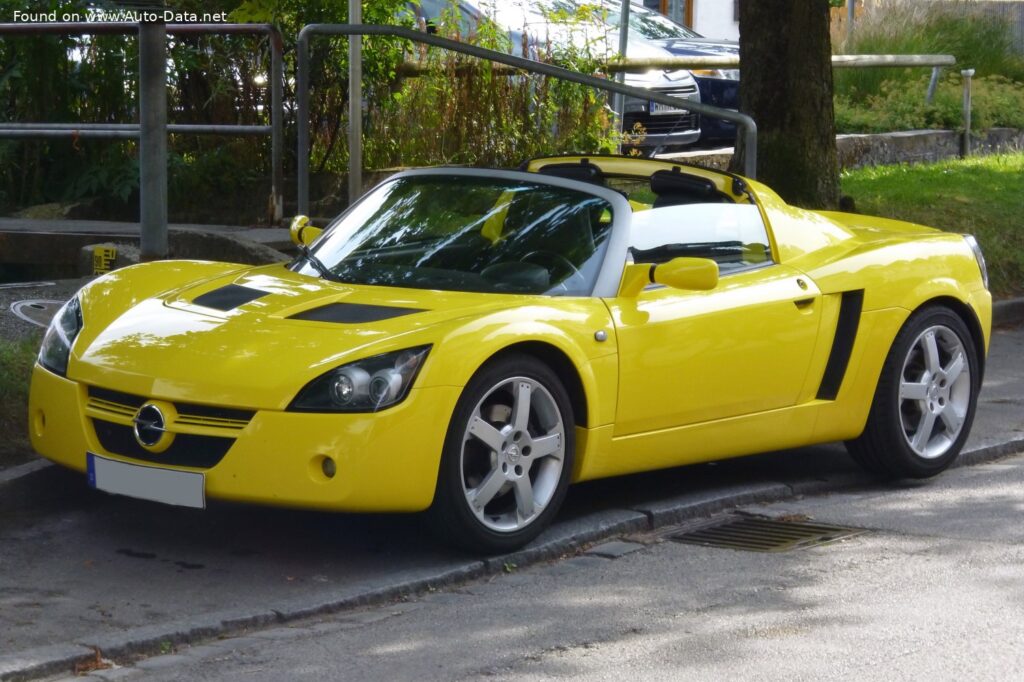
The Opel Speedster: A European Icon of Purity and Performance
The Opel Speedster 2.2 16V (147 Hp) Ecotec represents a unique and highly specialized chapter in the history of the German automaker Opel. Produced from March 2001 to February 2004, this two-seat roadster was not merely a sports car; it was a testament to the philosophy of lightweight design and unadulterated driving pleasure, a concept more commonly associated with niche manufacturers. Marketed primarily in Europe (and as the Vauxhall VX220 in the United Kingdom), the Speedster was Opel’s ambitious foray into the realm of pure performance, a segment where it sought to challenge established marques with a distinctly minimalist approach. Unlike many of Opel’s more mainstream offerings, the Speedster was a bespoke vehicle, developed in collaboration with Lotus Cars, sharing its critically acclaimed aluminum chassis with the second-generation Lotus Elise. This partnership imbued the Speedster with an exceptional power-to-weight ratio and handling dynamics that set it apart from virtually any other mass-produced vehicle of its era, embodying a raw, visceral driving experience that resonated deeply with enthusiasts.
Engine & Performance: The Heart of the Opel Speedster 2.2 16V (147 Hp) Ecotec
At the core of the Opel Speedster 2.2 16V (147 Hp) Ecotec lies a robust and well-proven powertrain: Opel’s Z22SE Ecotec engine. This naturally aspirated, 2.2-liter (2198 cm³ or 134.13 cu. in.) inline-four cylinder engine was a familiar unit across various Opel and General Motors platforms, but its application in the featherlight Speedster transformed its character entirely. The engine featured a DOHC (Double Overhead Camshaft) valvetrain with 16 valves (four per cylinder) and utilized a multi-port manifold injection system for precise fuel delivery. With a compression ratio of 10:1, it produced a respectable 147 horsepower at 5800 rpm, translating to a specific output of 66.9 horsepower per liter. Torque stood at 149.73 lb.-ft. (203 Nm) delivered at 4000 rpm, providing a broad and accessible powerband essential for spirited driving.
Mated exclusively to a crisp-shifting 5-speed manual transmission, the engine’s power was channeled directly to the rear wheels, reinforcing the Speedster’s purist credentials. This rear-wheel-drive architecture, combined with the vehicle’s astonishingly low curb weight of just 1918.02 lbs (870 kg), resulted in truly exhilarating performance figures. The Speedster could rocket from 0 to 60 mph in a mere 5.6 seconds (0-100 km/h in 5.9 seconds), a time that rivaled much more powerful and expensive sports cars of its day. Its top speed was electronically limited to 134.84 mph (217 km/h), a figure more than adequate for its intended purpose as a nimble roadster. The power-to-weight ratio was an impressive 169 horsepower per ton (5.9 kg/Hp), underscoring its performance capabilities. Despite its sporting intent, the Ecotec engine also delivered reasonable fuel economy for a performance car, with a combined rating of 27.7 US mpg (8.5 l/100 km), and CO2 emissions of 205 g/km. The engine’s layout was transverse and mounted in the rear, contributing to the car’s excellent weight distribution and handling balance.
Design & Features: Form Follows Function
The design of the Opel Speedster is a direct reflection of its performance-first philosophy. As a two-door, two-seat roadster, its primary goal was to provide an engaging driving experience, shedding all unnecessary weight and complexity. The Speedster’s distinctive bodywork, crafted from lightweight composite materials, was draped over the renowned bonded aluminum chassis, a hallmark of Lotus engineering. This construction method ensured exceptional torsional rigidity while keeping weight to an absolute minimum, a critical factor in its agile handling.
Measuring a compact 149.06 inches (3786 mm) in length, 67.32 inches (1710 mm) in width (74.17 inches or 1884 mm including mirrors), and a low-slung 43.98 inches (1117 mm) in height, the Speedster possessed an aggressive, purposeful stance. Its short wheelbase of 91.73 inches (2330 mm) further contributed to its nimble character. The minimalist interior mirrored the exterior’s focus on function, with essential controls and instrumentation prioritized over luxury appointments. Creature comforts were sparse, emphasizing the connection between driver and machine.
In terms of chassis and safety features, the Speedster was equipped for its performance capabilities. It featured coil spring suspension at both the front and rear, providing a firm yet communicative ride. Braking duties were handled by ventilated discs on all four corners, ensuring strong and consistent stopping power, complemented by an Anti-lock Braking System (ABS) for enhanced control under hard braking. Steering was a direct rack and pinion system, offering immediate feedback and precise control. The staggered tire setup, with 175/55 R17 tires at the front and wider 225/45 R17 tires at the rear, mounted on 7.5J x 17-inch wheel rims, optimized grip and handling balance. Despite its compact dimensions, the Speedster offered a modest trunk space of 7.27 cu. ft. (206 liters), enough for a weekend getaway for two. Its 9.51 US gallon (36 liter) fuel tank, while small, was adequate given the car’s relatively efficient engine and light weight.
Technical Specifications
| Category | Specification |
|---|---|
| Brand | Opel |
| Model | Speedster |
| Generation | Speedster |
| Engine Type | 2.2 16V (147 Hp) Ecotec |
| Production Start | March, 2001 |
| Production End | February, 2004 |
| Powertrain Architecture | Internal Combustion Engine |
| Body Type | Roadster |
| Seats | 2 |
| Doors | 2 |
| Performance Specs | |
| Fuel Economy – Urban | 19.1 US mpg (12.3 l/100 km) |
| Fuel Economy – Extra Urban | 36.8 US mpg (6.4 l/100 km) |
| Fuel Economy – Combined | 27.7 US mpg (8.5 l/100 km) |
| CO2 Emissions | 205 g/km |
| Fuel Type | Petrol (Gasoline) |
| Acceleration 0 – 60 mph | 5.6 sec |
| Acceleration 0 – 100 km/h | 5.9 sec |
| Maximum Speed | 134.84 mph (217 km/h) |
| Weight-to-Power Ratio | 5.9 kg/Hp (169 Hp/tonne) |
| Weight-to-Torque Ratio | 4.3 kg/Nm (233.3 Nm/tonne) |
| Engine Specs | |
| Power | 147 Hp @ 5800 rpm |
| Power per liter | 66.9 Hp/l |
| Torque | 149.73 lb.-ft. @ 4000 rpm (203 Nm @ 4000 rpm) |
| Engine Layout | Rear, Transverse |
| Engine Model/Code | Z22SE |
| Engine Displacement | 2.2 liters (2198 cm³ / 134.13 cu. in.) |
| Number of Cylinders | 4 |
| Engine Configuration | Inline |
| Cylinder Bore | 3.39 in. (86 mm) |
| Piston Stroke | 3.72 in. (94.6 mm) |
| Compression Ratio | 10:1 |
| Valves per Cylinder | 4 |
| Fuel Injection System | Multi-port manifold injection |
| Engine Aspiration | Naturally aspirated engine |
| Valvetrain | DOHC |
| Engine Oil Capacity | 5.81 US qt (5.5 l) |
| Coolant Capacity | 13 US qt (12.3 l) |
| Dimensions, Volume & Weights | |
| Curb Weight | 1918.02 lbs (870 kg) |
| Maximum Weight | 2535.32 lbs (1150 kg) |
| Maximum Load | 617.29 lbs (280 kg) |
| Trunk (boot) Space – Minimum | 7.27 cu. ft. (206 l) |
| Fuel Tank Capacity | 9.51 US gal (36 l) |
| Length | 149.06 in. (3786 mm) |
| Width | 67.32 in. (1710 mm) |
| Width Including Mirrors | 74.17 in. (1884 mm) |
| Height | 43.98 in. (1117 mm) |
| Wheelbase | 91.73 in. (2330 mm) |
| Front Track | 57.09 in. (1450 mm) |
| Rear Track | 57.8 in. (1468 mm) |
| Drivetrain, Brakes & Suspension | |
| Drivetrain Architecture | Internal Combustion Engine drives the rear wheels. |
| Drive Wheel | Rear Wheel Drive |
| Gearbox Type | 5 gears, Manual Transmission |
| Front Suspension | Coil spring |
| Rear Suspension | Coil spring |
| Front Brakes | Ventilated discs |
| Rear Brakes | Ventilated discs |
| Assisting Systems | ABS (Anti-lock braking system) |
| Steering Type | Steering rack and pinion |
| Tire Sizes | Front: 175/55 R17; Rear: 225/45 R17 |
| Wheel Rims Size | 7.5J x 17 |
Legacy & Market Impact of the Opel Speedster
The Opel Speedster, particularly the 2.2 16V Ecotec variant, carved out a distinct niche in the European automotive landscape during its short production run. Its most significant legacy stems from its direct connection to the Lotus Elise, inheriting that car’s legendary chassis and minimalist ethos. For Opel, a brand more accustomed to producing family hatchbacks and sedans, the Speedster was a bold statement, demonstrating the company’s capability to deliver a truly focused driver’s car. It served as a halo car, enhancing Opel’s image and attracting a different segment of the market, even if sales volumes were modest.
In its primary European market, the Speedster competed against a diverse range of sports cars. Its most direct rival was undoubtedly its platform twin, the Lotus Elise, though the Speedster offered a slightly more comfortable ride and a larger, more tractable engine in the 2.2-liter Ecotec, making it arguably more suitable for daily driving than some of the smaller-engined Elises. Other competitors included the Mazda MX-5 Miata, which offered similar open-top fun but with a more traditional front-engine, steel-chassis construction and a less extreme performance focus. Higher up the price scale, cars like the Porsche Boxster offered greater refinement and luxury but lacked the raw, unfiltered driving experience that defined the Speedster. The MG F/TF also attempted to capture the affordable roadster market, but struggled to match the Speedster’s dynamic prowess.
The Speedster’s reputation among enthusiasts is exceptionally high. It is revered for its telepathic steering, exceptional handling balance, and the immediate feedback it provides to the driver. Its lightweight construction means that even with 147 horsepower, the car feels genuinely quick and incredibly agile. While it forewent many modern conveniences, this very purity became its defining characteristic and its greatest strength. Its limited production numbers and unique position within Opel’s history have made it a sought-after collector’s item in certain circles, particularly as a more affordable entry point into the world of Lotus-derived performance. The Speedster proved that Opel could produce an exciting, no-compromise sports car, leaving behind a legacy of a truly engaging and memorable driving machine.
