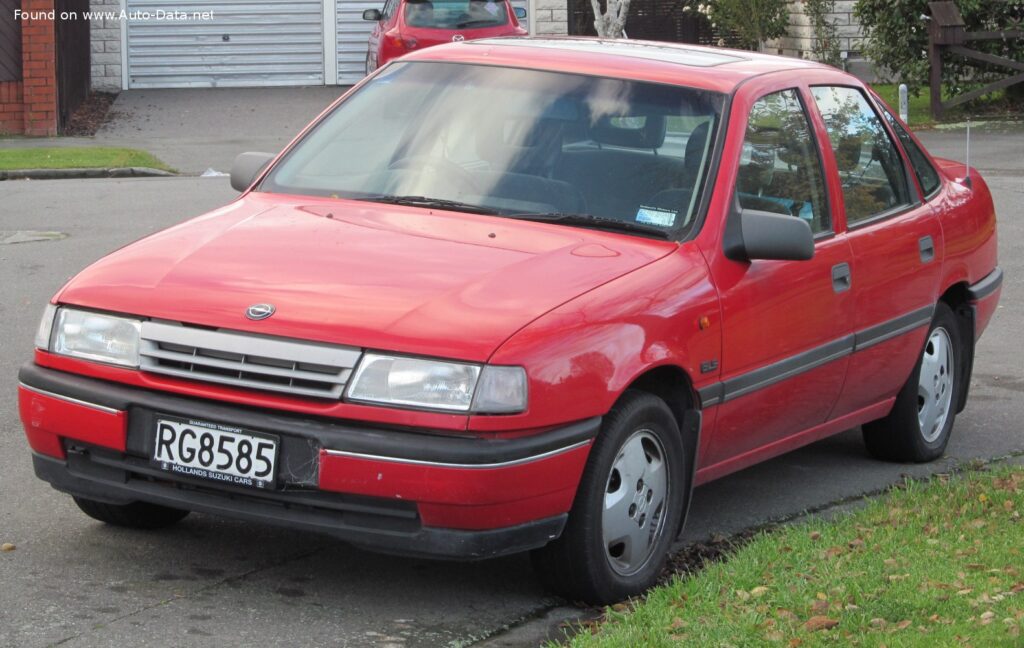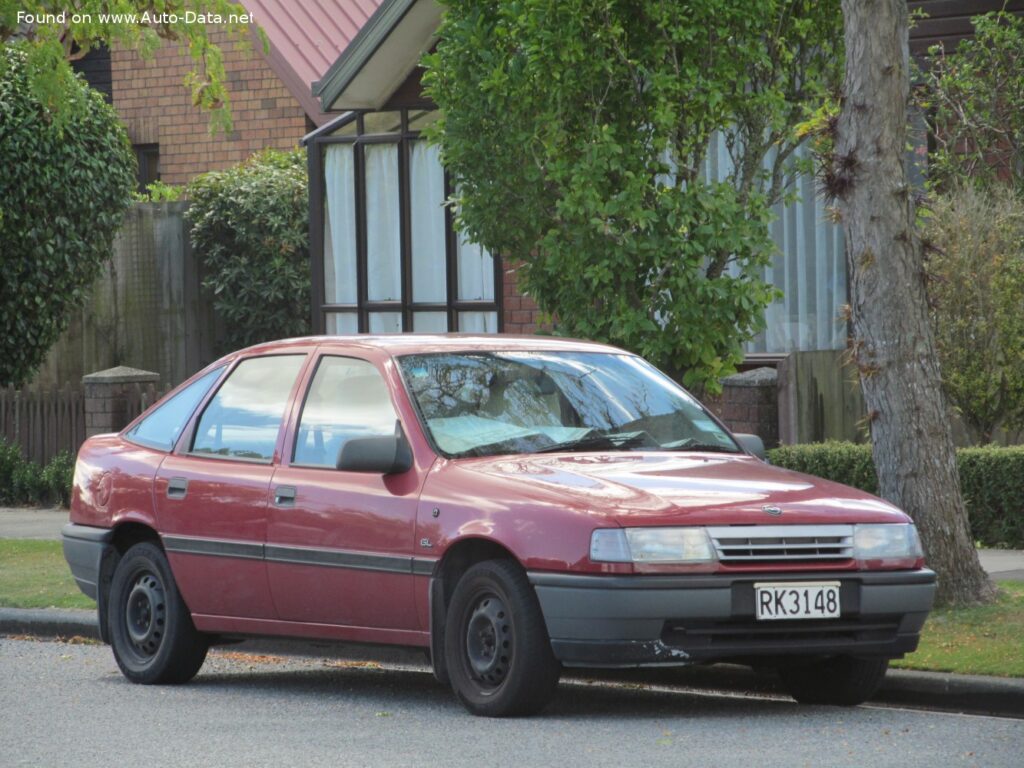
Introduction to the Opel Vectra A CC 1.7 TD (82 Hp)
The Opel Vectra A, introduced in 1988, marked a significant era for General Motors’ European operations, serving as a direct replacement for the venerable Ascona. Positioned in the highly competitive D-segment, or mid-size family car category, the Vectra A was designed to offer modern aesthetics, improved aerodynamics, and enhanced driving dynamics for the European market. While the Opel brand itself was not sold in the United States, the Vectra A played a crucial role in shaping GM’s presence across Europe, the UK (as the Vauxhall Cavalier), and even parts of South America and Australia (as the Chevrolet Vectra and Holden Apollo, respectively).
Among the diverse powertrain offerings, the Opel Vectra A CC 1.7 TD (82 Hp) variant, produced between September 1991 and July 1992, represented a practical and economical choice for European consumers. The “CC” designation stood for “Combi Coupé,” Opel’s term for its five-door hatchback body style, blending the sleek lines of a coupé with the versatility of a hatchback. This particular model, equipped with a 1.7-liter turbocharged diesel engine, was tailored to meet the growing demand for fuel-efficient vehicles in a market increasingly conscious of running costs, offering a compelling balance of performance and economy for daily driving.
Engine and Performance: The Opel Vectra A CC 1.7 TD (82 Hp) Powertrain
At the heart of the Opel Vectra A CC 1.7 TD (82 Hp) was a robust 1.7-liter (1686 cubic centimeters or 102.89 cubic inches) inline four-cylinder diesel engine, internally designated as the 17DT. This engine featured a single overhead camshaft (OHC) valvetrain with two valves per cylinder, a common and reliable configuration for diesel engines of its time. Crucially, it was equipped with a turbocharger, a technology that significantly boosted power output and torque compared to naturally aspirated diesel units. The fuel injection system utilized a precombustion chamber design, which was prevalent in early 1990s diesels, contributing to smoother operation and reduced noise compared to direct injection systems of later generations.
This turbocharged diesel powerplant generated a respectable 82 horsepower at 4400 revolutions per minute (rpm). More importantly for a diesel, it produced a healthy 123.91 pound-feet of torque at a low 2400 rpm. This ample low-end torque was a key characteristic, providing strong pulling power for everyday driving, particularly useful for highway cruising or carrying a full load. Power was delivered to the front wheels via a precise 5-speed manual transmission, a standard setup for a mid-size family car focused on driver engagement and efficiency.
In terms of performance, the Opel Vectra A CC 1.7 TD (82 Hp) was not designed for blistering acceleration but rather for steady, economical motoring. It achieved a 0 to 60 miles per hour sprint in a calculated 13.8 seconds, with a maximum speed of 109.36 mph (176 km/h). These figures were competitive for a diesel-powered family car in the early 1990s, emphasizing practicality over outright speed. Where this variant truly shone was its fuel economy, boasting a combined consumption figure of 39.9 US miles per gallon (5.9 liters per 100 km). This efficiency, combined with a 16.11 US gallon fuel tank, provided an impressive cruising range, making it an attractive option for long-distance commuters and families across Europe.
Design and Features of the Opel Vectra A CC
The Opel Vectra A introduced a fresh, aerodynamic design language to the mid-size segment when it debuted. The “CC” or Combi Coupé body style of the Opel Vectra A CC 1.7 TD (82 Hp) offered a five-door hatchback configuration, providing a practical blend of sedan-like proportions with enhanced cargo versatility. Its dimensions – 171.34 inches in length, 67.17 inches in width, and 55.12 inches in height – placed it firmly within the D-segment, offering comfortable seating for five occupants. The wheelbase of 102.36 inches contributed to a stable ride and a spacious cabin for its class.
Inside, the Vectra A CC was designed with functionality and ergonomics in mind. The generous trunk space was a major selling point for the hatchback, offering a minimum of 16.24 cubic feet (460 liters) with the rear seats up, expanding significantly to 45.56 cubic feet (1290 liters) when the rear seats were folded down. This flexibility made it highly suitable for family use, accommodating luggage, groceries, or larger items with ease.
For its era, the Vectra A CC offered a respectable array of features. Standard equipment typically included hydraulic power steering, which provided comfortable and predictable handling. Safety was also a consideration, with an Anti-lock Braking System (ABS) listed as an assisting system, which, while not universally standard across all trims, was a significant safety enhancement for the time. The car rode on 175/70 R14 tires paired with 14-inch wheel rims, providing a good balance between ride comfort and handling. The suspension system featured a wishbone setup at the front and coil springs at the rear, designed to offer a compliant ride characteristic of a family sedan. Braking performance was handled by ventilated discs at the front for improved heat dissipation, complemented by drum brakes at the rear, a common configuration for vehicles in this class during the early 1990s.
Technical Specifications: Opel Vectra A CC 1.7 TD (82 Hp)
| Category | Specification |
|---|---|
| Brand | Opel |
| Model | Vectra A CC |
| Type (Engine) | 1.7 TD (82 Hp) |
| Production Start | September, 1991 |
| Production End | July, 1992 |
| Body Type | Hatchback |
| Seats | 5 |
| Doors | 5 |
| Fuel Type | Diesel |
| Fuel Consumption (Combined) | 39.9 US mpg (5.9 l/100 km) |
| Acceleration 0-60 mph | 13.8 seconds |
| Maximum Speed | 109.36 mph (176 km/h) |
| Power | 82 Hp @ 4400 rpm |
| Torque | 123.91 lb.-ft. @ 2400 rpm (168 Nm) |
| Engine Displacement | 1.7 liters (1686 cm3 / 102.89 cu. in.) |
| Number of Cylinders | 4, Inline |
| Engine Layout | Front, Transverse |
| Engine Model/Code | 17DT |
| Cylinder Bore | 3.11 inches (79 mm) |
| Piston Stroke | 3.39 inches (86 mm) |
| Compression Ratio | 22:1 |
| Valves per Cylinder | 2 |
| Fuel Injection System | Precombustion chamber injection |
| Engine Aspiration | Turbocharger |
| Valvetrain | OHC |
| Engine Oil Capacity | 4.76 US qt (4.5 l) |
| Coolant Capacity | 7.82 US qt (7.4 l) |
| Kerb Weight | 2610.27 lbs (1184 kg) |
| Max. Weight | 3637.63 lbs (1650 kg) |
| Max Load | 1027.35 lbs (466 kg) |
| Trunk (boot) Space – Minimum | 16.24 cu. ft. (460 l) |
| Trunk (boot) Space – Maximum | 45.56 cu. ft. (1290 l) |
| Fuel Tank Capacity | 16.11 US gal (61 l) |
| Length | 171.34 inches (4352 mm) |
| Width | 67.17 inches (1706 mm) |
| Height | 55.12 inches (1400 mm) |
| Wheelbase | 102.36 inches (2600 mm) |
| Front Track | 56.14 inches (1426 mm) |
| Rear Track | 56.02 inches (1423 mm) |
| Drivetrain Architecture | Front-wheel drive (ICE drives front wheels) |
| Number of Gears | 5, Manual transmission |
| Front Suspension | Wishbone |
| Rear Suspension | Coil spring |
| Front Brakes | Ventilated discs |
| Rear Brakes | Drum |
| Assisting Systems | ABS (Anti-lock braking system) |
| Power Steering | Hydraulic Steering |
| Tires Size | 175/70 R14 |
| Wheel Rims Size | 14 inches |
Legacy and Market Impact of the Opel Vectra A CC
The Opel Vectra A, including its Opel Vectra A CC 1.7 TD (82 Hp) variant, carved out a significant legacy in the European automotive landscape. As a successor to the highly successful Ascona, the Vectra A had big shoes to fill, and it largely succeeded, becoming a strong seller for Opel throughout its production run from 1988 to 1995. Its reputation was built on reliability, practicality, and cost-effectiveness, characteristics highly valued by European families and fleet operators alike.
In the early 1990s, the D-segment was fiercely contested by a number of formidable rivals. The Vectra A competed directly with cars like the Ford Sierra (and later the Mondeo), Volkswagen Passat, Peugeot 405, and Renault 21. Against these competitors, the Vectra A offered a compelling package, particularly with its diesel options. The 1.7 TD (82 Hp) engine, while not the most powerful in the lineup, was instrumental in solidifying the Vectra’s position as an economical choice. Its excellent fuel economy and robust torque made it a favorite for