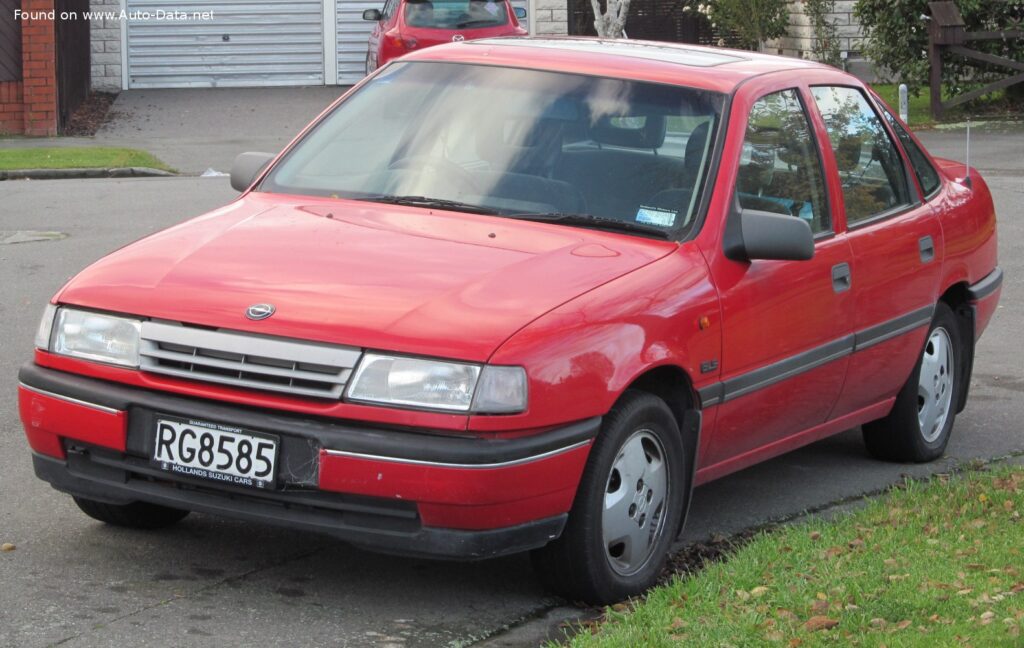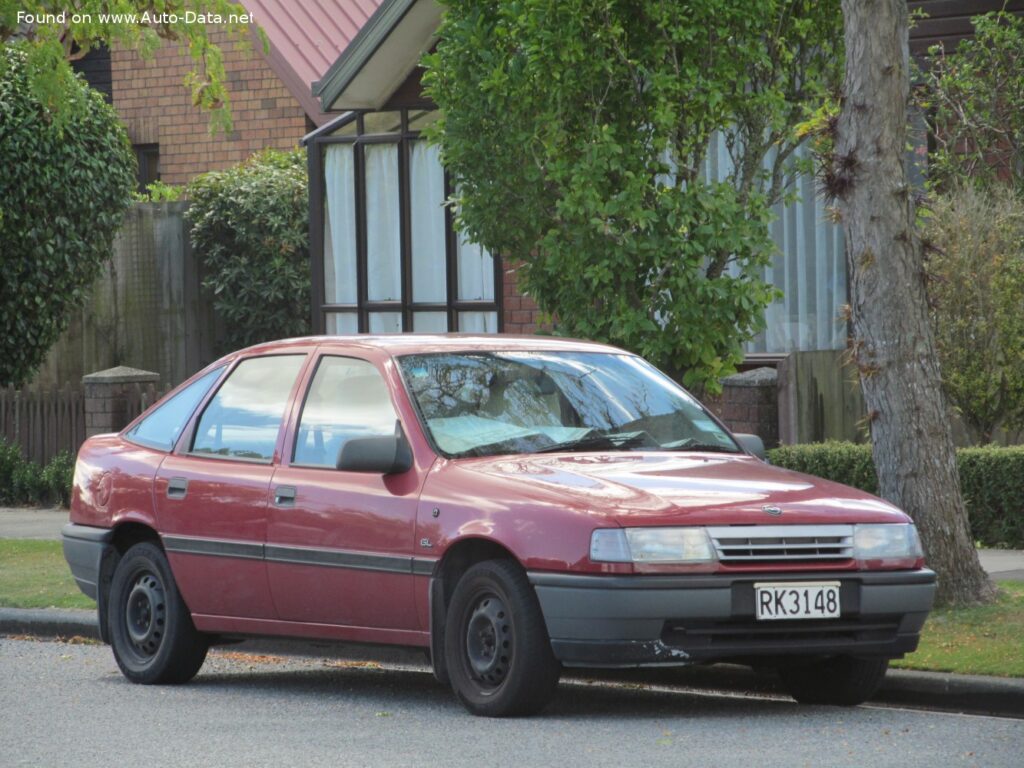
The Opel Vectra A CC 1.8 S (88 Hp) 4×4 represents a significant chapter in European automotive history, serving as a cornerstone of Opel’s product lineup during the late 1980s. Launched in October 1988, the Vectra A generation was a crucial successor to the long-standing Ascona, designed to compete fiercely in the highly contested European mid-size segment. This particular variant, the 1.8 S (88 Hp) 4×4, stood out not only for its practical five-door hatchback (CC, short for Combi Coupé in Opel’s nomenclature) body style but also for its advanced (for the time) all-wheel-drive system, offering enhanced traction and stability, a feature not commonly found in mainstream family cars of its era. Produced for a relatively short period until June 1989, this specific model offered a blend of robust engineering, sensible performance, and a pioneering drivetrain, establishing its role as a versatile and reliable option for European families.
The Opel Vectra A CC 1.8 S (88 Hp) 4×4: A European Pioneer
The Opel Vectra A was introduced at a time of increasing competition and technological advancement in the European automotive industry. While never officially sold in the United States under the Opel badge (though its platform would later underpin the Saturn L-Series), the Vectra A was a ubiquitous sight on European roads, embodying Opel’s commitment to delivering accessible technology and practical design. The addition of a 4×4 variant, especially in a family-oriented hatchback like the Vectra A CC 1.8 S (88 Hp) 4×4, underscored Opel’s ambition to offer features typically reserved for more premium or off-road-focused vehicles to a broader audience. This strategic move aimed to provide consumers in regions with challenging weather conditions or those simply desiring greater control with a compelling, all-weather capable option.
Engine and Performance
At the heart of the Opel Vectra A CC 1.8 S (88 Hp) 4×4 lay the E18NVR engine, a naturally aspirated, 1.8-liter (1796 cm³ or 109.6 cu. in.) inline-four cylinder unit. This powerplant, featuring an OHC (Overhead Camshaft) valvetrain with two valves per cylinder, was designed for a balance of reliability and fuel efficiency, typical of family cars in the late 1980s. Unlike many emerging engines of the period that were adopting electronic fuel injection, the 1.8 S engine retained a carburetor fuel injection system, a simpler and more cost-effective solution for its time. It generated a respectable 88 horsepower at 5400 rpm, providing a power-per-liter output of 49 horsepower per liter. Torque figures stood at 143 Nm (105.47 lb.-ft.) delivered at a relatively low 3200 rpm, ensuring decent pulling power for everyday driving scenarios.
The performance characteristics of the 1.8 S engine, combined with its five-speed manual transmission, allowed the Vectra A CC 4×4 to reach a maximum speed of 173 km/h (107.5 mph). While not a performance car, its top speed was adequate for highway cruising in Europe. Fuel economy was a notable strong suit, with a combined consumption figure of 8.2 liters per 100 km, translating to approximately 28.7 US miles per gallon. This efficiency, coupled with a 61-liter (16.11 US gallon) fuel tank, offered a practical driving range for long journeys. The most distinctive aspect of its powertrain was undoubtedly the all-wheel-drive system, which, paired with the transverse-mounted front engine, provided enhanced traction, particularly beneficial in adverse weather conditions or on unpaved roads, offering a level of grip and security uncommon in a family hatchback of its vintage.
Design and Features
The Opel Vectra A CC adopted a modern, aerodynamic design for its time, characterized by smooth lines and a functional aesthetic. The “CC” designation denoted its Combi Coupé body type, effectively a five-door hatchback, offering the practicality of a wagon with the stylistic appeal of a sedan. With seating for five occupants and five doors, it was designed as a versatile family vehicle. Its dimensions were substantial for the segment, measuring 4352 mm (171.34 in.) in length, 1706 mm (67.17 in.) in width, and 1400 mm (55.12 in.) in height. A wheelbase of 2600 mm (102.36 in.) contributed to a stable ride and a spacious cabin, while a ground clearance of 140 mm (5.51 in.) was typical for a road-going passenger car.
Practicality was a key selling point for the Vectra A CC. The hatchback design offered exceptional cargo flexibility, with a minimum trunk space of 460 liters (16.24 cu. ft.) that could expand significantly to 1290 liters (45.56 cu. ft.) with the rear seats folded down. This adaptability made it suitable for a wide range of uses, from daily commuting to family vacations. While specific interior features of the 1.8 S (88 Hp) 4×4 trim are not detailed, Opel vehicles of this era typically offered a straightforward, ergonomic cabin layout with durable materials. Safety features, while not as advanced as modern cars, would have included standard seatbelts and a robust body structure designed to meet the prevailing European safety standards of the late 1980s. The inclusion of a 4×4 drivetrain was itself a significant safety and performance feature, offering improved grip and handling stability.
Technical Specifications
| Category | Specification | US Equivalent / Notes |
|---|---|---|
| General Information | ||
| Brand | Opel | |
| Model | Vectra | |
| Generation | Vectra A CC | |
| Type (Engine) | 1.8 S (88 Hp) 4×4 | |
| Start of production | October, 1988 year | |
| End of production | June, 1989 year | |
| Powertrain Architecture | Internal Combustion engine | |
| Body type | Hatchback | |
| Seats | 5 | |
| Doors | 5 | |
| Performance Specs | ||
| Fuel consumption (economy) – combined | 8.2 l/100 km | 28.7 US mpg |
| Fuel Type | Petrol (Gasoline) | |
| Maximum speed | 173 km/h | 107.5 mph |
| Engine Specs | ||
| Power | 88 Hp @ 5400 rpm. | 88 HP @ 5400 rpm. |
| Power per liter | 49 Hp/l | |
| Torque | 143 Nm @ 3200 rpm. | 105.47 lb.-ft. @ 3200 rpm. |
| Engine layout | Front, Transverse | |
| Engine Model/Code | E18NVR | |
| Engine displacement | 1796 cm3 | 1.8 Liters / 109.6 cu. in. |
| Number of cylinders | 4 | |
| Engine configuration | Inline | |
| Cylinder Bore | 84.8 mm | 3.34 in. |
| Piston Stroke | 79.5 mm | 3.13 in. |
| Compression ratio | 9.2:1 | |
| Number of valves per cylinder | 2 | |
| Fuel injection system | Carburetor | |
| Engine aspiration | Naturally aspirated engine | |
| Valvetrain | OHC | Overhead Camshaft |
| Engine oil capacity | 4 l | 4.23 US qt |
| Coolant | 6.7 l | 7.08 US qt |
| Space, Volume and Weights | ||
| Trunk (boot) space – minimum | 460 l | 16.24 cu. ft. |
| Trunk (boot) space – maximum | 1290 l | 45.56 cu. ft. |
| Fuel tank capacity | 61 l | 16.11 US gal |
| Dimensions | ||
| Length | 4352 mm | 171.34 in. |
| Width | 1706 mm | 67.17 in. |
| Height | 1400 mm | 55.12 in. |
| Wheelbase | 2600 mm | 102.36 in. |
| Front track | 1420 mm | 55.91 in. |
| Rear (Back) track | 1423 mm | 56.02 in. |
| Ride height (ground clearance) | 140 mm | 5.51 in. |
| Drivetrain, Brakes and Suspension Specs | ||
| Drive wheel | All wheel drive (4×4) | |
| Number of gears and type of gearbox | 5 gears, manual transmission |
Legacy and Market Impact
The Opel Vectra A CC 1.8 S (88 Hp) 4×4, despite its relatively short production run for this specific variant, played an important role in the broader legacy of the Vectra A generation. In the competitive European market, the Vectra A succeeded the Opel Ascona, a car that had been a staple for decades. The Vectra A faced formidable rivals such as the Ford Sierra, Volkswagen Passat, Renault 21, and Peugeot 405. Its robust construction, practical design, and efficient powertrains helped it quickly establish a strong foothold.
The introduction of the 4×4 option was a strategic move that allowed Opel to differentiate the Vectra from many of its direct competitors. While all-wheel-drive systems were gaining traction in rally cars and luxury vehicles, offering it in a mainstream family hatchback was a forward-thinking approach. This particular model catered to a niche but significant demand for enhanced traction and stability, especially in markets prone to snow and ice or for customers living in rural areas with less-maintained roads. It demonstrated Opel’s engineering capability and willingness to integrate advanced technologies into its volume models.
The Opel Vectra A as a whole garnered a reputation for reliability, spaciousness, and straightforward mechanics, which contributed significantly to Opel’s strong brand image in Europe during the late 20th century. While the 1.8 S 4×4 variant was not the highest volume seller, its existence showcased the breadth of the Vectra A’s capabilities and its adaptability. It highlighted Opel’s approach to offering diverse options to meet varied customer needs, from basic family transport to vehicles with specialized features like all-wheel drive. Today, the Opel Vectra A is remembered as a workhorse of its era, and models like the 1.8 S (88 Hp) 4×4 stand out as examples of early adoption of sophisticated drivetrain technology in an everyday vehicle.