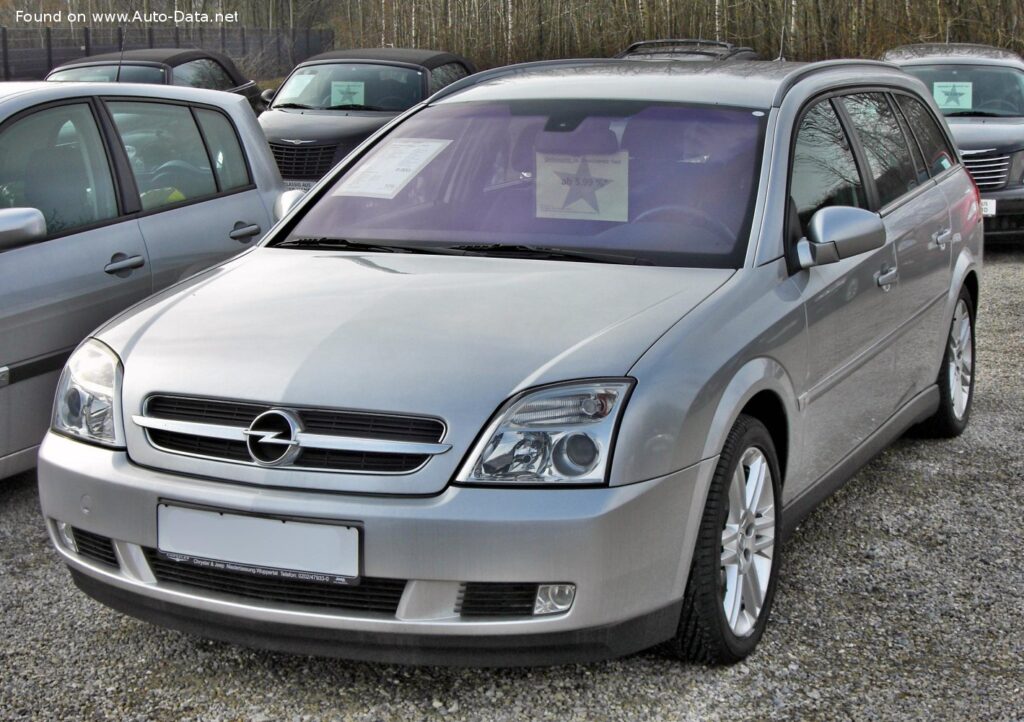
The Opel Vectra C Caravan, specifically the 3.0i V6 24V CDTI variant produced between July 2003 and June 2005, represents a significant offering from the German automaker Opel within the highly competitive European mid-size segment. As a member of the third-generation Vectra lineage, the “C” series, this particular model showcased Opel’s commitment to providing a versatile, powerful, and fuel-efficient family vehicle. While the Opel brand is not distributed in the United States, its vehicles, including the {original_title}, played a crucial role in the European market, often serving as a benchmark for practicality, comfort, and advanced diesel technology during its production run. The Caravan designation, synonymous with “station wagon” or “estate” in US English, highlighted its primary function as a capacious and adaptable vehicle designed for families and professionals requiring substantial cargo space without compromising on driving dynamics or refinement.
Engine & Performance: The Heart of the {original_focus_keyword}
At the core of the Opel Vectra C Caravan 3.0i V6 24V CDTI lies a robust 3.0-liter V6 common-rail diesel engine, internally designated as Y30DT. This powerplant was a testament to the increasing sophistication of diesel technology in the early 2000s, delivering a potent combination of power and torque while maintaining impressive fuel efficiency. The engine produced a respectable 177 horsepower at 4000 rpm, which, for a family wagon of its era, provided ample motivation. More significantly, its torque output was a substantial 272.9 lb.-ft., available from a remarkably low 1900 rpm. This broad torque band was crucial for effortless acceleration, strong pulling power, and relaxed highway cruising, characteristics highly valued in the European market.
The V6 configuration, coupled with a DOHC (Dual Overhead Camshaft) valvetrain and 24 valves (four per cylinder), ensured smooth power delivery and efficient combustion. The engine’s aspiration was handled by a turbocharger complemented by an intercooler, optimizing air density for improved performance and efficiency across the rev range. Fuel was delivered via a precise diesel common rail injection system, contributing to cleaner emissions and better fuel atomization. With a compression ratio of 18.5:1, the engine was designed for the inherent efficiency of diesel combustion. This sophisticated powertrain was paired with a 6-speed manual transmission, offering drivers precise control and further enhancing fuel economy by allowing the engine to operate within its most efficient rev range. Power was sent to the front wheels, a common and cost-effective layout for this segment.
In terms of outright performance, the Vectra C Caravan 3.0i V6 24V CDTI was no slouch. It could accelerate from 0 to 60 mph in a swift 9.3 seconds, making it competitive with many gasoline-powered counterparts. Its maximum speed of 137.94 mph underscored its capability as a competent long-distance cruiser. Despite its performance, fuel economy remained a strong suit, with a combined rating of 32.2 US mpg (7.3 liters per 100 km). This blend of performance and efficiency made it a compelling choice for European buyers who often faced high fuel prices and sought vehicles capable of covering long distances economically. The weight-to-power ratio of 9.6 kg/Hp and a weight-to-torque ratio of 4.6 kg/Nm further illustrate the engine’s strong pulling characteristics relative to the vehicle’s curb weight of 3758.88 lbs.
Design & Features: Practicality Meets European Styling
The Opel Vectra C Caravan embodied a design philosophy focused on practicality, spaciousness, and understated elegance, typical of European mid-size wagons. With its five-door, five-seat station wagon body type, it was engineered to maximize interior volume and cargo flexibility. The exterior dimensions were substantial, measuring 189.84 inches in length, 70.79 inches in width, and 59.06 inches in height, all riding on a generous 111.42-inch wheelbase. These proportions contributed to a stable ride and a commodious cabin.
A key selling point of the Caravan was its impressive cargo capacity. With the rear seats in place, it offered a minimum trunk space of 18.72 cubic feet (530 liters), ample for daily errands and family luggage. When the rear seats were folded down, this expanded dramatically to a cavernous 65.33 cubic feet (1850 liters), transforming the vehicle into a versatile hauler capable of accommodating large items for hobbies, work, or extensive travel. The maximum load capacity stood at 1179.47 lbs, further emphasizing its utility.
Underneath, the Vectra C Caravan featured a well-engineered chassis designed for comfort and predictable handling. The front suspension utilized a spring strut setup, a common and effective design for front-wheel-drive vehicles, providing a good balance between ride comfort and handling precision. The rear suspension employed a multi-link system, a more sophisticated arrangement that allowed for independent wheel movement, enhancing ride quality and stability, particularly when fully loaded. Braking performance was assured by ventilated discs at the front and solid discs at the rear, complemented by an Anti-lock Braking System (ABS) as standard, a crucial safety feature for preventing wheel lock-up during emergency stops. Steering was managed by a responsive rack and pinion system, offering direct feedback to the driver. The vehicle rode on 215/55 R16 tires mounted on 6.5J X 16-inch wheel rims, a practical size that offered a good blend of grip, comfort, and cost-effectiveness.
Technical Specifications: Opel Vectra C Caravan 3.0i V6 24V CDTI (177 Hp)
| Category | Specification |
|---|---|
| General Information | |
| Brand | Opel |
| Model | Vectra |
| Generation | Vectra C Caravan |
| Type (Engine) | 3.0i V6 24V CDTI (177 Hp) |
| Start of production | July, 2003 year |
| End of production | June, 2005 year |
| Powertrain Architecture | Internal Combustion engine |
| Body type | Station wagon (estate) |
| Seats | 5 |
| Doors | 5 |
| Performance Specs | |
| Fuel consumption (economy) – urban | 10.1 l/100 km (23.3 US mpg) |
| Fuel consumption (economy) – extra urban | 5.7 l/100 km (41.3 US mpg) |
| Fuel consumption (economy) – combined | 7.3 l/100 km (32.2 US mpg) |
| Fuel Type | Diesel |
| Acceleration 0 – 60 mph (Calculated) | 9.3 sec |
| Maximum speed | 222 km/h (137.94 mph) |
| Weight-to-power ratio | 9.6 kg/Hp |
| Weight-to-torque ratio | 4.6 kg/Nm |
| Engine Specs | |
| Power | 177 Hp @ 4000 rpm |
| Power per liter | 59.8 Hp/l |
| Torque | 370 Nm @ 1900 rpm (272.9 lb.-ft. @ 1900 rpm) |
| Engine layout | Front, Transverse |
| Engine Model/Code | Y30DT |
| Engine displacement | 2958 cm3 (180.51 cu. in.) |
| Number of cylinders | 6 |
| Engine configuration | V-engine |
| Cylinder Bore | 87.5 mm (3.44 in.) |
| Piston Stroke | 82 mm (3.23 in.) |
| Compression ratio | 18.5:1 |
| Number of valves per cylinder | 4 |
| Fuel injection system | Diesel Commonrail |
| Engine aspiration | Turbocharger, Intercooler |
| Valvetrain | DOHC |
| Engine oil capacity | 7.5 l (7.93 US qt) |
| Coolant capacity | 8.3 l (8.77 US qt) |
| Space, Volume and Weights | |
| Kerb Weight | 1705 kg (3758.88 lbs.) |
| Max. weight (GVWR) | 2240 kg (4938.35 lbs.) |
| Max load | 535 kg (1179.47 lbs.) |
| Trunk (boot) space – minimum | 530 l (18.72 cu. ft.) |
| Trunk (boot) space – maximum | 1850 l (65.33 cu. ft.) |
| Fuel tank capacity | 60 l (15.85 US gal) |
| Dimensions | |
| Length | 4822 mm (189.84 in.) |
| Width | 1798 mm (70.79 in.) |
| Height | 1500 mm (59.06 in.) |
| Wheelbase | 2830 mm (111.42 in.) |
| Front track | 1536 mm (60.47 in.) |
| Rear (Back) track | 1525 mm (60.04 in.) |
| Drivetrain, Brakes and Suspension Specs | |
| Drivetrain Architecture | Front-wheel drive (ICE drives front wheels) |
| Drive wheel | Front wheel drive |
| Number of gears and type of gearbox | 6 gears, manual transmission |
| Front suspension | Spring Strut |
| Rear suspension | Several levers and rods (Multi-link) |
| Front brakes | Ventilated discs |
| Rear brakes | Disc |
| Assisting systems | ABS (Anti-lock braking system) |
| Steering type | Steering rack and pinion |
| Tires size | 215/55 R16 |
| Wheel rims size | 6.5J X 16 |
Legacy & Market Impact: The Opel Vectra C Caravan in Europe
The Opel Vectra C Caravan 3.0i V6 24V CDTI carved out a significant niche for itself in the European automotive landscape during its production. It was a primary competitor in the highly contested D-segment (mid-size family car segment), vying for market share against formidable rivals such as the Volkswagen Passat Variant, Ford Mondeo Estate, Renault Laguna Grandtour, and Peugeot 407 SW. In this environment, the Vectra C Caravan distinguished itself with its robust diesel V6 engine, offering a level of refinement and power that appealed to both private buyers and, crucially, a large fleet market.
The reputation of the Opel Vectra C Caravan was built on its strengths as a reliable, practical, and comfortable long-distance cruiser. Its generous interior space, particularly the expansive cargo area, made it an ideal choice for families and businesses that required versatility. The 3.0-liter CDTI engine, in particular, was praised for its strong torque delivery and commendable fuel efficiency, which were vital attributes in a market where diesel engines dominated the mid-size and larger segments due to lower fuel costs and better economy compared to gasoline alternatives at the time. Its comprehensive feature set, including standard ABS and a focus on ride comfort, further solidified its appeal.
Historically, the Vectra C Caravan represented Opel’s ongoing commitment to the traditional family car segment before the widespread shift towards SUVs. It was a testament to the engineering prowess of General Motors’ European division, integrating advanced diesel technology and a well-sorted chassis into a highly functional package. While it may not have achieved the iconic status of some classic models, its impact was profound in its ability to serve as a workhorse for countless European families and businesses. The model’s sales performance contributed significantly to Opel’s standing as a major player in the European market, reinforcing its image as a producer of dependable, well-engineered, and value-oriented vehicles. Its legacy is one of quiet competence, demonstrating how a thoughtfully designed station wagon with a potent and efficient diesel engine could meet the diverse demands of a discerning European customer base.