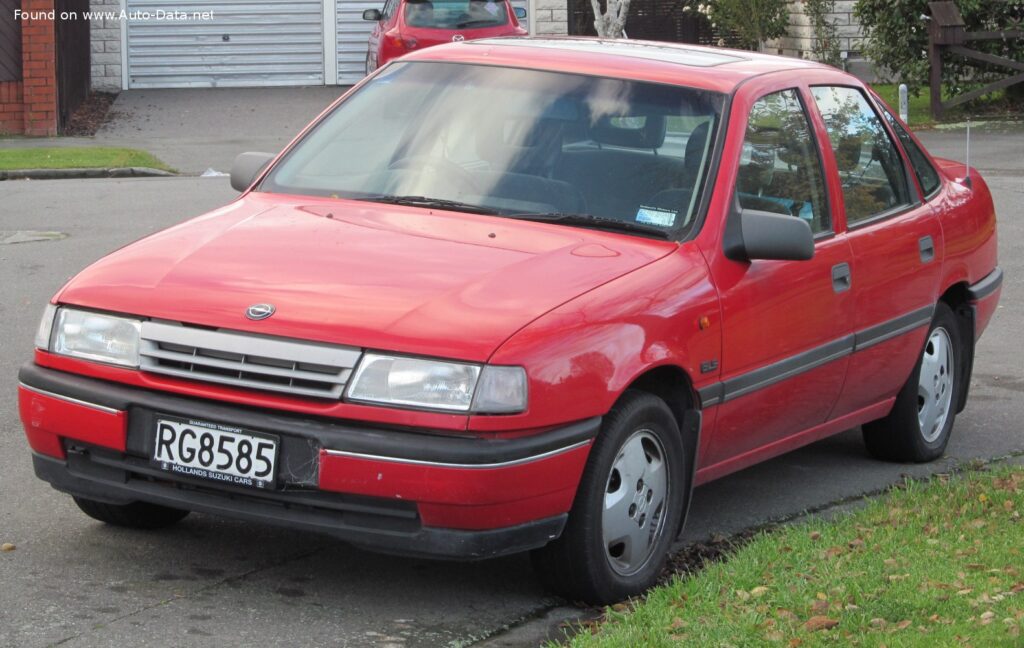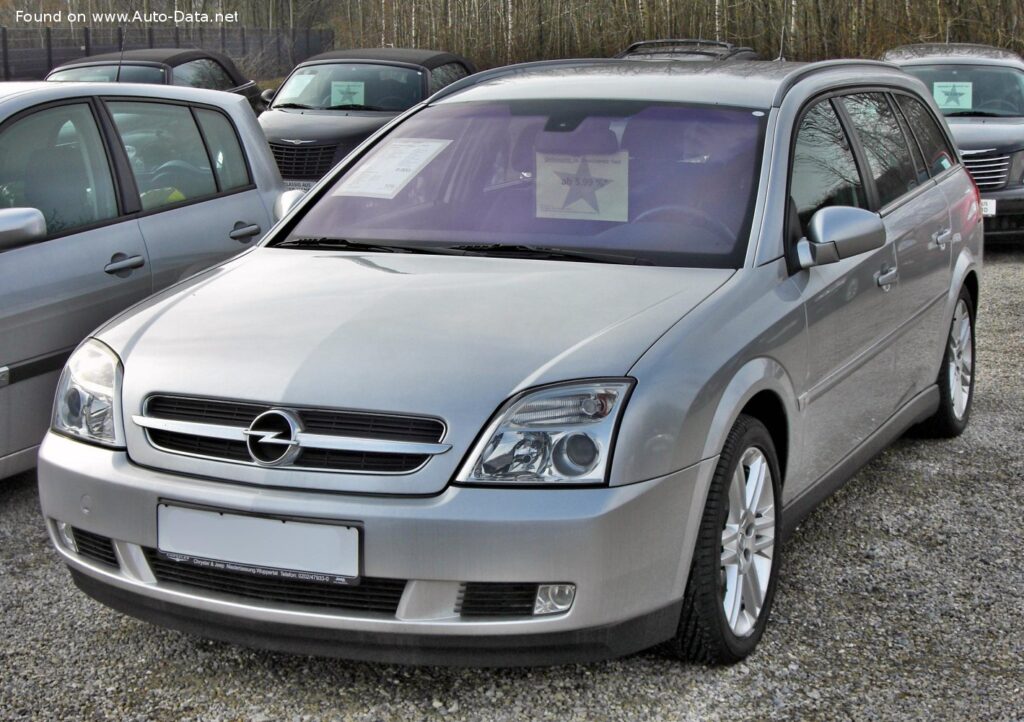
The Opel Vectra C Caravan 3.2i V6 24V (211 Hp) Automatic represents a significant offering in the European mid-size family car segment during its production run from January 2004 to June 2005. As part of the third generation Vectra lineup, the “C” series, this particular variant stood out as a premium and performance-oriented choice within the practical station wagon body style. While never officially sold in the United States, the Vectra C Caravan played a crucial role for Opel, a long-standing German marque within the General Motors (GM) family, as a versatile vehicle designed to meet the diverse needs of European consumers. It combined robust German engineering with a spacious and adaptable interior, making it a popular option for families requiring ample cargo capacity without sacrificing driving dynamics or comfort. This specific model, equipped with a powerful V6 engine and an automatic transmission, aimed to deliver a refined driving experience, superior acceleration, and effortless cruising capabilities on autobahns and country roads alike, distinguishing it from its more modest four-cylinder counterparts.
The Opel Vectra C Caravan: A European Mainstay
The Opel Vectra C, introduced in 2002, evolved from its predecessors to offer a more sophisticated platform, improved safety features, and a contemporary design language that reflected the automotive trends of the early 2000s. The Caravan, or estate version as it’s known in many markets, was particularly vital to Opel’s sales success, catering to a strong demand for practical family vehicles in Europe. Its extended wheelbase and generous rear overhang provided a cavernous cargo area, a primary selling point for the segment. The Vectra C generation was built on GM’s Epsilon platform, which also underpinned several other GM vehicles globally, including the Saab 9-3 and the Chevrolet Malibu. This shared platform allowed for cost efficiencies in development and manufacturing while providing a solid foundation for dynamic performance and safety. The design of the Vectra C Caravan, characterized by clean lines and a purposeful stance, aimed for a blend of elegance and utility. Its substantial dimensions, including a length of 189.84 inches (4822 mm) and a width of 70.79 inches (1798 mm), contributed to a commanding road presence and an interior that felt genuinely spacious for five occupants and their luggage. The attention to detail in its construction and the quality of materials used were designed to project an image of durability and refinement, essential attributes for a vehicle competing in such a competitive market segment.
Powertrain and Performance of the Opel Vectra C Caravan 3.2i V6 24V (211 Hp) Automatic
At the heart of this particular Opel Vectra C Caravan lies the potent 3.2-liter (3175 cm³) Z32SE V6 engine, a naturally aspirated gasoline unit that provided a compelling blend of power and smoothness. This engine configuration, with its V-layout and 24 valves (four per cylinder), employed a Double Overhead Camshaft (DOHC) valvetrain, ensuring efficient gas flow and robust performance across the rev range. It delivered a respectable 211 horsepower (Hp) at 6200 revolutions per minute (rpm), making it one of the more powerful options available in the Vectra C lineup. Torque figures were equally impressive for its class, peaking at 300 Nm (equivalent to 221.27 lb.-ft.) at an accessible 4000 rpm. This substantial torque output ensured strong pulling power, whether accelerating from a standstill or overtaking on the highway, even when the vehicle was fully laden with passengers and cargo.
The power was seamlessly managed by a 5-speed automatic transmission, a common and reliable choice for family vehicles of this era, which directed power to the front wheels. This front-wheel-drive architecture, combined with the V6 engine’s power, allowed the Opel Vectra C Caravan 3.2i V6 24V (211 Hp) Automatic to achieve a 0 to 60 mph acceleration time of approximately 8 seconds (0-100 km/h in 8.4 seconds). For a large station wagon designed primarily for practicality, these acceleration figures were quite competitive and underscored the vehicle’s capability to deliver spirited performance. The maximum speed was rated at 147.26 mph (237 km/h), highlighting its suitability for sustained high-speed cruising typical on European motorways. Despite its performance potential, Opel also paid attention to the engine’s operational efficiency. The compression ratio stood at 10:1, and fuel delivery was handled by a multi-port manifold injection system, standard for the time. Fuel consumption, while higher than smaller-engined variants, was reasonable for a 3.2-liter V6, with a combined economy rated at 10.6 liters per 100 kilometers (approximately 22.2 US mpg). This balance of performance and efficiency made the V6 Caravan a desirable choice for discerning drivers who valued both power and practicality.
Design, Practicality, and Features
The design of the Opel Vectra C Caravan prioritized functionality and comfort without compromising on a modern aesthetic. Its station wagon (estate) body type, featuring five doors and seating for five occupants, was engineered for maximum utility. The generous wheelbase of 111.42 inches (2830 mm) directly translated into expansive cabin space, particularly for rear-seat passengers, making long journeys more comfortable. The cargo area was a standout feature, offering a minimum trunk volume of 530 liters (18.72 cu. ft.), which could be expanded to an impressive 1850 liters (65.33 cu. ft.) with the rear seats folded down. This flexibility made it ideal for everything from weekly grocery runs