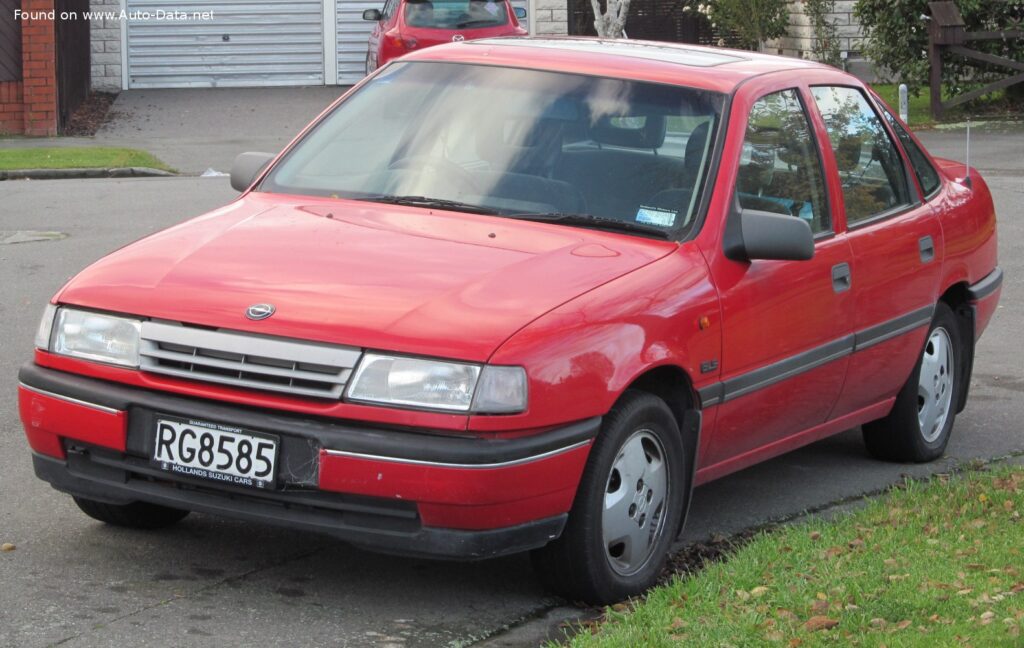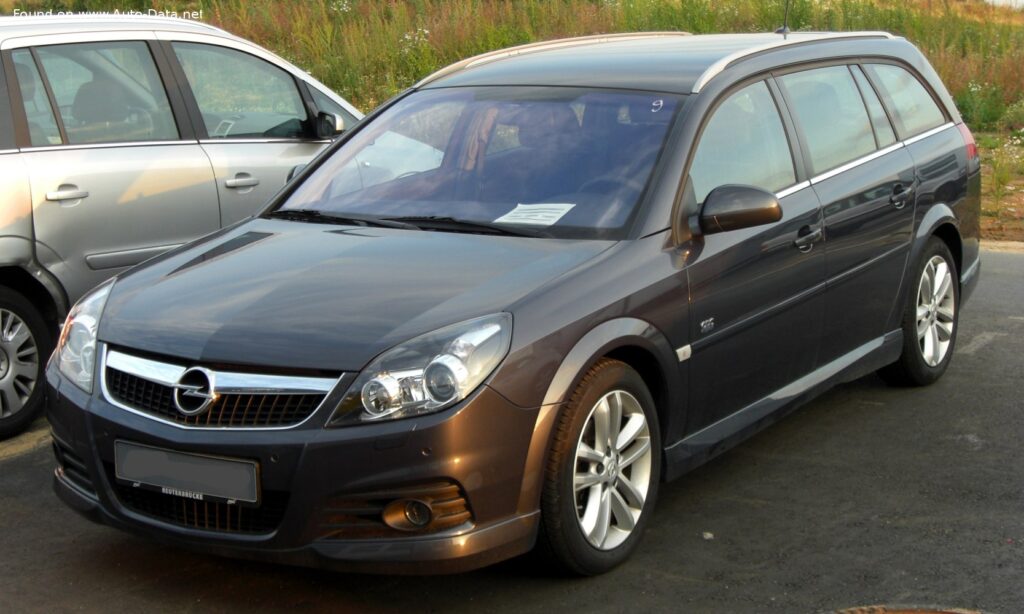
The Opel Vectra C Caravan (facelift 2005) stands as a notable iteration of Opel’s mid-size vehicle line, specifically targeting the European market where the brand has a strong presence. This particular model, produced from July 2005 to October 2006, represented the refreshed version of the third-generation Vectra, offering a blend of practical utility, refined comfort, and surprisingly potent performance, especially in its 2.8i V6 24V Turbo configuration. While the Opel brand was not directly sold in the United States during this period, the Vectra C shared its Epsilon platform with several General Motors vehicles globally, including the Saab 9-3 and certain Saturn models, showcasing its underlying engineering sophistication. As a spacious station wagon, or “Caravan” as Opel termed it, this vehicle was designed to cater to families and professionals seeking a versatile daily driver capable of handling long journeys with ease and a touch of sporting flair.
The {Opel Vectra C Caravan (facelift 2005)}: Engineering for the European Market
The Opel Vectra C generation, introduced in 2002, underwent a significant facelift in 2005, bringing updated styling cues, improved interior materials, and revised engine options to keep it competitive in the fiercely contested D-segment. The “Caravan” body style, a term synonymous with station wagons in many European markets, underscored its primary role as a capacious and practical family hauler. Unlike its sedan and hatchback siblings, the Caravan offered an extended wheelbase and a larger rear overhang, maximizing cargo volume without compromising the vehicle’s dynamic capabilities. This particular variant, equipped with the 2.8i V6 24V Turbo engine, represented the pinnacle of performance within the Vectra C range, appealing to those who desired both utility and exhilarating acceleration.
Engine & Performance: A Turbocharged V6 Powerhouse
At the heart of this formidable station wagon was the 2.8-liter (2792 cm3 or 170.38 cu. in.) Z28NEL V6 engine, a sophisticated powertrain featuring 24 valves (four per cylinder) and bolstered by a turbocharger and intercooler system. This setup allowed the engine to produce a robust 230 horsepower at 5500 rpm, delivering impressive acceleration for a vehicle of its size and type. More critically for real-world driving, the V6 generated a substantial 243.4 lb.-ft. of torque across a broad and accessible rev range, from 1800 to 4500 rpm. This wide powerband translated into effortless overtaking and strong pulling power, whether fully loaded with passengers and cargo or cruising on the autobahn.
Power was efficiently transmitted to the front wheels via a precise 6-speed manual transmission, offering engaging driver control. The performance figures were noteworthy for a family-oriented station wagon, with the Opel Vectra C Caravan 2.8i V6 Turbo accelerating from 0 to 60 mph in a swift 7.1 seconds. Its top speed was rated at 152.24 mph (245 km/h), firmly placing it among the faster vehicles in its segment. Despite its performance potential, Opel also engineered the Vectra C for reasonable fuel efficiency, especially for a turbocharged V6. The combined fuel economy was rated at 21 US mpg (11.2 l/100 km), with highway cruising yielding a respectable 31.8 US mpg (7.4 l/100 km). This balance of power and economy made the 2.8i V6 Turbo a compelling choice for discerning European buyers.
The engine’s layout, a front-mounted transverse V-engine configuration, was typical for front-wheel-drive platforms of the era, optimizing space utilization within the engine bay. With a compression ratio of 9.5:1 and a multi-port manifold injection system, the engine was designed for both efficiency and responsiveness. Its weight-to-power ratio of 6.7 kg/Hp (148.9 Hp/tonne) and weight-to-torque ratio of 4.7 kg/Nm (213.6 Nm/tonne) underscored its athletic capabilities, ensuring that the Caravan felt nimble despite its substantial dimensions and kerb weight of 3406.14 lbs. (1545 kg).
Design & Features: Practicality Meets Refinement
The Opel Vectra C Caravan, in its facelifted 2005 guise, was a masterclass in practical design, embodying the quintessential European station wagon. Its five-door body provided excellent accessibility to both the passenger cabin and the expansive cargo area. With five comfortable seats, it was well-suited for family duties, offering ample legroom and headroom for all occupants. The exterior styling received subtle but effective updates during the facelift, aligning it with Opel’s contemporary design language, which emphasized clean lines and a purposeful stance. Its length of 190.51 inches (4839 mm) and width of 70.79 inches (1798 mm) gave it a commanding road presence, while the 111.42-inch (2830 mm) wheelbase contributed to a stable and composed ride.
A key highlight of the Caravan was its exceptional cargo capacity. The trunk space offered a minimum of 18.72 cubic feet (530 liters) with all seats in place, which could expand to a cavernous 65.33 cubic feet (1850 liters) when the rear seats were folded down. This flexibility made it an ideal companion for everything from grocery runs to extended road trips with bulky luggage or sports equipment. The vehicle’s maximum load capacity stood at 1421.98 lbs. (645 kg), further enhancing its utility.
Underneath, the Vectra C Caravan featured an independent coil spring suspension system at both the front and rear, designed to provide a compliant ride while maintaining good body control and handling dynamics. Braking performance was assured by ventilated discs at the front and solid discs at the rear, complemented by an Anti-lock Braking System (ABS) for enhanced safety during emergency stops. The car rode on 215/55 R16 tires mounted on 16-inch wheel rims, a setup that offered a good balance of grip, comfort, and durability for diverse driving conditions. These features, combined with a 15.85 US gallon (60 liter) fuel tank, ensured that the Opel Vectra C Caravan 2.8i V6 24V Turbo was a well-rounded and capable vehicle, perfectly adapted to the demands of its primary market.
Technical Specifications: Opel Vectra C Caravan (facelift 2005) 2.8i V6 24V Turbo (230 Hp)
| Brand | Opel |
| Model | Vectra |
| Generation | Vectra C Caravan (facelift 2005) |
| Type (Engine) | 2.8i V6 24V Turbo (230 Hp) |
| Start of production | July, 2005 year |
| End of production | October, 2006 year |
| Powertrain Architecture | Internal Combustion engine |
| Body type | Station wagon (estate) |
| Seats | 5 |
| Doors | 5 |
| Fuel consumption (economy) – urban | 15.5 l/100 km (15.2 US mpg / 18.2 UK mpg) |
| Fuel consumption (economy) – extra urban | 7.4 l/100 km (31.8 US mpg / 38.2 UK mpg) |
| Fuel consumption (economy) – combined | 11.2 l/100 km (21 US mpg / 25.2 UK mpg) |
| Fuel Type | Petrol (Gasoline) |
| Acceleration 0 – 100 km/h | 7.5 sec |
| Acceleration 0 – 62 mph | 7.5 sec |
| Acceleration 0 – 60 mph (Calculated) | 7.1 sec |
| Maximum speed | 245 km/h (152.24 mph) |
| Weight-to-power ratio | 6.7 kg/Hp (148.9 Hp/tonne) |
| Weight-to-torque ratio | 4.7 kg/Nm (213.6 Nm/tonne) |
| Power | 230 Hp @ 5500 rpm |
| Power per litre | 82.4 Hp/l |
| Torque | 330 Nm @ 1800-4500 rpm (243.4 lb.-ft. @ 1800-4500 rpm) |
| Engine layout | Front, Transverse |
| Engine Model/Code | Z28NEL |
| Engine displacement | 2792 cm3 (170.38 cu. in.) |
| Number of cylinders | 6 |
| Engine configuration | V-engine |
| Cylinder Bore | 89 mm (3.5 in.) |
| Piston Stroke | 74.8 mm (2.94 in.) |
| Compression ratio | 9.5:1 |
| Number of valves per cylinder | 4 |
| Fuel injection system | Multi-port manifold injection |
| Engine aspiration | Turbocharger, Intercooler |
| Engine oil capacity | 6 l (6.34 US qt / 5.28 UK qt) |
| Coolant | 7.5 l (7.93 US qt / 6.6 UK qt) |
| Kerb Weight | 1545 kg (3406.14 lbs.) |
| Max. weight | 2190 kg (4828.12 lbs.) |
| Max load | 645 kg (1421.98 lbs.) |
| Trunk (boot) space – minimum | 530 l (18.72 cu. ft.) |
| Trunk (boot) space – maximum | 1850 l (65.33 cu. ft.) |
| Fuel tank capacity | 60 l (15.85 US gal / 13.2 UK gal) |
| Length | 4839 mm (190.51 in.) |
| Width | 1798 mm (70.79 in.) |
| Height | 1500 mm (59.06 in.) |
| Wheelbase | 2830 mm (111.42 in.) |
| Front track | 1536 mm (60.47 in.) |
| Rear (Back) track | 1525 mm (60.04 in.) |
| Drivetrain Architecture | The Internal combustion engine (ICE) drives the front wheels of the vehicle. |
| Drive wheel | Front wheel drive |
| Number of gears and type of gearbox | 6 gears, manual transmission |
| Front suspension | Independent coil spring |
| Rear suspension | Independent coil spring |
| Front brakes | Ventilated discs |
| Rear brakes | Disc |
| Assisting systems | ABS (Anti-lock braking system) |
| Tires size | 215/55 R16 |
| Wheel rims size | 16 |