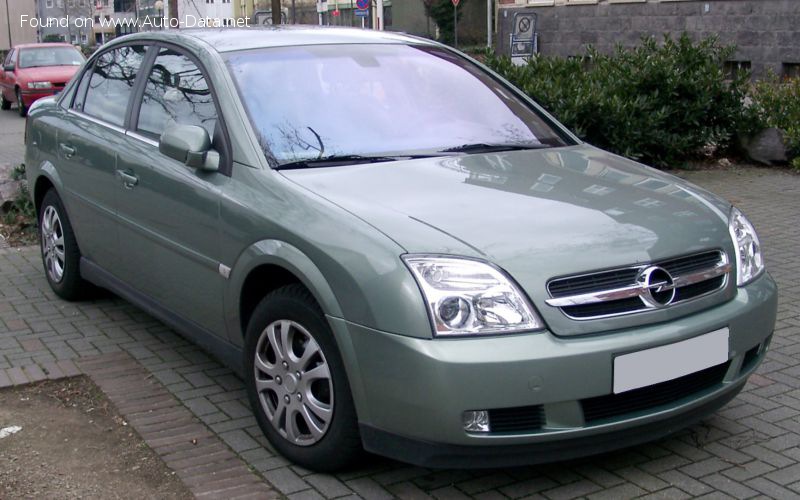
The Opel Vectra C CC 1.8 ECOTEC (122 Hp) represents a significant offering from General Motors’ European subsidiary, Opel, during the early to mid-2000s. Positioned squarely in the highly competitive European D-segment, also known as the mid-size family car segment, the Vectra C generation was launched in April 2002 and continued production for this specific variant until October 2005. Unlike some of its predecessors or other Opel models that found their way to North America under different badges like Saturn or Chevrolet, the Opel Vectra C CC remained primarily a European market vehicle, tailored to the continent’s driving preferences and regulatory landscape. The “CC” designation, while sometimes implying a coupe-cabriolet, in the context of the Vectra C, referred to a five-door hatchback body style, often marketed as a “Compact Class” or “Comfort Coupe” variant, offering a sportier silhouette and enhanced practicality compared to the traditional sedan, without being a full-sized wagon (Caravan). This model aimed to combine practicality, efficiency, and a comfortable driving experience for European families and business users, cementing Opel’s reputation for building reliable and well-engineered mainstream vehicles.
The Opel Vectra C CC 1.8 ECOTEC (122 Hp): A European Mainstay
The third generation of the Opel Vectra, internally designated as the Vectra C, marked a considerable evolution in design, engineering, and technology for Opel. Introduced to replace the long-running Vectra B, the C-generation embraced a more modern and aerodynamic aesthetic, characterized by cleaner lines and a more substantial road presence. The Vectra C CC, specifically, carved out its niche by offering the versatility of a hatchback with a more dynamic roofline, appealing to buyers who desired a blend of sedan elegance and wagon utility. Its primary markets were Germany, the United Kingdom (where it was sold as the Vauxhall Vectra), and other major European nations, where it competed fiercely with rivals such as the Ford Mondeo, Volkswagen Passat, and Renault Laguna. The Vectra C generation was built on GM’s Epsilon platform, which also underpinned several other global GM models, showcasing Opel’s central role in GM’s global engineering efforts. This platform provided a solid foundation for improved ride quality, handling dynamics, and enhanced crash safety over its predecessor, crucial attributes for a family car in the discerning European market. Its design language was conservative yet contemporary for its time, prioritizing functionality and broad appeal over radical styling.
Engine and Performance: The 1.8 ECOTEC Powertrain
At the heart of the Opel Vectra C CC 1.8 ECOTEC (122 Hp) lies the venerable 1.8-liter ECOTEC engine, an inline-four-cylinder unit known by its engine code Z18XE. This naturally aspirated gasoline engine was a staple in Opel’s lineup, valued for its balance of adequate power, reasonable fuel economy, and proven reliability. With a displacement of 1796 cubic centimeters (109.6 cubic inches), the engine features a DOHC (Double Overhead Camshaft) valvetrain with four valves per cylinder, optimizing airflow for combustion efficiency. It delivers a peak power output of 122 horsepower at 6000 rpm, providing sufficient propulsion for everyday driving and comfortable highway cruising, particularly within European speed limits and traffic conditions. Torque figures stand at 123.17 lb.-ft. (167 Nm) at a relatively accessible 3800 rpm, ensuring decent low-to-mid range responsiveness, which is beneficial for city driving and overtaking maneuvers on country roads. The engine employs a multi-port manifold injection system for precise fuel delivery and a compression ratio of 10.5:1, contributing to its efficiency and clean emissions for the period.
Paired with a slick-shifting 5-speed manual transmission, power is channeled efficiently to the front wheels, a common and cost-effective drivetrain architecture for this segment, known for its packaging efficiency and predictable handling characteristics. The performance metrics for the Vectra C CC 1.8 ECOTEC are competitive for its class and era. It achieves an acceleration from 0 to 60 mph in a respectable 10.6 seconds, with the 0-100 km/h sprint taking 11.2 seconds. The vehicle’s maximum speed is rated at 127.38 mph (205 km/h), making it capable of sustained high-speed travel on European autobahns where permitted. Fuel economy was a key consideration, and the ECOTEC engine delivered a combined fuel consumption rating of 29.8 US mpg (7.9 l/100 km). Urban driving yielded 21.2 US mpg (11.1 l/100 km), while extra-urban cycles saw a more impressive 38.6 US mpg (6.1 l/100 km). These figures underscore the ECOTEC philosophy of balancing “Economy, Ecology, and Technology,” providing a practical and environmentally conscious choice for drivers, particularly in an era of increasing fuel prices and environmental awareness.
Design, Features, and Ergonomics
The design of the Opel Vectra C CC emphasized a blend of modern aesthetics, aerodynamic efficiency, and practical utility. As a five-door hatchback, it offered a distinct profile that was sleeker than the conventional sedan but more versatile than a traditional coupe. Its overall length of 180.94 inches (4596 mm) and width of 70.79 inches (1798 mm) placed it squarely within the D-segment, providing ample cabin space for five occupants. The generous wheelbase of 106.3 inches (2700 mm) contributed significantly to a stable and comfortable ride, as well as providing commendable legroom for both front and rear passengers. The height of 57.48 inches (1460 mm) ensured good headroom, even with the slightly tapering roofline of the CC variant, making it suitable for a wide range of drivers and passengers.
Inside, the Vectra C CC focused on ergonomic design and functional features, reflecting its role as a practical family vehicle. The five-seat configuration offered comfortable seating for adults, with particular attention paid to material quality and fit-and-finish, reflecting its European market positioning where perceived quality is crucial. A standout feature was its impressive cargo capacity. With the rear seats in place, the trunk offered a substantial 17.66 cubic feet (500 liters) of space, making it highly practical for family trips or large grocery hauls. Folding down the rear seats expanded this volume significantly to a cavernous 48.03 cubic feet (1360 liters), allowing for the transportation of larger items such as bicycles or flat-pack furniture, a key advantage of the hatchback body style over a traditional sedan. The fuel tank capacity of 16.11 US gallons (61 liters) provided a good cruising range, complementing its fuel-efficient engine and reducing the