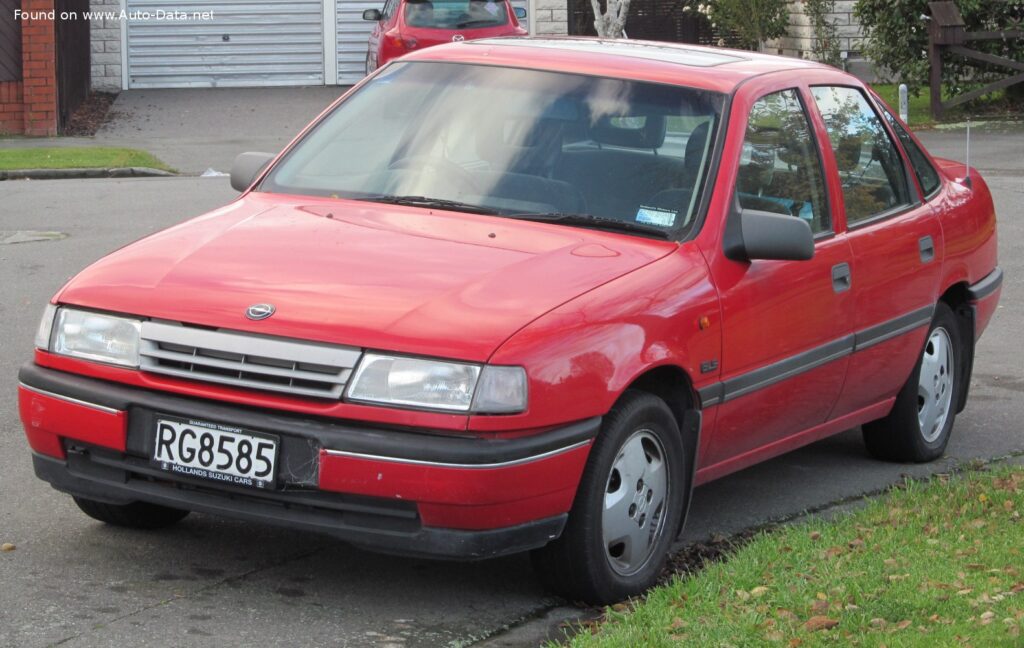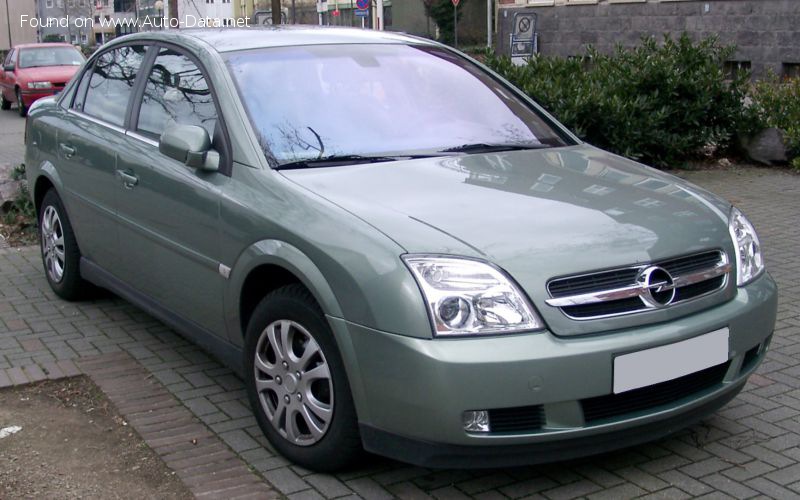
The Opel Vectra C CC 2.2 DTI ECOTEC (125 Hp) represents a significant offering from the German automaker Opel during the early 2000s, specifically from April 2002 to November 2004. As a key player in the European D-segment, or mid-size family car category, the Vectra C generation aimed to build upon its predecessors’ reputation for practicality, comfort, and robust engineering. The “CC” designation, often interpreted as ‘Compact Coupe’ or a nod to its hatchback configuration, distinguished this variant from the traditional sedan and wagon body styles. While Opel vehicles were not directly sold in the United States under the Opel brand name during this period, General Motors, Opel’s parent company, often shared platforms and technologies across its global brands, influencing vehicles sold in North America. The Vectra C, in particular, was lauded in its primary European markets for its blend of spaciousness, mature driving dynamics, and a strong emphasis on fuel efficiency, especially with its diesel engine offerings.
Engine & Performance: The 2.2 DTI ECOTEC Powerplant for the Opel Vectra C CC 2.2 DTI ECOTEC (125 Hp)
At the heart of this particular Opel Vectra C CC lies the 2.2 DTI ECOTEC engine, a four-cylinder inline diesel unit engineered for a balance of performance and economy. With a displacement of 2171 cubic centimeters (approximately 2.2 liters or 132.48 cubic inches), this engine delivers a respectable 125 horsepower at 4000 rpm. The “ECOTEC” moniker, a portmanteau for “Emissions, Consumption, Optimization, Technology,” underscored Opel’s commitment to developing engines that were not only powerful but also environmentally conscious and efficient for their time. This particular diesel variant, identified by the engine code Y22DTR, featured a common rail fuel injection system, a sophisticated technology for its era that allowed for precise control over fuel delivery, optimizing combustion and reducing emissions.
Further enhancing its performance and efficiency, the engine was equipped with both a turbocharger and an intercooler. The turbocharger significantly boosts engine power by forcing more air into the cylinders, while the intercooler cools this compressed air, making it denser and further improving combustion efficiency. This combination enabled the 2.2 DTI ECOTEC to produce a robust 280 Nm (or 206.52 lb.-ft.) of torque, available from a low 1500 rpm. This low-end torque characteristic is particularly beneficial for everyday driving, providing strong acceleration from a standstill and ample pulling power without needing to rev the engine excessively. The engine’s layout is front, transverse, driving the front wheels through a 5-speed manual transmission, a common and reliable setup for vehicles in this segment.
In terms of outright performance, the Opel Vectra C CC 2.2 DTI ECOTEC offered competitive figures for a family hatchback. It could accelerate from 0 to 60 mph in an estimated 10.3 seconds (0-100 km/h in 10.8 seconds), and reach a maximum speed of 128 mph (206 km/h). While not a performance car, these figures ensured confident overtaking and comfortable highway cruising. Where the diesel engine truly shone was in its fuel economy. The combined fuel consumption was rated at an impressive 6 liters per 100 kilometers, translating to approximately 39.2 US miles per gallon. Even in urban environments, it managed 8.2 l/100 km (28.7 US mpg), and on extra-urban cycles, it achieved an excellent 4.7 l/100 km (50 US mpg), making it a highly economical choice for European drivers facing rising fuel costs.
Design & Features: Practicality Meets European Styling
The Opel Vectra C CC adopted a sleek and understated design language characteristic of early 2000s European automobiles. Its hatchback body style, featuring five doors and seating for five occupants, emphasized practicality and versatility. With a length of 4596 mm (180.94 inches), a width of 1798 mm (70.79 inches, or 2036 mm/80.16 inches including mirrors), and a height of 1460 mm (57.48 inches), the Vectra C CC provided a substantial road presence and a spacious interior for its class. The 2700 mm (106.3 inches) wheelbase contributed to a stable ride and generous cabin space, particularly for rear passengers.
Inside, the Vectra C CC focused on ergonomic design and functional comfort. The hatchback configuration was a key selling point, offering a highly flexible cargo area. With the rear seats in place, the trunk provided a substantial 500 liters (17.66 cubic feet) of space, ample for family luggage or groceries. When the rear seats were folded down, this capacity expanded significantly to 1360 liters (48.03 cubic feet), transforming the vehicle into a capable cargo hauler. This adaptability made it a popular choice for families and individuals needing versatile transport.
From a chassis and safety perspective, the Vectra C CC was well-equipped for its time. It featured a front suspension utilizing spring struts, a common and effective setup for front-wheel-drive vehicles, providing a good balance of comfort and handling. The rear suspension employed a multi-link design, described as “several levers and rods,” which allowed for more independent wheel movement, enhancing ride comfort and stability, especially over uneven surfaces. Braking performance was handled by ventilated discs at the front and solid discs at the rear, complemented by an Anti-lock Braking System (ABS) as a standard assisting system, crucial for maintaining steering control during emergency braking. The steering system was a rack and pinion type, offering direct and responsive feedback to the driver. The vehicle rode on 195/65 R15 tires mounted on 6.5J x 15 wheel rims, providing a comfortable ride and adequate grip for its intended purpose. The 61-liter (16.11 US gallon) fuel tank ensured a long cruising range, further bolstering its appeal as a practical and economical family car.
Technical Specifications
| Brand | Opel |
| Model | Vectra |
| Generation | Vectra C CC |
| Type (Engine) | 2.2 DTI ECOTEC (125 Hp) |
| Start of production | April, 2002 year |
| End of production | November, 2004 year |
| Powertrain Architecture | Internal Combustion engine |
| Body type | Hatchback |
| Seats | 5 |
| Doors | 5 |
| Fuel consumption (economy) – urban | 8.2 l/100 km (28.7 US mpg, 34.4 UK mpg) |
| Fuel consumption (economy) – extra urban | 4.7 l/100 km (50 US mpg, 60.1 UK mpg) |
| Fuel consumption (economy) – combined | 6 l/100 km (39.2 US mpg, 47.1 UK mpg) |
| Fuel Type | Diesel |
| Acceleration 0 – 60 mph | 10.3 sec |
| Acceleration 0 – 100 km/h | 10.8 sec |
| Maximum speed | 206 km/h (128 mph) |
| Weight-to-power ratio | 11.4 kg/Hp, 87.4 Hp/tonne |
| Weight-to-torque ratio | 5.1 kg/Nm, 195.8 Nm/tonne |
| Power | 125 Hp @ 4000 rpm |
| Power per litre | 57.6 Hp/l |
| Torque | 280 Nm @ 1500 rpm (206.52 lb.-ft. @ 1500 rpm) |
| Engine layout | Front, Transverse |
| Engine Model/Code | Y22DTR |
| Engine displacement | 2171 cm3 (132.48 cu. in.) |
| Number of cylinders | 4 |
| Engine configuration | Inline |
| Cylinder Bore | 84 mm (3.31 in.) |
| Piston Stroke | 98 mm (3.86 in.) |
| Compression ratio | 18.5:1 |
| Number of valves per cylinder | 4 |
| Fuel injection system | Diesel Commonrail |
| Engine aspiration | Turbocharger, Intercooler |
| Valvetrain | OHC |
| Engine oil capacity | 5.5 l (5.81 US qt | 4.84 UK qt) |
| Coolant | 7.3 l (7.71 US qt | 6.42 UK qt) |
| Kerb Weight | 1430 kg (3152.61 lbs.) |
| Max. weight | 1995 kg (4398.22 lbs.) |
| Max load | 565 kg (1245.61 lbs.) |
| Trunk (boot) space – minimum | 500 l (17.66 cu. ft.) |
| Trunk (boot) space – maximum | 1360 l (48.03 cu. ft.) |
| Fuel tank capacity | 61 l (16.11 US gal | 13.42 UK gal) |
| Length | 4596 mm (180.94 in.) |
| Width | 1798 mm (70.79 in.) |
| Width including mirrors | 2036 mm (80.16 in.) |
| Height | 1460 mm (57.48 in.) |
| Wheelbase | 2700 mm (106.3 in.) |
| Front track | 1523 mm (59.96 in.) |
| Rear (Back) track | 1513 mm (59.57 in.) |
| Front overhang | 905 mm (35.63 in.) |
| Rear overhang | 991 mm (39.02 in.) |
| Drivetrain Architecture | The Internal combustion engine (ICE) drives the front wheels of the vehicle. |
| Drive wheel | Front wheel drive |
| Number of gears and type of gearbox | 5 gears, manual transmission |
| Front suspension | Spring Strut |
| Rear suspension | Several levers and rods |
| Front brakes | Ventilated discs |
| Rear brakes | Disc |
| Assisting systems | ABS (Anti-lock braking system) |
| Steering type | Steering rack and pinion |
| Tires size | 195/65 R15 |
| Wheel rims size | 6.5J x 15 |