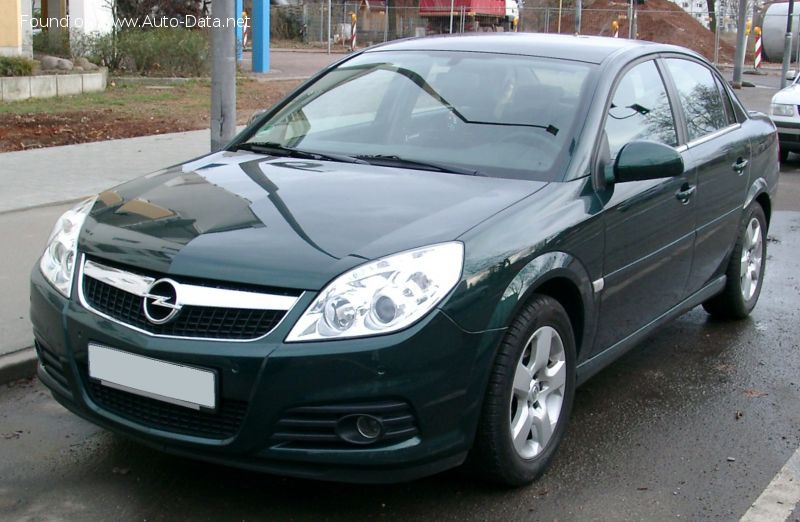
The Opel Vectra C, particularly in its facelifted iteration from 2005, represented a significant contender in the highly competitive European mid-size sedan segment. This generation, which ran from 2002 to 2008, received a substantial refresh in July 2005, enhancing its aesthetic appeal, refining its driving dynamics, and updating its technological offerings. The focus of this analysis is the potent Opel Vectra C (facelift 2005) 2.8i V6 24V Turbo (230 Hp) Automatic variant, a performance-oriented model that combined executive comfort with impressive power. While the Opel brand itself was not widely sold in the United States, the Vectra C shared its GM Epsilon platform with vehicles that did reach North American shores, such as the Saturn Aura and Chevrolet Malibu, offering a glimpse into the sophisticated engineering prevalent within General Motors’ global portfolio during that era. This particular model, produced from July 2005 to October 2006, stood out in its class for delivering a compelling blend of turbocharged performance, a smooth automatic transmission, and the practical versatility of a four-door sedan, catering to discerning European buyers seeking both dynamism and everyday usability.
The Opel Vectra C (facelift 2005): A Refined European Mid-Size Sedan
The 2005 facelift of the Opel Vectra C marked a pivotal moment for the model, introducing a sharper, more contemporary design and a host of mechanical and interior enhancements. This update was crucial for maintaining its competitive edge against rivals from Volkswagen, Ford, and Renault in the bustling European market. The design revisions included a redesigned front fascia with new headlights, a more prominent grille, and revised bumper styling, giving the car a more assertive and modern presence. At the rear, updated taillights and a subtly reshaped bumper completed the exterior transformation. Beyond aesthetics, the facelift also brought improvements to the chassis and suspension tuning, aiming for a more engaging driving experience and enhanced ride comfort, a hallmark for European sedans of its caliber. The Opel Vectra C (facelift 2005) was offered in various body styles, but the 2.8i V6 24V Turbo (230 Hp) Automatic variant specifically highlighted here was available as a four-door sedan, balancing sleek lines with practical accessibility for five occupants. This particular configuration underscored Opel’s commitment to offering a performance-oriented option within its mainstream family car lineup, targeting customers who desired more than just basic transportation.
Powertrain and Performance
At the heart of this formidable Opel Vectra C (facelift 2005) variant was its sophisticated 2.8-liter (2792 cm3 or 170.38 cu. in.) V6 engine, designated with the model code Z28NEL. This powerplant was a testament to modern engineering for its time, featuring 24 valves (four per cylinder) and a robust turbocharger with an intercooler. This forced induction system was instrumental in extracting a substantial 230 horsepower at 5500 rpm, translating to an impressive power-per-liter output of 82.4 Hp/l. Equally significant was the engine’s torque delivery, peaking at 243.4 lb.-ft. (330 Nm), which contributed to its strong acceleration and flexible in-gear performance. The V6 configuration ensured inherent smoothness, a desirable trait for a car positioned in the mid-size executive segment. Power was channeled to the front wheels through a refined 6-speed automatic transmission, offering seamless shifts and contributing to both driving comfort and efficiency. This combination allowed the Vectra C to sprint from 0 to 60 mph in a brisk 7.3 seconds and achieve a top speed of 155.34 mph (250 km/h), placing it firmly in the realm of genuine performance sedans. Despite its spirited performance, the engine maintained a compression ratio of 9.5:1 and utilized a multi-port manifold injection system, optimized for gasoline (petrol) fuel. Fuel economy, while not its primary focus, was respectable for a turbocharged V6 of its era, rated at an estimated 13.8 US mpg in urban driving and 32.2 US mpg on the extra-urban cycle, showcasing a balance between power and efficiency.
Exterior Design and Interior Amenities
The Opel Vectra C (facelift 2005) sedan embodied a design language that was both elegant and functional, characteristic of European automotive styling. Its overall length of 181.54 inches (4611 mm), width of 70.79 inches (1798 mm), and height of 57.48 inches (1460 mm) provided a substantial road presence and a spacious interior. The 106.3-inch (2700 mm) wheelbase contributed to both ride stability and generous cabin room. As a four-door sedan, it offered practical access for all five occupants, who benefited from a well-appointed interior designed for comfort on long journeys. The facelift brought subtle yet impactful changes to the cabin, including updated trim materials, revised instrument cluster graphics, and potentially enhanced infotainment options, depending on the specific trim level. Ergonomics were a key consideration, with controls logically placed and seating designed for support. The trunk space was generous for a vehicle of its class, offering 17.66 cubic feet (500 liters) of capacity, making it suitable for family trips or substantial cargo. Standard features for safety and convenience included an Anti-lock Braking System (ABS), a critical active safety feature for the mid-2000s, complemented by ventilated disc brakes on both the front and rear axles for confident stopping power. The car rode on 215/55 R16 tires mounted on 16-inch wheel rims, a practical size that balanced ride comfort with capable handling.
Driving Dynamics and Safety
The engineering of the Opel Vectra C (facelift 2005) was geared towards delivering a composed and confidence-inspiring driving experience. The chassis, refined during the facelift, featured an independent coil spring suspension system at both the front and rear. This setup was crucial for providing a sophisticated ride, absorbing road imperfections effectively while maintaining body control during dynamic maneuvers. The front-wheel-drive architecture, common for European sedans in this segment, offered predictable handling characteristics and good traction in varied conditions. The vehicle’s kerb weight of 3295.91 lbs (1495 kg) was well-managed by the powerful V6 engine, resulting in a favorable weight-to-power ratio of 6.5 kg/Hp. Safety was a paramount concern, and beyond the standard ABS, the Vectra C would have featured a comprehensive suite of passive safety systems, including multiple airbags and a rigid passenger safety cell, although specific details on these were not provided. The combination of its robust braking system, well-tuned suspension, and responsive powertrain ensured that the Vectra C 2.8i V6 Turbo offered not only spirited performance but also a secure and comfortable ride, making it a strong contender in its market segment for drivers seeking a blend of sportiness and practicality.
Technical Specifications: Opel Vectra C (facelift 2005) 2.8i V6 24V Turbo (230 Hp) Automatic
| General information | |
| Brand | Opel |
| Model | Vectra |
| Generation | Vectra C (facelift 2005) |
| Type (Engine) | 2.8i V6 24V Turbo (230 Hp) Automatic |
| Start of production | July, 2005 year |
| End of production | October, 2006 year |
| Powertrain Architecture | Internal Combustion engine |
| Body type | Sedan |
| Seats | 5 |
| Doors | 4 |
| Performance specs | |
| Fuel consumption (economy) – urban | 13.8 US mpg |
| Fuel consumption (economy) – extra urban | 32.2 US mpg |
| Fuel Type | Petrol (Gasoline) |
| Acceleration 0 – 60 mph | 7.3 sec |
| Maximum speed | 155.34 mph |
| Weight-to-power ratio | 6.5 kg/Hp, 153.8 Hp/tonne |
| Weight-to-torque ratio | 4.5 kg/Nm, 220.7 Nm/tonne |
| Engine specs | |
| Power | 230 Hp @ 5500 rpm. |
| Power per litre | 82.4 Hp/l |
| Torque | 243.4 lb.-ft. (330 Nm) |
| Engine layout | Front, Transverse |
| Engine Model/Code | Z28NEL |
| Engine displacement | 2.8 l (170.38 cu. in.) |
| Number of cylinders | 6 |
| Engine configuration | V-engine |
| Cylinder Bore | 3.5 in. (89 mm) |
| Piston Stroke | 2.94 in. (74.8 mm) |
| Compression ratio | 9.5:1 |
| Number of valves per cylinder | 4 |
| Fuel injection system | Multi-port manifold injection |
| Engine aspiration | Turbocharger, Intercooler |
| Engine oil capacity | 6.34 US qt (6 l) |
| Coolant | 7.93 US qt (7.5 l) |
| Space, Volume and weights | |
| Kerb Weight | 3295.91 lbs. (1495 kg) |
| Max. weight | 4497.43 lbs. (2040 kg) |
| Max load | 1201.52 lbs. (545 kg) |
| Trunk (boot) space – maximum | 17.66 cu. ft. (500 l) |
| Fuel tank capacity | 16.11 US gal (61 l) |
| Dimensions | |
| Length | 181.54 in. (4611 mm) |
| Width | 70.79 in. (1798 mm) |
| Height | 57.48 in. (1460 mm) |
| Wheelbase | 106.3 in. (2700 mm) |
| Front track | 60.47 in. (1536 mm) |
| Rear (Back) track | 60.04 in. (1525 mm) |
| Drivetrain, brakes and suspension specs | |
| Drivetrain Architecture | The Internal combustion engine (ICE) drives the front wheels of the vehicle. |
| Drive wheel | Front wheel drive |
| Number of gears and type of gearbox | 6 gears, automatic transmission |
| Front suspension | Independent coil spring |
| Rear suspension | Independent coil spring |
| Front brakes | Ventilated discs |
| Rear brakes | Ventilated discs |
| Assisting systems | ABS (Anti-lock braking system) |
| Tires size | 215/55 R16 |
| Wheel rims size | 16 |