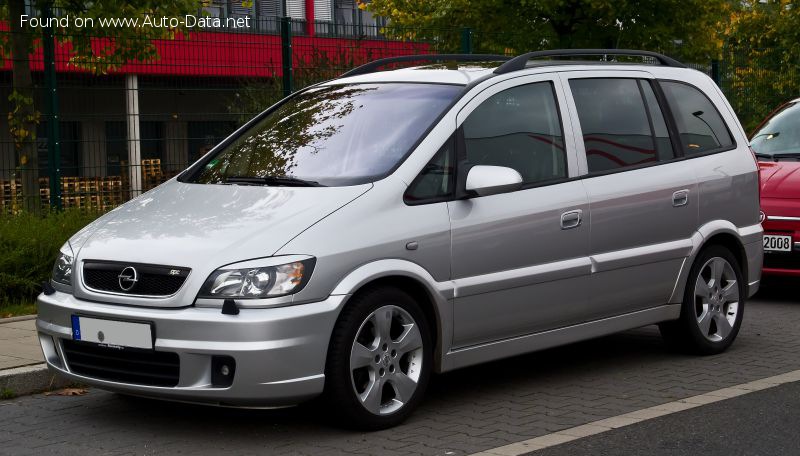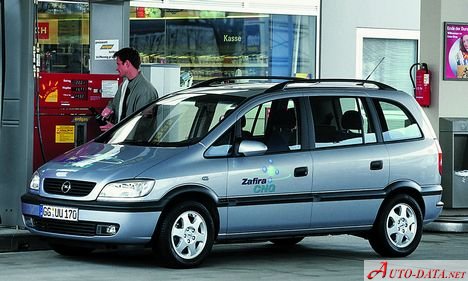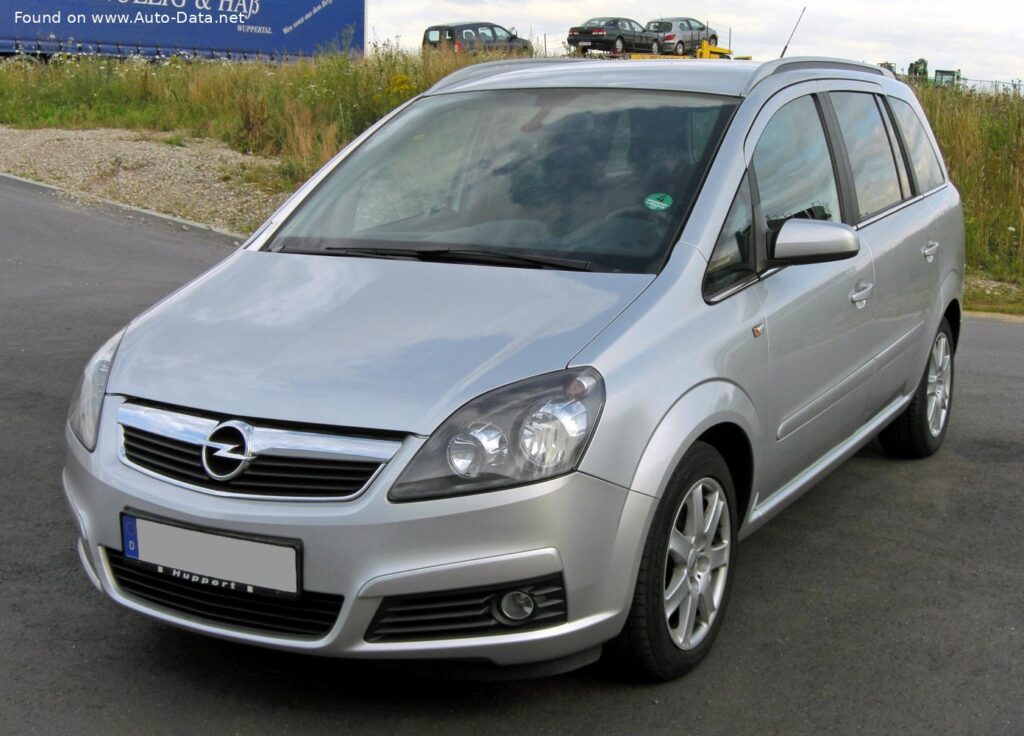
The Opel Zafira B 1.6i 16V CNG, produced between 2006 and 2007, represents a significant iteration of Opel’s popular compact minivan. Part of the second generation Zafira (B), this model was primarily aimed at the European market, offering a flexible seven-seat configuration and, crucially, a bi-fuel petrol/Compressed Natural Gas (CNG) powertrain. The Zafira B sought to improve upon its predecessor with enhanced interior space, improved safety features, and a more refined driving experience. While not officially sold in the United States, understanding the Zafira B provides insight into the European automotive landscape of the mid-2000s, where fuel efficiency and alternative fuels were gaining prominence.
Opel Zafira B: A European Compact MPV
The Zafira B occupied a crucial segment in the European automotive market – the compact Multi-Purpose Vehicle (MPV), often referred to as a minivan. These vehicles were designed to cater to families needing flexible seating and cargo arrangements. The Zafira distinguished itself with its innovative ‘Flex7’ seating system, allowing the third-row seats to be folded flat into the floor, creating a large, uninterrupted cargo area. The 1.6i 16V CNG variant specifically targeted environmentally conscious buyers, offering a lower carbon footprint compared to purely petrol-powered vehicles. The Zafira B competed with models like the Renault Scenic, Citroën Xsara Picasso, and Volkswagen Touran.
Engine & Performance
The heart of the Zafira B 1.6i 16V CNG is a 1.6-liter inline four-cylinder engine, designated the Z16YNG. This engine produces 94 horsepower at 6,200 rpm and 133 Nm (98.1 lb-ft) of torque at 4,200 rpm. The key feature is its bi-fuel capability, allowing it to run on either petrol or Compressed Natural Gas (CNG). When running on CNG, the engine’s output may be slightly reduced, but the significant benefit lies in lower emissions and reduced fuel costs where CNG infrastructure is available. The engine utilizes multi-port fuel injection and a double overhead camshaft (DOHC) valvetrain. Performance figures reflect the focus on economy rather than outright speed; acceleration from 0 to 100 km/h (0-62 mph) takes approximately 17 seconds, with a top speed of 165 km/h (102.53 mph). The weight-to-power ratio of 14.9 kg/Hp indicates a modest power output relative to the vehicle’s weight.
Design & Features
The Zafira B features a typical minivan silhouette, prioritizing interior space and practicality. Its five-door body style provides easy access to all seating positions. The exterior design, while functional, was considered relatively conservative for its time. Inside, the ‘Flex7’ seating system is the defining feature, offering a variety of seating configurations to accommodate passengers and cargo. Safety features for the era included Anti-lock Braking System (ABS) as standard. The interior materials were durable and designed for family use, though not particularly luxurious. The dashboard layout was straightforward and focused on ease of use. Trunk space is highly variable, ranging from 140 liters (4.94 cu. ft.) with all seats in use to a substantial 1820 liters (64.27 cu. ft.) with the rear seats folded. The drag coefficient of 0.31 is respectable for a vehicle of this type, contributing to reasonable fuel efficiency.
Technical Specifications
| Brand | Opel |
| Model | Zafira |
| Generation | Zafira B |
| Type (Engine) | 1.6i 16V (94 Hp) CNG |
| Start of production | July, 2006 |
| End of production | November, 2007 |
| Powertrain Architecture | Internal Combustion engine |
| Body type | Minivan |
| Seats | 7 |
| Doors | 5 |
| Fuel consumption (urban) | 6.4 l/100 km (36.8 US mpg, 44.1 UK mpg, 15.6 km/l) |
| Fuel consumption (extra urban) | 4.3 l/100 km (54.7 US mpg, 65.7 UK mpg, 23.3 km/l) |
| Fuel consumption (combined) | 5.2 l/100 km (45.2 US mpg, 54.3 UK mpg, 19.2 km/l) |
| CO2 emissions | 138 g/km |
| Fuel Type | Petrol / CNG |
| Acceleration 0 – 100 km/h | 17 sec |
| Acceleration 0 – 62 mph | 17 sec |
| Acceleration 0 – 60 mph | 16.2 sec |
| Maximum speed | 165 km/h (102.53 mph) |
| Emission standard | Euro 4 |
| Weight-to-power ratio | 14.9 kg/Hp |
| Weight-to-torque ratio | 10.6 kg/Nm |
| Power | 94 Hp @ 6200 rpm |
| Torque | 133 Nm @ 4200 rpm (98.1 lb.-ft. @ 4200 rpm) |
| Engine layout | Front, Transverse |
| Engine Model/Code | Z16YNG |
| Engine displacement | 1598 cm3 (97.52 cu. in.) |
| Number of cylinders | 4 |
| Engine configuration | Inline |
| Cylinder Bore | 79 mm (3.11 in.) |
| Piston Stroke | 81.5 mm (3.21 in.) |
| Compression ratio | 10.5:1 |
| Number of valves per cylinder | 4 |
| Fuel injection system | Multi-port manifold injection |
| Engine aspiration | Naturally aspirated engine |
| Valvetrain | DOHC |
| Engine oil capacity | 4.5 l (4.76 US qt | 3.96 UK qt) |
| Coolant | 6.1 l (6.45 US qt | 5.37 UK qt) |
| Kerb Weight | 1405 kg (3097.49 lbs.) |
| Max. weight | 2075 kg (4574.59 lbs.) |
| Max load | 670 kg (1477.1 lbs.) |
| Trunk (boot) space – minimum | 140 l (4.94 cu. ft.) |
| Trunk (boot) space – maximum | 1820 l (64.27 cu. ft.) |
| Length | 4467 mm (175.87 in.) |
| Width | 1801 mm (70.91 in.) |
| Height | 1645 mm (64.76 in.) |
| Wheelbase | 2703 mm (106.42 in.) |
| Front track | 1488 mm (58.58 in.) |
| Rear (Back) track | 1510 mm (59.45 in.) |
| Drag coefficient (Cd) | 0.31 |
| Minimum turning circle (turning diameter) | 10.9 m (35.76 ft.) |
| Drivetrain Architecture | The Internal combustion engine (ICE) drives the front wheels of the vehicle. |
| Drive wheel | Front wheel drive |
| Number of gears and type of gearbox | 5 gears, manual transmission |
| Front suspension | Spring Strut |
| Rear suspension | Torsion |
| Front brakes | Ventilated discs |
| Rear brakes | Disc |
| Assisting systems | ABS (Anti-lock braking system) |
| Steering type | Steering rack and pinion |
| Tires size | 205/55 R16 |
| Wheel rims size | 6.5J x 16 |
The Opel Zafira B 1.6i 16V CNG, while not a performance vehicle, offered a practical and economical solution for families in Europe. Its bi-fuel capability and flexible interior made it a popular choice for those seeking a versatile and environmentally conscious MPV.