
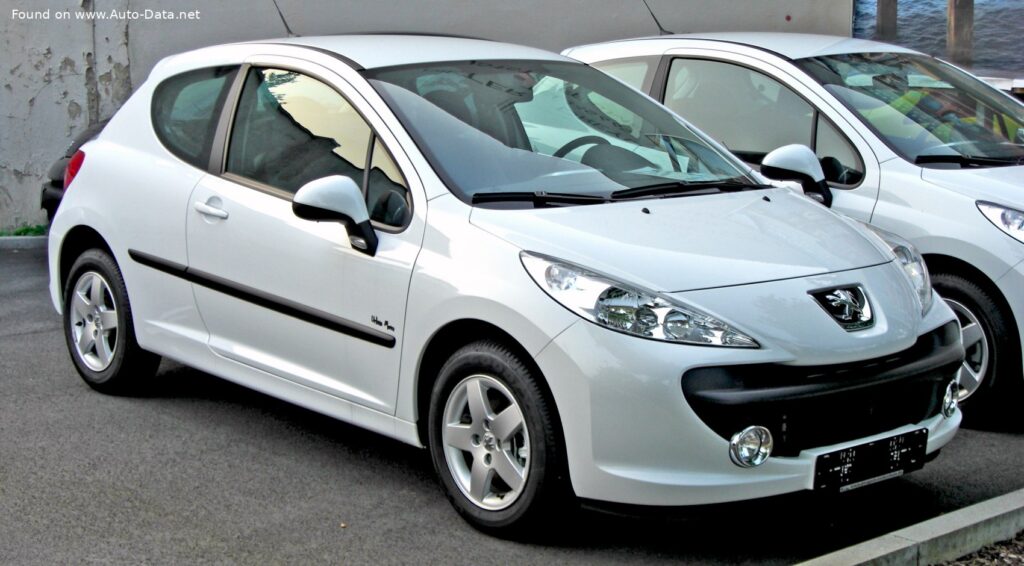
The Peugeot 207 1.6 i 16V (120 Hp) Automatic: A European B-Segment Contender
The Peugeot 207, a prominent figure in the European subcompact (B-segment) market, represented a significant evolution from its highly successful predecessor, the 206. Launched in 2006, the 207 aimed to elevate Peugeot’s offering in a fiercely competitive class, bringing a more sophisticated design, enhanced safety features, and a greater emphasis on comfort and refinement. The specific variant under review, the Peugeot 207 1.6 i 16V (120 Hp) Automatic, produced between 2007 and 2009, showcased a blend of adequate power, urban maneuverability, and the convenience of an automatic transmission, catering to a demographic seeking ease of driving without sacrificing reasonable performance. While Peugeot vehicles are not widely distributed in the United States, the 207 played a crucial role in Europe, Asia, and other international markets, serving as a high-volume seller that defined the brand’s presence in the compact segment for nearly a decade. This particular model, with its 1.6-liter engine and automatic gearbox, was positioned as a practical yet spirited option within the extensive 207 lineup, appealing to daily commuters and small families alike.
Engine and Performance of the Peugeot 207
At the heart of the Peugeot 207 1.6 i 16V (120 Hp) Automatic lies a naturally aspirated 1.6-liter (1598 cm³) inline four-cylinder engine, designated by the code 5FW EP6. This powerplant was a product of the PSA Group’s collaboration with BMW, a family of engines known for their efficiency and smooth operation. Featuring a Double Overhead Camshaft (DOHC) valvetrain with 16 valves (four per cylinder) and multi-port manifold injection, the engine delivers a respectable 120 horsepower at 6000 rpm. Its maximum torque output of 118.01 lb.-ft. (160 Nm) arrives at 4250 rpm, providing a responsive feel for urban driving and sufficient grunt for highway cruising. The compression ratio of 11:1 contributes to its efficiency.
Power is channeled to the front wheels through a 4-speed automatic transmission. While a 4-speed automatic might be considered somewhat dated by today’s standards, for its era, it offered a smooth and user-friendly driving experience, particularly in congested city environments where manual shifting could be tiresome. This combination allowed the 207 to accelerate from 0 to 60 mph in a calculated 10.8 seconds, with a top speed reaching 121.17 mph (195 km/h).
In terms of fuel economy, the 1.6-liter engine demonstrated a commendable balance for its class and the presence of an automatic transmission. The combined fuel economy is rated at 33.6 US mpg (7 l/100 km), with city driving yielding approximately 24 US mpg (9.8 l/100 km) and highway driving significantly better at 42.8 US mpg (5.5 l/100 km). These figures were competitive within its segment during its production run, underscoring Peugeot’s commitment to efficiency. The vehicle also met the Euro 4 emission standard, reflecting its compliance with contemporary environmental regulations in its primary markets.
Design and Features
The Peugeot 207 was offered in various body styles, with this specific variant being a versatile hatchback available in both 3-door and 5-door configurations, accommodating five occupants. Its design language was a significant departure from the more rounded 206, adopting a more aggressive and contemporary aesthetic characterized by a larger, more prominent front grille, swept-back headlights, and a muscular stance. The overall length of 158.66 inches (4030 mm), width of 67.72 inches (1720 mm), and height of 57.95 inches (1472 mm) placed it firmly within the supermini segment, making it agile for city driving and easy to park. The wheelbase of 100 inches (2540 mm) contributed to a stable ride and a surprisingly spacious cabin for its class.
Aerodynamics were also considered, with a drag coefficient (Cd) of 0.30, which aided both performance and fuel efficiency. The 207’s interior was designed with an emphasis on comfort and functionality. While specific trim levels varied, standard features for a car of this segment and era often included power steering (rack and pinion type), front power windows, central locking, and a basic audio system. Safety was a key focus for the 207, building on Peugeot’s reputation. The vehicle came equipped with an Anti-lock Braking System (ABS) as standard, complemented by ventilated disc brakes at the front and drum brakes at the rear, providing reliable stopping power. The suspension setup, featuring an independent McPherson strut system with coil springs and an anti-roll bar at the front and a semi-independent elastic beam with coil springs at the rear, aimed to strike a balance between comfortable ride quality and engaging handling dynamics, a hallmark of Peugeot’s engineering.
Practicality was also a strong suit, with a minimum cargo volume of 9.53 cubic feet (270 liters), expandable to a generous 32.6 cubic feet (923 liters) with the rear seats folded down, making it suitable for varying cargo needs. The 50-liter (13.21 US gallons) fuel tank provided a decent cruising range. The vehicle rode on 195/55 R16 tires, offering a good compromise between grip and ride comfort.
Technical Specifications
| Category | Specification | US/Imperial Equivalent |
|---|---|---|
| General Information | ||
| Brand | Peugeot | |
| Model | 207 | |
| Generation | 207 | |
| Type (Engine) | 1.6 i 16V (120 Hp) Automatic | |
| Start of Production | 2007 | |
| End of Production | 2009 | |
| Powertrain Architecture | Internal Combustion engine | |
| Body Type | Hatchback | |
| Seats | 5 | |
| Doors | 3-5 | |
| Performance Specs | ||
| City Fuel Economy | 9.8 l/100 km | 24 US mpg |
| Highway Fuel Economy | 5.5 l/100 km | 42.8 US mpg |
| Combined Fuel Economy | 7 l/100 km | 33.6 US mpg |
| Fuel Type | Gasoline | |
| Acceleration 0 – 60 mph | 10.8 sec | |
| Maximum Speed | 195 km/h | 121.17 mph |
| Emission Standard | Euro 4 | |
| Weight-to-Power Ratio | 10.9 kg/Hp | 91.5 Hp/tonne |
| Weight-to-Torque Ratio | 8.2 kg/Nm | 122 Nm/tonne |
| Engine Specs | ||
| Power | 120 Hp @ 6000 rpm | |
| Power per liter | 75.1 Hp/l | |
| Torque | 160 Nm @ 4250 rpm | 118.01 lb.-ft. @ 4250 rpm |
| Engine Layout | Front, Transverse | |
| Engine Model/Code | 5FW EP6 | |
| Engine Displacement | 1598 cm³ | 1.6 Liters / 97.52 cu. in. |
| Number of Cylinders | 4 | |
| Engine Configuration | Inline | |
| Cylinder Bore | 77 mm | 3.03 in. |
| Piston Stroke | 85.8 mm | 3.38 in. |
| Compression Ratio | 11:1 | |
| Number of Valves per Cylinder | 4 | |
| Fuel Injection System | Multi-port manifold injection | |
| Engine Aspiration | Naturally aspirated engine | |
| Valvetrain | DOHC | |
| Engine Oil Capacity | 4.25 l | 4.49 US qt |
| Coolant Capacity | 5.4 l | 5.71 US qt |
| Space, Volume and Weights | ||
| Curb Weight | 1312 kg | 2892.46 lbs. |
| Max. Weight | 1678 kg | 3699.36 lbs. |
| Max Load | 366 kg | 806.89 lbs. |
| Cargo Volume (min) | 270 l | 9.53 cu. ft. |
| Cargo Volume (max) | 923 l | 32.6 cu. ft. |
| Fuel Tank Capacity | 50 l | 13.21 US gal |
| Dimensions | ||
| Length | 4030 mm | 158.66 in. |
| Width | 1720 mm | 67.72 in. |
| Width with mirrors folded | 1818 mm | 71.57 in. |
| Width including mirrors | 1972 mm | 77.64 in. |
| Height | 1472 mm | 57.95 in. |
| Wheelbase | 2540 mm | 100 in. |
| Front Track | 1475 mm | 58.07 in. |
| Rear Track | 1466 mm | 57.72 in. |
| Drag Coefficient (Cd) | 0.30 | |
| Minimum Turning Circle | 10.4 m | 34.12 ft. |
| Drivetrain, Brakes and Suspension Specs | ||
| Drivetrain Architecture | Front-wheel drive, Internal Combustion engine | |
| Drive Wheel | Front wheel drive | |
| Number of Gears and Type of Gearbox | 4 gears, automatic transmission | |
| Front Suspension | Independent, McPherson with coil spring and anti-roll bar | |
| Rear Suspension | Semi-independent, coil spring, Elastic beam | |
| Front Brakes | Ventilated discs | |
| Rear Brakes | Drum | |
| Assisting Systems | ABS (Anti-lock braking system) | |
| Steering Type | Steering rack and pinion | |
| Tires Size | 195/55 R16 | |
Legacy and Market Impact of the Peugeot 207
The Peugeot 207, particularly variants like the 1.6 i 16V (120 Hp) Automatic, carved out a significant niche in its primary markets, largely Europe, succeeding the iconic 206, which had sold over 8 million units globally. While it never officially graced American showrooms, its impact across the Atlantic was undeniable. The 207 was designed to be a more substantial and premium offering than its predecessor, aiming to compete with increasingly sophisticated rivals in the crowded B-segment.
Its market reputation was generally positive, lauded for its stylish design, which was seen as more mature and sophisticated than the 206. Drivers appreciated its comfortable ride quality, refined interior (for its class), and responsive handling, attributes often associated with Peugeot. The 1.6-liter engine, co-developed with BMW, was particularly well-regarded for its balance of performance and fuel efficiency, a crucial factor in markets with high fuel prices. The availability of an automatic transmission made it an attractive option for urban dwellers and those prioritizing convenience, especially as automatic transmissions became more prevalent in smaller cars.
In Europe, the Peugeot 207 faced stiff competition from a host of well-established and popular models. Its main rivals included the Renault Clio, Ford Fiesta, Volkswagen Polo, Opel Corsa (Vauxhall Corsa in the UK), Fiat Grande Punto, and the Skoda Fabia. Each of these competitors offered a strong proposition, whether through brand loyalty, perceived reliability, or specific features. The 207 distinguished itself with its distinctive French styling, comfortable suspension tuning, and a perception of being a slightly more upmarket choice compared to some of its utilitarian rivals.
Historically, the 207 represented a pivotal moment for Peugeot. It maintained the brand’s strong presence in the supermini segment, continuing the legacy of its ’20x’ series. Its design cues influenced subsequent Peugeot models, and its engineering advancements, particularly in engine technology and safety, set new benchmarks for the brand in this class. While its production for major European markets concluded around 2012 (though it continued in some regions until 2014), paving the way for the even more successful 208, the 207 remains a testament to Peugeot’s ability to produce compelling, well-rounded compact cars that resonated deeply with a broad international audience. The 1.6 i 16V (120 Hp) Automatic variant, in particular, offered a practical and enjoyable driving experience that contributed significantly to the 207’s overall success and enduring appeal as a quintessential European hatchback of its time.
