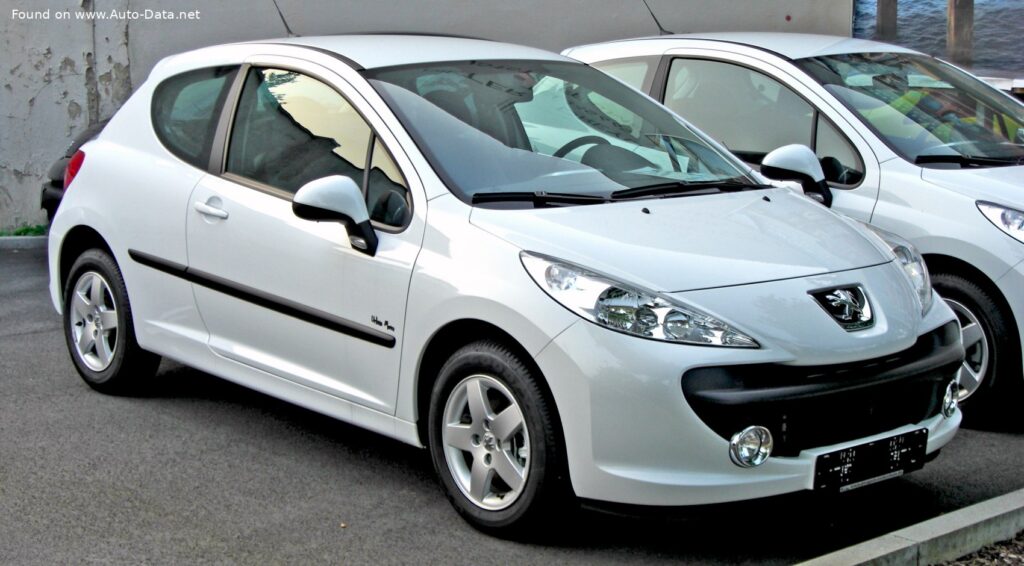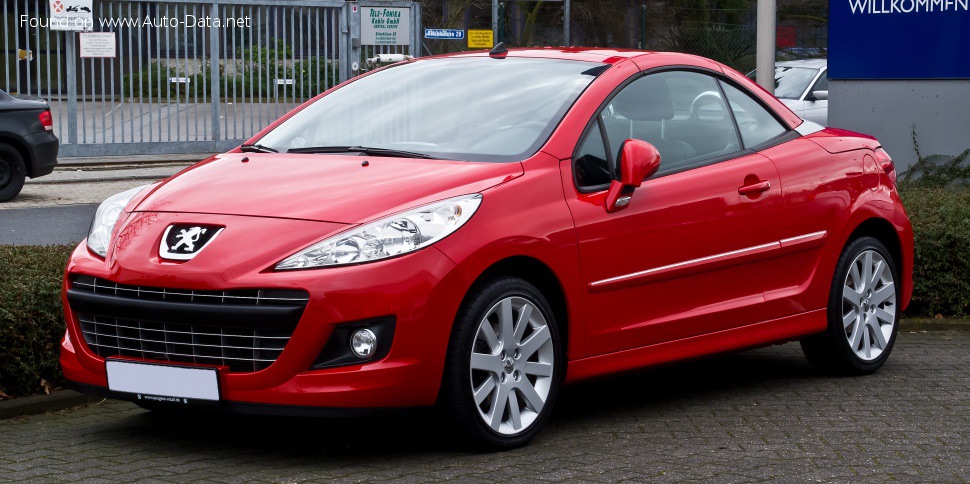
As an international automotive expert, I present a detailed analysis of the Peugeot 207 CC (facelift 2009) 1.6 HDi (109 Hp), a notable entry in the European compact coupe-cabriolet segment.
Introduction to the Peugeot 207 CC (facelift 2009)
The Peugeot 207 CC (facelift 2009) represents a significant chapter in the French automaker’s commitment to the accessible convertible market. Introduced as a refreshed version of the popular 207 CC, this model continued the legacy established by its highly successful predecessor, the 206 CC. The “CC” designation, standing for “Coupe-Cabriolet,” denotes its defining feature: a retractable hardtop roof, offering the security and refinement of a coupe combined with the open-air exhilaration of a convertible.
Positioned within the competitive European B-segment (subcompact) market, the 207 CC aimed to provide a stylish, versatile, and relatively affordable option for consumers seeking a blend of practicality and leisure. Unlike many European models, the Peugeot 207 CC was never officially sold in the United States, a strategic decision by Peugeot to focus on its primary markets in Europe and other international regions. This particular variant, equipped with the 1.6 HDi (109 Hp) diesel engine, highlights Peugeot’s expertise in efficient diesel powertrains, catering to European demand for fuel economy and lower emissions, even in a lifestyle vehicle.
The 2009 facelift brought subtle but meaningful updates to the 207 CC, aligning its aesthetics with Peugeot’s contemporary design language and incorporating minor technical refinements. This iteration, produced for a short period in 2009, served as a bridge before further evolutions in Peugeot’s compact lineup. It maintained its 2-door, 4-seat configuration, offering a compact footprint suitable for urban environments while still providing enough space for two adults and occasional rear passengers.
Engine & Performance: The 1.6 HDi (109 Hp) Powertrain
At the heart of this particular Peugeot 207 CC (facelift 2009) model lies the highly regarded 1.6-liter HDi (High-pressure Direct Injection) diesel engine, a powerplant celebrated for its blend of efficiency and respectable performance. This inline four-cylinder, designated with the internal code 9HZ DV6TED4, features a DOHC (Double Overhead Camshaft) valvetrain with 4 valves per cylinder, ensuring efficient air intake and exhaust.
The engine’s displacement of 1560 cubic centimeters (95.2 cubic inches) is complemented by a sophisticated fuel injection system utilizing common rail technology, which precisely atomizes diesel fuel for optimal combustion. Further enhancing its performance and efficiency is a turbocharger coupled with an intercooler, which forces more air into the cylinders, leading to increased power output and torque across a broad RPM range. This setup allows the engine to produce a healthy 109 horsepower at 4000 rpm, delivering a power-per-liter ratio of 69.9 horsepower per liter.
Crucially for a diesel, torque is abundant, peaking at 240 Newton meters (177.01 lb.-ft.) at a low 1750 rpm. This substantial low-end torque is key to the car’s responsive feel in city driving and its ability to cruise comfortably on highways. Power is sent to the front wheels via a 5-speed manual transmission, offering direct engagement and control for the driver. The drivetrain architecture is a classic front-engine, front-wheel-drive layout, known for its packaging efficiency and predictable handling characteristics.
In terms of acceleration, the 207 CC 1.6 HDi manages a 0 to 60 mph sprint in a respectable 10.4 seconds, with a top speed of 119.92 mph (193 km/h). However, where this powertrain truly shines is in its fuel economy. The combined cycle fuel consumption is an impressive 5 liters per 100 kilometers, translating to approximately 47 US miles per gallon. Urban driving yields around 37.9 US mpg, while extra-urban cruising can achieve an outstanding 54.7 US mpg. These figures, coupled with CO2 emissions of 130 g/km, underscore its compliance with the Euro 4 emission standard, making it an environmentally conscious choice for its era.
Design & Features of the Peugeot 207 CC (facelift 2009)
The design of the Peugeot 207 CC (facelift 2009) is intrinsically linked to its “Coupe-Cabriolet” body type. With two doors and seating for four, the car’s proportions are carefully balanced to accommodate the complex mechanism of its retractable hardtop roof. When the roof is up, the 207 CC presents a sleek, compact coupe profile, characterized by its distinctive “peugeot nose” and swept-back headlights. The 2009 facelift introduced subtle refinements to the front fascia, often including revised grilles, updated fog light surrounds, and perhaps minor tweaks to the rear lights, ensuring it remained fresh and appealing.
The party trick of the 207 CC is, of course, its fully automatic, electro-hydraulic folding hardtop. This system allows the driver to transform the car from a secure coupe into an open-air convertible with the press of a button, typically in under 25 seconds. This feature provided significant advantages over traditional soft-top convertibles, including enhanced security, better insulation from noise and weather, and improved structural rigidity.
Measuring 159.21 inches (4044 mm) in length, 68.82 inches (1748 mm) in width (77.64 inches including mirrors), and 54.84 inches (1393 mm) in height, the 207 CC has a compact footprint, making it nimble in urban environments. Its 100-inch (2540 mm) wheelbase contributes to a stable ride for a car of its size. The minimum turning circle of 36.09 feet (11.0 m) further aids maneuverability.
Inside, the 207 CC offered a cockpit-like feel for the front occupants, with a dashboard design typical of Peugeot’s contemporary models – modern, ergonomic, and featuring quality materials for its class. While technically a four-seater, the rear seats were primarily designed for children or for short journeys, a common compromise in compact 2+2 convertibles. Trunk space is a significant consideration in hardtop convertibles; the 207 CC offered 13.07 cubic feet (370 liters) with the roof up, shrinking to 5.12 cubic feet (145 liters) when the roof was stowed, which is typical for this type of vehicle.
Safety features for the 2009 model included standard ABS (Anti-lock Braking System), ventilated discs at the front, and disc brakes at the rear, providing adequate stopping power. The car’s structure was designed with specific reinforcements to compensate for the absence of a fixed roof, aiming to maintain occupant protection in a rollover scenario. The front suspension utilized an independent McPherson type, while the rear featured a semi-independent setup with coil springs, providing a balance of comfort and handling that was characteristic of Peugeot.
Technical Specifications
| Category | Specification | US Equivalent / Notes |
|---|---|---|
| General Information | ||
| Brand | Peugeot | |
| Model | 207 | |
| Generation | 207 CC (facelift 2009) | |
| Type (Engine) | 1.6 HDi (109 Hp) | |
| Start of Production | 2009 year | |
| End of Production | 2009 year | |
| Powertrain Architecture | Internal Combustion engine | |
| Body Type | Coupe – Cabriolet | |
| Seats | 4 | |
| Doors | 2 | |
| Performance Specs | ||
| Fuel Consumption (Economy) – Urban | 6.2 l/100 km | 37.9 US mpg |
| Fuel Consumption (Economy) – Extra Urban | 4.3 l/100 km | 54.7 US mpg |
| Fuel Consumption (Economy) – Combined | 5 l/100 km | 47 US mpg |
| CO2 Emissions | 130 g/km | |
| Fuel Type | Diesel | |
| Acceleration 0 – 60 mph | 10.4 sec | |
| Maximum Speed | 193 km/h | 119.92 mph |
| Emission Standard | Euro 4 | |
| Weight-to-Power Ratio | 12.9 kg/Hp | 77.6 Hp/tonne |
| Weight-to-Torque Ratio | 5.9 kg/Nm | 170.8 Nm/tonne |
| Engine Specs | ||
| Power | 109 Hp @ 4000 rpm | |
| Power per Liter | 69.9 Hp/l | |
| Torque | 240 Nm @ 1750 rpm | 177.01 lb.-ft. @ 1750 rpm |
| Engine Layout | Front, Transverse | |
| Engine Model/Code | 9HZ DV6TED4 | |
| Engine Displacement | 1560 cm3 | 1.6 Liters / 95.2 cu. in. |
| Number of Cylinders | 4 | |
| Engine Configuration | Inline | |
| Cylinder Bore | 75 mm | 2.95 in. |
| Piston Stroke | 88.3 mm | 3.48 in. |
| Compression Ratio | 17.6:1 | |
| Number of Valves per Cylinder | 4 | |
| Fuel Injection System | Diesel Commonrail | |
| Engine Aspiration | Turbocharger, Intercooler | |
| Valvetrain | DOHC | |
| Engine Oil Capacity | 3.75 l | 3.96 US qt |
| Coolant Capacity | 5.6 l | 5.92 US qt |
| Space, Volume and Weights | ||
| Kerb Weight | 1405 kg | 3097.49 lbs. |
| Max. Weight | 1785 kg | 3935.25 lbs. |
| Max Load | 380 kg | 837.76 lbs. |
| Trunk (boot) Space – Minimum | 145 l | 5.12 cu. ft. |
| Trunk (boot) Space – Maximum | 370 l | 13.07 cu. ft. |
| Fuel Tank Capacity | 50 l | 13.21 US gal |
| Permitted Trailer Load with Brakes (12%) | 1070 kg | 2358.95 lbs. |
| Permitted Trailer Load without Brakes | 600 kg | 1322.77 lbs. |
| Dimensions | ||
| Length | 4044 mm | 159.21 in. |
| Width | 1748 mm | 68.82 in. |
| Width with Mirrors Folded | 1818 mm | 71.57 in. |
| Width Including Mirrors | 1972 mm | 77.64 in. |
| Height | 1393 mm | 54.84 in. |
| Wheelbase | 2540 mm | 100 in. |
| Front Track | 1469 mm | 57.83 in. |
| Rear (Back) Track | 1470 mm | 57.87 in. |
| Drag Coefficient (Cd) | 0.31 | |
| Minimum Turning Circle (Turning Diameter) | 11.0 m | 36.09 ft. |
| Drivetrain, Brakes and Suspension Specs | ||
| Drivetrain Architecture | The Internal combustion engine (ICE) drives the front wheels of the vehicle. | |
| Drive Wheel | Front wheel drive | |
| Number of Gears and Type of Gearbox | 5 gears, manual transmission | |
| Front Suspension | Independent type McPherson | |
| Rear Suspension | Semi-independent, coil spring | |
| Front Brakes | Ventilated discs | |
| Rear Brakes | Disc | |
| Assisting Systems | ABS (Anti-lock braking system) | |
| Steering Type | Steering rack and pinion | |
| Tires Size | 195/55 R16 | |
| Wheel Rims Size | 16 | |
Legacy & Market Impact of the Peugeot 207 CC (facelift 2009)
The Peugeot 207 CC (facelift 2009) played a significant role in solidifying Peugeot’s reputation as a pioneer and leader in the compact coupe-cabriolet segment in Europe. Following the phenomenal success of the 206 CC, which essentially created this niche, the 207 CC had big shoes to fill, and it largely succeeded. Its market impact was primarily felt across European countries, where the demand for stylish, fuel-efficient, and versatile cars that could adapt to varying weather conditions was high.
In its segment, the 207 CC faced competition from a host of other European and Asian manufacturers who quickly adopted the retractable hardtop concept. Key rivals included the Opel Tigra TwinTop, Nissan Micra C+C, Mitsubishi Colt CZC, and even larger, more premium offerings like the Volkswagen Eos, though the 207 CC typically sat at a more accessible price point. What distinguished the 207 CC was its blend of French flair, proven diesel economy, and the practical advantages of a hardtop over traditional soft-tops, particularly in terms of security and all-season usability.
The 1.6 HDi (109 Hp) variant, in particular, was a shrewd offering in markets where diesel fuel was prevalent and favored for its lower running costs and reduced CO2 emissions. This powertrain choice positioned the 207 CC as an attractive option for younger buyers or those seeking a second car that was both fun and economical. Its reputation was built on its distinctive styling, the novelty and convenience of its folding roof, and Peugeot’s historically strong chassis tuning, which offered a comfortable yet engaging driving experience.
Historically, the 207 CC continued Peugeot’s “CC” lineage, demonstrating the brand’s commitment to innovation in body styles and its ability to bring niche concepts to a mass market. While the trend of small hardtop convertibles eventually waned due to increasing manufacturing complexity, cost, and a shift in consumer preferences towards crossovers and SUVs, the 207 CC stands as a testament to a golden age of diverse and imaginative automotive design. It left a legacy as a charming, practical, and efficient open-top vehicle that brought convertible ownership within reach for many European consumers, even if it remained an exotic sight for American enthusiasts.