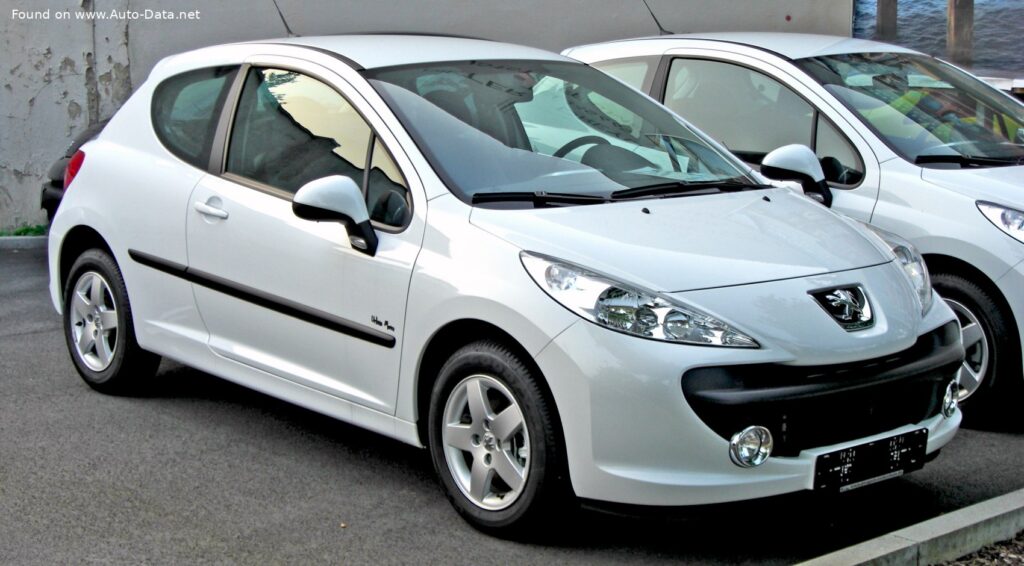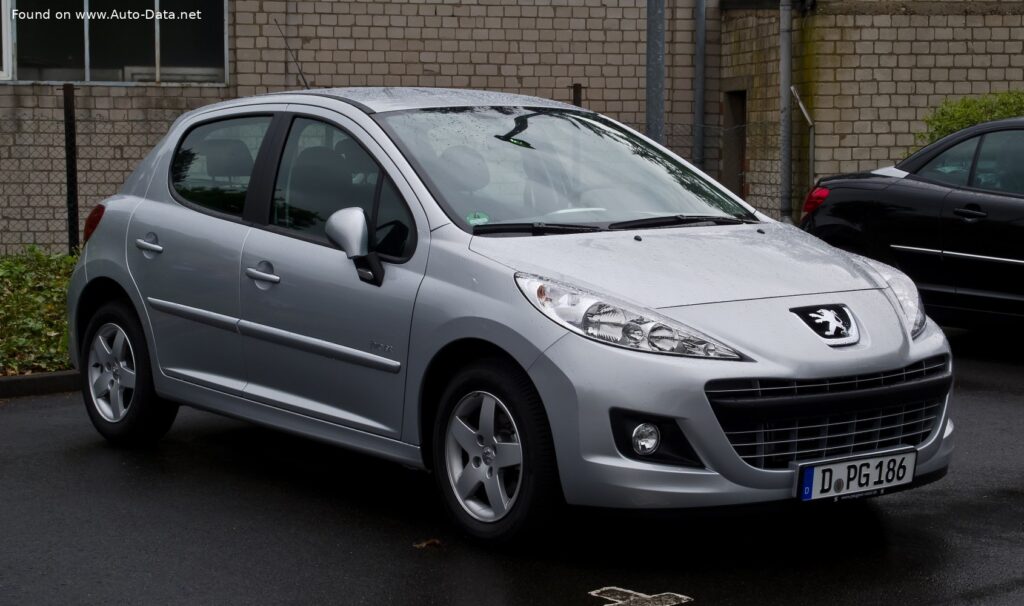
Introduction to the Peugeot 207 (facelift 2009) RC 1.6 (174 Hp)
The Peugeot 207, a prominent contender in Europe’s highly competitive B-segment or supermini class, received a significant refresh in 2009, enhancing its aesthetic appeal and refining its mechanical offerings. Among the various trims and engine configurations, the Peugeot 207 (facelift 2009) RC 1.6 (174 Hp) stood out as the performance-oriented variant, designed to deliver a spirited driving experience for enthusiasts. This particular model, produced from 2009 to 2012, was Peugeot’s answer to the burgeoning demand for compact, agile “hot hatchbacks” in its primary European market.
While never officially sold in the United States, the Peugeot 207 RC represented a crucial part of Peugeot’s global strategy, showcasing its engineering prowess and commitment to dynamic performance within a practical, everyday package. The “RC” designation, often associated with Peugeot’s performance models, signaled a focus on sporty handling and a potent powertrain, distinguishing it from its more pedestrian siblings. This article will delve into the technical specifications, design philosophy, and market impact of this engaging French compact, utilizing American English terminology for clarity.
Powertrain and Performance of the Peugeot 207 (facelift 2009) RC 1.6 (174 Hp)
Engine Specifications and Output
At the heart of the Peugeot 207 (facelift 2009) RC 1.6 (174 Hp) lies a sophisticated 1.6-liter (1598 cm3 or 97.52 cu. in.) inline-four gasoline engine, internally designated as the 5FY EP6DTS. This powerplant, a product of a collaborative effort between PSA Peugeot Citroën and BMW, was renowned for its advanced technology and impressive power delivery for its displacement. Featuring a direct injection fuel system, a turbocharger, and an intercooler, the engine produced a robust 174 horsepower at 6000 rpm. This translated to a remarkable power per liter of 108.9 HP/l, underscoring its high-performance tuning.
Torque figures were equally impressive, with the engine generating 240 Nm, or approximately 177.01 lb.-ft., across a broad and accessible rev range from 1600 to 3500 rpm. This wide torque band ensured excellent responsiveness and flexibility in various driving conditions, whether navigating city streets or tackling winding country roads. The engine also incorporated DOHC-VVT (Double Overhead Camshaft with Variable Valve Timing), further optimizing combustion efficiency and performance across the entire RPM spectrum. With a compression ratio of 10.5:1 and four valves per cylinder, the engine was engineered for both power and refinement, adhering to the Euro 5 emission standard prevalent at the time.
Driving Dynamics and Fuel Efficiency
Power was delivered to the front wheels via a precise 5-speed manual transmission, a common choice for hot hatches of this era, offering direct driver engagement. This setup allowed the 207 RC to accelerate from 0 to 60 mph in a brisk 6.7 seconds, with a 0 to 100 km/h sprint completed in 7.1 seconds. The car could reach a maximum speed of 136.7 mph (220 km/h), firmly placing it in the performance hatchback category.
Despite its sporty inclinations, Peugeot also focused on balancing performance with reasonable fuel economy for its class. The combined fuel consumption was rated at 7.2 l/100 km, which translates to an estimated 32.7 US mpg. Urban driving saw consumption figures around 9.9 l/100 km (23.8 US mpg), while extra-urban cruising improved significantly to 5.7 l/100 km (41.3 US mpg). These figures, combined with CO2 emissions of 171 g/km, highlighted Peugeot’s efforts to offer a performance car that was also mindful of environmental impact within its segment. The vehicle’s weight-to-power ratio of 7.1 kg/Hp (140.3 Hp/tonne) and weight-to-torque ratio of 5.2 kg/Nm (193.5 Nm/tonne) further illustrate its agile and responsive character.
Design and Features
Exterior Styling and Dimensions
The Peugeot 207 (facelift 2009) RC 1.6 (174 Hp) maintained the 3-door hatchback body type, which is often favored for performance variants due to its inherent structural rigidity and sportier profile. The 2009 facelift brought subtle yet effective styling updates, including revised front fascias, new lighting elements, and refreshed trim details, giving the 207 a more contemporary and aggressive look without straying far from its original design language.
Dimensionally, the 207 RC measured 159.25 inches (4045 mm) in length, 68.82 inches (1748 mm) in width (77.64 inches or 1972 mm including mirrors), and 57.95 inches (1472 mm) in height. Its wheelbase of 100 inches (2540 mm) contributed to a stable ride, while the relatively compact dimensions ensured nimble handling, crucial for a hot hatch. The car’s aerodynamic efficiency was respectable for its class, with a drag coefficient (Cd) of 0.30. The RC model typically featured sportier exterior cues, such as unique alloy wheels—specifically 17-inch rims fitted with 205/45 R17 tires—and possibly subtle body kits or badging to differentiate it from standard models.
Interior, Chassis, and Safety
Inside, the 207 RC offered seating for five occupants, though the rear seats, typical for a compact hatchback, were best suited for shorter journeys or smaller passengers. The trunk space was practical, ranging from 9.53 cu. ft. (270 liters) with the rear seats up, expanding to a generous 32.6 cu. ft. (923 liters) when the seats were folded down, providing versatility for cargo. The interior likely featured sport seats, unique trim accents, and a sport steering wheel to emphasize its performance credentials.
The chassis was designed to complement the powerful engine. The front suspension utilized an independent McPherson strut setup with coil springs and an anti-roll bar, offering precise steering and good road holding. The rear employed a semi-independent setup with coil springs and an elastic beam, a cost-effective and space-efficient solution common in this segment. Braking performance was handled by ventilated discs at the front and solid discs at the rear, augmented by an Anti-lock Braking System (ABS) for enhanced safety and control during hard braking. The steering system was a responsive rack and pinion type, contributing to the car’s agile feel. These features, combined with a kerb weight of 2733.73 lbs. (1240 kg), ensured a dynamic and engaging driving experience.
Technical Specifications: Peugeot 207 (facelift 2009) RC 1.6 (174 Hp)
| General Information | |
|---|---|
| Brand | Peugeot |
| Model | 207 |
| Generation | 207 (facelift 2009) |
| Type (Engine) | RC 1.6 (174 Hp) |
| Start of Production | 2009 year |
| End of Production | 2012 year |
| Powertrain Architecture | Internal Combustion engine |
| Body type | Hatchback |
| Seats | 5 |
| Doors | 3 |
| Performance Specifications | |
| Fuel Consumption (Economy) – Urban | 9.9 l/100 km (23.8 US mpg) |
| Fuel Consumption (Economy) – Extra Urban | 5.7 l/100 km (41.3 US mpg) |
| Fuel Consumption (Economy) – Combined | 7.2 l/100 km (32.7 US mpg) |
| CO2 Emissions | 171 g/km |
| Fuel Type | Petrol (Gasoline) |
| Acceleration 0 – 60 mph | 6.7 sec |
| Acceleration 0 – 100 km/h | 7.1 sec |
| Maximum Speed | 136.7 mph (220 km/h) |
| Emission Standard | Euro 5 |
| Weight-to-Power Ratio | 7.1 kg/Hp (140.3 Hp/tonne) |
| Weight-to-Torque Ratio | 5.2 kg/Nm (193.5 Nm/tonne) |
| Engine Specifications | |
| Power | 174 Hp @ 6000 rpm |
| Power per Liter | 108.9 Hp/l |
| Torque | 240 Nm (177.01 lb.-ft.) @ 1600-3500 rpm |
| Engine Layout | Front, Transverse |
| Engine Model/Code | 5FY EP6DTS |
| Engine Displacement | 1598 cm3 (97.52 cu. in.) |
| Number of Cylinders | 4 |
| Engine Configuration | Inline |
| Cylinder Bore | 77 mm (3.03 in.) |
| Piston Stroke | 85.8 mm (3.38 in.) |
| Compression Ratio | 10.5:1 |
| Number of Valves per Cylinder | 4 |
| Fuel Injection System | Direct injection |
| Engine Aspiration | Turbocharger, Intercooler |
| Valvetrain | DOHC-VVT |
| Engine Oil Capacity | 4.25 l (4.49 US qt) |
| Coolant Capacity | 5.3 l (5.6 US qt) |
| Space, Volume and Weights | |
| Kerb Weight | 1240 kg (2733.73 lbs.) |
| Max. Weight | 1600 kg (3527.4 lbs.) |
| Max Load | 360 kg (793.66 lbs.) |
| Trunk (Boot) Space – Minimum | 270 l (9.53 cu. ft.) |
| Trunk (Boot) Space – Maximum | 923 l (32.6 cu. ft.) |
| Fuel Tank Capacity | 50 l (13.21 US gal) |
| Permitted Trailer Load with Brakes (12%) | 1080 kg (2380.99 lbs.) |
| Permitted Trailer Load without Brakes | 600 kg (1322.77 lbs.) |
| Dimensions | |
| Length | 4045 mm (159.25 in.) |
| Width | 1748 mm (68.82 in.) |
| Width with Mirrors Folded | 1818 mm (71.57 in.) |
| Width Including Mirrors | 1972 mm (77.64 in.) |
| Height | 1472 mm (57.95 in.) |
| Wheelbase | 2540 mm (100 in.) |
| Front Track | 1475 mm (58.07 in.) |
| Rear (Back) Track | 1468 mm (57.8 in.) |
| Drag Coefficient (Cd) | 0.30 |
| Minimum Turning Circle (Turning Diameter) | 11.0 m (36.09 ft.) |
| Drivetrain, Brakes and Suspension Specifications | |
| Drivetrain Architecture | The Internal combustion engine (ICE) drives the front wheels of the vehicle. |
| Drive Wheel | Front wheel drive |
| Number of Gears and Type of Gearbox | 5 gears, manual transmission |
| Front Suspension | Independent, type McPherson with coil spring and anti-roll bar |
| Rear Suspension | Semi-independent, coil spring, Elastic beam |
| Front Brakes | Ventilated discs |
| Rear Brakes | Disc |
| Assisting Systems | ABS (Anti-lock braking system) |
| Steering Type | Steering rack and pinion |
| Tires Size | 205/45 R17 |
| Wheel Rims Size | 17 |
Legacy and Market Impact
The Peugeot 207, particularly its performance-oriented RC variant, played a significant role in the European hot hatch segment during its production run. In a market teeming with strong competitors, the Peugeot 207 (facelift 2009) RC 1.6 (174 Hp) carved out its niche by offering a blend of French flair, a potent engine, and engaging driving dynamics. Its primary rivals included established players like the Renault Clio RS, the Ford Fiesta ST, the Opel Corsa OPC (Vauxhall Corsa VXR in the UK), and the Volkswagen Polo GTI. Each of these competitors offered their unique interpretation of the compact performance car, creating a vibrant and competitive landscape.
The 207 RC’s reputation was largely built on its excellent 1.6-liter turbocharged engine, co-developed with BMW, which was praised for its strong power delivery and broad torque band. This engine provided a level of sophistication and performance that elevated the 207 beyond typical supermini expectations. While some critics might have pointed to its slightly heavier curb weight compared to some featherweight rivals, or the perceived refinement of its 5-speed manual transmission against more modern 6-speed units, the 207 RC remained a compelling option for those seeking a spirited and stylish compact car.
Historically, the 207 RC continued Peugeot’s tradition of producing desirable hot hatchbacks, a lineage that includes legendary models like the 205 GTi and 306 GTi. While the 207 RC might not have achieved the same iconic status as its older siblings, it successfully carried the torch of performance for the brand in the late 2000s and early 2010s. It demonstrated Peugeot’s continued commitment to offering performance variants across its mainstream models, appealing to a younger, enthusiast-driven demographic.
Its impact on the market was primarily felt in Europe, where its combination of French design, strong performance, and practical hatchback utility resonated with buyers. The 207 RC served as a stepping stone for many enthusiasts into the world of performance driving, offering an accessible yet thrilling experience. Although it never crossed the Atlantic to grace American showrooms, its technical sophistication and engaging character remain a testament to Peugeot’s engineering capabilities and its enduring legacy in the global automotive industry.