The Peugeot 207 SW 1.4 (73 Hp): A Practical European Compact Wagon
The Peugeot 207 SW 1.4 (73 Hp) represents a key offering in the European compact car segment, specifically within the highly competitive subcompact (B-segment) wagon market. Launched in 2007 as part of the 207 generation, the SW (Station Wagon) variant was designed to provide enhanced practicality and versatility compared to its hatchback sibling, catering to families and individuals who required more cargo space without sacrificing the nimble driving dynamics of a smaller vehicle. Produced until 2009, this particular model, equipped with a 1.4-liter naturally aspirated gasoline engine, was positioned as an accessible and economical choice within the 207 SW lineup. While the Peugeot brand has a limited presence in the United States market, the 207 SW played a significant role in European automotive landscapes, embodying French design sensibilities and a focus on comfortable, efficient urban and inter-urban travel.
Engine and Performance: The Heart of the Peugeot 207 SW 1.4 (73 Hp)
Under the hood, the Peugeot 207 SW 1.4 (73 Hp) featured a robust and widely utilized 1.4-liter (1361 cubic centimeters or 83.05 cubic inches) inline-four cylinder petrol engine, designated by the code KFT TU3AE5. This naturally aspirated unit was designed for reliability and fuel efficiency rather than outright speed, producing a modest 73 horsepower at 5400 revolutions per minute. Torque figures stood at 118 Newton meters (87.03 lb.-ft.) delivered at a relatively low 3300 rpm, indicating an engine that was well-suited for city driving and maintaining momentum at lower speeds. The powertrain architecture followed a conventional front, transverse engine layout, driving the front wheels through a 5-speed manual transmission.
Performance metrics for the 207 SW 1.4 (73 Hp) reflected its practical orientation. Acceleration from 0 to 60 miles per hour was achieved in an estimated 13.5 seconds, while the sprint from 0 to 100 kilometers per hour took 14.2 seconds. The vehicle’s top speed reached 170 km/h, or approximately 105.63 mph. Fuel economy was a strong point for this model, with a combined cycle rating of 6.5 liters per 100 kilometers, translating to an impressive 36.2 US miles per gallon. Urban driving yielded about 26.7 US mpg (8.8 l/100 km), while extra-urban conditions saw consumption drop to 44.4 US mpg (5.3 l/100 km). With CO2 emissions of 155 grams per kilometer, the vehicle met the Euro 4 emission standard, which was current at the time of its production.
The engine’s design incorporated a multi-port manifold injection system and a single overhead camshaft (SOHC) valvetrain with two valves per cylinder. Its bore and stroke dimensions were 75 mm (2.95 inches) and 77 mm (3.03 inches) respectively, with a compression ratio of 10.2:1. These specifications highlight a conventional, proven engine architecture focused on durability and ease of maintenance, characteristic of Peugeot’s approach to its volume models.
Design and Features: Practicality Meets European Style
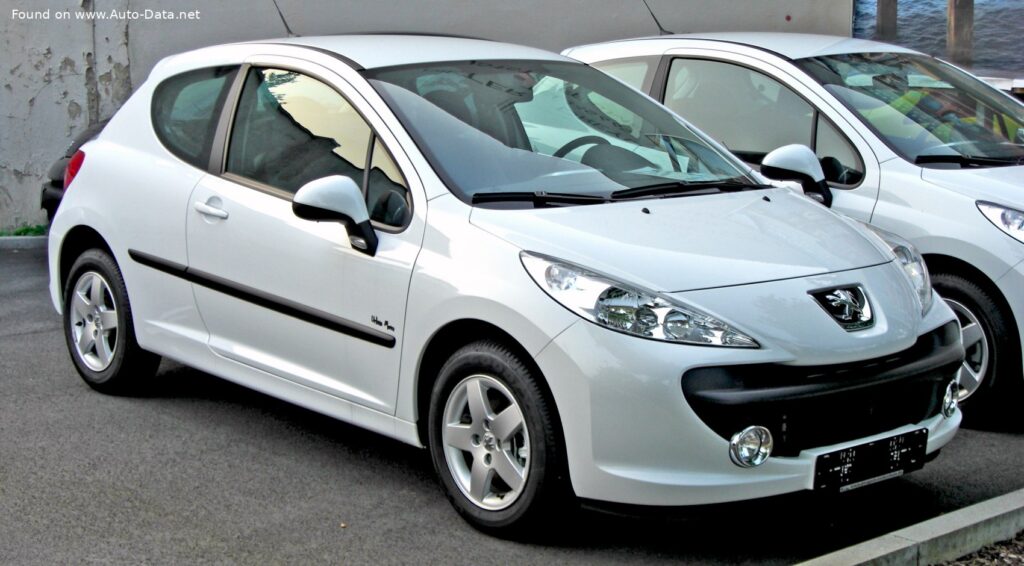
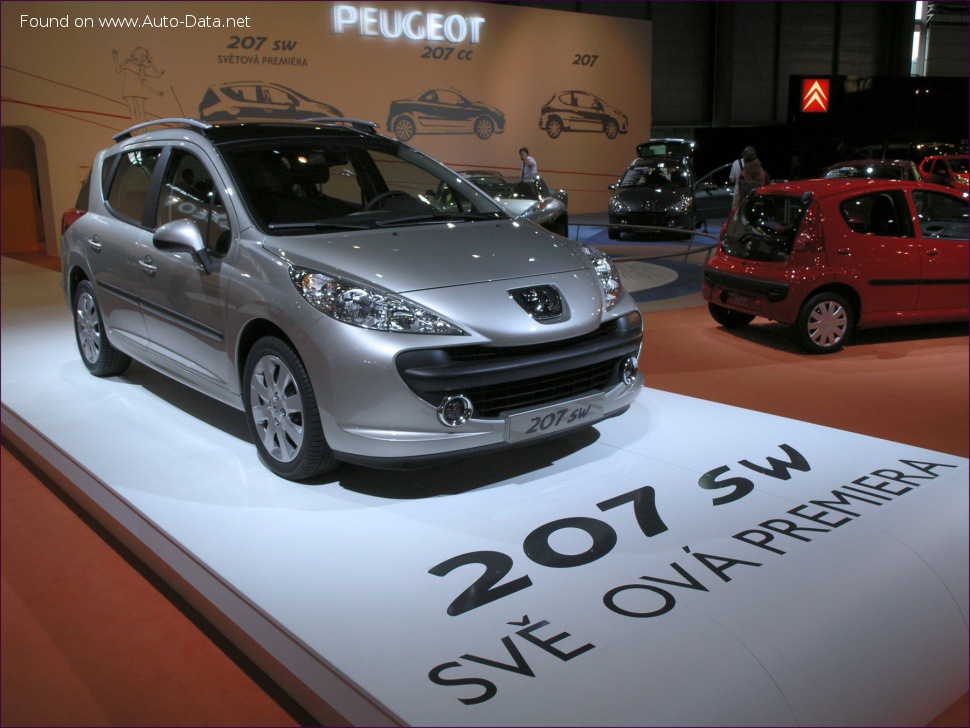
The Peugeot 207 SW distinguishes itself from its hatchback counterpart primarily through its extended roofline and redesigned rear section, transforming it into a versatile 5-door station wagon. Measuring 163.62 inches (4156 mm) in length, 68.82 inches (1748 mm) in width (excluding mirrors), and 60.12 inches (1527 mm) in height, the 207 SW maintained a compact footprint ideal for navigating crowded European city streets while offering superior cargo capacity. Its wheelbase of 100 inches (2540 mm) contributed to a stable ride and adequate interior space for five occupants.
One of the most compelling features of the 207 SW was its trunk (boot) space. With the rear seats in place, it offered a respectable 11.9 cubic feet (337 liters) of cargo volume. When the rear seats were folded down, this expanded significantly to 44.43 cubic feet (1258 liters), providing ample room for luggage, groceries, or even larger items, making it a highly practical choice for small families or those with active lifestyles. The vehicle’s kerb weight was 2636.73 lbs (1196 kg), with a maximum permissible gross weight of 3619.99 lbs (1642 kg), allowing for a maximum payload of 983.26 lbs (446 kg).
In terms of chassis and safety, the 207 SW 1.4 (73 Hp) featured an independent McPherson strut front suspension and a semi-independent, coil spring rear suspension, a common setup for compact cars of its era, balancing comfort and handling. Stopping power came from ventilated disc brakes at the front and drum brakes at the rear, supported by an Anti-lock Braking System (ABS) as a standard assisting system, enhancing safety during emergency braking maneuvers. The car rode on 185/65 R15 tires mounted on 15-inch wheel rims, providing a good balance of grip and ride comfort. The steering system utilized a rack and pinion setup, offering a minimum turning circle of 35.43 feet (10.8 meters), which aided maneuverability in tight urban environments.
Technical Specifications: Peugeot 207 SW 1.4 (73 Hp)
| Category | Specification | Metric Value | US/Imperial Value |
|---|---|---|---|
| General Information | |||
| Brand | Peugeot | ||
| Model | 207 SW | ||
| Type (Engine) | 1.4 (73 Hp) | ||
| Production Start | 2007 | ||
| Production End | 2009 | ||
| Powertrain Architecture | Internal Combustion Engine | ||
| Body Type | Station wagon (estate) | ||
| Seats | 5 | ||
| Doors | 5 | ||
| Performance Specs | |||
| Fuel Consumption (Urban) | 8.8 l/100 km | 26.7 US mpg | |
| Fuel Consumption (Extra Urban) | 5.3 l/100 km | 44.4 US mpg | |
| Fuel Consumption (Combined) | 6.5 l/100 km | 36.2 US mpg | |
| CO2 Emissions | 155 g/km | ||
| Fuel Type | Petrol (Gasoline) | ||
| Acceleration 0-60 mph | 13.5 sec | ||
| Acceleration 0-100 km/h | 14.2 sec | ||
| Maximum Speed | 170 km/h | 105.63 mph | |
| Emission Standard | Euro 4 | ||
| Weight-to-Power Ratio | 16.4 kg/Hp | 61 Hp/tonne | |
| Weight-to-Torque Ratio | 10.1 kg/Nm | 98.7 Nm/tonne | |
| Engine Specs | |||
| Power | 73 Hp @ 5400 rpm | ||
| Power per liter | 53.6 Hp/l | ||
| Torque | 118 Nm @ 3300 rpm | 87.03 lb.-ft. @ 3300 rpm | |
| Engine Layout | Front, Transverse | ||
| Engine Model/Code | KFT TU3AE5 | ||
| Engine Displacement | 1361 cm3 | 83.05 cu. in. | |
| Number of Cylinders | 4 | ||
| Engine Configuration | Inline | ||
| Cylinder Bore | 75 mm | 2.95 in. | |
| Piston Stroke | 77 mm | 3.03 in. | |
| Compression Ratio | 10.2:1 | ||
| Valves per Cylinder | 2 | ||
| Fuel Injection System | Multi-port manifold injection | ||
| Engine Aspiration | Naturally aspirated engine | ||
| Valvetrain | SOHC | ||
| Engine Oil Capacity | 2.5 l | 2.64 US qt | |
| Engine Oil Specification | Not specified in data provided | ||
| Coolant Capacity | 5.3 l | 5.6 US qt | |
| Space, Volume and Weights | |||
| Kerb Weight | 1196 kg | 2636.73 lbs | |
| Max. Weight | 1642 kg | 3619.99 lbs | |
| Max Load | 446 kg | 983.26 lbs | |
| Trunk (boot) Space – Minimum | 337 l | 11.9 cu. ft. | |
| Trunk (boot) Space – Maximum | 1258 l | 44.43 cu. ft. | |
| Fuel Tank Capacity | 50 l | 13.21 US gal | |
| Permitted Trailer Load (with brakes) | 1045 kg | 2303.83 lbs | |
| Permitted Trailer Load (without brakes) | 600 kg | 1322.77 lbs | |
| Dimensions | |||
| Length | 4156 mm | 163.62 in. | |
| Width | 1748 mm | 68.82 in. | |
| Width with Mirrors Folded | 1818 mm | 71.57 in. | |
| Width Including Mirrors | 1972 mm | 77.64 in. | |
| Height | 1527 mm | 60.12 in. | |
| Wheelbase | 2540 mm | 100 in. | |
| Front Track | 1467 mm | 57.76 in. | |
| Rear (Back) Track | 1461 mm | 57.52 in. | |
| Drag Coefficient (Cd) | 0.3 | ||
| Minimum Turning Circle | 10.8 m | 35.43 ft. | |
| Drivetrain, Brakes and Suspension Specs | |||
| Drivetrain Architecture | Front-wheel drive, Internal Combustion Engine | ||
| Drive Wheel | Front wheel drive | ||
| Number of Gears and Type | 5 gears, manual transmission | ||
| Front Suspension | Independent type McPherson | ||
| Rear Suspension | Semi-independent, coil spring | ||
| Front Brakes | Ventilated discs | ||
| Rear Brakes | Drum | ||
| Assisting Systems | ABS (Anti-lock braking system) | ||
| Steering Type | Steering rack and pinion | ||
| Tires Size | 185/65 R15 | ||
| Wheel Rims Size | 15 | ||
Legacy and Market Impact of the Peugeot 207 SW
The Peugeot 207 SW, particularly the 1.4-liter variant, was a significant player in the European B-segment wagon market during its production run from 2007 to 2009. While compact wagons like the 207 SW never truly gained traction in the North American market, they were, and continue to be, highly valued in Europe for their blend of city-friendly dimensions and family-oriented practicality. The 207 SW successfully carried on the tradition established by its predecessor, the 206 SW, by offering a stylish and practical alternative to larger, more expensive vehicles.
Its primary competitors in the European market included models such as the Renault Clio Estate (Grandtour), Skoda Fabia Combi, and the Opel Corsa D Estate (though less common). Compared to these rivals, the 207 SW was often praised for its comfortable ride, distinctive French styling, and a perceived higher quality interior finish in some trims. The 1.4-liter engine, while not a powerhouse, was lauded for its fuel efficiency and low running costs, making it an attractive option for budget-conscious buyers and fleets. Its Euro 4 emissions rating was also a relevant factor for consumers and regulators at the time.
The 207 SW’s legacy lies in its contribution to popularizing the compact wagon body style in Europe, demonstrating that practicality didn’t necessarily require a large, unwieldy vehicle. It provided a compelling argument for downsizing without compromising on utility, a trend that has continued to evolve with the rise of compact SUVs and crossovers. Its impact was primarily felt in its ability to offer a versatile, economical, and aesthetically pleasing option for European consumers seeking a balance between urban usability and weekend adventure capabilities. Even today, the 207 SW remains a common sight on European roads, a testament to its durable design and the enduring appeal of its practical packaging.