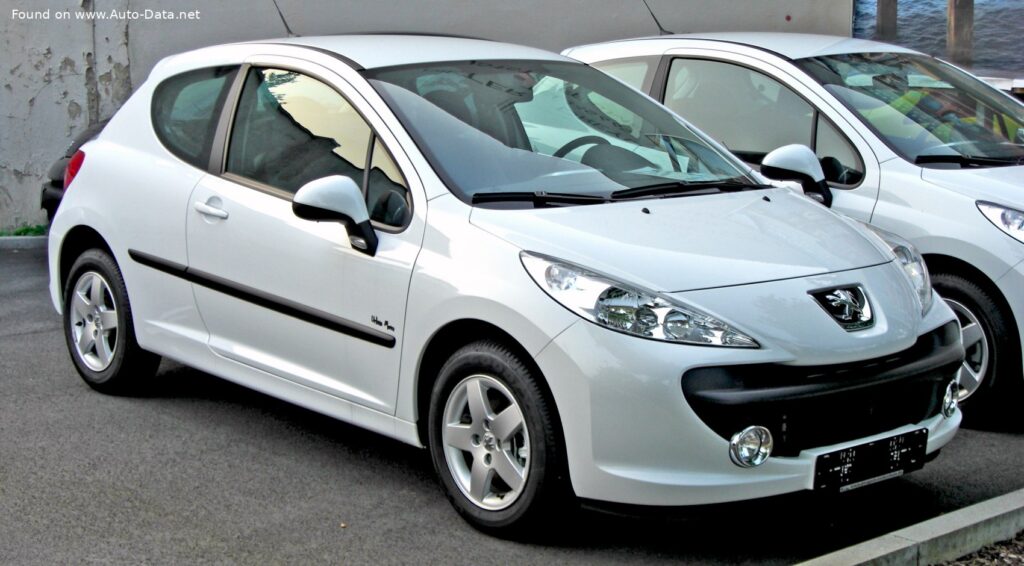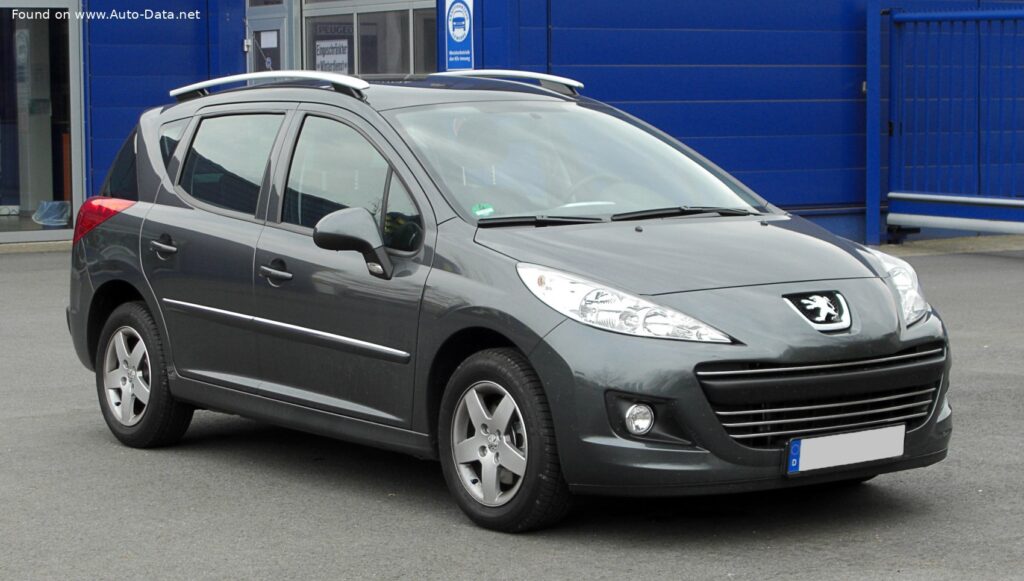
The Peugeot 207 SW (facelift 2009) 1.4 (73 Hp): A Practical European Compact
The Peugeot 207 SW (facelift 2009) 1.4 (73 Hp) represents a significant offering within the European subcompact or supermini segment, specifically catering to those requiring enhanced practicality and cargo capacity over the standard hatchback. Produced by the venerable French automaker Peugeot, this particular iteration, launched in 2009, was a refreshed version of the popular 207 SW (Station Wagon) model, which had been introduced in 2007. The 207 series, following in the successful footsteps of the 206, became a cornerstone of Peugeot’s lineup, known for its stylish design, comfortable ride, and economical operation in its primary markets across Europe and other international regions. This facelifted model aimed to keep the 207 SW competitive, offering subtle aesthetic updates and maintaining its reputation as a versatile and efficient family vehicle.
While never officially sold in the United States, the Peugeot 207 SW played a crucial role in Europe’s highly competitive B-segment, where compact dimensions, fuel efficiency, and utility are paramount. The “SW” designation signifies its station wagon body style, a practical alternative to the more common hatchback, providing a larger and more flexible cargo area. The 1.4-liter engine variant, with its 73 horsepower output, was positioned as an entry-level option, designed for urban commuting and economical long-distance travel, aligning perfectly with European consumer preferences for smaller, more efficient powertrains. Its blend of French design flair and everyday usability made it a compelling choice for individuals and small families navigating dense cityscapes and diverse road conditions across the continent.
Engine and Performance of the Peugeot 207 SW (facelift 2009)
Under the hood, the Peugeot 207 SW (facelift 2009) 1.4 (73 Hp) was equipped with Peugeot’s well-regarded KFT TU3A engine, a 1.4-liter (1361 cubic centimeters or 83.05 cubic inches) naturally aspirated inline four-cylinder gasoline unit. This engine featured a Single Overhead Camshaft (SOHC) valvetrain with two valves per cylinder, a configuration known for its simplicity, reliability, and cost-effective maintenance. Fuel delivery was handled by a multi-port manifold injection system, ensuring efficient combustion and adherence to the Euro 5 emission standards of its time.
The powertrain delivered a modest but adequate 73 horsepower at 5400 rpm, paired with 87.03 lb.-ft. of torque peaking at a relatively low 3300 rpm. This torque characteristic made the vehicle feel reasonably spry in city traffic, where low-end grunt is often more valuable than peak power. Power was transmitted to the front wheels via a 5-speed manual transmission, a common and efficient setup for a car in this class.
From a performance perspective, the 207 SW 1.4 (73 Hp) was not designed for outright speed but rather for practical, everyday driving. It achieved a 0-60 mph acceleration in a calculated 14 seconds, with a top speed of 103.77 mph. These figures are typical for a compact station wagon with an entry-level engine in the European market, emphasizing economy and usability over blistering pace.
Fuel efficiency was a key selling point for this model, especially in markets sensitive to fuel prices. The official combined fuel consumption was rated at 36.8 US mpg (6.4 liters per 100 km), with urban driving yielding 27.4 US mpg and extra-urban figures reaching an impressive 47 US mpg. These numbers underscored the vehicle’s economical nature, making it an attractive option for budget-conscious buyers and those facing high fuel costs. Its CO2 emissions of 152 g/km further highlighted its relatively low environmental impact for its class during that period.
Design and Features
The Peugeot 207 SW (facelift 2009) maintained the distinctive styling cues of the 207 family, characterized by its feline-inspired headlights and a prominent front grille. The facelift introduced subtle refinements, including updated front bumper designs, revised fog lamp surrounds, and new taillight graphics, giving the car a fresher and more modern appearance without drastically altering its successful aesthetic.
As a station wagon (or “estate” in European terminology), the 207 SW’s primary appeal lay in its enhanced practicality. Measuring 163.94 inches in length, 68.82 inches in width (77.64 inches including mirrors), and 60.12 inches in height, it was compact enough for urban maneuverability yet offered significantly more cargo space than its hatchback sibling. The wheelbase of 100 inches contributed to a stable ride and reasonable interior room for five occupants.
The interior was designed with functionality and comfort in mind, typical of Peugeot’s approach to its mainstream models. With all five seats in place, the trunk offered a respectable 11.9 cubic feet of cargo volume. However, its versatility truly shone when the rear seats were folded, expanding the load capacity to a generous 44.43 cubic feet, transforming it into a capable hauler for luggage, sports equipment, or even small furniture.
In terms of features and safety, the 207 SW came equipped with standard systems relevant to its era. Anti-lock Braking System (ABS) was a crucial safety feature, enhancing braking control. The steering system utilized electric power steering, providing light and effortless steering for city driving and parking, a significant advantage in tight European urban environments. The vehicle featured ventilated disc brakes at the front for effective stopping power, complemented by drum brakes at the rear. The suspension system comprised an independent McPherson strut setup at the front and a semi-independent coil spring arrangement at the rear, tuned to provide a comfortable ride quality that Peugeot vehicles are often known for, balancing compliance with adequate handling. The car rode on 185/65 R15 tires, mounted on 15-inch wheel rims, providing a good balance of grip, comfort, and rolling resistance.
Technical Specifications
| Category | Specification |
|---|---|
| Brand | Peugeot |
| Model | 207 SW (facelift 2009) 1.4 (73 Hp) |
| Production Years | 2009 – 2013 |
| Body Type | Station wagon (estate) |
| Seats | 5 |
| Doors | 5 |
| Engine & Performance | |
| Engine Type | 1.4 (73 Hp) Petrol (Gasoline) |
| Powertrain Architecture | Internal Combustion Engine (Front-wheel drive) |
| Engine Model/Code | KFT TU3A |
| Engine Layout | Front, Transverse |
| Engine Displacement | 1361 cm3 (83.05 cu. in.) |
| Number of Cylinders | 4, Inline |
| Valvetrain | SOHC (2 valves per cylinder) |
| Fuel Injection System | Multi-port manifold injection |
| Engine Aspiration | Naturally aspirated |
| Power | 73 Hp @ 5400 rpm |
| Torque | 87.03 lb.-ft. @ 3300 rpm (118 Nm) |
| Acceleration 0-60 mph | 14 seconds |
| Maximum Speed | 103.77 mph (167 km/h) |
| Fuel Consumption (Urban) | 27.4 US mpg (8.6 l/100 km) |
| Fuel Consumption (Extra Urban) | 47 US mpg (5 l/100 km) |
| Fuel Consumption (Combined) | 36.8 US mpg (6.4 l/100 km) |
| CO2 Emissions | 152 g/km |
| Emission Standard | Euro 5 |
| Fuel Tank Capacity | 13.21 US gal (50 l) |
| Transmission | 5 gears, manual transmission |
| Drive Wheel | Front-wheel drive |
| Dimensions & Weights | |
| Length | 163.94 in (4164 mm) |
| Width | 68.82 in (1748 mm) |
| Width (including mirrors) | 77.64 in (1972 mm) |
| Height | 60.12 in (1527 mm) |
| Wheelbase | 100 in (2540 mm) |
| Front Track | 57.76 in (1467 mm) |
| Rear Track | 57.52 in (1461 mm) |
| Kerb Weight | 2610.27 lbs. (1184 kg) |
| Maximum Weight | 3622.19 lbs. (1643 kg) |
| Maximum Load | 1011.92 lbs. (459 kg) |
| Trunk Space (Minimum) | 11.9 cu. ft. (337 l) |
| Trunk Space (Maximum) | 44.43 cu. ft. (1258 l) |
| Permitted Trailer Load (with brakes) | 2303.83 lbs. (1045 kg) |
| Permitted Trailer Load (without brakes) | 1322.77 lbs. (600 kg) |
| Drag Coefficient (Cd) | 0.3 |
| Minimum Turning Circle | 34.12 ft. (10.4 m) |
| Chassis, Brakes & Suspension | |
| Front Suspension | Independent type McPherson |
| Rear Suspension | Semi-independent, coil spring |
| Front Brakes | Ventilated discs |
| Rear Brakes | Drum |
| Assisting Systems | ABS (Anti-lock braking system) |
| Steering Type | Steering rack and pinion |
| Power Steering | Electric Steering |
| Tires Size | 185/65 R15 |
| Wheel Rims Size | 15 inches |
Legacy and Market Impact
The Peugeot 207 SW (facelift 2009) 1.4 (73 Hp) solidified its position as a highly relevant and practical vehicle within its target markets. In Europe, where compact cars dominate sales charts and space is often at a premium, the station wagon variant offered a compelling blend of maneuverability, fuel efficiency, and cargo flexibility. It was particularly appealing to young families or individuals who needed more utility than a standard hatchback but didn’t want the larger footprint or higher running costs of a full-size estate or SUV.
Its reputation was built on Peugeot’s established expertise in producing small, comfortable, and reliable cars. Owners typically praised its comfortable ride, especially over varied road surfaces, and its generally agreeable handling characteristics for daily driving. The 1.4-liter engine, while not powerful, was lauded for its frugality, making it an economical choice for both city commutes and longer journeys across the continent. Maintenance costs were also generally reasonable, contributing to its overall appeal as a sensible purchase.
In the competitive European B-segment, the 207 SW faced a host of rivals, including the Renault Clio Estate, Skoda Fabia Combi, and the Opel Corsa SW (in certain markets). Each offered its own interpretation of the compact station wagon, but the Peugeot stood out with its distinctive French styling, perceived quality of interior materials for its class, and a focus on driver and passenger comfort. Its slightly more upscale feel compared to some direct competitors helped it carve out a niche.
The historical significance of the 207 SW lies in its contribution to the evolution of the supermini segment, demonstrating that even small cars could offer substantial practicality and versatility. It represented a period when European manufacturers were refining their offerings to meet increasingly stringent emissions standards and consumer demands for greater efficiency without sacrificing utility. The facelifted 2009 model ensured the 207 SW remained fresh and competitive through the latter half of its production run, continuing to be a strong performer for Peugeot until its eventual replacement by the 208-based 2008 crossover, signaling a shift in market preferences towards utility vehicles. Despite this evolution, the 207 SW remains a testament to Peugeot’s ability to deliver practical, stylish, and efficient vehicles for the mainstream European market.