The Peugeot 207 SW (facelift 2009) 1.6 HDi (112 Hp): A European Compact Workhorse
The Peugeot 207 SW (facelift 2009) 1.6 HDi (112 Hp) represents a significant offering in the highly competitive European B-segment, specifically catering to the demand for a practical and fuel-efficient compact station wagon. Produced by the venerable French automaker Peugeot, this particular iteration, introduced in 2009 as part of a mid-cycle refresh for the 207 generation, aimed to refine its predecessor’s successful formula. While Peugeot models like the 207 were not officially imported and sold in the United States, they played a crucial role in Europe, providing a compelling blend of compact dimensions, versatile cargo capacity, and economical diesel powertrains. This 1.6 HDi variant, with its 112 horsepower engine, was particularly notable for its strong emphasis on efficiency and low running costs, making it a popular choice for families and businesses across the continent.
Powertrain and Performance of the Peugeot 207 SW (facelift 2009) 1.6 HDi (112 Hp)
At the heart of the Peugeot 207 SW (facelift 2009) 1.6 HDi (112 Hp) lies a sophisticated 1.6-liter (1560 cm3) HDi (High-Pressure Direct Injection) turbodiesel engine. This four-cylinder, inline powerplant, designated by the engine code 9HR DV6C, was a cornerstone of Peugeot’s powertrain strategy for its compact and mid-size vehicles. Featuring a Single Overhead Camshaft (SOHC) valvetrain with two valves per cylinder, the engine benefits from a turbocharger and intercooler, which significantly enhance its power delivery and efficiency.
The engine produces a respectable 112 horsepower at 3600 rpm, a healthy output for its displacement and segment. More impressive, however, is its torque figure: 270 Nm (199.14 lb.-ft.) available from a low 1750 rpm. This characteristic low-end torque, typical of modern diesel engines, provides excellent pulling power, making the 207 SW feel robust and responsive in city driving and capable on the highway, even when loaded. Power is sent to the front wheels via a smooth-shifting 6-speed manual transmission, offering a good balance between acceleration and highway cruising economy.
In terms of performance, the 207 SW 1.6 HDi (112 Hp) accelerates from 0 to 60 mph in a brisk 10.5 seconds, with a top speed of 119.3 mph. These figures were competitive for its class, especially considering its focus on practicality. Where this powertrain truly excelled was in fuel economy. The vehicle boasted an impressive combined fuel consumption of 4.6 liters per 100 kilometers, equating to approximately 51.1 US miles per gallon. Urban consumption was rated at 41.3 US mpg, while extra-urban driving could yield up to 58.8 US mpg. This exceptional efficiency, coupled with CO2 emissions of just 119 g/km, ensured compliance with the Euro 5 emission standard and contributed to lower running costs and reduced environmental impact, factors highly valued in the European market. The inclusion of a particulate filter was standard, further enhancing its environmental credentials.
Design and Practicality
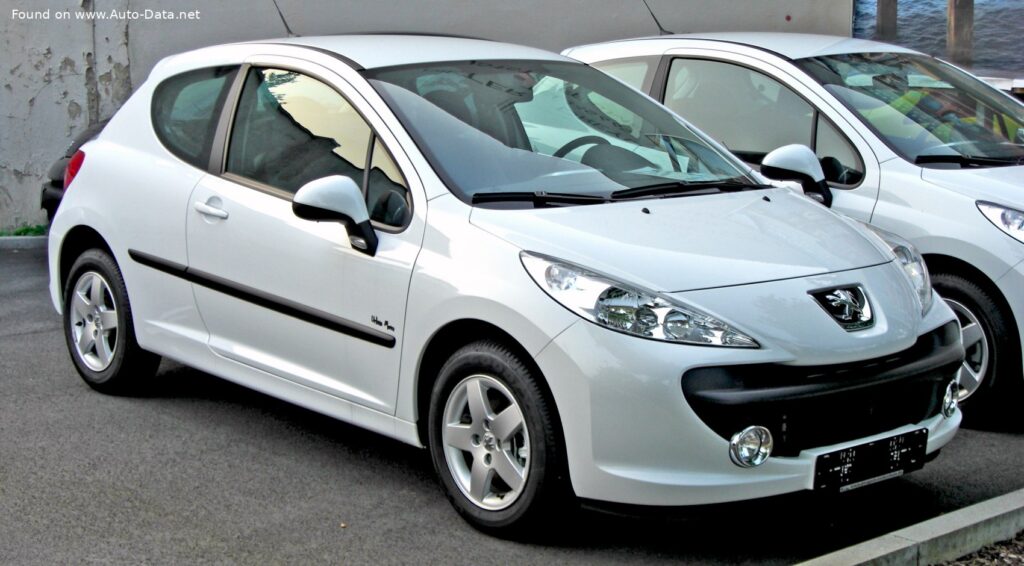
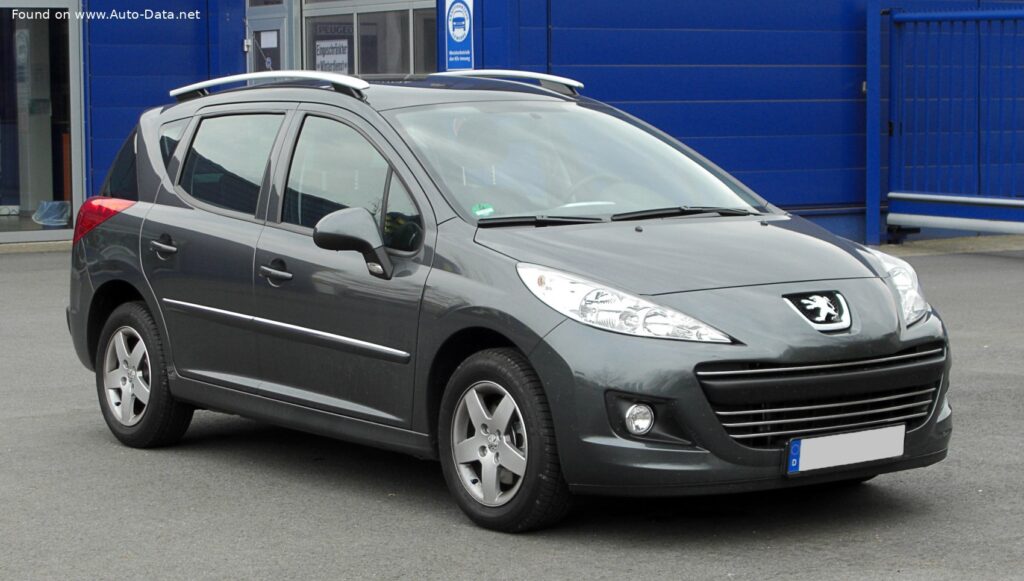
The Peugeot 207 SW (facelift 2009) retained the characteristic styling cues of the 207 lineup, but with a distinct emphasis on increased utility. As a 5-door station wagon (often referred to as an “estate” in Europe), its design seamlessly extended the hatchback’s lines to create a more capacious rear section. The facelift introduced subtle refinements, typically including revised front bumpers, grille designs, and updated lighting clusters, giving the car a fresher, more contemporary look without a radical overhaul.
Measuring 163.94 inches in length, 68.82 inches in width (77.64 inches including mirrors), and 60.12 inches in height, with a wheelbase of 100 inches, the 207 SW struck an excellent balance between a compact footprint and practical interior space. Its relatively modest exterior dimensions made it highly maneuverable in congested European cities, aided by an electric power steering system and a turning circle of just 34.78 feet.
The interior was designed to accommodate five occupants comfortably, with a focus on ergonomics and functionality. However, the true strength of the SW variant lay in its cargo capacity. The trunk offered a minimum volume of 11.9 cubic feet (337 liters), which could be expanded to a generous 44.43 cubic feet (1258 liters) with the rear seats folded down. This flexibility made it an ideal vehicle for small families, urban adventurers, or those needing extra space for hobbies and errands, without having to step up to a larger, less fuel-efficient vehicle.
For its era, the 207 SW was equipped with a range of features aimed at enhancing comfort, convenience, and safety. Standard equipment typically included power windows, central locking, air conditioning, and a basic audio system. Safety features were robust for its class, including an Anti-lock Braking System (ABS) as standard, complemented by ventilated disc brakes at the front and solid discs at the rear, ensuring confident stopping power. The suspension setup, featuring independent McPherson struts at the front and a semi-independent, coil spring system at the rear, provided a comfortable ride quality characteristic of French vehicles, adept at soaking up road imperfections.
Technical Specifications
| Category | Specification |
|---|---|
| Brand | Peugeot |
| Model | 207 SW (facelift 2009) |
| Engine Type | 1.6 HDi (112 Hp) |
| Production Years | 2009 – 2013 |
| Body Type | Station wagon (estate), 5 Doors, 5 Seats |
| Powertrain Architecture | Internal Combustion engine, Front-wheel drive |
| Fuel Type | Diesel |
| Engine Displacement | 1560 cm3 (1.6 Liters / 95.2 cu. in.) |
| Number of Cylinders | 4, Inline |
| Power | 112 Hp @ 3600 rpm |
| Torque | 270 Nm (199.14 lb.-ft.) @ 1750 rpm |
| Acceleration 0-60 mph | 10.5 seconds |
| Maximum Speed | 192 km/h (119.3 mph) |
| Fuel Consumption (Combined) | 4.6 l/100 km (51.1 US mpg) |
| Fuel Consumption (Urban) | 5.7 l/100 km (41.3 US mpg) |
| Fuel Consumption (Extra Urban) | 4 l/100 km (58.8 US mpg) |
| CO2 Emissions | 119 g/km |
| Emission Standard | Euro 5 |
| Kerb Weight | 1261 kg (2780.03 lbs.) |
| Max. Weight | 1793 kg (3952.89 lbs.) |
| Max Load | 532 kg (1172.86 lbs.) |
| Trunk Space (Min/Max) | 337 l (11.9 cu. ft.) / 1258 l (44.43 cu. ft.) |
| Fuel Tank Capacity | 50 l (13.21 US gal) |
| Length | 4164 mm (163.94 in.) |
| Width | 1748 mm (68.82 in.) |
| Height | 1527 mm (60.12 in.) |
| Wheelbase | 2540 mm (100 in.) |
| Front Track | 1467 mm (57.76 in.) |
| Rear Track | 1461 mm (57.52 in.) |
| Minimum Turning Circle | 10.6 m (34.78 ft.) |
| Gearbox Type | 6 gears, manual transmission |
| Front Suspension | Independent type McPherson |
| Rear Suspension | Semi-independent, coil spring |
| Front Brakes | Ventilated discs |
| Rear Brakes | Disc |
| Assisting Systems | ABS (Anti-lock braking system) |
| Steering Type | Steering rack and pinion, Electric Steering |
| Tire Size | 195/55 R16 |
| Wheel Rims Size | 16 inches |
| Compression Ratio | 17.6:1 |
| Engine Aspiration | Turbocharger, Intercooler |
| Valvetrain | SOHC |
| Engine Oil Capacity | 3.75 l (3.96 US qt) |
| Coolant Capacity | 5.6 l (5.92 US qt) |
| Engine Systems | Particulate filter |
| Permitted Trailer Load with Brakes (12%) | 1150 kg (2535.32 lbs.) |
| Permitted Trailer Load without Brakes | 600 kg (1322.77 lbs.) |
Legacy and Market Impact in Europe
The Peugeot 207 SW (facelift 2009) 1.6 HDi (112 Hp) carved out a significant niche for itself within the demanding European automotive landscape. As part of Peugeot’s long-standing “2xx” series, which includes iconic models like the 205 and 206, the 207 had big shoes to fill. The SW variant specifically addressed the growing demand for versatile, family-friendly vehicles that retained the maneuverability and fuel economy of a supermini while offering enhanced practicality. In a market where compact station wagons held considerable appeal, unlike the SUV-dominated landscape of the US, the 207 SW was a highly relevant contender.
Its primary competitors included other European compact estates such as the Renault Clio Estate, Skoda Fabia Combi, and to a lesser extent, the Ford Fiesta (though a wagon variant was less common in some markets). What set the 207 SW 1.6 HDi apart was its combination of a well-regarded diesel engine, known for its refinement and exceptional fuel efficiency, and a comfortable, practical interior. The 112 HP HDi engine was particularly crucial, offering a compelling balance of performance for highway travel and outstanding economy for daily commutes, which was a strong selling point given Europe’s higher fuel prices and stringent emission regulations.
The 207 SW developed a reputation for its comfortable ride, predictable handling, and robust build quality, contributing to Peugeot’s image as a producer of reliable and engaging compact cars. Its success underscored the importance of segment diversity in Europe, where a single model could be offered in multiple body styles to cater to a wide array of consumer needs. The facelift ensured that the 207 remained competitive through its production run until 2013, when it was eventually succeeded by the 208, which adopted a different strategy by not offering a direct station wagon derivative, instead focusing on the hatchback and later, compact crossovers.
In essence, the Peugeot 207 SW 1.6 HDi (112 Hp) was more than just a car; it was a testament to Peugeot’s understanding of the European consumer’s desire for a practical, economical, and stylish compact vehicle. Its legacy lies in its contribution to making efficient diesel technology accessible in a versatile package, cementing its place as a sensible and popular choice for countless European drivers.