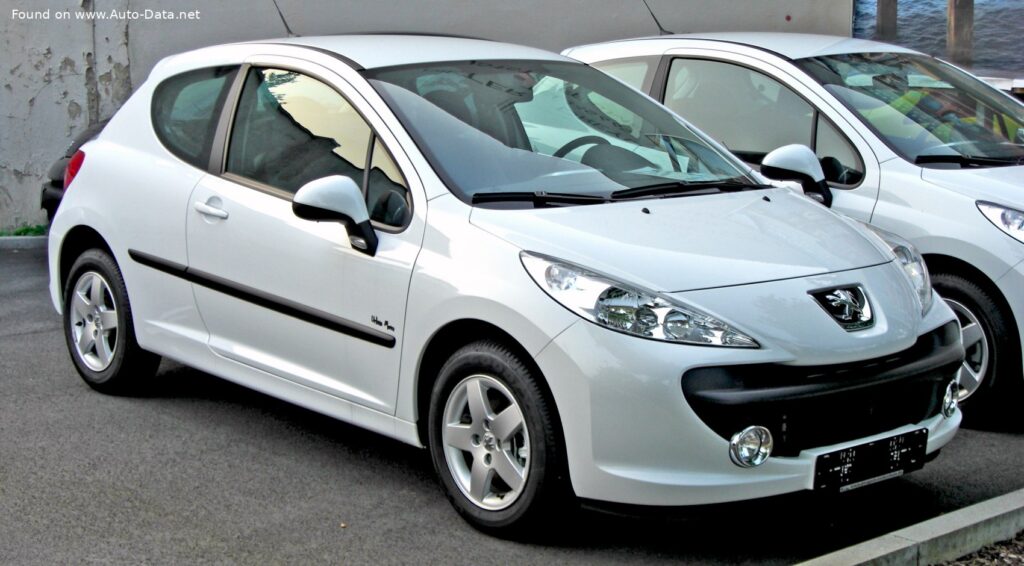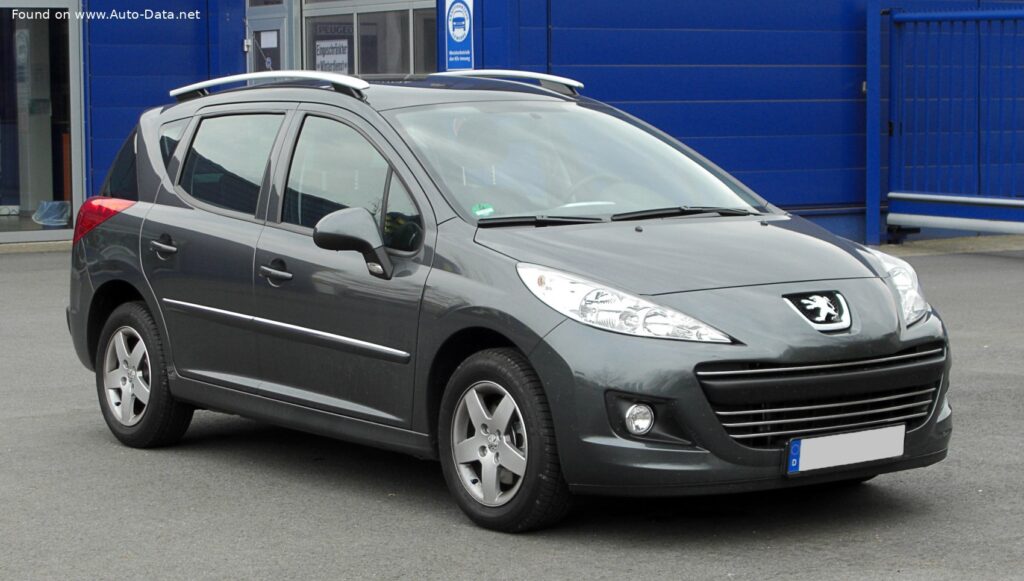
Introduction to the Peugeot 207 SW (facelift 2009)
The Peugeot 207 SW (facelift 2009) represents a significant offering within the European B-segment, or subcompact class, particularly for consumers prioritizing versatility and practicality. Launched in 2009 as part of a mid-cycle refresh for the second generation of Peugeot’s popular 207 lineup, this station wagon variant aimed to build upon the success of its hatchback sibling by providing enhanced cargo capacity and family-friendly utility. While never officially imported into the United States market, the Peugeot 207 SW (facelift 2009) played a crucial role in Europe, offering a compelling blend of French design flair, respectable efficiency, and a comfortable ride.
The 207 series, which succeeded the immensely popular 206, evolved Peugeot’s design language with a more assertive front fascia and larger dimensions. The SW (Station Wagon) model, in particular, extended the standard 207’s silhouette to create a more capacious and adaptable vehicle. The 2009 facelift brought subtle but effective updates, primarily focusing on refreshed styling elements, improved interior materials, and tweaks to the powertrain lineup to enhance efficiency and meet evolving emission standards. This article specifically focuses on the 1.6 VTi (120 Hp) Automatic variant, a powertrain combination that offered a balanced approach to performance and convenience for its target audience.
Powertrain and Performance: The 1.6 VTi in the Peugeot 207 SW (facelift 2009)
At the heart of the Peugeot 207 SW (facelift 2009) discussed here is a robust and efficient 1.6-liter VTi gasoline engine. This naturally aspirated, inline-four-cylinder unit, bearing the internal code 5FS EP6C, was part of a collaborative effort between PSA Peugeot Citroën and BMW, known for its advanced engineering and variable valve timing (VVT) technology. With a displacement of 1598 cubic centimeters (97.52 cubic inches), the engine was tuned to produce a respectable 120 horsepower at 6000 rpm, delivering a lively performance for a vehicle in its class. Torque output stood at 118.01 lb.-ft. (160 Nm) at 4250 rpm, providing adequate pulling power for both urban commuting and highway cruising.
Power was delivered to the front wheels via a 4-speed automatic transmission. While a 4-speed automatic might seem modest by today’s standards, it was a common offering in the B-segment at the time, prioritizing smooth operation and ease of use, particularly in congested European city environments. This transmission contributed to the vehicle’s accessible driving dynamics, making it an appealing option for those seeking a less strenuous driving experience. The Peugeot 207 SW (facelift 2009) with this powertrain achieved a 0-60 mph acceleration time of approximately 10.9 seconds and could reach a maximum speed of 121.17 mph (195 km/h).
Fuel efficiency for the 1.6 VTi Automatic model was competitive for its era. The combined fuel consumption was rated at 35.1 US mpg (6.7 l/100 km), with urban figures at 25 US mpg (9.4 l/100 km) and extra-urban figures reaching 45.2 US mpg (5.2 l/100 km). These figures underscored the engine’s balance of performance and economy, making it an attractive proposition for cost-conscious European buyers. Furthermore, the engine complied with the Euro 5 emission standard, reflecting Peugeot’s commitment to environmental responsibility at the time, with CO2 emissions of 155 g/km.
Design, Utility, and Features
Exterior Styling and Practicality
The Peugeot 207 SW (facelift 2009) distinguished itself with a design that blended the contemporary aesthetics of the 207 hatchback with the enhanced practicality of a station wagon body. Measuring 163.94 inches (4164 mm) in length, 68.82 inches (1748 mm) in width, and 60.12 inches (1527 mm) in height, it maintained a compact footprint ideal for navigating narrow European streets and parking in tight spaces. The 2009 facelift introduced subtle refinements, including revised front bumper designs, updated grille treatments, and new taillight graphics, which gave the 207 SW a slightly more modern and sophisticated appearance. Its sleek lines and distinctive “cat’s eye” headlights contributed to a drag coefficient (Cd) of 0.3, aiding both aesthetics and aerodynamic efficiency.
The station wagon form factor was, of course, its defining characteristic. The extended roofline and redesigned rear section significantly increased cargo volume compared to the hatchback. The vehicle featured five doors and seating for five occupants, making it a versatile choice for small families or individuals requiring ample load-carrying capability. The wheelbase of 100 inches (2540 mm) provided a stable ride, while the minimum turning circle of 34.78 feet (10.6 meters) ensured good maneuverability in urban settings.
Interior Comfort and Versatility
Inside, the 207 SW offered a cabin designed for comfort and functionality. The interior benefited from the 2009 facelift with potentially improved material quality and trim options, aiming for a more premium feel within its segment. The primary advantage of the SW variant was its generous cargo space. With the rear seats in place, the trunk offered a respectable 11.9 cubic feet (337 liters) of volume. When the rear seats were folded down, this expanded dramatically to an impressive 44.43 cubic feet (1258 liters), transforming the car into a highly capable load-hauler for groceries, luggage, or even small furniture items.
Standard features for the 207 SW (facelift 2009) included an electric power steering system, which provided light and responsive steering, enhancing the driving experience in city conditions. Safety was addressed with the inclusion of an Anti-lock Braking System (ABS), which was standard. The suspension setup featured an independent McPherson type at the front and a semi-independent, coil spring arrangement at the rear, designed to offer a comfortable ride quality typical of French cars, soaking up road imperfections effectively. Braking duties were handled by ventilated discs at the front and solid discs at the rear, providing reliable stopping power. The vehicle came equipped with 195/55 R16 tires mounted on 16-inch wheel rims.
Technical Specifications
| Peugeot 207 SW (facelift 2009) 1.6 VTi (120 Hp) Automatic | |
|---|---|
| General Information | |
| Brand | Peugeot |
| Model | 207 |
| Generation | 207 SW (facelift 2009) |
| Type (Engine) | 1.6 VTi (120 Hp) Automatic |
| Production Start | 2009 |
| Production End | 2013 |
| Powertrain Architecture | Internal Combustion Engine |
| Body Type | Station wagon (estate) |
| Seats | 5 |
| Doors | 5 |
| Performance Specs | |
| Fuel Consumption (Urban) | 25 US mpg (9.4 l/100 km) |
| Fuel Consumption (Extra Urban) | 45.2 US mpg (5.2 l/100 km) |
| Fuel Consumption (Combined) | 35.1 US mpg (6.7 l/100 km) |
| CO2 Emissions | 155 g/km |
| Fuel Type | Petrol (Gasoline) |
| Acceleration 0-60 mph | 10.9 sec |
| Maximum Speed | 121.17 mph (195 km/h) |
| Emission Standard | Euro 5 |
| Weight-to-Power Ratio | 10.3 kg/Hp (97.2 Hp/tonne) |
| Weight-to-Torque Ratio | 7.7 kg/Nm (129.7 Nm/tonne) |
| Engine Specs | |
| Power | 120 Hp @ 6000 rpm |
| Power per liter | 75.1 Hp/l |
| Torque | 118.01 lb.-ft. (160 Nm) @ 4250 rpm |
| Engine Layout | Front, Transverse |
| Engine Model/Code | 5FS EP6C |
| Engine Displacement | 1.6 liters (1598 cm3 / 97.52 cu. in.) |
| Number of Cylinders | 4 |
| Engine Configuration | Inline |
| Cylinder Bore | 3.03 in. (77 mm) |
| Piston Stroke | 3.38 in. (85.8 mm) |
| Compression Ratio | 11:1 |
| Valves per Cylinder | 4 |
| Fuel Injection System | Multi-port manifold injection |
| Engine Aspiration | Naturally aspirated |
| Valvetrain | DOHC-VVT |
| Engine Oil Capacity | 4.49 US qt (4.25 l) |
| Coolant Capacity | 6.02 US qt (5.7 l) |
| Space, Volume and Weights | |
| Kerb Weight | 2720.5 lbs. (1234 kg) |
| Max. Weight | 3893.36 lbs. (1766 kg) |
| Max Load | 1172.86 lbs. (532 kg) |
| Trunk Space (Minimum) | 11.9 cu. ft. (337 l) |
| Trunk Space (Maximum) | 44.43 cu. ft. (1258 l) |
| Fuel Tank Capacity | 13.21 US gal (50 l) |
| Permitted Trailer Load with Brakes (12%) | 2535.32 lbs. (1150 kg) |
| Permitted Trailer Load without Brakes | 1322.77 lbs. (600 kg) |
| Dimensions | |
| Length | 163.94 in. (4164 mm) |
| Width | 68.82 in. (1748 mm) |
| Width with Mirrors Folded | 71.57 in. (1818 mm) |
| Width Including Mirrors | 77.64 in. (1972 mm) |
| Height | 60.12 in. (1527 mm) |
| Wheelbase | 100 in. (2540 mm) |
| Front Track | 57.76 in. (1467 mm) |
| Rear Track | 57.52 in. (1461 mm) |
| Drag Coefficient (Cd) | 0.3 |
| Minimum Turning Circle | 34.78 ft. (10.6 m) |
| Drivetrain, Brakes and Suspension Specs | |
| Drivetrain Architecture | Front wheel drive, Internal Combustion Engine |
| Drive Wheel | Front wheel drive |
| Number of Gears & Type | 4 gears, automatic transmission |
| Front Suspension | Independent type McPherson |
| Rear Suspension | Semi-independent, coil spring |
| Front Brakes | Ventilated discs |
| Rear Brakes | Disc |
| Assisting Systems | ABS (Anti-lock Braking System) |
| Steering Type | Steering rack and pinion |
| Power Steering | Electric Steering |
| Tires Size | 195/55 R16 |
| Wheel Rims Size | 16 inches |
Legacy and Market Impact of the Peugeot 207 SW
The Peugeot 207 SW (facelift 2009) held a distinctive position in the highly competitive European subcompact market during its production run from 2009 to 2013. It competed against a diverse array of rivals, including the Renault Clio Estate, Skoda Fabia Combi, and the SEAT Ibiza ST, all vying for the attention of buyers seeking compact dimensions with expanded utility. The 207 SW carved out its niche by offering a blend of characteristic French comfort, appealing aesthetics, and a practical approach to family motoring that resonated with a specific segment of the European populace.
Its reputation was built on its versatility and ease of use. For young families, urban dwellers, or those needing more space than a conventional hatchback without the bulk of a larger vehicle, the 207 SW provided an ideal solution. The 1.6 VTi automatic variant, in particular, was appreciated for its smooth power delivery and the convenience it offered in stop-and-go traffic, further enhancing its appeal as a practical daily driver. While not a performance leader, its balanced characteristics made it a reliable and pleasant companion for various driving scenarios.
The 207 SW continued Peugeot’s tradition of offering compelling station wagon variants in its smaller car lines, a strategy that proved successful with the preceding 206 SW. It contributed significantly to Peugeot’s overall sales volume in Europe, maintaining the brand’s strong presence in the B-segment. However, as market trends began to shift dramatically towards crossovers and SUVs in the early 2010s, the demand for traditional subcompact station wagons started to wane. Consequently, when the 207 was succeeded by the 208, Peugeot chose to replace the 207 SW with the more fashionable 2008 compact crossover, reflecting the evolving tastes of the European consumer.
Despite this shift, the Peugeot 207 SW (facelift 2009) remains a testament to a period when compact wagons offered an intelligent, practical, and stylish alternative for mainstream buyers. It demonstrated Peugeot’s ability to combine attractive design with functional engineering, leaving a legacy as a well-regarded, versatile vehicle that served its primary market effectively before the automotive landscape transformed.