
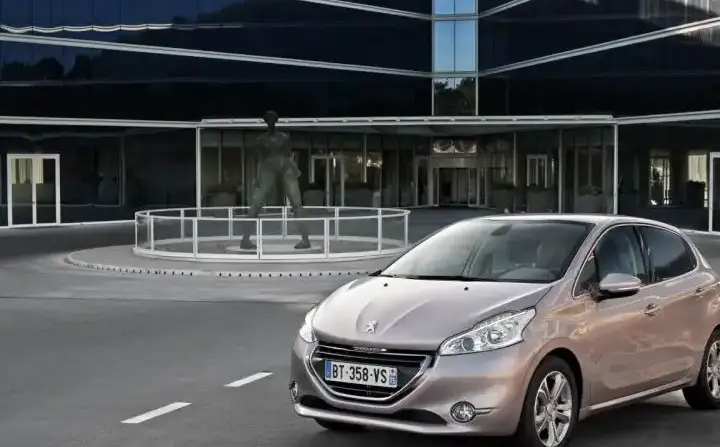
The Peugeot 208 1.2 VTi 82 hp, introduced in 2012 as part of the first generation (208 I, Phase I) of the 208 model, represented an entry-level offering in Peugeot’s supermini lineup. Produced from 2012 to 2015, this variant was designed to provide an affordable and fuel-efficient option for buyers, particularly in European markets where smaller, economical cars are highly popular. It was built on the PF1 platform, also known as the 1HX0/A3 platform, shared with Citroën and other Stellantis brands. This model aimed to replace the aging Peugeot 207, offering a more modern design and improved efficiency.
Technical Specifications
| Brand | Peugeot |
| Model | 208 |
| Generation | 208 I (Phase I, 2012) |
| Type (Engine) | 1.2 VTi (82 Hp) |
| Start of production | 2012 |
| End of production | 2015 |
| Powertrain Architecture | Internal Combustion engine |
| Body type | Hatchback |
| Seats | 5 |
| Doors | 3-5 |
| Fuel consumption (urban) | 5.5 l/100 km (42.8 US mpg, 51.4 UK mpg, 18.2 km/l) |
| Fuel consumption (extra urban) | 3.9 l/100 km (60.3 US mpg, 72.4 UK mpg, 25.6 km/l) |
| Fuel consumption (combined) | 4.5 l/100 km (52.3 US mpg, 62.8 UK mpg, 22.2 km/l) |
| Fuel Type | Petrol (Gasoline) |
| Acceleration 0 – 100 km/h | 12.2 sec |
| Acceleration 0 – 62 mph | 12.2 sec |
| Acceleration 0 – 60 mph | 11.6 sec |
| Maximum speed | 175 km/h (108.74 mph) |
| Emission standard | Euro 5 |
| Weight-to-power ratio | 11.9 kg/Hp, 84.1 Hp/tonne |
| Weight-to-torque ratio | 8.3 kg/Nm, 121 Nm/tonne |
| Power | 82 Hp @ 6000 rpm |
| Power per litre | 68.4 Hp/l |
| Torque | 118 Nm @ 2750 rpm (87.03 lb.-ft. @ 2750 rpm) |
| Engine layout | Front, Transverse |
| Engine Model/Code | HMZ EB2F |
| Engine displacement | 1199 cm3 (73.17 cu. in.) |
| Number of cylinders | 3 |
| Engine configuration | Inline |
| Number of valves per cylinder | 4 |
| Fuel injection system | Multi-port manifold injection |
| Engine aspiration | Naturally aspirated engine |
| Engine oil capacity | 3.25 l (3.43 US qt, 2.86 UK qt) |
| Coolant capacity | 6 l (6.34 US qt, 5.28 UK qt) |
| Kerb Weight | 975 kg (2149.51 lbs) |
| Max. weight | 1527 kg (3366.46 lbs) |
| Max load | 552 kg (1216.95 lbs) |
| Trunk (boot) space – minimum | 285 l (10.06 cu. ft.) |
| Trunk (boot) space – maximum | 1076 l (38 cu. ft.) |
| Fuel tank capacity | 50 l (13.21 US gal, 11 UK gal) |
| Length | 3962 mm (155.98 in.) |
| Width | 1829 mm (72.01 in.) |
| Height | 1460 mm (57.48 in.) |
| Wheelbase | 2538 mm (99.92 in.) |
| Minimum turning circle | 10.4 m (34.12 ft.) |
| Drivetrain Architecture | The Internal combustion engine (ICE) drives the front wheels of the vehicle. |
| Drive wheel | Front wheel drive |
| Number of gears | 5 gears, manual transmission |
| Front suspension | Independent type McPherson |
| Rear suspension | Semi-independent, coil spring |
| Front brakes | Ventilated discs |
| Rear brakes | Drum |
| Assisting systems | ABS (Anti-lock braking system) |
| Steering type | Steering rack and pinion |
INTRODUCTION
The Peugeot 208 1.2 VTi 82 hp, launched in 2012, was a key component of Peugeot’s strategy to revitalize its presence in the competitive supermini segment. Positioned as the entry-level trim, it offered a more affordable route into the 208 range, appealing to budget-conscious buyers and those prioritizing fuel economy. The 1.2 VTi engine, part of Peugeot’s PureTech family, was a relatively new design at the time, intended to deliver improved efficiency and reduced emissions compared to older engine options. This variant was primarily sold in Europe, where the demand for small, economical cars is consistently high.
Powertrain & Engine Architecture
The heart of this 208 variant is the HMZ (also known as EB2F) 1.2-liter three-cylinder petrol engine. This engine utilizes a naturally aspirated configuration and multi-point fuel injection. The engine’s design focused on minimizing internal friction and weight to enhance fuel efficiency. It features four valves per cylinder and a single overhead camshaft. The 82 horsepower output is achieved at 6000 rpm, while peak torque of 118 Nm (87 lb-ft) is delivered at 2750 rpm. The engine is transversely mounted at the front of the vehicle. The 208 1.2 VTi was typically paired with a five-speed manual transmission, although a later, less common, automated manual transmission (ETG) was also offered. The ETG transmission was known for its somewhat jerky shifts compared to traditional automatics.
Driving Characteristics
The 1.2 VTi 82 hp version of the 208 offered a modest but adequate driving experience. Acceleration was not its strong suit, with a 0-60 mph time of around 11.6 seconds. The engine felt somewhat strained when pushed hard, particularly when fully loaded or tackling inclines. The five-speed manual transmission was well-matched to the engine’s characteristics, offering a reasonable spread of gears. Compared to the more powerful 1.6 VTi models, the 1.2 VTi felt noticeably slower, but it provided a more relaxed and economical driving experience. The steering was light and precise, making it easy to maneuver in urban environments. The suspension provided a comfortable ride, although it could feel a little unsettled on rougher road surfaces.
Equipment & Trim Levels
The 1.2 VTi 82 hp typically came with a basic level of equipment, reflecting its position as the entry-level trim. Standard features generally included power steering, central locking, electric front windows, and an audio system with USB connectivity. Safety features such as ABS, ESP (Electronic Stability Program), and multiple airbags were also standard. Higher trim levels, such as Active and Allure, added features like air conditioning, alloy wheels, cruise control, and a touchscreen infotainment system. Optional extras included parking sensors, a panoramic sunroof, and leather upholstery.
Chassis & Braking
The 208 1.2 VTi utilized a McPherson strut front suspension and a semi-independent coil spring rear suspension. The front brakes were ventilated discs, providing adequate stopping power, while the rear brakes were drums, a cost-saving measure common in entry-level models. The steering system employed a rack and pinion setup, offering precise and responsive handling. The relatively light weight of the 1.2 VTi variant (around 975 kg or 2149 lbs) contributed to its nimble handling characteristics. Stabilizer bars were fitted to both the front and rear axles to reduce body roll during cornering.
Market Reception & Comparison
The Peugeot 208 1.2 VTi 82 hp was generally well-received by critics as a practical and economical city car. Its fuel economy figures of around 52.3 US mpg combined were a major selling point. However, some reviewers criticized its lack of power and the somewhat basic interior trim. Compared to other engines in the 208 lineup, such as the 1.6 VTi, the 1.2 VTi offered significantly lower performance but superior fuel efficiency. The 1.6 VTi was aimed at drivers who prioritized performance, while the 1.2 VTi catered to those seeking affordability and economy. The diesel variants, like the 1.6 HDi, offered even better fuel economy but came with a higher purchase price.
Legacy
The 1.2 VTi engine, despite some early reports of timing chain issues in some applications, proved to be generally reliable. The 208 1.2 VTi 82 hp remains a popular choice in the used car market, particularly for first-time drivers or those seeking a low-cost, economical vehicle. Its simple mechanical design and relatively low running costs make it an attractive option for budget-conscious buyers. While not the most exciting car to drive, the 208 1.2 VTi 82 hp provided a solid and dependable transportation solution for many years, and continues to do so for those seeking a practical and affordable supermini.
