
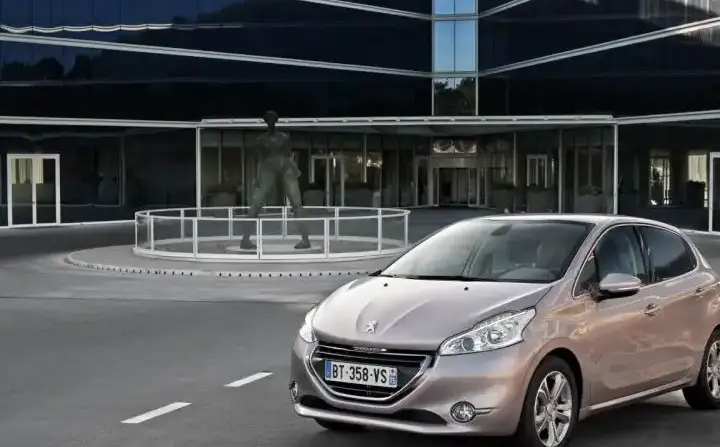
The Peugeot 208 1.4 VTi 95 hp, introduced as part of the first generation (208 I, Phase I) launched in 2012, represented an entry-level offering within the 208 range. Produced through 2015, this variant aimed to provide affordable and efficient transportation, primarily targeting budget-conscious buyers and those seeking a practical city car. It was positioned below the more powerful 1.6 VTi and diesel variants, offering a balance between fuel economy and acceptable performance. The 208 itself was a significant model for Peugeot, replacing the 207 and marking a shift towards a more modern and stylish design language.
Technical Specifications
| Brand | Peugeot |
| Model | 208 |
| Generation | 208 I (Phase I, 2012) |
| Type (Engine) | 1.4 VTi (95 Hp) |
| Start of production | 2012 |
| End of production | 2015 |
| Powertrain Architecture | Internal Combustion engine |
| Body type | Hatchback |
| Seats | 5 |
| Doors | 3-5 |
| Fuel consumption (urban) | 7.5 l/100 km (31.4 US mpg) |
| Fuel consumption (extra urban) | 4.5 l/100 km (52.3 US mpg) |
| Fuel consumption (combined) | 5.6 l/100 km (42 US mpg) |
| Fuel Type | Petrol (Gasoline) |
| Acceleration 0 – 100 km/h | 10.5 sec |
| Acceleration 0 – 62 mph | 10.5 sec |
| Acceleration 0 – 60 mph | 10 sec |
| Maximum speed | 188 km/h (116.82 mph) |
| Emission standard | Euro 5 |
| Weight-to-power ratio | 11.3 kg/Hp |
| Weight-to-torque ratio | 7.9 kg/Nm |
| Power | 95 Hp @ 6000 rpm |
| Torque | 136 Nm @ 4000 rpm (100.31 lb.-ft. @ 4000 rpm) |
| Engine layout | Front, Transverse |
| Engine Model/Code | 8FS EP3C |
| Engine displacement | 1397 cm3 (85.25 cu. in.) |
| Number of cylinders | 4 |
| Engine configuration | Inline |
| Number of valves per cylinder | 4 |
| Fuel injection system | Multi-port manifold injection |
| Engine aspiration | Naturally aspirated engine |
| Engine oil capacity | 4.25 l (4.49 US qt | 3.74 UK qt) |
| Kerb Weight | 1070 kg (2358.95 lbs.) |
| Max. weight | 1590 kg (3505.35 lbs.) |
| Max load | 520 kg (1146.4 lbs.) |
| Trunk (boot) space – minimum | 285 l (10.06 cu. ft.) |
| Trunk (boot) space – maximum | 1076 l (38 cu. ft.) |
| Fuel tank capacity | 50 l (13.21 US gal | 11 UK gal) |
| Length | 3962 mm (155.98 in.) |
| Width | 1829 mm (72.01 in.) |
| Height | 1460 mm (57.48 in.) |
| Wheelbase | 2538 mm (99.92 in.) |
| Drivetrain Architecture | The Internal combustion engine (ICE) drives the front wheels of the vehicle. |
| Drive wheel | Front wheel drive |
| Number of gears and type of gearbox | 5 gears, manual transmission |
| Front suspension | Independent type McPherson |
| Rear suspension | Semi-independent, coil spring |
| Front brakes | Ventilated discs |
| Rear brakes | Disc |
| Assisting systems | ABS (Anti-lock braking system) |
| Steering type | Steering rack and pinion |
| Tires size | 185/65 R15 |
| Wheel rims size | 15 |
Powertrain & Engine Architecture
The heart of the 208 1.4 VTi 95 was the 8FS EP3C engine, a 1.4-liter inline-four cylinder petrol engine. This engine belonged to Peugeot’s Prince engine family, developed in collaboration with BMW. It featured a naturally aspirated configuration and utilized a multi-point fuel injection system. The engine’s valvetrain employed four valves per cylinder, contributing to its relatively efficient combustion process. The 95 horsepower output was achieved at 6000 rpm, while peak torque of 136 Nm (100.31 lb-ft) arrived at 4000 rpm. The engine was typically paired with a five-speed manual transmission, although an optional four-speed automatic transmission was also available, albeit less common. The automatic transmission, while offering convenience, was known for its less-than-sporty shift characteristics and slightly reduced fuel economy compared to the manual.
Driving Characteristics
The 208 1.4 VTi 95 hp, particularly when equipped with the five-speed manual transmission, offered a reasonably engaging driving experience for a car in its class. Acceleration from 0 to 60 mph took around 10 seconds, which was adequate for everyday driving but didn’t provide particularly brisk performance. The engine felt responsive enough in the mid-range, making it suitable for overtaking maneuvers on open roads. However, it did require the driver to downshift to maintain momentum when climbing hills or carrying a full load. The automatic transmission version, while smoother in city traffic, noticeably dulled the driving experience, with slower acceleration and a tendency to hunt for gears. The gear ratios were optimized for fuel efficiency rather than outright performance. Steering was light and precise, making the 208 easy to maneuver in urban environments.
Equipment & Trim Levels
The 1.4 VTi 95 hp typically came with a fairly basic level of equipment, reflecting its position as an entry-level model. Standard features generally included power steering, central locking, electric front windows, and an audio system with USB connectivity. Air conditioning was often an optional extra. Interior upholstery was typically cloth, and the dashboard featured a functional but somewhat minimalist design. Higher trim levels, such as Active or Allure, added features like alloy wheels, cruise control, and more sophisticated infotainment systems. Optional extras included parking sensors, a panoramic sunroof, and upgraded audio systems.
Chassis & Braking
The 208 1.4 VTi utilized a McPherson strut front suspension and a semi-independent coil spring rear suspension. This setup provided a comfortable ride quality, absorbing bumps and imperfections in the road surface effectively. The front brakes were ventilated discs, offering good stopping power, while the rear brakes were typically solid discs. ABS (Anti-lock Braking System) was standard, enhancing safety during emergency braking situations. The relatively lightweight nature of the 208 (around 1070 kg or 2359 lbs) contributed to its nimble handling characteristics. Stabilizer bars were fitted to both the front and rear axles to reduce body roll during cornering.
Market Reception & Comparison
The Peugeot 208 1.4 VTi 95 hp received generally positive reviews, particularly for its stylish design, comfortable ride, and fuel efficiency. Critics noted that the engine, while adequate, wasn’t particularly powerful, and the automatic transmission felt somewhat dated. Compared to other engines in the 208 lineup, such as the 1.6 VTi, the 1.4 VTi offered significantly better fuel economy but at the expense of performance. The diesel variants, like the 1.6 HDi, provided even greater fuel efficiency and more torque, but came with a higher purchase price. In terms of reliability, the 1.4 VTi engine proved to be generally dependable, although some owners reported minor issues with the fuel injection system.
Legacy
The Peugeot 208 1.4 VTi 95 hp remains a relatively common sight on the used car market. Its affordability, fuel efficiency, and generally reliable powertrain make it an attractive option for buyers seeking a practical and economical city car. While not the most exciting version of the 208, it represents a solid and dependable choice for those prioritizing value and running costs. The Prince engine family, of which the 1.4 VTi is a part, has proven to be a durable and long-lasting design, and well-maintained examples of this variant are likely to continue providing reliable service for years to come. However, potential buyers should be aware of the potential for minor issues with the fuel injection system and ensure that the car has been regularly serviced.
