
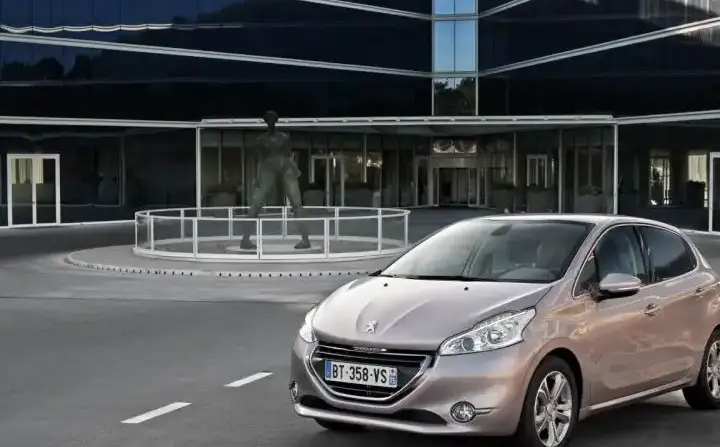
The Peugeot 208 1.6 e-HDi 92 hp, produced between 2012 and 2015, represented a key entry point into the first generation (T1) 208 range. Positioned as a fuel-efficient and relatively affordable option, it played a significant role in Peugeot’s attempt to recapture market share in the competitive European subcompact hatchback segment. This variant utilized Peugeot’s e-HDi diesel technology, combining a turbocharged 1.6-liter engine with a semi-automatic transmission, aiming to deliver a balance of economy and usability. It was part of the A9 platform family, shared with the Citroën C3.
Technical Specifications
| Brand | Peugeot |
| Model | 208 |
| Generation | 208 I (Phase I, 2012) |
| Type (Engine) | 1.6 e-HDi (92 Hp) FAP STT BMP6 |
| Start of production | 2012 |
| End of production | 2015 |
| Powertrain Architecture | Internal Combustion engine |
| Body type | Hatchback |
| Seats | 5 |
| Doors | 3-5 |
| Fuel consumption (urban) | 4.5 l/100 km (52.3 US mpg, 62.8 UK mpg, 22.2 km/l) |
| Fuel consumption (extra urban) | 3.4 l/100 km (69.2 US mpg, 83.1 UK mpg, 29.4 km/l) |
| Fuel consumption (combined) | 3.8 l/100 km (61.9 US mpg, 74.3 UK mpg, 26.3 km/l) |
| Fuel Type | Diesel |
| Acceleration 0 – 100 km/h | 10.9 sec |
| Acceleration 0 – 62 mph | 10.9 sec |
| Acceleration 0 – 60 mph | 10.4 sec |
| Maximum speed | 185 km/h (114.95 mph) |
| Emission standard | Euro 5 |
| Weight-to-power ratio | 12.9 kg/Hp, 77.6 Hp/tonne |
| Weight-to-torque ratio | 5.2 kg/Nm, 194.1 Nm/tonne |
| Power | 92 Hp @ 4000 rpm |
| Power per litre | 59 Hp/l |
| Torque | 230 Nm @ 1750 rpm (169.64 lb.-ft. @ 1750 rpm) |
| Engine layout | Front, Transverse |
| Engine Model/Code | 9HP DV6DTED |
| Engine displacement | 1560 cm3 (95.2 cu. in.) |
| Number of cylinders | 4 |
| Engine configuration | Inline |
| Number of valves per cylinder | 2 |
| Fuel injection system | Diesel Commonrail |
| Engine aspiration | Turbocharger, Intercooler |
| Engine oil capacity | 3.75 l (3.96 US qt | 3.3 UK qt) |
| Coolant capacity | 6 l (6.34 US qt | 5.28 UK qt) |
| Kerb Weight | 1185 kg (2612.48 lbs.) |
| Max. weight | 1640 kg (3615.58 lbs.) |
| Max load | 455 kg (1003.1 lbs.) |
| Trunk (boot) space – minimum | 285 l (10.06 cu. ft.) |
| Trunk (boot) space – maximum | 1076 l (38 cu. ft.) |
| Fuel tank capacity | 50 l (13.21 US gal | 11 UK gal) |
| Length | 3962 mm (155.98 in.) |
| Width | 1829 mm (72.01 in.) |
| Height | 1460 mm (57.48 in.) |
| Wheelbase | 2538 mm (99.92 in.) |
| Drivetrain Architecture | Front wheel drive |
| Number of gears | 6 |
| Gearbox type | Semi-automatic (BMP6) |
| Front suspension | Independent type McPherson |
| Rear suspension | Semi-independent, coil spring |
| Front brakes | Ventilated discs |
| Rear brakes | Disc |
| Assisting systems | ABS (Anti-lock braking system) |
| Steering type | Steering rack and pinion |
INTRODUCTION
The Peugeot 208 1.6 e-HDi 92, launched in 2012, was a crucial variant within the first generation 208 lineup. Built on the 1HX0/A3 platform, it aimed to provide a modern, efficient, and affordable hatchback option for European buyers. The “e-HDi” designation signified Peugeot’s implementation of diesel particulate filters and Stop & Start technology, enhancing fuel economy and reducing emissions. This trim level typically served as a mid-range offering, bridging the gap between the base-level petrol engines and the more powerful diesel options.
Powertrain & Engine Architecture
At the heart of the 208 1.6 e-HDi was the DV6DTED engine, a 1.6-liter inline-four cylinder diesel. This engine, commonly found in various PSA Group vehicles, utilized a common rail direct injection system, delivering fuel at high pressure for optimized combustion. The engine code, 9HP, identifies specific calibrations and components. A turbocharger with an intercooler was employed to boost power and torque. The 92 horsepower output was achieved at 4000 rpm, while the peak torque of 230 Nm (169.64 lb-ft) was available from just 1750 rpm, providing good low-end responsiveness.
The transmission was a key differentiator: a six-speed semi-automatic gearbox known as BMP6 (Boîte Manuelle Pilotée 6 rapports). This system used actuators to automatically shift gears, offering a degree of convenience without the full complexity (and cost) of a traditional automatic transmission. While offering smoother shifts than a conventional manual, it wasn’t as refined as a torque-converter automatic and could sometimes exhibit noticeable pauses during gear changes.
Driving Characteristics
The 1.6 e-HDi 92 hp/BMP6 combination delivered a practical and economical driving experience. Acceleration was adequate for everyday driving, with a 0-60 mph time of around 10.4 seconds. However, it wasn’t a particularly sporty setup. The focus was on maximizing fuel efficiency, and the engine’s torque characteristics meant that it felt more responsive in the mid-range than at higher revs. The BMP6 transmission, while convenient, could sometimes feel hesitant, especially during quick overtaking maneuvers. Compared to the more powerful 1.6 BlueHDi variants or the petrol-powered 1.2 PureTech engines, this version offered less outright performance but significantly better fuel economy.
Equipment & Trim Levels
The 208 1.6 e-HDi 92 typically came equipped with features such as air conditioning, electric front windows, a CD/MP3 stereo system, and ABS brakes. Higher trim levels added features like alloy wheels, a touchscreen infotainment system, rear parking sensors, and cruise control. Interior upholstery was generally cloth, with a functional and durable design. Optional extras included a panoramic sunroof, leather upholstery, and a navigation system. The trim level often dictated the exterior styling details, such as chrome trim or different wheel designs.
Chassis & Braking
The 208 featured a McPherson strut front suspension and a semi-independent coil spring rear suspension. This setup provided a comfortable ride quality, although it wasn’t particularly engaging for enthusiastic drivers. Front brakes were ventilated discs, while rear brakes were solid discs. ABS (Anti-lock Braking System) was standard. The suspension tuning was geared towards providing a balance between comfort and handling, suitable for everyday driving conditions. Stabilizer bars were included to reduce body roll during cornering.
Market Reception & Comparison
The Peugeot 208 1.6 e-HDi 92 was generally well-received by critics for its fuel efficiency and low running costs. It was seen as a sensible choice for buyers prioritizing economy over performance. However, the BMP6 transmission received mixed reviews, with some testers finding it clunky and slow to respond. Compared to the petrol-powered versions, the diesel offered superior fuel economy, but at a higher purchase price. Against competitors like the Volkswagen Polo, Ford Fiesta, and Renault Clio, the 208 offered a stylish design and a comfortable interior, but its semi-automatic transmission was a potential drawback for some buyers.
Legacy
The 1.6 e-HDi engine, while eventually superseded by newer, more efficient diesel engines, proved to be relatively reliable. The BMP6 transmission, however, is known to be a potential source of issues, with some owners reporting problems with the actuators and control unit. In the used car market, the 208 1.6 e-HDi 92 remains an affordable and economical option, but potential buyers should be aware of the potential transmission issues and ensure that the vehicle has been properly maintained. The model helped establish the 208 as a popular choice in the subcompact hatchback segment, paving the way for subsequent generations.
