
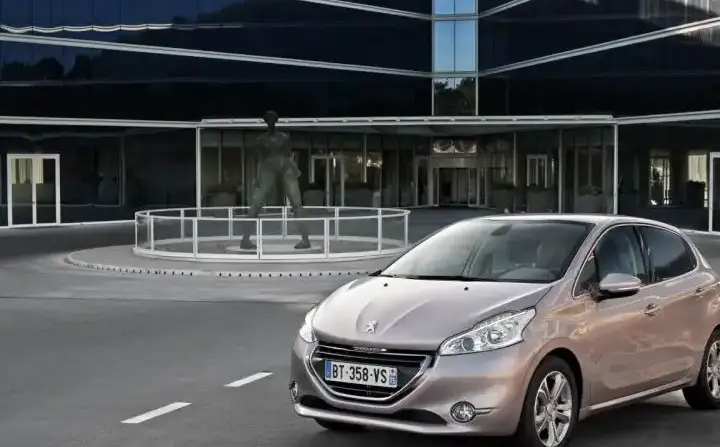
The Peugeot 208 1.6 THP (155 hp) represents a performance-oriented variant of the first-generation 208, produced between 2012 and 2015. Falling within the Phase I production run (designated 208 I), this model aimed to offer a more engaging driving experience compared to the base engine options, positioning itself as a sporty alternative within the subcompact hatchback segment. It was a key offering in Peugeot’s attempt to revitalize its image and appeal to a younger demographic. The 208, as a whole, replaced the Peugeot 207 and was built on the PF1 platform, shared with Citroën and DS Automobiles models.
Technical Specifications
| Brand | Peugeot |
| Model | 208 |
| Generation | 208 I (Phase I, 2012) |
| Type (Engine) | 1.6 THP (155 Hp) |
| Start of production | 2012 |
| End of production | 2015 |
| Powertrain Architecture | Internal Combustion engine |
| Body type | Hatchback |
| Seats | 5 |
| Doors | 3-5 |
| Fuel consumption (urban) | 7.9 l/100 km (29.8 US mpg, 35.8 UK mpg, 12.7 km/l) |
| Fuel consumption (extra urban) | 4.5 l/100 km (52.3 US mpg, 62.8 UK mpg, 22.2 km/l) |
| Fuel consumption (combined) | 5.8 l/100 km (40.6 US mpg, 48.7 UK mpg, 17.2 km/l) |
| Fuel Type | Petrol (Gasoline) |
| Acceleration 0 – 100 km/h | 7.3 sec |
| Acceleration 0 – 62 mph | 7.3 sec |
| Acceleration 0 – 60 mph | 6.9 sec |
| Maximum speed | 215 km/h (133.59 mph) |
| Emission standard | Euro 5 |
| Weight-to-power ratio | 7.5 kg/Hp, 133 Hp/tonne |
| Power | 155 Hp |
| Power per litre | 111 Hp/l |
| Engine layout | Front, Transverse |
| Engine Model/Code | 5FV EP6CDT |
| Engine displacement | 1397 cm3 (85.25 cu. in.) |
| Number of cylinders | 4 |
| Engine configuration | Inline |
| Number of valves per cylinder | 4 |
| Fuel injection system | Direct injection |
| Engine aspiration | Turbocharger, Intercooler |
| Engine oil capacity | 4.25 l (4.49 US qt, 3.74 UK qt) |
| Coolant capacity | 6 l (6.34 US qt, 5.28 UK qt) |
| Kerb Weight | 1165 kg (2568.39 lbs) |
| Max. weight | 1640 kg (3615.58 lbs) |
| Max load | 475 kg (1047.2 lbs) |
| Trunk (boot) space – minimum | 285 l (10.06 cu. ft.) |
| Trunk (boot) space – maximum | 1076 l (38 cu. ft.) |
| Fuel tank capacity | 50 l (13.21 US gal, 11 UK gal) |
| Length | 3962 mm (155.98 in) |
| Width | 1829 mm (72.01 in) |
| Height | 1460 mm (57.48 in) |
| Wheelbase | 2538 mm (99.92 in) |
| Drivetrain Architecture | The Internal combustion engine (ICE) drives the front wheels of the vehicle. |
| Drive wheel | Front wheel drive |
| Number of gears and type of gearbox | 6 gears, manual transmission |
| Front suspension | Independent type McPherson |
| Rear suspension | Semi-independent, coil spring |
| Front brakes | Ventilated discs |
| Rear brakes | Disc |
| Assisting systems | ABS (Anti-lock braking system) |
| Steering type | Steering rack and pinion |
Powertrain & Engine Architecture
The heart of the 208 1.6 THP is the EP6CDT engine, a 1.6-liter turbocharged inline-four cylinder gasoline engine. This engine is part of the Prince engine family, a collaborative development between PSA Peugeot Citroën and BMW. The “THP” designation stands for “Turbo High Pressure,” indicating the use of a twin-scroll turbocharger and direct fuel injection. The direct injection system, operating at pressures up to 190 bar, ensures precise fuel delivery for improved efficiency and performance. The engine features a dual overhead camshaft (DOHC) valvetrain with four valves per cylinder. The 6-speed manual transmission was standard, providing a relatively short final drive ratio to maximize acceleration. The engine’s control unit (ECU) manages the engine’s operation, optimizing fuel delivery, ignition timing, and turbocharger boost based on driver input and sensor data.
Driving Characteristics
The 155 hp output, coupled with the 6-speed manual gearbox, provided a noticeably more spirited driving experience than the lower-powered 1.0L and 1.6L naturally aspirated versions of the 208. Acceleration from 0 to 60 mph was achieved in approximately 6.9 seconds, making it one of the quicker vehicles in its class. The turbocharger provides a noticeable boost in power from around 2000 rpm, delivering strong mid-range acceleration. While not a dedicated hot hatch like the Peugeot 208 GTi, the 1.6 THP offered a good balance between performance and fuel economy. The gear ratios were well-matched, allowing for responsive acceleration in most driving situations. Compared to the diesel variants, the THP engine offered a more linear power delivery and a more engaging engine note.
Equipment & Trim Levels
The 1.6 THP typically came in mid-range trim levels, often designated as “Allure” or similar. Standard equipment generally included air conditioning, power windows, power door locks, a touchscreen infotainment system with Bluetooth connectivity, and alloy wheels. Optional extras included features like a panoramic sunroof, navigation system, parking sensors, and automatic headlights and wipers. Interior upholstery was typically cloth, with the option of partial leather trim. The dashboard layout was modern and driver-focused, with a compact steering wheel and a centrally-mounted touchscreen display.
Chassis & Braking
The 208 1.6 THP utilized a McPherson strut front suspension and a semi-independent coil spring rear suspension. The suspension was tuned to provide a balance between comfort and handling. The front brakes were ventilated discs, while the rear brakes were solid discs, providing adequate stopping power for the vehicle’s weight and performance. Anti-lock Braking System (ABS) was standard. The steering was a rack and pinion system, offering precise and responsive steering feel. Compared to the base models, the 1.6 THP often featured slightly stiffer suspension components to improve handling.
Market Reception & Comparison
The Peugeot 208 1.6 THP was generally well-received by automotive critics. It was praised for its responsive engine, engaging handling, and stylish design. However, some critics noted that the interior materials were not as premium as those found in some competitors. Compared to the 1.0L and 1.6L naturally aspirated versions, the 1.6 THP offered significantly better performance, but at the cost of slightly lower fuel economy. Compared to diesel variants, the THP engine provided a more enjoyable driving experience, but with slightly higher running costs. The 1.6 THP positioned itself as a compelling alternative to rivals like the Volkswagen Polo 1.4 TSI and the Ford Fiesta 1.0 EcoBoost.
Legacy
The EP6CDT engine, while generally reliable, has been known to exhibit issues with carbon buildup on the intake valves, particularly with frequent short trips. Regular use of fuel system cleaners and occasional Italian tune-ups (high-speed runs) can help mitigate this issue. The 6-speed manual transmission is generally robust and requires minimal maintenance. Today, the Peugeot 208 1.6 THP represents a relatively affordable and enjoyable entry point into the world of turbocharged hot hatchbacks. Well-maintained examples are still relatively common on the used car market, offering a good balance of performance, fuel economy, and style.
