
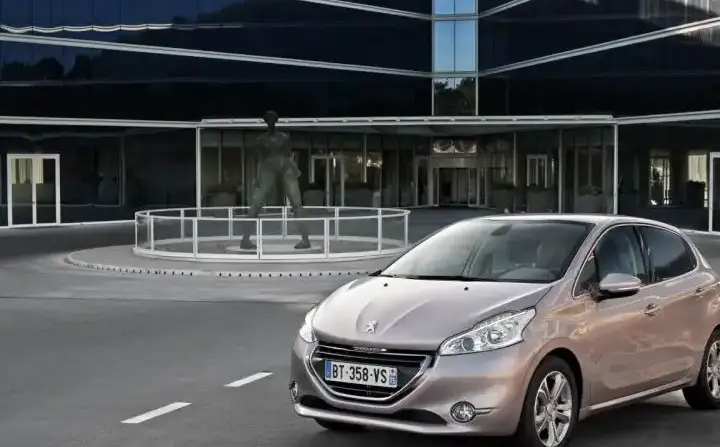
The Peugeot 208 GTi 1.6 THP (208 horsepower) represents a performance-oriented variant of the first-generation 208 (T7/208 I) hatchback, produced between 2014 and 2015. Positioned as the flagship model within the 208 range, it aimed to deliver a more engaging driving experience than the standard, economy-focused trims. This model was a key part of Peugeot’s attempt to re-establish a sporty image, building on the heritage of previous GTi models. It was primarily marketed in Europe, where the hot hatch segment enjoys significant popularity. The 208 GTi utilized the 1HX/A3 platform shared with Citroën and DS Automobiles vehicles.
Technical Specifications
| Brand | Peugeot |
| Model | 208 |
| Generation | 208 I (Phase I, 2012) |
| Type (Engine) | GTi 1.6 THP (208 Hp) |
| Start of production | 2014 |
| End of production | 2015 |
| Powertrain Architecture | Internal Combustion engine |
| Body type | Hatchback |
| Seats | 5 |
| Doors | 3 |
| Fuel consumption (urban) | 6.9 l/100 km (34.1 US mpg, 40.9 UK mpg, 14.5 km/l) |
| Fuel consumption (extra urban) | 4.6 l/100 km (51.1 US mpg, 61.4 UK mpg, 21.7 km/l) |
| Fuel consumption (combined) | 5.4 l/100 km (43.6 US mpg, 52.3 UK mpg, 18.5 km/l) |
| CO2 emissions | 125 g/km |
| Fuel Type | Petrol (Gasoline) |
| Acceleration 0 – 100 km/h | 6.5 sec |
| Acceleration 0 – 62 mph | 6.5 sec |
| Acceleration 0 – 60 mph | 6.2 sec |
| Maximum speed | 230 km/h (142.92 mph) |
| Emission standard | Euro 6 |
| Weight-to-power ratio | 5.6 kg/Hp, 179.3 Hp/tonne |
| Weight-to-torque ratio | 3.9 kg/Nm, 258.6 Nm/tonne |
| Power | 208 Hp @ 5800 rpm |
| Power per litre | 130.2 Hp/l |
| Torque | 300 Nm @ 1700-3000 rpm (221.27 lb.-ft. @ 1700-3000 rpm) |
| Engine layout | Front, Transverse |
| Engine Model/Code | 5GR EP6FDTX |
| Engine displacement | 1598 cm3 (97.52 cu. in.) |
| Number of cylinders | 4 |
| Engine configuration | Inline |
| Number of valves per cylinder | 4 |
| Fuel injection system | Direct injection |
| Engine aspiration | Turbocharger, Intercooler |
| Engine oil capacity | 4.25 l (4.49 US qt | 3.74 UK qt) |
| Coolant capacity | 6 l (6.34 US qt | 5.28 UK qt) |
| Kerb Weight | 1160 kg (2557.36 lbs.) |
| Max. weight | 1650 kg (3637.63 lbs.) |
| Max load | 490 kg (1080.27 lbs.) |
| Trunk (boot) space – minimum | 285 l (10.06 cu. ft.) |
| Trunk (boot) space – maximum | 1076 l (38 cu. ft.) |
| Fuel tank capacity | 50 l (13.21 US gal | 11 UK gal) |
| Length | 3962 mm (155.98 in.) |
| Width | 1829 mm (72.01 in.) |
| Height | 1450 mm (57.09 in.) |
| Wheelbase | 2538 mm (99.92 in.) |
| Front track | 1475-1470 mm (58.07 – 57.87 in.) |
| Rear (Back) track | 1471-1467 mm (57.91 – 57.76 in.) |
| Ride height (ground clearance) | 100 mm (3.94 in.) |
| Minimum turning circle | 11 m (36.09 ft.) |
| Drivetrain Architecture | Front wheel drive |
| Number of gears | 6 gears, manual transmission |
| Front suspension | Independent, type McPherson with coil spring and anti-roll bar |
| Rear suspension | Semi-independent, coil spring |
| Front brakes | Ventilated discs |
| Rear brakes | Disc |
| Assisting systems | ABS (Anti-lock braking system) |
| Steering type | Steering rack and pinion |
| Tires size | 205/40 ZR18 |
| Wheel rims size | 18 |
Powertrain & Engine Architecture
The heart of the 208 GTi is the 5GR EP6FDTX 1.6-liter turbocharged inline-four engine. This engine is part of the Prince engine family, a collaborative development between PSA Peugeot Citroën and BMW. The engine features direct fuel injection, a twin-scroll turbocharger, and variable valve timing on both intake and exhaust camshafts. This configuration allows for a broad torque curve and responsive power delivery. The 6-speed manual transmission was the only transmission option offered, prioritizing driver engagement. The gearbox featured relatively short ratios, contributing to the car’s brisk acceleration. The engine’s control unit (ECU) was specifically tuned for the GTi model, optimizing performance and throttle response.
Driving Characteristics
The 208 GTi 1.6 THP delivers a noticeably more spirited driving experience compared to lower-spec 208 models. The 208 hp and 300 Nm (221 lb-ft) of torque provide strong acceleration, with a 0-60 mph time of around 6.2 seconds. The turbocharger provides minimal lag, offering readily available power throughout the rev range. The short gear ratios of the manual transmission keep the engine in its powerband, enhancing responsiveness. While the suspension is firmer than standard 208s, it remains compliant enough for everyday driving. The steering is precise and well-weighted, providing good feedback to the driver. Compared to the later 208 GTi by Peugeot Sport, this initial GTi model had a slightly less aggressive suspension setup and a more forgiving ride.
Equipment & Trim Levels
The 208 GTi came standard with a range of features designed to enhance the driving experience and differentiate it from other 208 trims. These included sport seats with enhanced bolstering, aluminum pedals, a leather-wrapped steering wheel, and unique GTi badging both inside and outside the vehicle. Standard exterior features included 18-inch alloy wheels, a rear spoiler, and chrome exhaust tailpipe. Optional extras included a panoramic sunroof, navigation system, and parking sensors. The interior typically featured a dark color scheme with red accents, emphasizing the car’s sporty character.
Chassis & Braking
The 208 GTi featured a modified chassis compared to the standard 208. The suspension was lowered and stiffened, with revised spring rates and damper settings. A thicker front anti-roll bar was also fitted to reduce body roll during cornering. The braking system consisted of ventilated front discs and solid rear discs, providing adequate stopping power for the car’s performance capabilities. ABS (Anti-lock Braking System) was standard. The steering system utilized a rack-and-pinion setup, offering precise and responsive steering feel.
Market Reception & Comparison
The Peugeot 208 GTi was generally well-received by automotive critics. It was praised for its engaging driving dynamics, responsive engine, and stylish design. However, some reviewers noted that the interior quality could be improved. Compared to rivals such as the Volkswagen Polo GTI and Renault Clio RS, the 208 GTi offered a compelling blend of performance and value. Fuel economy was respectable for a hot hatch, averaging around 43.6 US mpg in combined driving. Reliability reports were generally positive, although some owners reported minor issues with the turbocharger and fuel injection system.
Legacy
The 208 GTi 1.6 THP remains a popular choice among enthusiasts seeking an affordable and engaging hot hatch. The 1.6 THP engine, while generally reliable, can be susceptible to carbon buildup if not properly maintained. Regular oil changes and the use of quality fuel are essential for long-term reliability. The 208 GTi paved the way for the later, more focused 208 GTi by Peugeot Sport, which featured even more aggressive styling and a more track-oriented setup. Today, well-maintained examples of the 208 GTi 1.6 THP are sought after in the used car market, offering a rewarding driving experience at a reasonable price.
