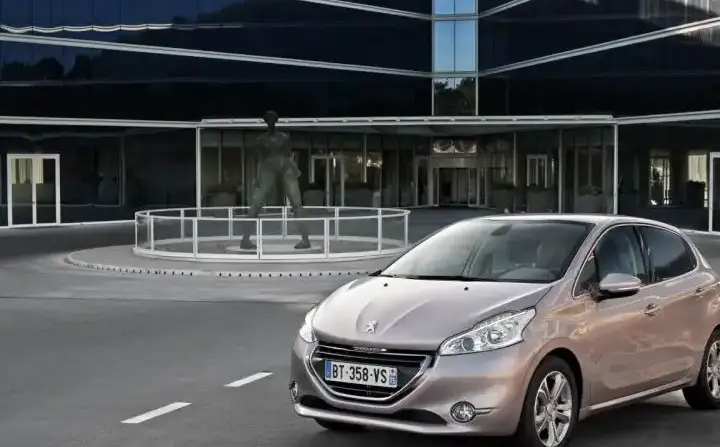
Technical Specifications
| Brand | Peugeot |
| Model | 208 |
| Generation | 208 I (Phase II, 2015) |
| Type (Engine) | 1.2 PureTech (82 Hp) |
| Start of production | 2015 |
| End of production | 2018 |
| Powertrain Architecture | Internal Combustion engine |
| Body type | Hatchback |
| Seats | 5 |
| Doors | 3-5 |
| Fuel consumption (urban) | 5.5 l/100 km (42.8 US mpg, 51.4 UK mpg, 18.2 km/l) |
| Fuel consumption (extra urban) | 3.9 l/100 km (60.3 US mpg, 72.4 UK mpg, 25.6 km/l) |
| Fuel consumption (combined) | 4.5 l/100 km (52.3 US mpg, 62.8 UK mpg, 22.2 km/l) |
| CO2 emissions | 104 g/km |
| Fuel Type | Petrol (Gasoline) |
| Acceleration 0 – 100 km/h | 12.2 sec |
| Acceleration 0 – 62 mph | 12.2 sec |
| Acceleration 0 – 60 mph | 11.6 sec |
| Maximum speed | 175 km/h (108.74 mph) |
| Emission standard | Euro 6 |
| Weight-to-power ratio | 11.7 kg/Hp, 85.4 Hp/tonne |
| Weight-to-torque ratio | 8.1 kg/Nm, 122.9 Nm/tonne |
| Power | 82 Hp @ 5750 rpm |
| Power per litre | 68.4 Hp/l |
| Torque | 118 Nm @ 2750 rpm (87.03 lb.-ft. @ 2750 rpm) |
| Engine layout | Front, Transverse |
| Engine Model/Code | HMZ EB2F |
| Engine displacement | 1199 cm3 (73.17 cu. in.) |
| Number of cylinders | 3 |
| Engine configuration | Inline |
| Number of valves per cylinder | 4 |
| Fuel injection system | Multi-port manifold injection |
| Engine aspiration | Naturally aspirated engine |
| Engine oil capacity | 3.25 l (3.43 US qt, 2.86 UK qt) |
| Coolant capacity | 6 l (6.34 US qt, 5.28 UK qt) |
| Kerb Weight | 960 kg (2116.44 lbs) |
| Max. weight | 1534 kg (3381.89 lbs) |
| Max load | 574 kg (1265.45 lbs) |
| Trunk (boot) space – minimum | 285 l (10.06 cu. ft.) |
| Trunk (boot) space – maximum | 1076 l (38 cu. ft.) |
| Fuel tank capacity | 50 l (13.21 US gal, 11 UK gal) |
| Permitted trailer load with brakes (12%) | 820 kg (1807.79 lbs) |
| Length | 3973 mm (156.42 in) |
| Width | 1829 mm (72.01 in) |
| Width including mirrors | 2004 mm (78.9 in) |
| Height | 1460 mm (57.48 in) |
| Wheelbase | 2538 mm (99.92 in) |
| Front track | 1475-1470 mm (58.07 – 57.87 in) |
| Rear (Back) track | 1471-1467 mm (57.91 – 57.76 in) |
| Ride height (ground clearance) | 123-129 mm (4.84 – 5.08 in) |
| Minimum turning circle (turning diameter) | 10.4 m (34.12 ft) |
| Drivetrain Architecture | The Internal combustion engine (ICE) drives the front wheels of the vehicle. |
| Drive wheel | Front wheel drive |
| Number of gears and type of gearbox | 5 gears, manual transmission |
| Front suspension | Independent type McPherson |
| Rear suspension | Elastic beam |
| Front brakes | Ventilated discs |
| Rear brakes | Drum |
| Assisting systems | ABS (Anti-lock braking system) |
| Steering type | Steering rack and pinion |
The Peugeot 208 I (Phase II) 1.2 PureTech 82 hp model was introduced as part of the facelifted 208 range in 2015. Built on the PF1 platform (also known as the 1HX0/A3 platform shared with Citroën and Opel/Vauxhall vehicles), this variant aimed to provide an accessible entry point into the 208 lineup. It catered to buyers prioritizing fuel economy and affordability over outright performance. The Phase II updates included revised front-end styling, an updated interior with a larger touchscreen infotainment system, and improvements to ride quality. This model was primarily sold in Europe, where subcompact hatchbacks are a dominant market segment.
Powertrain & Engine Architecture
At the heart of the 208 1.2 PureTech 82 is the HMZ (EB2F) engine, a 1.2-liter, three-cylinder, naturally aspirated gasoline engine. This engine is part of Peugeot’s PureTech family, known for its efficiency and refinement. The engine utilizes multi-point fuel injection and four valves per cylinder. The 82 horsepower output is achieved at 5750 rpm, with a torque figure of 118 Nm (87 lb-ft) delivered at 2750 rpm. This particular variant was typically paired with a five-speed manual transmission, although an optional six-speed automatic transmission was available in some markets. The automatic transmission, while offering convenience, did slightly impact fuel economy and acceleration compared to the manual version. The engine’s relatively simple design contributes to its reliability and ease of maintenance.
Driving Characteristics
The 1.2 PureTech 82 hp/manual transmission combination offered adequate performance for urban driving and shorter journeys. Acceleration from 0-60 mph took around 11.6 seconds, and top speed was approximately 108.74 mph. While not particularly sporty, the engine provided sufficient power for everyday driving situations. The five-speed gearbox was well-matched to the engine’s characteristics, offering smooth shifts and reasonable gear spacing. Compared to the 1.2 PureTech 110 hp version, the 82 hp model felt noticeably less responsive, particularly when accelerating onto highways or overtaking. The lower power output also meant that the engine needed to be revved more frequently to maintain speed, which could impact fuel economy on longer trips. The automatic transmission, while convenient, further dulled the driving experience and resulted in slightly slower acceleration times.
Equipment & Trim Levels
The 1.2 PureTech 82 hp model typically came equipped with a basic level of standard features. These generally included air conditioning, power steering, electric front windows, a basic audio system with USB connectivity, and ABS brakes. Higher trim levels, such as Active or Allure, added features like alloy wheels, a touchscreen infotainment system, Bluetooth connectivity, cruise control, and rear parking sensors. Interior upholstery was typically cloth, with a relatively simple dashboard design. Optional extras included a panoramic sunroof, navigation system, and automatic climate control.
Chassis & Braking
The 208 1.2 PureTech 82 hp utilized a McPherson strut front suspension and an elastic beam rear suspension. This setup provided a comfortable ride quality, particularly on smooth roads. The front brakes were ventilated discs, while the rear brakes were drums. This configuration was typical for vehicles in this weight class and price range. ABS (Anti-lock Braking System) was standard, providing enhanced braking performance and stability. The steering was a rack and pinion system, offering precise and responsive handling.
Market Reception & Comparison
The Peugeot 208 1.2 PureTech 82 hp was generally well-received by critics as a practical and affordable city car. It was praised for its fuel efficiency, stylish design, and comfortable ride. However, some reviewers noted that the engine lacked outright power, particularly when fully loaded or driving on hilly terrain. Compared to the 1.2 PureTech 110 hp version, the 82 hp model offered lower running costs but compromised on performance. The diesel variants, while more expensive to purchase, provided superior fuel economy and torque. In terms of reliability, the 1.2 PureTech engine has had some reported issues with timing chain wear, although these were more prevalent in later engine iterations.
Legacy
The Peugeot 208 I (Phase II) 1.2 PureTech 82 hp remains a relatively common sight on used car markets. Its affordability and fuel efficiency continue to make it an attractive option for budget-conscious buyers. While the engine has had some reported reliability concerns, regular maintenance and timely servicing can mitigate these risks. The 208’s stylish design and comfortable interior have helped it maintain its appeal over time. The 1.2 PureTech engine, despite its issues, proved to be a significant step forward for Peugeot in terms of fuel efficiency and refinement, paving the way for future generations of PureTech engines.