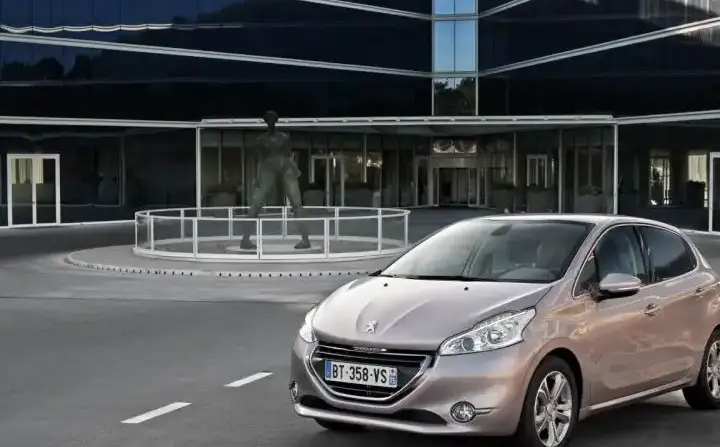
The Peugeot 208 I (Phase II), specifically the 1.6 BlueHDi variant producing 100 horsepower, was a key model in Peugeot’s lineup from 2015 to 2018. This iteration of the 208, built on the B9 platform, represented a mid-cycle refresh of the first-generation 208, aiming to enhance its appeal with updated styling, improved efficiency, and refined technology. The 1.6 BlueHDi 100 hp model occupied a central position within the 208 range, offering a balance between fuel economy, performance, and affordability, targeting buyers seeking a practical and efficient supermini for daily use. It was particularly popular in European markets where diesel engines held a significant share of the automotive landscape.
Technical Specifications
| Brand | Peugeot |
| Model | 208 |
| Generation | 208 I (Phase II, 2015) |
| Type (Engine) | 1.6 BlueHDi (100 Hp) |
| Start of production | 2015 |
| End of production | 2018 |
| Powertrain Architecture | Internal Combustion engine |
| Body type | Hatchback |
| Seats | 5 |
| Doors | 3-5 |
| Fuel consumption (urban) | 3.8 l/100 km (61.9 US mpg, 74.3 UK mpg, 26.3 km/l) |
| Fuel consumption (extra urban) | 3.2 l/100 km (73.5 US mpg, 88.3 UK mpg, 31.3 km/l) |
| Fuel consumption (combined) | 3.4 l/100 km (69.2 US mpg, 83.1 UK mpg, 29.4 km/l) |
| CO2 emissions | 87 g/km |
| Fuel Type | Diesel |
| Acceleration 0 – 100 km/h | 10.7 sec |
| Acceleration 0 – 62 mph | 10.7 sec |
| Acceleration 0 – 60 mph | 10.2 sec |
| Maximum speed | 187 km/h (116.2 mph) |
| Emission standard | Euro 6 |
| Weight-to-power ratio | 10.9 kg/Hp, 91.7 Hp/tonne |
| Weight-to-torque ratio | 4.3 kg/Nm, 233 Nm/tonne |
| Power | 100 Hp @ 3750 rpm |
| Power per litre | 64.1 Hp/l |
| Torque | 254 Nm @ 1750 rpm (187.34 lb.-ft. @ 1750 rpm) |
| Engine layout | Front, Transverse |
| Engine Model/Code | BHY DV6FD |
| Engine displacement | 1560 cm3 (95.2 cu. in.) |
| Number of cylinders | 4 |
| Engine configuration | Inline |
| Number of valves per cylinder | 2 |
| Fuel injection system | Diesel Commonrail |
| Engine aspiration | Turbocharger, Intercooler |
| Engine oil capacity | 3.75 l (3.96 US qt | 3.3 UK qt) |
| Coolant capacity | 6 l (6.34 US qt | 5.28 UK qt) |
| Kerb Weight | 1090 kg (2403.04 lbs.) |
| Max. weight | 1680 kg (3703.77 lbs.) |
| Max load | 590 kg (1300.73 lbs.) |
| Trunk (boot) space – minimum | 285 l (10.06 cu. ft.) |
| Trunk (boot) space – maximum | 1076 l (38 cu. ft.) |
| Fuel tank capacity | 50 l (13.21 US gal | 11 UK gal) |
| Permitted trailer load with brakes (12%) | 840 kg (1851.88 lbs.) |
| Length | 3973 mm (156.42 in.) |
| Width | 1829 mm (72.01 in.) |
| Width including mirrors | 2004 mm (78.9 in.) |
| Height | 1460 mm (57.48 in.) |
| Wheelbase | 2538 mm (99.92 in.) |
| Front track | 1475-1470 mm (58.07 – 57.87 in.) |
| Rear (Back) track | 1471-1467 mm (57.91 – 57.76 in.) |
| Ride height (ground clearance) | 123-129 mm (4.84 – 5.08 in.) |
| Minimum turning circle (turning diameter) | 10.4 m (34.12 ft.) |
| Drivetrain Architecture | The Internal combustion engine (ICE) drives the front wheels of the vehicle. |
| Drive wheel | Front wheel drive |
| Number of gears and type of gearbox | 5 gears, manual transmission |
| Front suspension | Independent type McPherson |
| Rear suspension | Elastic beam |
| Front brakes | Ventilated discs |
| Rear brakes | Disc |
| Assisting systems | ABS (Anti-lock braking system) |
| Steering type | Steering rack and pinion |
Powertrain & Engine Architecture
The heart of the 208 1.6 BlueHDi was the DV6FD engine, specifically the BHY variant. This 1.6-liter, four-cylinder diesel engine was a member of Peugeot-Citroën’s (PSA Group) well-established DV6 family. It featured a common-rail direct injection system, delivering fuel at extremely high pressure for optimized combustion. The engine utilized a turbocharger with an intercooler to boost power and efficiency. The BHY engine code indicated a specific calibration for the engine management system, targeting 100 horsepower at 3750 rpm and a substantial 254 Nm (187 lb-ft) of torque at a low 1750 rpm. This torque output was a key characteristic of the engine, providing strong pulling power from low speeds. The engine also incorporated a diesel particulate filter (DPF) to meet stringent Euro 6 emission standards. The 208 1.6 BlueHDi was exclusively offered with a five-speed manual transmission, designed to complement the engine’s torque curve and provide a balance between fuel efficiency and driver engagement.
Driving Characteristics
The 1.6 BlueHDi 100 hp variant of the Peugeot 208 offered a practical and economical driving experience. Acceleration from 0 to 62 mph (0-100 km/h) took around 10.7 seconds, which was adequate for everyday driving but not particularly sporty. The engine’s strong low-end torque made it feel more responsive in urban environments and during overtaking maneuvers than its horsepower figure might suggest. The five-speed manual transmission was well-matched to the engine, with gear ratios optimized for fuel efficiency. Compared to the more powerful petrol variants of the 208, the 1.6 BlueHDi prioritized fuel economy over outright performance. It also offered a more refined and quieter driving experience than the smaller 1.2 PureTech petrol engine, particularly at highway speeds. The manual transmission provided a more engaging driving experience than the automatic options available on other 208 models.
Equipment & Trim Levels
The 1.6 BlueHDi 100 hp model was typically offered in mid-range trim levels, such as Active or Allure, depending on the market. Standard equipment generally included air conditioning, power steering, electric front windows, a basic audio system with USB connectivity, and ABS brakes. Higher trim levels added features like alloy wheels, a touchscreen infotainment system, Bluetooth connectivity, cruise control, and rear parking sensors. Interior upholstery was typically cloth, with options for upgraded materials and colors. The dashboard layout was functional and modern, with a focus on ergonomics. Optional extras included a panoramic sunroof, navigation system, and automatic headlights and wipers.
Chassis & Braking
The Peugeot 208 featured a McPherson strut front suspension and an elastic beam rear suspension. This setup provided a good balance between ride comfort and handling. The front brakes were ventilated discs, while the rear brakes were solid discs. ABS (Anti-lock Braking System) was standard. The 208’s relatively lightweight construction contributed to its agile handling characteristics. The steering was precise and well-weighted, providing good feedback to the driver. Stabilizer bars were fitted to both the front and rear axles to reduce body roll during cornering.
Market Reception & Comparison
The Peugeot 208 1.6 BlueHDi 100 hp was well-received by critics for its fuel efficiency, low emissions, and comfortable ride. It was often praised as a practical and economical choice for city driving and long-distance journeys. Compared to the petrol-powered 208 variants, the 1.6 BlueHDi offered significantly better fuel economy, making it an attractive option for drivers covering high mileages. However, some critics noted that the engine could be slightly noisy under hard acceleration. In terms of reliability, the DV6 engine family had a generally good reputation, although the DPF could be a potential source of issues if the vehicle was primarily used for short trips.
Legacy
The Peugeot 208 1.6 BlueHDi 100 hp remains a popular choice in the used car market, particularly for buyers seeking a fuel-efficient and reliable supermini. The DV6 engine is known for its durability, and with proper maintenance, it can provide many years of trouble-free service. However, potential buyers should be aware of the potential for DPF issues and ensure that the vehicle has been regularly serviced. The 208’s stylish design and comfortable interior have also contributed to its enduring appeal. The 1.6 BlueHDi variant represents a sweet spot in the 208 range, offering a compelling combination of economy, practicality, and driving enjoyment.