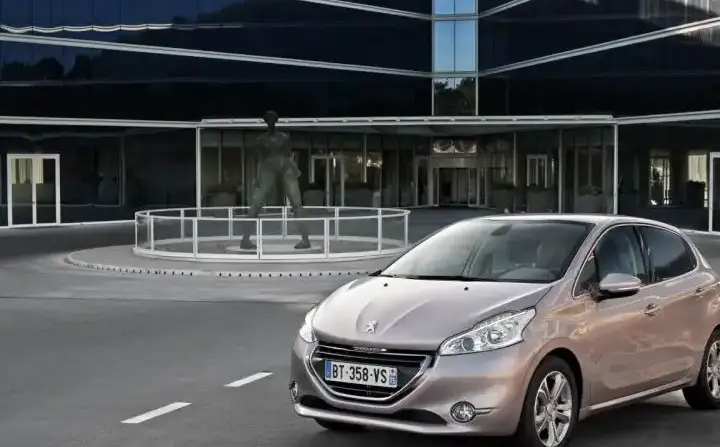
The Peugeot 208 I (Phase II), specifically the 1.6 THP 208 horsepower variant produced between 2015 and April 2018, represented a performance-oriented offering within the second generation of Peugeot’s popular subcompact hatchback. This model year marked a mid-cycle refresh for the 208, bringing styling updates and refinements to the already successful platform. The 1.6 THP served as the flagship engine option, positioned above the naturally aspirated and diesel variants, appealing to drivers seeking a more engaging driving experience. It was primarily sold in the European market, where small, fuel-efficient, yet sporty hatchbacks are highly sought after.
Technical Specifications
| Brand | Peugeot |
| Model | 208 |
| Generation | 208 I (Phase II, 2015) |
| Type (Engine) | 1.6 THP (208 Hp) |
| Start of production | 2015 |
| End of production | April, 2018 |
| Powertrain Architecture | Internal Combustion engine |
| Body type | Hatchback |
| Seats | 5 |
| Doors | 3-5 |
| Fuel consumption (urban) | 7 l/100 km (33.6 US mpg, 40.4 UK mpg, 14.3 km/l) |
| Fuel consumption (extra urban) | 4.5 l/100 km (52.3 US mpg, 62.8 UK mpg, 22.2 km/l) |
| Fuel consumption (combined) | 5.4 l/100 km (43.6 US mpg, 52.3 UK mpg, 18.5 km/l) |
| CO2 emissions | 125 g/km |
| Fuel Type | Petrol (Gasoline) |
| Acceleration 0 – 100 km/h | 6.5 sec |
| Acceleration 0 – 62 mph | 6.5 sec |
| Acceleration 0 – 60 mph | 6.2 sec |
| Maximum speed | 230 km/h (142.92 mph) |
| Emission standard | Euro 6 |
| Weight-to-power ratio | 5.6 kg/Hp, 179.3 Hp/tonne |
| Weight-to-torque ratio | 3.9 kg/Nm, 258.6 Nm/tonne |
| Power | 208 Hp @ 6000 rpm |
| Power per litre | 130.2 Hp/l |
| Torque | 300 Nm @ 3000 rpm (221.27 lb.-ft. @ 3000 rpm) |
| Engine layout | Front, Transverse |
| Engine Model/Code | 5GR EP6FDTX |
| Engine displacement | 1598 cm3 (97.52 cu. in.) |
| Number of cylinders | 4 |
| Engine configuration | Inline |
| Number of valves per cylinder | 4 |
| Fuel injection system | Direct injection |
| Engine aspiration | Turbocharger, Intercooler |
| Engine oil capacity | 4.25 l (4.49 US qt | 3.74 UK qt) |
| Kerb Weight | 1160 kg (2557.36 lbs.) |
| Max. weight | 1650 kg (3637.63 lbs.) |
| Max load | 490 kg (1080.27 lbs.) |
| Trunk (boot) space – minimum | 285 l (10.06 cu. ft.) |
| Trunk (boot) space – maximum | 1076 l (38 cu. ft.) |
| Fuel tank capacity | 50 l (13.21 US gal | 11 UK gal) |
| Permitted trailer load with brakes (12%) | 930 kg (2050.3 lbs.) |
| Length | 3962 mm (155.98 in.) |
| Width | 1829 mm (72.01 in.) |
| Width including mirrors | 2004 mm (78.9 in.) |
| Height | 1460 mm (57.48 in.) |
| Wheelbase | 2538 mm (99.92 in.) |
| Front track | 1475-1470 mm (58.07 – 57.87 in.) |
| Rear (Back) track | 1471-1467 mm (57.91 – 57.76 in.) |
| Ride height (ground clearance) | 123-129 mm (4.84 – 5.08 in.) |
| Minimum turning circle (turning diameter) | 10.4 m (34.12 ft.) |
| Drivetrain Architecture | The Internal combustion engine (ICE) drives the front wheels of the vehicle. |
| Drive wheel | Front wheel drive |
| Number of gears and type of gearbox | 6 gears, manual transmission |
| Front suspension | Independent type McPherson |
| Rear suspension | Elastic beam |
| Front brakes | Ventilated discs |
| Rear brakes | Disc |
| Assisting systems | ABS (Anti-lock braking system) |
| Steering type | Steering rack and pinion |
Powertrain & Engine Architecture
The heart of the 208 1.6 THP is the 5GR EP6FDTX engine, a 1.6-liter turbocharged inline-four cylinder gasoline engine. This engine is part of the Prince engine family, jointly developed by PSA Peugeot Citroën and BMW. It features direct fuel injection, delivering fuel directly into the combustion chamber for improved efficiency and performance. The engine utilizes a single-scroll turbocharger with an intercooler to increase air density and boost power output. The valvetrain employs four valves per cylinder, contributing to efficient gas exchange. The 208 1.6 THP was exclusively offered with a 6-speed manual transmission, prioritizing driver engagement and control. This transmission was chosen to handle the engine’s torque output and complement the sporty character of the car.
Driving Characteristics
The 208 1.6 THP offered a noticeably more spirited driving experience compared to lower-powered variants. The 208 horsepower and 300 Nm (221 lb-ft) of torque provided brisk acceleration, with a 0-60 mph time of around 6.2 seconds. The turbocharger provides a noticeable surge of power in the mid-range, making overtaking maneuvers effortless. The 6-speed manual transmission allows for precise gear selection, and the relatively short gear ratios keep the engine within its optimal power band. While not a dedicated performance car, the 1.6 THP variant offered a compelling balance of performance and everyday usability. Compared to the diesel models, the THP offered quicker acceleration but slightly higher fuel consumption. Against naturally aspirated gasoline engines, it provided significantly more power and torque.
Equipment & Trim Levels
The 1.6 THP variant typically came with a higher level of standard equipment than the base models. This included features like alloy wheels, sport seats, air conditioning, a touchscreen infotainment system with Bluetooth connectivity, and a leather-wrapped steering wheel. Optional extras included a panoramic sunroof, navigation system, and parking sensors. Interior upholstery was typically a combination of cloth and leatherette, with a sporty design aesthetic. Trim levels varied slightly depending on the market, but generally, the 1.6 THP represented a mid-to-high range offering within the 208 lineup.
Chassis & Braking
The 208 1.6 THP utilized a McPherson strut front suspension and an elastic beam rear suspension. This setup provided a good balance of ride comfort and handling. The suspension was tuned to be slightly firmer than the lower-powered variants to better manage the increased power and torque. Braking duties were handled by ventilated discs at the front and solid discs at the rear, equipped with ABS (Anti-lock Braking System). The braking system was adequate for the car’s performance capabilities, providing confident stopping power.
Market Reception & Comparison
The Peugeot 208 1.6 THP was generally well-received by automotive critics. It was praised for its punchy engine, engaging handling, and stylish design. However, some reviewers noted that the ride could be a bit firm on rough roads. Compared to rivals like the Renault Clio and Volkswagen Polo, the 208 1.6 THP offered a more dynamic driving experience. Fuel economy was respectable, averaging around 43.6 US mpg in combined driving, but slightly lower than the diesel alternatives. Reliability was generally good, although some owners reported minor issues with the turbocharger and fuel injection system.
Legacy
The 1.6 THP engine, while offering strong performance, did experience some reliability concerns related to carbon buildup on the intake valves, a common issue with direct injection engines. Regular maintenance, including the use of quality fuel and occasional intake valve cleaning, is crucial for long-term reliability. Today, the 208 1.6 THP remains a popular choice in the used car market, particularly among enthusiasts seeking a fun-to-drive and stylish subcompact hatchback. Its combination of performance, fuel efficiency, and affordability makes it a compelling option for those looking for a sporty and practical vehicle.