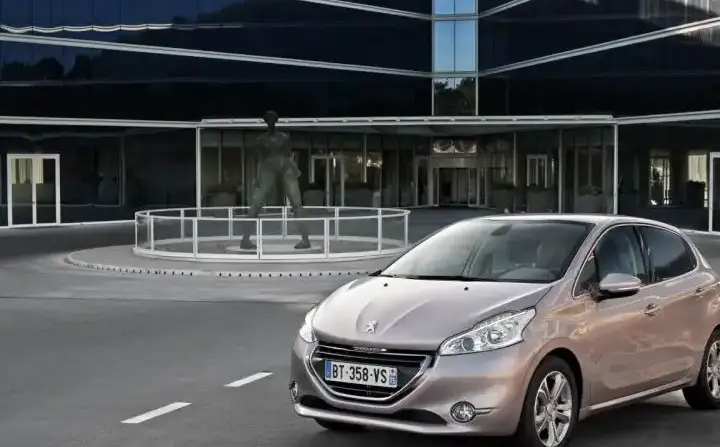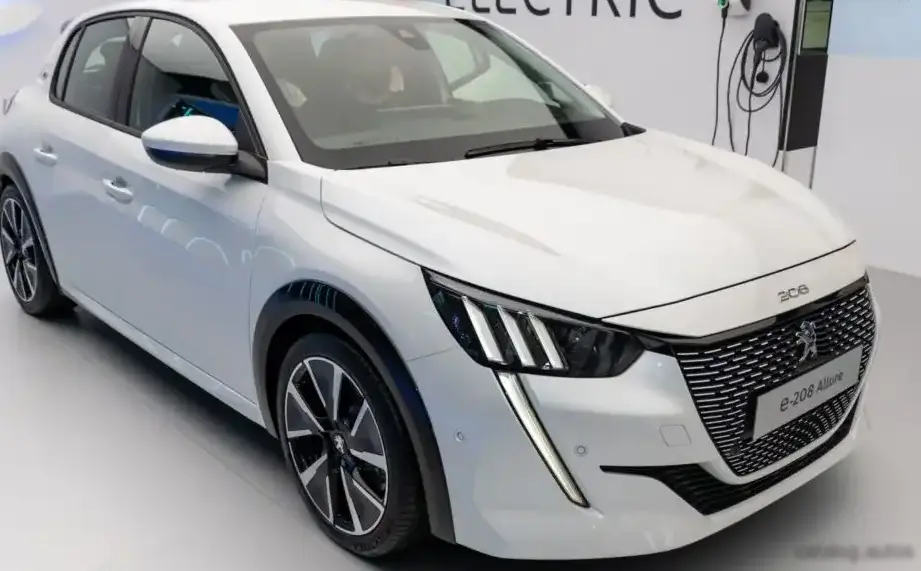
The Peugeot 208 II, specifically the 1.2 PureTech 130 horsepower Stop&Start Automatic variant, represents a significant iteration in Peugeot’s popular subcompact hatchback lineage. Introduced in 2019 as part of the second-generation 208 (Phase I), this model aimed to blend fuel efficiency with a more engaging driving experience than its predecessors. Positioned as a mid-range offering within the 208 lineup, it sat above the lower-powered engine options and below the performance-oriented GT models. The 208 II is built on the Common Modular Platform (CMP), shared with other Stellantis brands, marking a shift towards more standardized and efficient vehicle architecture.
Technical Specifications
| Brand | Peugeot |
| Model | 208 |
| Generation | 208 II (Phase I, 2019) |
| Type (Engine) | 1.2 PureTech (130 Hp) Stop&Start Automatic |
| Start of production | 2019 |
| End of production | 2023 |
| Powertrain Architecture | Internal Combustion engine |
| Body type | Hatchback |
| Seats | 5 |
| Doors | 5 |
| Fuel consumption (urban) | 5.4 l/100 km (43.6 US mpg, 52.3 UK mpg, 18.5 km/l) |
| Fuel consumption (extra urban) | 4 l/100 km (58.8 US mpg, 70.6 UK mpg, 25 km/l) |
| Fuel consumption (combined) | 4.5 l/100 km (52.3 US mpg, 62.8 UK mpg, 22.2 km/l) |
| CO2 emissions | 101 g/km |
| Fuel Type | Petrol (Gasoline) |
| Acceleration 0 – 100 km/h | 8.7 sec |
| Acceleration 0 – 62 mph | 8.7 sec |
| Acceleration 0 – 60 mph | 8.3 sec |
| Maximum speed | 208 km/h (129.25 mph) |
| Emission standard | Euro 6 d-TEMP |
| Weight-to-power ratio | 8.9 kg/Hp, 112.3 Hp/tonne |
| Weight-to-torque ratio | 5 kg/Nm, 198.6 Nm/tonne |
| Power | 130 Hp @ 5500 rpm |
| Power per litre | 108.4 Hp/l |
| Torque | 230 Nm @ 1750 rpm (169.64 lb.-ft. @ 1750 rpm) |
| Engine layout | Front, Transverse |
| Engine Model/Code | HNS EB2ADTS |
| Engine displacement | 1199 cm3 (73.17 cu. in.) |
| Number of cylinders | 3 |
| Engine configuration | Inline |
| Number of valves per cylinder | 4 |
| Fuel injection system | Direct injection |
| Engine aspiration | Turbocharger, Intercooler |
| Engine oil capacity | 3.5 l (3.7 US qt | 3.08 UK qt) |
| Kerb Weight | 1158 kg (2552.95 lbs.) |
| Max. weight | 1630 kg (3593.53 lbs.) |
| Max load | 472 kg (1040.58 lbs.) |
| Trunk (boot) space – minimum | 265 l (9.36 cu. ft.) |
| Fuel tank capacity | 44 l (11.62 US gal | 9.68 UK gal) |
| Permitted trailer load with brakes (12%) | 1200 kg (2645.55 lbs.) |
| Length | 4055 mm (159.65 in.) |
| Width | 1745 mm (68.7 in.) |
| Height | 1430 mm (56.3 in.) |
| Wheelbase | 2540 mm (100 in.) |
| Front track | 1500 mm (59.06 in.) |
| Rear (Back) track | 1500 mm (59.06 in.) |
| Front overhang | 825 mm (32.48 in.) |
| Rear overhang | 690 mm (27.17 in.) |
| Minimum turning circle | 10.4 m (34.12 ft.) |
| Drivetrain Architecture | Front wheel drive |
| Number of gears and type of gearbox | 8 gears, automatic transmission |
| Front suspension | Independent type McPherson |
| Rear suspension | Elastic beam |
| Front brakes | Disc, 283 mm |
| Rear brakes | Disc, 249 mm |
| Assisting systems | ABS (Anti-lock braking system) |
| Steering type | Steering rack and pinion |
| Tires size | 195/55 R16 H; 205/45 R17 V |
| Wheel rims size | 16; 17 |
Powertrain & Engine Architecture
At the heart of the 208 II 1.2 PureTech 130 is the HNS EB2ADTS engine, a 1.2-liter turbocharged three-cylinder petrol engine. This engine is part of Peugeot’s PureTech family, known for its focus on efficiency and drivability. The engine utilizes direct fuel injection, delivering fuel directly into the combustion chamber for improved combustion efficiency and reduced emissions. A single twin-scroll turbocharger, coupled with an intercooler, provides forced induction, boosting power output. The engine also features variable valve timing on both the intake and exhaust sides, optimizing performance across the rev range. The engine is paired with an Aisin-sourced eight-speed automatic transmission. This transmission offers smooth and responsive gear changes, contributing to a more refined driving experience compared to earlier automated manual transmissions. The Stop&Start system further enhances fuel economy by automatically shutting off the engine when the vehicle is stationary.
Driving Characteristics
The 1.8L Automatic configuration delivers a balanced driving experience. While not as overtly sporty as the higher-powered variants, the 130 horsepower engine provides adequate performance for everyday driving. Acceleration from 0-60 mph takes approximately 8.3 seconds, and the engine feels responsive in most situations. The eight-speed automatic transmission is well-tuned, providing smooth gear changes and keeping the engine in its optimal power band. Compared to the manual transmission versions of the same engine, the automatic offers greater convenience, particularly in urban traffic. However, it may result in a slight reduction in fuel economy and a less engaging driving experience for enthusiasts. The turbocharger does exhibit some lag at lower RPMs, but the power delivery becomes more linear as the engine gains speed.
Equipment & Trim Levels
The 1.2 PureTech 130 Automatic typically came equipped with a generous level of standard features. These included air conditioning, a touchscreen infotainment system with Apple CarPlay and Android Auto compatibility, Bluetooth connectivity, and a suite of safety features such as lane departure warning, automatic emergency braking, and speed limit recognition. Higher trim levels offered additional features such as a larger touchscreen display, navigation system, panoramic sunroof, and premium upholstery. Interior upholstery was typically cloth, with options for leather upgrades. The dashboard layout was modern and driver-focused, with a compact steering wheel and a digital instrument cluster.
Chassis & Braking
The 208 II utilizes a McPherson strut front suspension and an elastic beam rear suspension. This setup provides a good balance between ride comfort and handling. The front brakes are disc brakes, while the rear brakes are also disc brakes on most trims, providing adequate stopping power. ABS (Anti-lock Braking System) is standard, enhancing safety during emergency braking situations. The steering is a rack and pinion system, offering precise and responsive steering feel. Stabilizer bars are fitted to both the front and rear axles to reduce body roll during cornering.
Market Reception & Comparison
The Peugeot 208 II 1.2 PureTech 130 Automatic was generally well-received by automotive critics. It was praised for its fuel efficiency, comfortable ride, and refined driving experience. However, some critics noted that the engine could feel strained when fully loaded or driving uphill. Compared to the lower-powered 1.2 PureTech variants, the 130 horsepower version offered a noticeable improvement in performance. Compared to the diesel-powered 208 models, the 1.2 PureTech offered a quieter and more refined driving experience, but with slightly higher fuel consumption. The 1.2 PureTech 130 Automatic competed with other subcompact hatchbacks such as the Volkswagen Polo, Ford Fiesta, and Renault Clio.
Legacy
The 1.2 PureTech engine, while generally reliable, has been subject to some reports of timing chain issues in certain production years. Regular maintenance, including oil changes and adherence to the manufacturer’s recommended service intervals, is crucial for ensuring the longevity of this powertrain. The Aisin eight-speed automatic transmission has proven to be a durable and reliable unit. On the used car market, the 208 II 1.2 PureTech 130 Automatic remains a popular choice, offering a good balance of fuel efficiency, practicality, and affordability. Its modern styling and well-equipped interior continue to appeal to buyers looking for a stylish and efficient subcompact hatchback.