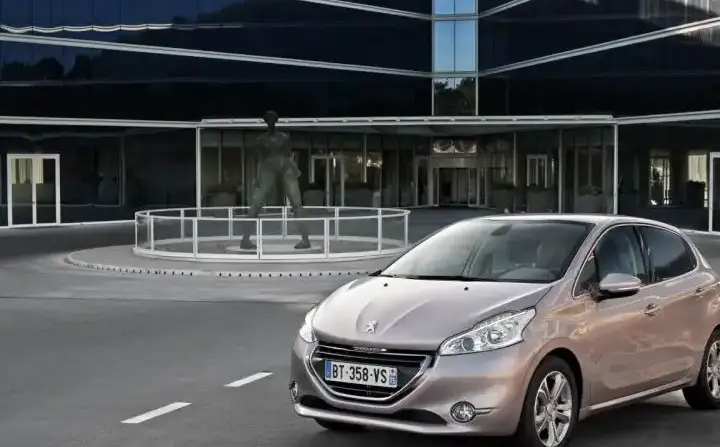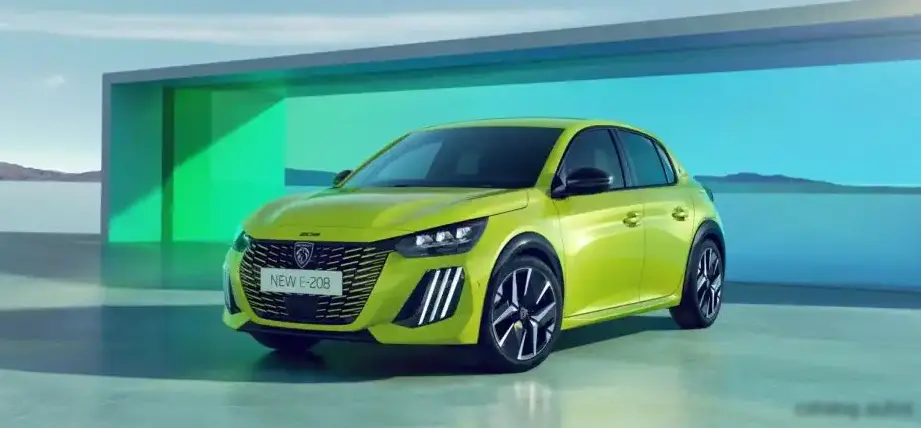
The Peugeot 208 II Phase II 1.2 (100 hp) Mild Hybrid Automatic, introduced in September 2023 and produced through March 2025, represents a key variant within the second generation of Peugeot’s popular subcompact hatchback. Positioned as a fuel-efficient and technologically modern option, this model leverages a 48-volt mild hybrid system to enhance the driving experience and reduce emissions. It builds upon the foundation of the B-segment 208, which has been a mainstay in the European market since its initial introduction, and aims to appeal to buyers seeking a practical, stylish, and economical vehicle. This particular configuration was designed to offer a balance between performance and fuel economy, slotting into the mid-range of the 208 lineup.
Technical Specifications
| Brand | Peugeot |
| Model | 208 |
| Generation | 208 II (Phase II, 2023) |
| Type (Engine) | 1.2 (100 Hp) Mild Hybrid Automatic |
| Start of production | September, 2023 |
| End of production | March, 2025 |
| Powertrain Architecture | MHEV (Mild Hybrid Electric Vehicle) |
| Body type | Hatchback |
| Seats | 5 |
| Doors | 5 |
| Combined fuel consumption (WLTP) | 4.5-4.7 l/100 km (52.3 – 50 US mpg) |
| CO2 emissions (WLTP) | 101-105 g/km |
| Fuel Type | Petrol (Gasoline) |
| Acceleration 0 – 100 km/h | 9.8 sec |
| Acceleration 0 – 62 mph | 9.8 sec |
| Acceleration 0 – 60 mph | 9.3 sec |
| Maximum speed | 193 km/h (119.92 mph) |
| Emission standard | Euro 6d |
| Weight-to-power ratio | 11.8 kg/Hp |
| Weight-to-torque ratio | 5.7 kg/Nm |
| Gross battery capacity | 0.89 kWh |
| Net (usable) battery capacity | 0.43 kWh |
| Battery voltage | 48 V |
| Battery technology | Lithium-ion (Li-Ion) |
| Power | 100 Hp @ 5500 rpm |
| Torque | 205 Nm @ 1750 rpm (151.2 lb.-ft. @ 1750 rpm) |
| Engine layout | Front, Transverse |
| Engine Model/Code | HN09 |
| Engine displacement | 1199 cm3 (73.17 cu. in.) |
| Number of cylinders | 3 |
| Engine configuration | Inline |
| Number of valves per cylinder | 4 |
| Fuel injection system | Direct injection |
| Engine aspiration | Turbocharger, Intercooler |
| Engine oil capacity | 3.5 l (3.7 US qt | 3.08 UK qt) |
| Kerb Weight | 1175 kg (2590.43 lbs.) |
| Max. weight | 1670 kg (3681.72 lbs.) |
| Max load | 495 kg (1091.29 lbs.) |
| Trunk (boot) space – minimum | 387 l (13.67 cu. ft.) |
| Trunk (boot) space – maximum | 1163 l (41.07 cu. ft.) |
| Permitted trailer load with brakes (12%) | 1200 kg (2645.55 lbs.) |
| Length | 4055 mm (159.65 in.) |
| Width | 1745 mm (68.7 in.) |
| Width with mirrors folded | 1765 mm (69.49 in.) |
| Width including mirrors | 1960 mm (77.17 in.) |
| Height | 1430 mm (56.3 in.) |
| Wheelbase | 2540 mm (100 in.) |
| Front track | 1500 mm (59.06 in.) |
| Rear (Back) track | 1500 mm (59.06 in.) |
| Front suspension | Independent type McPherson |
| Rear suspension | Elastic beam |
| Front brakes | Disc, 283×26 mm |
| Rear brakes | Disc, 249×10 mm |
| Number of gears and type of gearbox | 6 gears, automatic transmission |
| Tires size | 195/55 R16 H; 205/45 R17 H |
| Wheel rims size | 16; 17 |
Powertrain & Engine Architecture
At the heart of the 208 II Phase II 1.2 MHEV is the HN09 engine, a 1.2-liter, three-cylinder turbocharged gasoline engine. This engine utilizes direct fuel injection and a single turbocharger with an intercooler to deliver a respectable 100 horsepower at 5500 rpm and 205 Nm (151.2 lb-ft) of torque at 1750 rpm. The “Mild Hybrid” designation refers to the integration of a 48-volt electrical system and a small electric motor. This system doesn’t provide full electric drive capability, but instead assists the gasoline engine during acceleration and allows for regenerative braking, capturing energy normally lost during deceleration to recharge the 48V battery. The electric motor provides a boost of approximately 5-10 hp. The engine is paired with a six-speed automatic transmission, specifically designed to work in conjunction with the mild hybrid system for smooth and efficient gear changes.
Driving Characteristics
The 1.2-liter 100 hp automatic powertrain delivers a comfortable and practical driving experience. Acceleration from 0 to 100 km/h (0-62 mph) takes approximately 9.8 seconds, which is adequate for everyday driving but doesn’t offer particularly sporty performance. The automatic transmission is well-tuned, providing smooth shifts and responsive performance. Compared to the more powerful 130 hp version of the 1.2 PureTech engine, this variant offers slightly less punch, but the mild hybrid system helps to improve low-end torque and responsiveness. The gear ratios are optimized for fuel efficiency, and the electric motor assist provides a noticeable boost during initial acceleration. Compared to manual transmission versions, the automatic offers greater convenience, particularly in urban environments, but may result in a slight reduction in fuel economy.
Equipment & Trim Levels
The 1.2 (100 Hp) Mild Hybrid Automatic trim typically includes standard features such as air conditioning, a touchscreen infotainment system with Apple CarPlay and Android Auto compatibility, Bluetooth connectivity, and a suite of safety features including automatic emergency braking, lane departure warning, and speed limit recognition. Higher trim levels add features like a larger touchscreen, navigation system, rear parking sensors, a reversing camera, and upgraded interior upholstery. Interior materials are generally of good quality, with a focus on practicality and durability. Optional extras often include a panoramic sunroof, keyless entry, and adaptive cruise control.
Chassis & Braking
The 208 II utilizes a McPherson strut front suspension and an elastic beam rear suspension. This setup provides a good balance between ride comfort and handling. The front brakes are disc brakes, measuring 283x26mm, while the rear brakes are also disc brakes, sized at 249x10mm. The steering is electric power-assisted, providing light and precise control. The chassis is designed to be relatively lightweight, contributing to the car’s overall fuel efficiency and agility. Stabilizer bars are included to reduce body roll during cornering.
Market Reception & Comparison
The Peugeot 208 II Phase II 1.2 MHEV was generally well-received by automotive critics for its fuel efficiency, comfortable ride, and stylish design. It was often praised for its modern interior and user-friendly technology. Compared to other trims in the 208 lineup, this variant offered a compelling balance between price, performance, and economy. The mild hybrid system provided a noticeable improvement in fuel economy compared to the non-hybrid versions, making it an attractive option for buyers concerned about running costs. However, some critics noted that the 100 hp engine could feel underpowered when fully loaded or on steep inclines.
Legacy
The Peugeot 208 II Phase II 1.2 MHEV represents a significant step towards electrification for the Peugeot brand. The HN09 engine, while not without its complexities, has proven to be relatively reliable when properly maintained. The mild hybrid system, while not a full hybrid, provides a valuable stepping stone towards more advanced hybrid technologies. On the used car market, these models are becoming increasingly popular due to their fuel efficiency and relatively low running costs. Regular maintenance, including oil changes and adherence to the manufacturer’s recommended service intervals, is crucial for ensuring the long-term reliability of this powertrain.