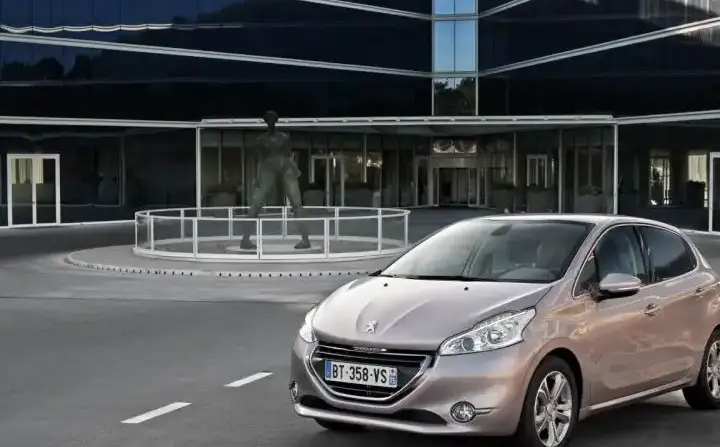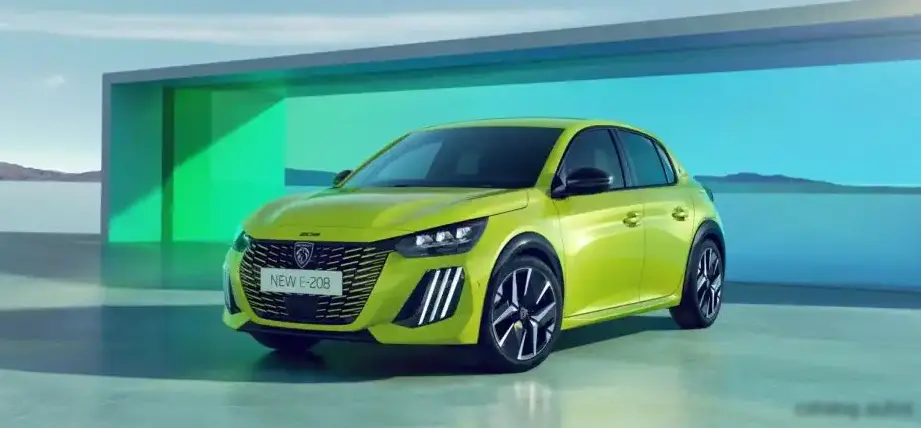
The Peugeot 208 II Phase II 1.2 (110 hp) Mild Hybrid e-DSC, launched in March 2025, represents a significant evolution of Peugeot’s popular subcompact hatchback. Positioned as a mid-range offering within the 208 lineup, this variant combines a turbocharged three-cylinder gasoline engine with a 48-volt mild hybrid system, aiming to balance fuel efficiency with acceptable performance. It builds upon the foundation of the second-generation 208 (introduced in 2019), which itself is based on the Common Modular Platform (CMP) shared with other Stellantis brands. This particular configuration is primarily targeted at the European market, where demand for fuel-efficient and environmentally conscious vehicles is high.
Technical Specifications
| Brand | Peugeot |
| Model | 208 |
| Generation | 208 II (Phase II, 2023) |
| Type (Engine) | 1.2 (110 Hp) Mild Hybrid e-DSC |
| Start of production | March, 2025 |
| Powertrain Architecture | MHEV (Mild Hybrid Electric Vehicle) |
| Body type | Hatchback |
| Seats | 5 |
| Doors | 5 |
| Fuel consumption at Low speed (WLTP) | 4.8-5.0 l/100 km (49 – 47 US mpg, 58.9 – 56.5 UK mpg, 20.8 – 20 km/l) |
| Fuel consumption at Medium speed (WLTP) | 3.8-4.0 l/100 km (61.9 – 58.8 US mpg, 74.3 – 70.6 UK mpg, 26.3 – 25 km/l) |
| Fuel consumption at high speed (WLTP) | 5.3-5.4 l/100 km (44.4 – 43.6 US mpg, 53.3 – 52.3 UK mpg, 18.9 – 18.5 km/l) |
| Fuel consumption at very high speed (WLTP) | 4.5-4.6 l/100 km (52.3 – 51.1 US mpg, 62.8 – 61.4 UK mpg, 22.2 – 21.7 km/l) |
| Combined fuel consumption (WLTP) | 4.5-4.6 l/100 km (52.3 – 51.1 US mpg, 62.8 – 61.4 UK mpg, 22.2 – 21.7 km/l) |
| CO2 emissions (WLTP) | 102-105 g/km |
| Fuel Type | Petrol (Gasoline) |
| Acceleration 0 – 100 km/h | 10.7 sec |
| Acceleration 0 – 62 mph | 10.7 sec |
| Acceleration 0 – 60 mph | 10.2 sec |
| Maximum speed | 193 km/h (119.92 mph) |
| Emission standard | Euro 6e |
| Weight-to-power ratio | 11.1 kg/Hp, 90.2 Hp/tonne |
| Weight-to-torque ratio | 6 kg/Nm, 168 Nm/tonne |
| Gross battery capacity | 0.89 kWh |
| Net (usable) battery capacity | 0.43 kWh |
| Battery voltage | 48 V |
| Battery technology | Lithium-ion (Li-Ion) |
| Electric motor power | 21 Hp @ 4264 rpm |
| Electric motor Torque | 51 Nm (37.62 lb.-ft.) |
| Electric motor location | Integrated into the transmission |
| Electric motor type | Synchronous |
| System power | 110 Hp |
| System torque | 205 Nm @ 1750 rpm (151.2 lb.-ft. @ 1750 rpm) |
| Power | 101 Hp @ 5500 rpm |
| Torque | 205 Nm @ 1750 rpm (151.2 lb.-ft. @ 1750 rpm) |
| Engine layout | Front, Transverse |
| Engine Model/Code | HN09 |
| Engine displacement | 1199 cm3 (73.17 cu. in.) |
| Number of cylinders | 3 |
| Engine configuration | Inline |
| Number of valves per cylinder | 4 |
| Fuel injection system | Direct injection |
| Engine aspiration | Turbocharger, Intercooler |
| Engine oil capacity | 3.5 l (3.7 US qt | 3.08 UK qt) |
| Kerb Weight | 1220-1297 kg (2689.64 – 2859.4 lbs.) |
| Max. weight | 1690 kg (3725.81 lbs.) |
| Max load | 393-470 kg (866.42 – 1036.17 lbs.) |
| Trunk (boot) space – minimum | 352 l (12.43 cu. ft.) |
| Trunk (boot) space – maximum | 1163 l (41.07 cu. ft.) |
| Fuel tank capacity | 44 l (11.62 US gal | 9.68 UK gal) |
| Max. roof load | 70 kg (154.32 lbs.) |
| Permitted trailer load with brakes (12%) | 1200 kg (2645.55 lbs.) |
| Permitted trailer load without brakes | 645 kg (1421.98 lbs.) |
| Permitted towbar download | 55 kg (121.25 lbs.) |
| Length | 4055 mm (159.65 in.) |
| Width | 1745 mm (68.7 in.) |
| Width with mirrors folded | 1765 mm (69.49 in.) |
| Width including mirrors | 1960 mm (77.17 in.) |
| Height | 1430 mm (56.3 in.) |
| Wheelbase | 2540 mm (100 in.) |
| Front track | 1500 mm (59.06 in.) |
| Rear (Back) track | 1500 mm (59.06 in.) |
| Front overhang | 825 mm (32.48 in.) |
| Rear overhang | 690 mm (27.17 in.) |
| Minimum turning circle (turning diameter) | 10.4 m (34.12 ft.) |
| Drivetrain Architecture | ICE and electric motor drive the front wheels |
| Drive wheel | Front wheel drive |
| Number of gears and type of gearbox | 6 gears, automatic transmission e-DSC |
| Front suspension | Independent type McPherson |
| Rear suspension | Elastic beam |
| Front brakes | Ventilated discs, 283×26 mm |
| Rear brakes | Disc, 249×10 mm |
| Assisting systems | ABS (Anti-lock braking system) |
| Steering type | Steering rack and pinion |
| Power steering | Electric Steering |
| Tires size | 195/55 R16 81H; 205/45 R17 81H |
| Wheel rims size | 16; 17 |
Powertrain & Engine Architecture
At the heart of the 208 II 1.2 PureTech 110 MHEV lies the HN09 engine, a 1.2-liter turbocharged three-cylinder gasoline engine. This engine utilizes direct fuel injection and a single scroll turbocharger to deliver a balance of power and efficiency. The engine produces 101 horsepower at 5500 rpm and 205 Nm (151.2 lb-ft) of torque at 1750 rpm. The “MHEV” designation indicates the inclusion of a 48-volt mild hybrid system. This system comprises a small electric motor (21 hp and 51 Nm of torque) integrated with the transmission, and a 48V lithium-ion battery with a usable capacity of 0.43 kWh. The electric motor provides assistance during acceleration and allows for regenerative braking, capturing energy normally lost during deceleration to recharge the battery. The e-DSC (electric Dual-Clutch Stop&Start) 6-speed automatic transmission is specifically designed to work with the mild hybrid system, enabling smooth gear changes and optimized fuel consumption.
Driving Characteristics
The 1.2L 110 hp automatic powertrain delivers adequate performance for everyday driving. Acceleration from 0 to 100 km/h (0-62 mph) takes approximately 10.7 seconds. While not particularly sporty, the mild hybrid system provides a noticeable boost during initial acceleration, making city driving feel more responsive. The e-DSC transmission offers smooth and quick shifts, contributing to a comfortable driving experience. Compared to the more powerful 130 hp version of the same engine, or the diesel variants, this configuration prioritizes fuel economy over outright performance. The gear ratios are tuned for efficiency, meaning the engine can feel slightly strained when climbing hills or during aggressive overtaking maneuvers.
Equipment & Trim Levels
The 1.2 (110 hp) Mild Hybrid e-DSC trim typically includes standard features such as air conditioning, a touchscreen infotainment system with Apple CarPlay and Android Auto compatibility, lane departure warning, automatic emergency braking, and cruise control. Higher trim levels add features like a larger touchscreen, digital instrument cluster, automatic climate control, and parking sensors. Interior upholstery is generally cloth, with options for partial leather trim. Optional extras often include a panoramic sunroof, premium audio system, and advanced driver-assistance systems.
Chassis & Braking
The 208 II utilizes a McPherson strut front suspension and an elastic beam rear suspension. This setup provides a good balance between ride comfort and handling. The front brakes are ventilated discs measuring 283x26mm, while the rear brakes are solid discs measuring 249x10mm. ABS (Anti-lock Braking System) is standard. The suspension is tuned to provide a comfortable ride, but it can feel slightly firm on rough roads. Stabilizer bars are fitted to both the front and rear axles to reduce body roll during cornering.
Market Reception & Comparison
The Peugeot 208 II 1.2 (110 hp) Mild Hybrid e-DSC has been generally well-received by automotive critics, particularly for its fuel efficiency and comfortable driving experience. Compared to the non-hybrid 1.2 PureTech models, the MHEV version offers improved fuel economy, especially in urban driving conditions. The diesel variants, while offering even better fuel economy, are often more expensive to maintain due to the complexity of their emissions control systems. The automatic transmission is praised for its smoothness, but some reviewers note that it can occasionally feel hesitant when downshifting.
Legacy
The HN09 engine, in its various iterations, has proven to be a relatively reliable powertrain. However, early versions of the 1.2 PureTech engine were known to experience issues with timing chain wear, although Peugeot has addressed these concerns with updated designs. The mild hybrid system itself is generally considered reliable, as it places less stress on the internal combustion engine compared to full hybrid systems. On the used car market, the 208 II 1.2 (110 hp) Mild Hybrid e-DSC is expected to hold its value reasonably well, due to its fuel efficiency and the growing demand for hybrid vehicles. Regular maintenance, including oil changes and adherence to the manufacturer’s recommended service intervals, is crucial for ensuring the long-term reliability of this powertrain.