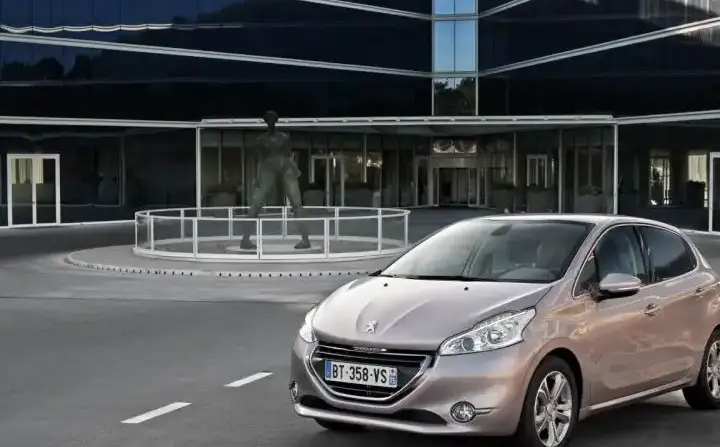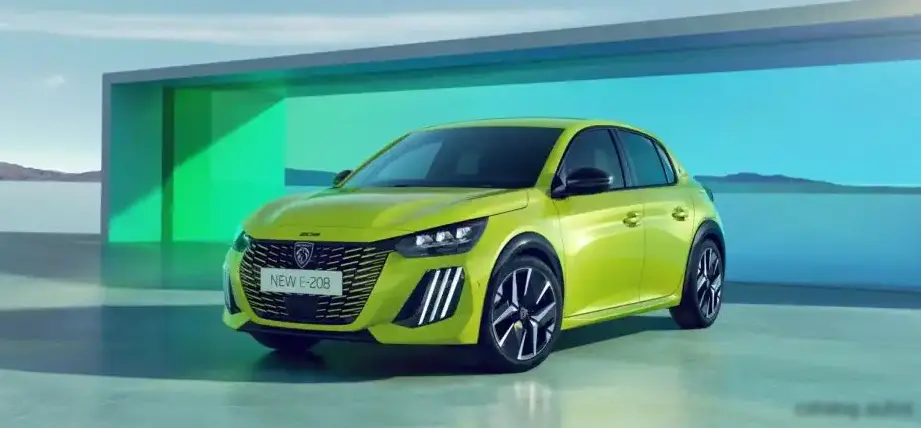
The Peugeot 208 II Phase II, specifically the 1.2 PureTech 100 horsepower variant introduced in September 2023, represents a mid-cycle refresh of the second-generation 208 hatchback. Positioned as a core offering within the 208 lineup, this model aims to balance fuel efficiency with acceptable performance for everyday driving. It builds upon the foundation of the B-segment hatchback, competing with vehicles like the Volkswagen Polo, Renault Clio, and Opel Corsa. The Phase II updates brought styling revisions, enhanced technology, and refinements to the powertrain, maintaining the 208’s appeal as a stylish and practical supermini. This version utilizes the EMP2 platform, shared with other Stellantis vehicles.
Technical Specifications
| Brand | Peugeot |
| Model | 208 |
| Generation | 208 II (Phase II, 2023) |
| Type (Engine) | 1.2 PureTech (100 Hp) |
| Start of production | September, 2023 |
| Powertrain Architecture | Internal Combustion engine |
| Body type | Hatchback |
| Seats | 5 |
| Doors | 5 |
| Combined fuel consumption (WLTP) | 5-5.2 l/100 km (47 – 45.2 US mpg, 56.5 – 54.3 UK mpg, 20 – 19.2 km/l) |
| CO2 emissions (WLTP) | 113-117 g/km |
| Fuel Type | Petrol (Gasoline) |
| Acceleration 0 – 100 km/h | 10.1 sec |
| Acceleration 0 – 62 mph | 10.1 sec |
| Acceleration 0 – 60 mph | 9.6 sec |
| Maximum speed | 194 km/h (120.55 mph) |
| Emission standard | Euro 6d |
| Weight-to-power ratio | 10.9 kg/Hp, 91.7 Hp/tonne |
| Weight-to-torque ratio | 5.3 kg/Nm, 188.1 Nm/tonne |
| Power | 100 Hp @ 5500 rpm |
| Power per litre | 83.4 Hp/l |
| Torque | 205 Nm @ 1750 rpm (151.2 lb.-ft. @ 1750 rpm) |
| Engine layout | Front, Transverse |
| Engine Model/Code | HN05 |
| Engine displacement | 1199 cm3 (73.17 cu. in.) |
| Number of cylinders | 3 |
| Engine configuration | Inline |
| Number of valves per cylinder | 4 |
| Fuel injection system | Direct injection |
| Engine aspiration | Turbocharger, Intercooler |
| Engine systems | Start & Stop System, Particulate filter |
| Kerb Weight | 1090 kg (2403.04 lbs.) |
| Max. weight | 1595 kg (3516.37 lbs.) |
| Max load | 505 kg (1113.33 lbs.) |
| Trunk (boot) space – minimum | 387 l (13.67 cu. ft.) |
| Trunk (boot) space – maximum | 1163 l (41.07 cu. ft.) |
| Permitted trailer load with brakes (12%) | 1200 kg (2645.55 lbs.) |
| Length | 4055 mm (159.65 in.) |
| Width | 1745 mm (68.7 in.) |
| Width with mirrors folded | 1765 mm (69.49 in.) |
| Width including mirrors | 1960 mm (77.17 in.) |
| Height | 1430 mm (56.3 in.) |
| Wheelbase | 2540 mm (100 in.) |
| Front track | 1500 mm (59.06 in.) |
| Rear (Back) track | 1500 mm (59.06 in.) |
| Front overhang | 825 mm (32.48 in.) |
| Rear overhang | 690 mm (27.17 in.) |
| Drivetrain Architecture | The Internal combustion engine (ICE) drives the front wheels of the vehicle. |
| Drive wheel | Front wheel drive |
| Number of gears and type of gearbox | 6 gears, manual transmission |
| Front suspension | Independent type McPherson |
| Rear suspension | Elastic beam |
| Front brakes | Disc, 283×26 mm |
| Rear brakes | Drum |
| Assisting systems | ABS (Anti-lock braking system) |
| Steering type | Steering rack and pinion |
| Power steering | Electric Steering |
| Tires size | 195/55 R16 H; 205/45 R17 H |
| Wheel rims size | 16; 17 |
Powertrain & Engine Architecture
At the heart of the 208 1.2 PureTech 100 is the HN05 engine, a 1.2-liter turbocharged three-cylinder gasoline engine. This engine is part of Peugeot’s PureTech family, known for its focus on efficiency and drivability. The HN05 utilizes direct fuel injection, delivering fuel directly into the combustion chamber for improved combustion control and efficiency. It also features a single-scroll turbocharger with an intercooler, boosting power output. The engine employs a timing chain for durability and reduced maintenance compared to timing belts. The 100 horsepower output is achieved at 5500 rpm, while peak torque of 205 Nm (151.2 lb-ft) is available from 1750 rpm. This configuration is paired with a 6-speed manual transmission, providing a balance between fuel economy and driver engagement. The engine also incorporates a Start & Stop system and a particulate filter to reduce emissions, meeting Euro 6d standards.
Driving Characteristics
The 1.2 PureTech 100 hp variant of the 208 offers a comfortable and practical driving experience. Acceleration from 0-100 km/h (0-62 mph) takes approximately 10.1 seconds, which is adequate for everyday commuting and urban driving. The turbocharger provides a noticeable boost in power, making overtaking maneuvers manageable. However, it doesn’t offer the brisk acceleration of higher-powered versions like the 130 hp variant. The 6-speed manual transmission is well-matched to the engine, offering smooth gear changes and allowing the driver to keep the engine in its optimal power band. The gear ratios are tuned for fuel efficiency, meaning the engine can feel slightly strained when climbing hills or carrying a full load. Compared to the more powerful 130 hp version, this variant prioritizes fuel economy over outright performance.
Equipment & Trim Levels
The 1.2 PureTech 100 typically comes equipped with a respectable level of standard features. These generally include air conditioning, a touchscreen infotainment system with Apple CarPlay and Android Auto compatibility, Bluetooth connectivity, and a suite of safety features such as lane departure warning, automatic emergency braking, and speed limit recognition. Interior upholstery is typically cloth, with options for upgraded materials available. Higher trim levels add features like a larger touchscreen, navigation system, rear parking sensors, and automatic climate control. Optional extras often include a panoramic sunroof, keyless entry, and upgraded alloy wheels.
Chassis & Braking
The 208 II utilizes a McPherson strut front suspension and an elastic beam rear suspension. This setup provides a good balance between ride comfort and handling. The front brakes are disc brakes (283x26mm), while the rear brakes are drum brakes. This configuration is typical for vehicles in this weight class and price range. The electric power steering provides light and precise steering feel. ABS (Anti-lock Braking System) is standard, enhancing braking performance and safety.
Market Reception & Comparison
The Peugeot 208 1.2 PureTech 100 has been generally well-received by automotive critics. It’s praised for its stylish design, comfortable interior, and fuel-efficient engine. However, some reviewers have noted that the engine can feel underpowered when fully loaded or on steep inclines. Compared to the 130 hp version, the 100 hp model offers better fuel economy but sacrifices some performance. The 1.5 BlueHDi diesel variant, while no longer widely available, offered even better fuel economy but at the cost of increased complexity and potential maintenance costs. The 1.2 PureTech 100 represents a sweet spot for buyers prioritizing affordability and efficiency.
Legacy
The 1.2 PureTech engine has proven to be a relatively reliable powertrain, although early versions of the engine did experience some issues with timing chain durability. Later revisions addressed these concerns. The 208 II, in general, has established itself as a popular and well-regarded supermini. On the used car market, the 1.2 PureTech 100 offers good value for money, providing a stylish and economical option for buyers seeking a practical and reliable hatchback. Its continued popularity suggests a lasting appeal in the competitive B-segment market.