The Peugeot 3008 I (Phase I, 2009) 1.6 HDi (112 Hp) FAP: A European Crossover Pioneer
The Peugeot 3008 I, specifically the Phase I model launched in 2009, marked a significant entry for the French automaker into the burgeoning compact crossover segment. This particular variant, equipped with the 1.6 HDi (112 Hp) FAP engine, was a cornerstone of Peugeot’s strategy to blend the versatility of a multi-purpose vehicle (MPV) with the commanding driving position and rugged aesthetics of a sport utility vehicle (SUV). Primarily targeted at European markets where diesel powertrains and compact dimensions are highly valued, the 3008 offered a compelling package of practicality, efficiency, and a distinctive design. It was engineered to cater to families and individuals seeking a flexible vehicle that could handle urban commutes with ease while providing ample space for weekend getaways, establishing itself as a key player in its competitive class from its production start in 2009 until the end of its Phase I run in 2013.
Engine and Performance of the Peugeot 3008 I (Phase I, 2009) 1.6 HDi (112 Hp) FAP
At the heart of this specific Peugeot 3008 model was a sophisticated 1.6-liter (1560 cm3 or 95.2 cu. in.) inline four-cylinder HDi diesel engine, a powerplant renowned for its balance of fuel efficiency and usable torque. This engine, designated with the code 9HR DV6C, utilized a common rail fuel injection system and was boosted by a turbocharger with an intercooler, optimizing power delivery across the rev range. It produced a respectable 112 horsepower at 3600 rpm, which, for a vehicle of its size and intended purpose, provided adequate motivation. More importantly for a diesel, it generated a robust 199.14 lb.-ft. (270 Nm) of torque available from a low 1750 rpm, ensuring strong acceleration from a standstill and effortless overtaking maneuvers, especially in typical European driving conditions.
The powertrain architecture for the 3008 I 1.6 HDi was a front-transverse engine layout driving the front wheels through a precise 6-speed manual transmission. This combination contributed to its commendable fuel economy figures: an impressive 46.1 US mpg (5.1 liters per 100 km) in combined driving, reaching up to 50 US mpg (4.7 liters per 100 km) on the extra-urban cycle. This efficiency was a major selling point in markets where fuel costs are a significant consideration. Performance-wise, the 3008 I 1.6 HDi could accelerate from 0 to 60 mph in a reasonable 12 seconds, with a top speed of 113.71 mph (183 km/h). Furthermore, the engine was equipped with a FAP (Filtre à Particules) or Diesel Particulate Filter, ensuring compliance with the Euro 5 emission standard, a critical factor for environmental regulations in Europe at the time.
Design and Features
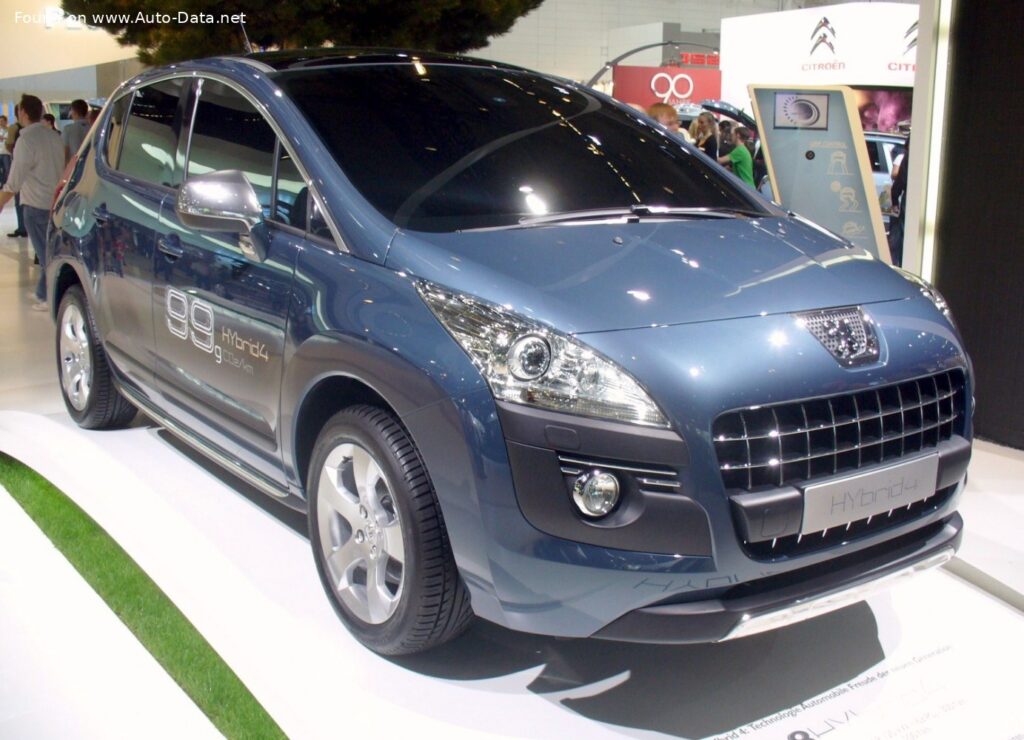
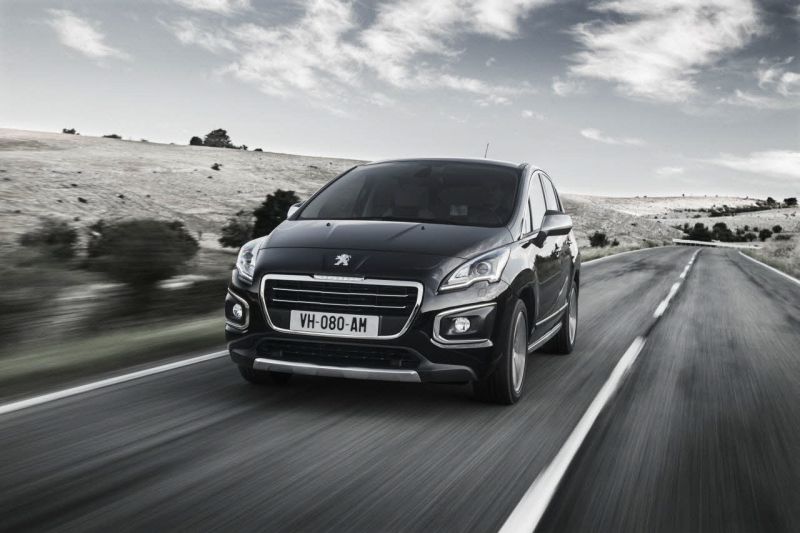
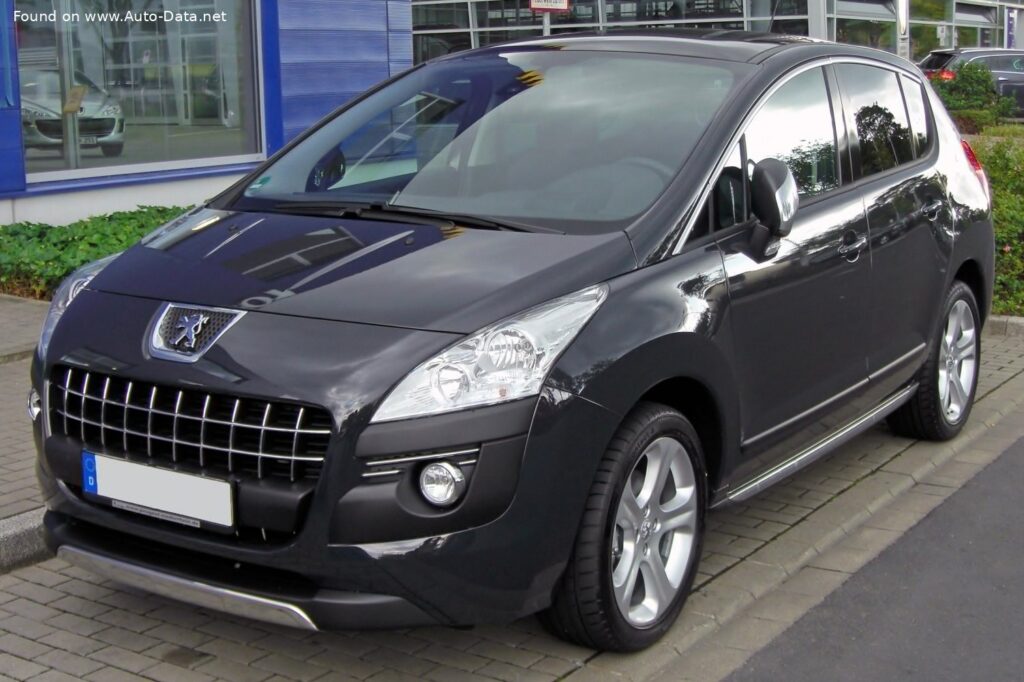
The design of the Peugeot 3008 I was a bold departure for the brand, aiming to carve out a niche between traditional hatchbacks, SUVs, and MPVs. Its exterior styling was distinctive, characterized by a prominent grille, sculpted lines, and a relatively tall stance, giving it a robust yet refined appearance. While categorized as an SUV, its silhouette leaned more towards a raised hatchback or a compact MPV, reflecting its emphasis on practicality and on-road comfort rather than off-road prowess. The vehicle featured a 5-door body type, offering easy access to both front and rear passengers, and a comfortable seating arrangement for five occupants.
Inside, the 3008 I prioritized ergonomics and versatility. The cabin offered a commanding driving position, reminiscent of an SUV, coupled with an intuitive layout of controls. A key highlight was its flexible cargo capacity; the trunk space ranged from a generous 18.08 cubic feet (512 liters) with all seats in place, expanding to a substantial 56.64 cubic feet (1604 liters) when the rear seats were folded down. This adaptability made it highly suitable for families requiring ample space for luggage, groceries, or sports equipment. The vehicle’s dimensions, measuring 171.85 inches (4365 mm) in length, 72.32 inches (1837 mm) in width, and 64.37 inches (1635 mm) in height, contributed to its maneuverability in urban environments, further aided by a minimum turning circle of 35.76 feet (10.9 meters).
Suspension-wise, the 3008 I featured an independent McPherson strut setup with coil springs and an anti-roll bar at the front, while the rear utilized a semi-independent arrangement with coil springs. This configuration provided a comfortable ride quality, absorbing road imperfections effectively. Braking duties were handled by ventilated discs at the front and solid discs at the rear, complemented by an Anti-lock Braking System (ABS) for enhanced safety. The standard tire sizes were 225/50 R17, with an option for 235/45 R18, mounted on corresponding 17-inch or 18-inch wheel rims, contributing to both aesthetics and roadholding.
Technical Specifications: Peugeot 3008 I (Phase I, 2009) 1.6 HDi (112 Hp) FAP
| Category | Specification | US Equivalent / Notes |
|---|---|---|
| General Information | ||
| Brand | Peugeot | |
| Model | 3008 | |
| Generation | 3008 I (Phase I, 2009) | |
| Type (Engine) | 1.6 HDi (112 Hp) FAP | |
| Start of Production | 2009 year | |
| End of Production | 2013 year | |
| Powertrain Architecture | Internal Combustion engine | |
| Body Type | SUV | |
| Seats | 5 | |
| Doors | 5 | |
| Performance Specs | ||
| Fuel Consumption (Urban) | 5.9 l/100 km | 39.9 US mpg |
| Fuel Consumption (Extra Urban) | 4.7 l/100 km | 50 US mpg |
| Fuel Consumption (Combined) | 5.1 l/100 km | 46.1 US mpg |
| Fuel Type | Diesel | |
| Acceleration 0 – 60 mph | 12 sec | (Calculated by Auto-Data.net) |
| Acceleration 0 – 62 mph (100 km/h) | 12.6 sec | |
| Maximum Speed | 183 km/h | 113.71 mph |
| Emission Standard | Euro 5 | |
| Weight-to-Power Ratio | 12.7 kg/Hp | 78.8 Hp/tonne |
| Weight-to-Torque Ratio | 5.3 kg/Nm | 189.9 Nm/tonne |
| Engine Specs | ||
| Power | 112 Hp @ 3600 rpm | |
| Power per Liter | 71.8 Hp/l | |
| Torque | 270 Nm @ 1750 rpm | 199.14 lb.-ft. @ 1750 rpm |
| Engine Layout | Front, Transverse | |
| Engine Model/Code | 9HR DV6C | |
| Engine Displacement | 1560 cm3 | 95.2 cu. in. |
| Number of Cylinders | 4 | |
| Engine Configuration | Inline | |
| Number of Valves per Cylinder | 2 | |
| Fuel Injection System | Diesel Commonrail | |
| Engine Aspiration | Turbocharger, Intercooler | |
| Engine Oil Capacity | 3.75 l | 3.96 US qt |
| Engine Systems | Particulate filter | |
| Space, Volume and Weights | ||
| Kerb Weight | 1422 kg | 3134.97 lbs. |
| Max. Weight | 2030 kg | 4475.38 lbs. |
| Max Load | 608 kg | 1340.41 lbs. |
| Trunk (Boot) Space – Minimum | 512 l | 18.08 cu. ft. |
| Trunk (Boot) Space – Maximum | 1604 l | 56.64 cu. ft. |
| Fuel Tank Capacity | 60 l | 15.85 US gal |
| Dimensions | ||
| Length | 4365 mm | 171.85 in. |
| Width | 1837 mm | 72.32 in. |
| Height | 1635 mm | 64.37 in. |
| Wheelbase | 2613 mm | 102.87 in. |
| Minimum Turning Circle | 10.9 m | 35.76 ft. |
| Drivetrain, Brakes and Suspension Specs | ||
| Drivetrain Architecture | Front wheel drive, Internal Combustion engine | |
| Drive Wheel | Front wheel drive | |
| Number of Gears and Type of Gearbox | 6 gears, manual transmission | |
| Front Suspension | Independent, McPherson with coil spring and anti-roll bar | |
| Rear Suspension | Semi-independent, coil spring | |
| Front Brakes | Ventilated discs | |
| Rear Brakes | Disc | |
| Assisting Systems | ABS (Anti-lock braking system) | |
| Steering Type | Steering rack and pinion | |
| Tires Size | 225/50 R17; 235/45 R18 | |
| Wheel Rims Size | 17; 18 |
Legacy and Market Impact
The Peugeot 3008 I, particularly the 1.6 HDi (112 Hp) FAP variant, played a crucial role in shaping Peugeot’s identity in the European crossover market. When it debuted, the crossover segment was experiencing rapid growth, and Peugeot’s offering was designed to be a competitive alternative to established players. It faced stiff competition from models like the Nissan Qashqai, Volkswagen Tiguan, Ford Kuga, and Renault Kadjar (which arrived later), all vying for dominance in the compact family vehicle category.
The 3008 I distinguished itself through its unique styling, which some found polarizing but others appreciated for its originality. Its blend of SUV visual cues with MPV practicality resonated with European buyers who needed versatile family transport but desired a more robust aesthetic than a traditional hatchback or wagon. The efficient diesel engine options, especially the 1.6 HDi, were particularly well-suited to the European market’s preference for low running costs and strong low-end torque. This focus on efficiency and practicality helped the 3008 establish a solid reputation for economy and reliability within its class.
Historically, the 3008 I marked a transitional period for Peugeot, as it ventured beyond its traditional sedan and hatchback strongholds into the burgeoning crossover space. It demonstrated Peugeot’s capability to innovate and adapt to changing consumer demands, laying the groundwork for future generations of the 3008, which would eventually evolve into more overtly SUV-styled vehicles. While not sold in the American market, its success in Europe demonstrated the global trend towards crossovers and solidified Peugeot’s position as a forward-thinking manufacturer adept at creating practical, stylish, and efficient vehicles for its target audience. Its legacy is one of a pioneering crossover that successfully combined multiple vehicle attributes into a single, cohesive, and popular package, ultimately influencing Peugeot’s design and market strategy for years to come.