Peugeot 3008 I (Phase I, 2009) 1.6 THP (156 Hp): An In-Depth Look at Peugeot’s Initial Crossover Venture
The Peugeot 3008 I (Phase I, 2009) represented a significant and somewhat unconventional entry for the French automaker into the burgeoning compact crossover SUV segment. Launched in 2009, this first-generation 3008, specifically the Phase I variant, aimed to blend the practicality of a multi-purpose vehicle (MPV) with the elevated driving position and rugged aesthetics of an SUV. Positioned primarily for the European and Asian markets, where it competed fiercely with established rivals, the 3008 was designed to offer a unique blend of comfort, versatility, and driving dynamics. The 1.6 THP (Turbo High Pressure) engine, delivering 156 horsepower, stood out as a particularly compelling powertrain option, offering a balance of performance and fuel efficiency that was highly regarded in its class.
Peugeot, known for its innovative designs and comfortable interiors, sought to carve out a distinct niche with the 3008. While not directly sold in the United States, its design philosophy and technical specifications reflect broader global automotive trends of the late 2000s, where consumers increasingly desired vehicles that could serve multiple roles—from urban commuting to family adventures—without sacrificing economy or driving enjoyment. The 3008 I (Phase I, 2009) was a testament to Peugeot’s commitment to adapting to changing market demands, embodying a pragmatic yet stylish approach to the crossover formula.
Engine and Performance: The 1.6 THP Powerplant in the Peugeot 3008 I (Phase I, 2009)
At the heart of the featured Peugeot 3008 I (Phase I, 2009) lies the well-regarded 1.6 THP (Turbo High Pressure) engine, a collaborative effort between PSA Peugeot Citroën and BMW. This inline four-cylinder gasoline engine, with a displacement of 1598 cm3 (97.52 cu. in.), was engineered to deliver robust performance without compromising on fuel economy. Utilizing a front, transverse engine layout, the 1.6 THP benefits from direct injection and a turbocharger with an intercooler, technologies that were cutting-edge for a mainstream compact vehicle at the time. This sophisticated setup allowed the engine to produce a respectable 156 horsepower at 6000 rpm, translating to a power-per-liter output of 97.6 horsepower per liter.
More impressively for a crossover, the engine generated a substantial 240 Nm (177.01 lb.-ft.) of torque, which became fully available at a remarkably low 1400 rpm. This broad torque band ensured excellent drivability and responsiveness, particularly in urban environments and during highway overtaking maneuvers. Power was efficiently managed through a 6-speed manual transmission, driving the front wheels. This drivetrain architecture, combined with the engine’s output, enabled the 3008 to accelerate from 0 to 60 mph in a brisk 8.5 seconds, with a top speed of 125.52 mph (202 km/h). These figures placed it competitively within its segment, offering a more engaging driving experience than many of its rivals.
Fuel efficiency was also a strong point for the 1.6 THP. The combined fuel consumption was rated at 7.3 liters per 100 kilometers, which translates to an impressive 32.2 US mpg. Urban consumption stood at 23.5 US mpg (10 l/100 km), while extra-urban driving yielded 40.6 US mpg (5.8 l/100 km). Adhering to the Euro 5 emission standard, the 3008 demonstrated a commitment to environmental responsibility, a growing concern for European consumers. The engine’s oil capacity was 4.25 liters, and the coolant system held 6.2 liters, indicating a well-engineered thermal management system for consistent performance.
Design and Features: Practicality Meets Distinctive Styling
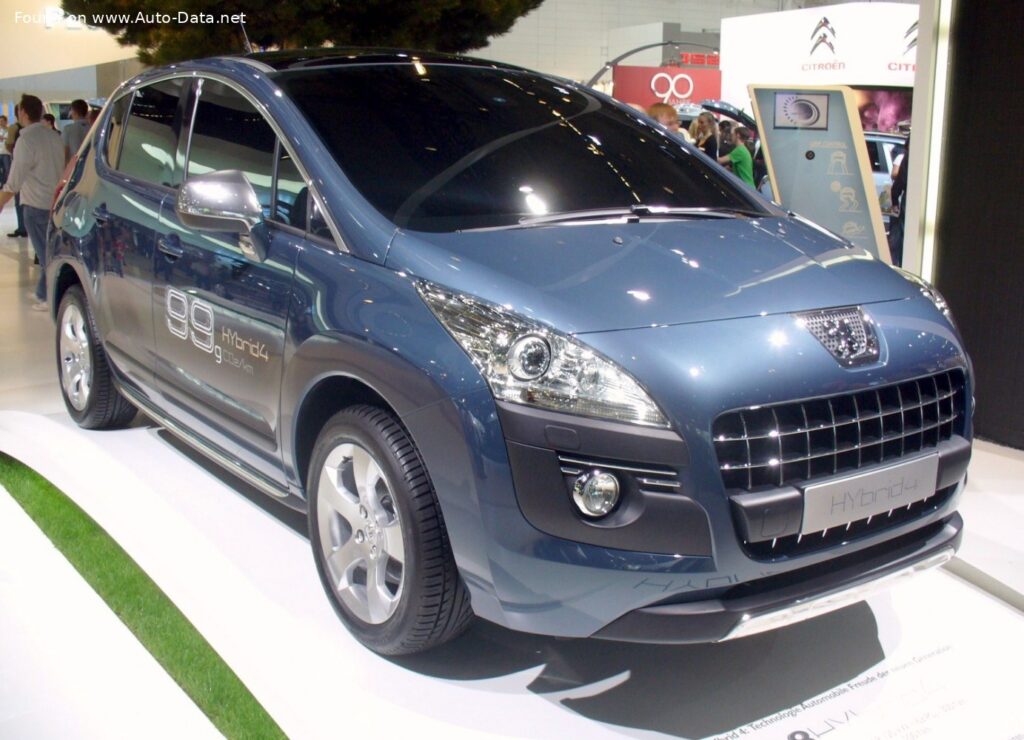
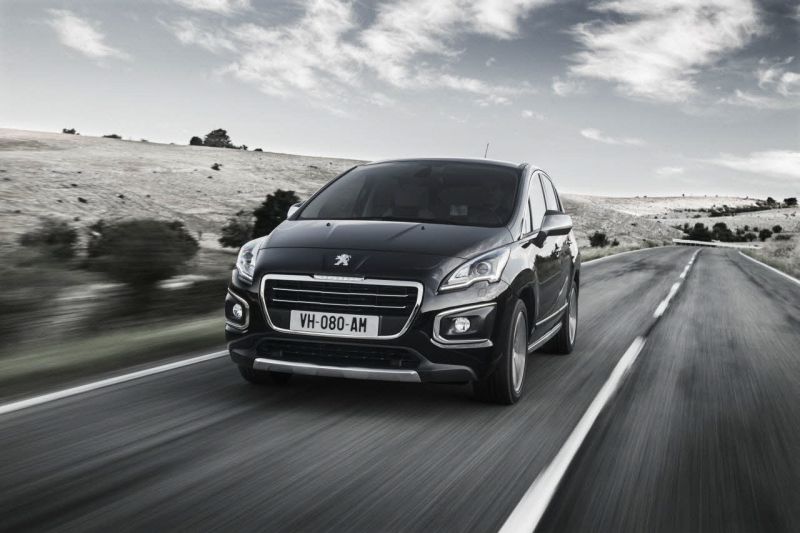
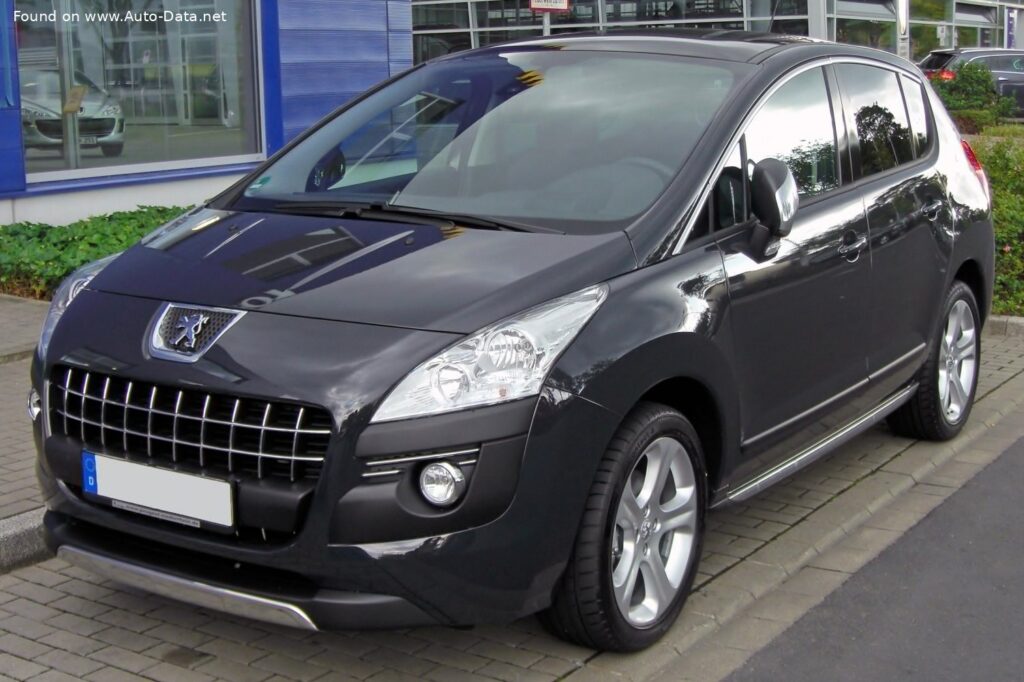
The Peugeot 3008 I (Phase I, 2009) adopted a five-door SUV body type, providing seating for five occupants. Its design language was distinct and somewhat polarizing upon its release. Unlike more traditional, boxy SUVs, the 3008 featured a more rounded, almost MPV-like silhouette, characterized by a tall roofline, expansive glass areas, and a prominent front grille. While it might not have exuded the ruggedness of some competitors, its design prioritized interior space and visibility, offering a commanding view of the road.
Measuring 171.85 inches in length, 72.32 inches in width, and 64.37 inches in height, with a wheelbase of 102.87 inches, the 3008 was a compact yet spacious vehicle. Its interior was a highlight, known for its high-quality materials and thoughtful ergonomics. The cabin featured a versatile layout, including a split-level trunk floor and a flat-folding rear seat, which expanded the cargo capacity from a minimum of 15.26 cubic feet (432 liters) to a generous 43.83 cubic feet (1241 liters). This flexibility was a key selling point, catering to families and individuals needing adaptable storage solutions.
For its era, the 3008 was equipped with a robust set of safety and convenience features. Standard safety equipment included ABS (Anti-lock Braking System), enhancing braking control under challenging conditions. The vehicle utilized ventilated discs for the front brakes and solid discs for the rear, providing reliable stopping power. The suspension system comprised an independent McPherson strut setup with coil springs and an anti-roll bar at the front, paired with a semi-independent coil spring arrangement at the rear. This configuration contributed to a comfortable ride quality and stable handling, a hallmark of Peugeot vehicles.
Steering was managed by an electric power steering system, connected to a rack and pinion setup, offering light and precise control, particularly beneficial in urban maneuvering. The 3008 came with tire sizes such as 225/50 R17 or 235/45 R18, mounted on 17-inch or 18-inch wheel rims, which further contributed to its road presence and handling characteristics. Its minimum turning circle of 35.76 feet (10.9 meters) made it surprisingly agile for its size in tight spaces.
Technical Specifications
| Category | Specification |
|---|---|
| Brand | Peugeot |
| Model | 3008 |
| Generation | 3008 I (Phase I, 2009) |
| Type (Engine) | 1.6 THP (156 Hp) |
| Start of production | 2009 year |
| End of production | 2013 year |
| Powertrain Architecture | Internal Combustion engine |
| Body type | SUV |
| Seats | 5 |
| Doors | 5 |
| Fuel consumption (economy) – urban | 10 l/100 km (23.5 US mpg) |
| Fuel consumption (economy) – extra urban | 5.8 l/100 km (40.6 US mpg) |
| Fuel consumption (economy) – combined | 7.3 l/100 km (32.2 US mpg) |
| Fuel Type | Petrol (Gasoline) |
| Acceleration 0 – 60 mph | 8.5 sec |
| Maximum speed | 202 km/h (125.52 mph) |
| Emission standard | Euro 5 |
| Weight-to-power ratio | 9.4 kg/Hp, 106.9 Hp/tonne |
| Weight-to-torque ratio | 6.1 kg/Nm, 164.5 Nm/tonne |
| Power | 156 Hp @ 6000 rpm |
| Power per liter | 97.6 Hp/l |
| Torque | 240 Nm (177.01 lb.-ft.) @ 1400 rpm |
| Engine layout | Front, Transverse |
| Engine Model/Code | 5FV EP6CDT |
| Engine displacement | 1598 cm3 (97.52 cu. in.) |
| Number of cylinders | 4 |
| Engine configuration | Inline |
| Number of valves per cylinder | 4 |
| Fuel injection system | Direct injection |
| Engine aspiration | Turbocharger, Intercooler |
| Engine oil capacity | 4.25 l (4.49 US qt) |
| Coolant | 6.2 l (6.55 US qt) |
| Kerb Weight | 1459 kg (3216.54 lbs.) |
| Max. weight | 2020 kg (4453.34 lbs.) |
| Max load | 561 kg (1236.79 lbs.) |
| Trunk (boot) space – minimum | 432 l (15.26 cu. ft.) |
| Trunk (boot) space – maximum | 1241 l (43.83 cu. ft.) |
| Fuel tank capacity | 60 l (15.85 US gal) |
| Length | 4365 mm (171.85 in.) |
| Width | 1837 mm (72.32 in.) |
| Height | 1635 mm (64.37 in.) |
| Wheelbase | 2613 mm (102.87 in.) |
| Minimum turning circle (turning diameter) | 10.9 m (35.76 ft.) |
| Drivetrain Architecture | Front-wheel drive, Internal Combustion engine |
| Drive wheel | Front wheel drive |
| Number of gears and type of gearbox | 6 gears, manual transmission |
| Front suspension | Independent, type McPherson with coil spring and anti-roll bar |
| Rear suspension | Semi-independent, coil spring |
| Front brakes | Ventilated discs |
| Rear brakes | Disc |
| Assisting systems | ABS (Anti-lock braking system) |
| Steering type | Steering rack and pinion |
| Power steering | Electric Steering |
| Tires size | 225/50 R17; 235/45 R18 |
| Wheel rims size | 17; 18 |
Legacy and Market Impact
The Peugeot 3008 I (Phase I, 2009) marked a pivotal moment for Peugeot as it navigated the evolving automotive landscape. While its initial styling might have been a subject of debate, often described as a blend of MPV and SUV rather than a purebred SUV, its practical attributes and refined driving experience quickly won over a significant segment of European buyers. Its reputation was built on a foundation of comfort, versatility, and the impressive efficiency and performance of engines like the 1.6 THP. It was often praised for its quiet cabin, supple ride, and a sense of quality that surpassed some of its direct competitors.
In its primary markets, the 3008 faced stiff competition from a growing array of compact crossovers and traditional SUVs. Key rivals included the Nissan Qashqai, which largely pioneered the segment, the Volkswagen Tiguan, known for its solid engineering, and the Ford Kuga, praised for its dynamic handling. Other contenders like the Renault Koleos also vied for market share. The 3008 distinguished itself through its unique “crossover” positioning, offering an alternative to those who found traditional SUVs too rugged or MPVs too staid. Its innovative interior, including the “Duo Modulaire” tailgate (a split tailgate with a lower section that could support weight), and the “Grip Control” system (an advanced traction control system for light off-road use, though not detailed in this specific data, it was a notable feature for the 3008 range) further enhanced its appeal as a versatile family vehicle.
Historically, the first-generation 3008 played a crucial role in preparing Peugeot for greater success in the SUV market. Despite its somewhat polarizing aesthetics, it demonstrated Peugeot’s capability to produce a competitive and desirable vehicle in a rapidly expanding segment. Its success laid the groundwork for the dramatically restyled second-generation 3008, which launched in 2016 and went on to win numerous awards, including European Car of the Year. The original 3008, therefore, stands as an important evolutionary step, bridging the gap between Peugeot’s MPV heritage and its future as a dominant force in the global SUV arena. It proved that a comfortable, efficient, and practical vehicle with a distinctive French flair could find a loyal audience, even in a crowded and competitive marketplace.