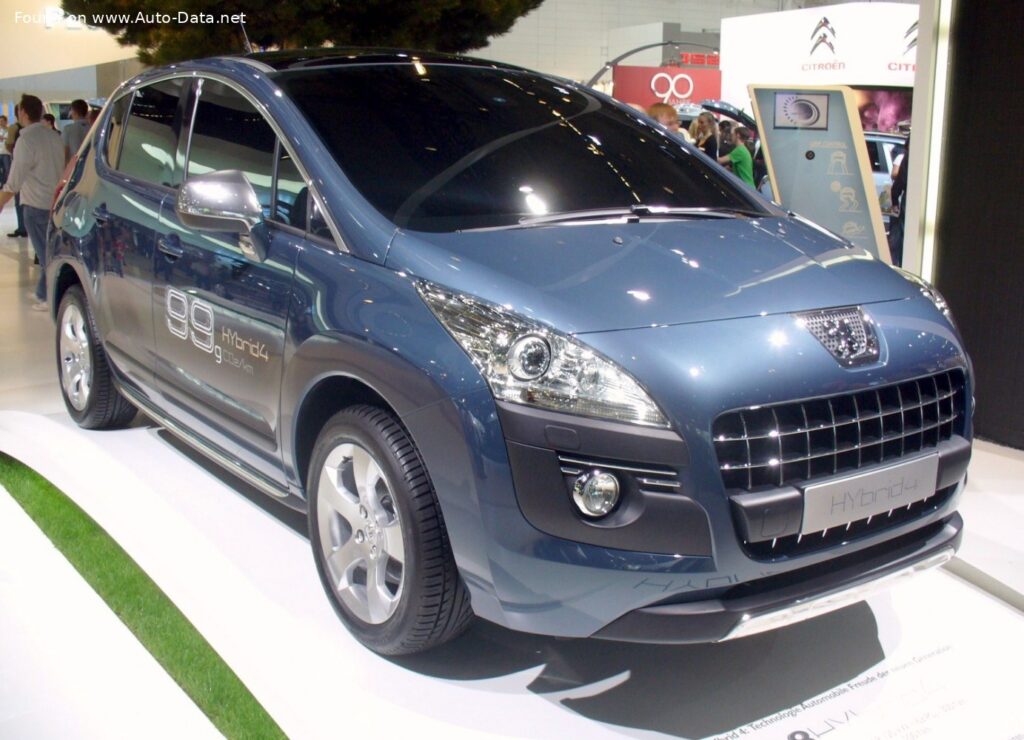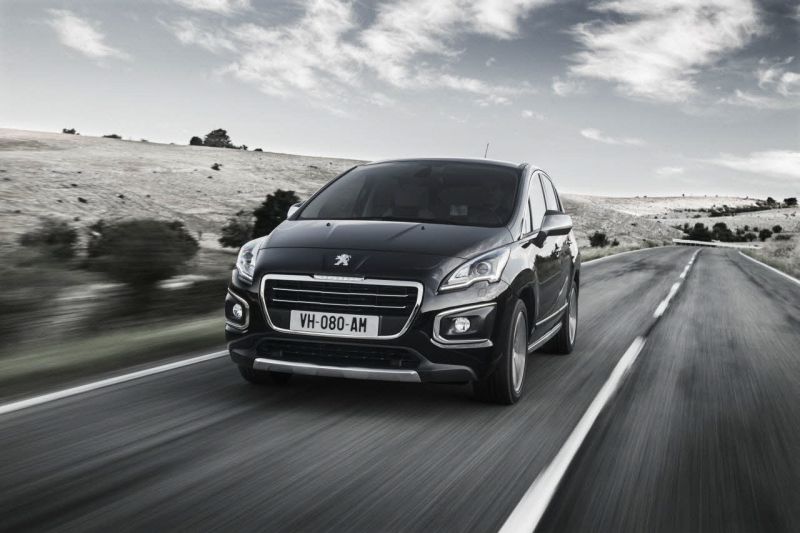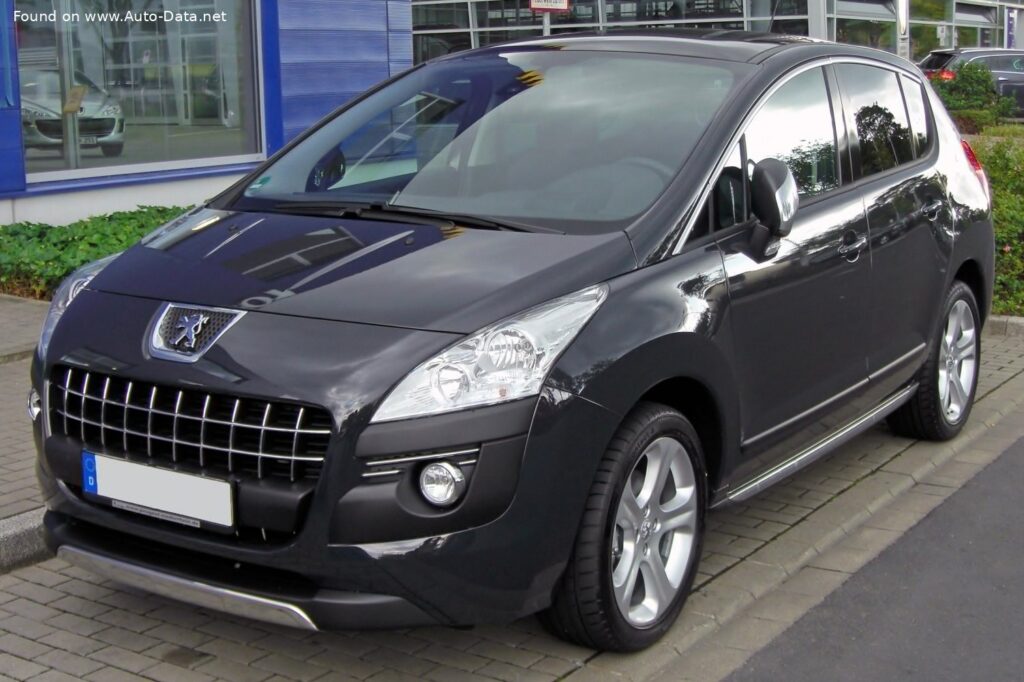
Peugeot 3008 I (Phase I, 2009) 1.6 THP (156 Hp)
The Peugeot 3008 I (Phase I, 2009) 1.6 THP (156 Hp) marked a significant entry for the French automaker into the burgeoning compact crossover SUV segment. Unveiled in 2009, this first-generation 3008 represented Peugeot’s ambitious step to blend the practicality of a multi-purpose vehicle (MPV) with the elevated driving position and rugged aesthetics of an SUV, specifically targeting the European market where such vehicles were rapidly gaining popularity. While not officially sold in the United States, the 3008 I quickly established itself as a versatile and stylish option for European families, offering a compelling mix of comfort, efficiency, and driving dynamics in a highly competitive class. This particular variant, equipped with the 1.6-liter THP (Turbo High Pressure) engine producing 156 horsepower, stood out for its modern powertrain and balanced performance, setting a new benchmark for Peugeot in terms of technology and market positioning.
Engine and Performance: The 1.6 THP Powertrain in the Peugeot 3008 I (Phase I, 2009) 1.6 THP (156 Hp)
At the heart of the Peugeot 3008 I (Phase I, 2009) 1.6 THP (156 Hp) lies a sophisticated 1.6-liter (1598 cm3 or 97.52 cu. in.) inline four-cylinder engine, designated by the code 5FV EP6CDT. This powerplant, a product of collaboration between PSA Peugeot Citroën and BMW, was a technological highlight for its time, featuring direct fuel injection, a twin-scroll turbocharger, and an intercooler. These advanced features allowed the compact engine to deliver impressive output for its size, churning out 156 horsepower at 5800 rpm and a robust 177.01 lb.-ft. of torque available from a remarkably low 1400 rpm. This broad torque band ensured strong acceleration and flexible driving characteristics, making the 3008 feel responsive both in urban environments and on the open road.
Power was delivered to the front wheels via a precise 6-speed manual transmission, a setup that underscored the vehicle’s emphasis on driver engagement and fuel efficiency. The powertrain architecture, with the engine mounted front and transverse, contributed to optimized weight distribution and interior space. Performance figures for this variant included a top speed of 124.9 mph (201 km/h), demonstrating its capability for highway cruising. Despite its spirited performance, the 1.6 THP engine also focused on efficiency, achieving an extra-urban fuel economy of 31.8 US mpg (7.4 l/100 km) and meeting the stringent Euro 5 emission standards with CO2 emissions of 167 g/km. The engine’s DOHC (Double Overhead Camshaft) valvetrain with 4 valves per cylinder further enhanced its breathing and efficiency, cementing its reputation as a modern and capable engine for the compact crossover segment.
Design and Features
The first-generation Peugeot 3008 adopted a distinctive design philosophy that blended various automotive genres. Classified as an SUV, its body type leaned heavily into a “monospace” or MPV-like silhouette, offering a practical and spacious interior without sacrificing a commanding road presence. At 171.85 inches (4365 mm) long, 72.32 inches (1837 mm) wide, and 64.53 inches (1639 mm) high, with a wheelbase of 102.87 inches (2613 mm), the 3008 offered compact dimensions ideal for European city driving while providing ample interior volume.
Its exterior styling featured a prominent grille, sculpted lines, and a relatively high waistline, giving it a robust yet refined appearance. The elevated driving position, a hallmark of SUVs, provided excellent visibility and a sense of security. Inside, the 3008 was designed for comfort and versatility, seating five occupants across two rows. The cargo area was particularly impressive for its class, offering a minimum trunk space of 15.26 cu. ft. (432 liters), which could expand significantly to 43.83 cu. ft. (1241 liters) with the rear seats folded, catering to families and those requiring flexible cargo capacity. Practical features like a split tailgate (known as “Hobby” in some markets) further enhanced its utility, allowing for easier loading of various items.
Safety was a key consideration, with the 3008 I featuring standard assisting systems like ABS (Anti-lock Braking System). The vehicle was equipped with ventilated disc brakes at the front and disc brakes at the rear, ensuring confident stopping power. Its suspension system comprised an independent McPherson strut setup with coil springs and an anti-roll bar at the front, paired with a semi-independent coil spring rear suspension, designed to offer a comfortable ride quality and stable handling. The electric power steering system, with a minimum turning circle of 36.09 feet (11 meters), made maneuvering in tight spaces effortless. Standard tire size was 225/50R17 on 17.5J x 17 wheel rims, balancing grip and ride comfort.
Technical Specifications
| Category | Specification | US Equivalent / Notes |
|---|---|---|
| General Information | ||
| Brand | Peugeot | |
| Model | 3008 | |
| Generation | 3008 I (Phase I, 2009) | |
| Type (Engine) | 1.6 THP (156 Hp) | |
| Start of Production | 2009 year | |
| End of Production | 2013 year | |
| Powertrain Architecture | Internal Combustion engine | |
| Body type | SUV | |
| Seats | 5 | |
| Doors | 5 | |
| Performance Specs | ||
| Fuel consumption (extra urban) | 7.4 l/100 km | 31.8 US mpg |
| CO2 emissions | 167 g/km | |
| Fuel Type | Petrol (Gasoline) | |
| Maximum speed | 201 km/h | 124.9 mph |
| Emission standard | Euro 5 | |
| Weight-to-power ratio | 9.8 kg/Hp | 101.7 Hp/tonne |
| Weight-to-torque ratio | 6.4 kg/Nm | 156.5 Nm/tonne |
| Engine Specs | ||
| Power | 156 Hp @ 5800 rpm. | |
| Power per liter | 97.6 Hp/l | |
| Torque | 240 Nm @ 1400 rpm. | 177.01 lb.-ft. @ 1400 rpm. |
| Engine layout | Front, Transverse | |
| Engine Model/Code | 5FV EP6CDT | |
| Engine displacement | 1598 cm3 | 97.52 cu. in. |
| Number of cylinders | 4 | |
| Engine configuration | Inline | |
| Cylinder Bore | 77 mm | 3.03 in. |
| Piston Stroke | 85.8 mm | 3.38 in. |
| Compression ratio | 10.5:1 | |
| Number of valves per cylinder | 4 | |
| Fuel injection system | Direct injection | |
| Engine aspiration | Turbocharger, Intercooler | |
| Valvetrain | DOHC | |
| Engine oil capacity | 4.25 l | 4.49 US qt |
| Coolant | 6.2 l | 6.55 US qt |
| Space, Volume and Weights | ||
| Kerb Weight | 1534 kg | 3381.89 lbs. |
| Max. weight (GVWR) | 2020 kg | 4453.34 lbs. |
| Max load | 486 kg | 1071.45 lbs. |
| Trunk (boot) space – minimum | 432 l | 15.26 cu. ft. |
| Trunk (boot) space – maximum | 1241 l | 43.83 cu. ft. |
| Fuel tank capacity | 60 l | 15.85 US gal |
| Dimensions | ||
| Length | 4365 mm | 171.85 in. |
| Width | 1837 mm | 72.32 in. |
| Height | 1639 mm | 64.53 in. |
| Wheelbase | 2613 mm | 102.87 in. |
| Front track | 1532 mm | 60.31 in. |
| Rear (Back) track | 1527 mm | 60.12 in. |
| Minimum turning circle | 11 m | 36.09 ft. |
| Drivetrain, Brakes and Suspension Specs | ||
| Drivetrain Architecture | Front wheel drive (ICE drives front wheels) | |
| Drive wheel | Front wheel drive | |
| Number of gears and type of gearbox | 6 gears, manual transmission | |
| Front suspension | Independent, McPherson with coil spring and anti-roll bar | |
| Rear suspension | Semi-independent, coil spring | |
| Front brakes | Ventilated discs | |
| Rear brakes | Disc | |
| Assisting systems | ABS (Anti-lock braking system) | |
| Steering type | Steering rack and pinion | |
| Power steering | Electric Steering | |
| Tires size | 225/50R17 | |
| Wheel rims size | 17.5J x 17 |
Legacy and Market Impact
The Peugeot 3008 I, particularly the Phase I model from 2009, carved out a significant niche for Peugeot in the European automotive landscape. Its introduction marked a strategic shift for the brand, moving beyond traditional hatchbacks and sedans to embrace the rapidly expanding crossover segment. In its primary market, the 3008 I was perceived as a bold, practical, and technologically advanced offering that successfully blended the best attributes of an MPV, an SUV, and even a family hatchback.
Its unique styling, which some found polarizing but many appreciated for its distinctiveness, helped it stand out from competitors. Key rivals in Europe included established players like the Nissan Qashqai, Volkswagen Tiguan, Ford Kuga, and Renault Koleos. The 3008 differentiated itself with its comfortable ride, high-quality interior materials for its class, and the efficient yet powerful 1.6 THP engine, which was a strong selling point for buyers seeking a balance of performance and fuel economy without resorting to a diesel powertrain. The manual transmission variant, as detailed here, further appealed to drivers who preferred a more engaging driving experience.
The 3008 I’s success laid a crucial foundation for Peugeot’s future crossover strategy. It demonstrated that the brand could innovate and compete effectively in new segments, evolving its design language and engineering prowess. Its reputation for versatility, comfort, and a strong powertrain helped solidify Peugeot’s image as a producer of modern, family-friendly vehicles with a touch of French flair. While it never reached American shores, its impact in Europe was undeniable, setting the stage for the even more successful second-generation 3008, which went on to win numerous accolades, including European Car of the Year, further cementing the model line’s historical significance within Peugeot’s portfolio.