<h2>The Peugeot 3008 I (Phase II, 2013) 1.6 HDi (115 Hp) FAP: A European Crossover’s Refined Efficiency</h2>
<p>The Peugeot 3008 is a compact crossover SUV (C-segment) produced by the French automaker Peugeot. The first generation, known as the 3008 I, debuted in 2008 and represented Peugeot’s ambitious entry into the burgeoning crossover segment, blending elements of an SUV, minivan, and hatchback. The specific model under review, the <strong>Peugeot 3008 I (Phase II, 2013) 1.6 HDi (115 Hp) FAP</strong>, refers to the facelifted version introduced in 2013, which brought refreshed styling and minor technical updates to keep it competitive. This particular variant, powered by a highly efficient 1.6-liter turbodiesel engine, was a cornerstone of the 3008’s appeal in its primary European market, where diesel powertrains were immensely popular for their fuel economy and robust torque delivery. While never officially sold in the United States, the 3008 I played a significant role in defining Peugeot’s modern design language and its strategy for the global crossover market, offering a practical, comfortable, and economical family vehicle.</p>
<h3>Engine and Performance of the Peugeot 3008 I (Phase II, 2013) 1.6 HDi (115 Hp) FAP</h3>
<p>At the heart of the <strong>Peugeot 3008 I (Phase II, 2013) 1.6 HDi (115 Hp) FAP</strong> lies a 1.6-liter (1560 cm<sup>3</sup> or 95.2 cu. in.) inline-four turbodiesel engine, specifically designated with the internal code BHX DV6FC. This engine, a staple in PSA Group vehicles of the era, was renowned for its balance of power and exceptional fuel efficiency. It features a common rail direct fuel injection system, a turbocharger, and an intercooler, all designed to optimize combustion and maximize output from its relatively small displacement. Producing 115 horsepower at 3600 rpm and a robust 199.14 lb.-ft. of torque at a low 1750 rpm, the engine provided ample pulling power for everyday driving and highway cruising, especially considering the vehicle’s curb weight of 3132.77 lbs.</p>
<p>Power is delivered to the front wheels via a smooth-shifting 6-speed manual transmission, a common and preferred setup in European markets for its engaging driving dynamics and efficiency. This powertrain combination allowed the 3008 to accelerate from 0 to 60 mph in a respectable 11.6 seconds, with a top speed of 112.47 mph. More importantly for its target audience, the 1.6 HDi engine excelled in fuel economy. The combined fuel consumption was rated between 48 and 49 US mpg (4.8-4.9 l/100 km), with extra-urban figures reaching an impressive 53.5 to 56 US mpg (4.2-4.4 l/100 km). Urban consumption stood at 40.6 US mpg (5.8 l/100 km). These figures, combined with CO2 emissions of 125-127 g/km, ensured that the vehicle met the Euro 5 emission standard and offered competitive running costs, a critical factor for European buyers. The inclusion of a FAP (Filtre à Particules or Diesel Particulate Filter) was standard, significantly reducing particulate matter emissions, underscoring Peugeot’s commitment to environmental standards.</p>
<h3>Design and Features</h3>
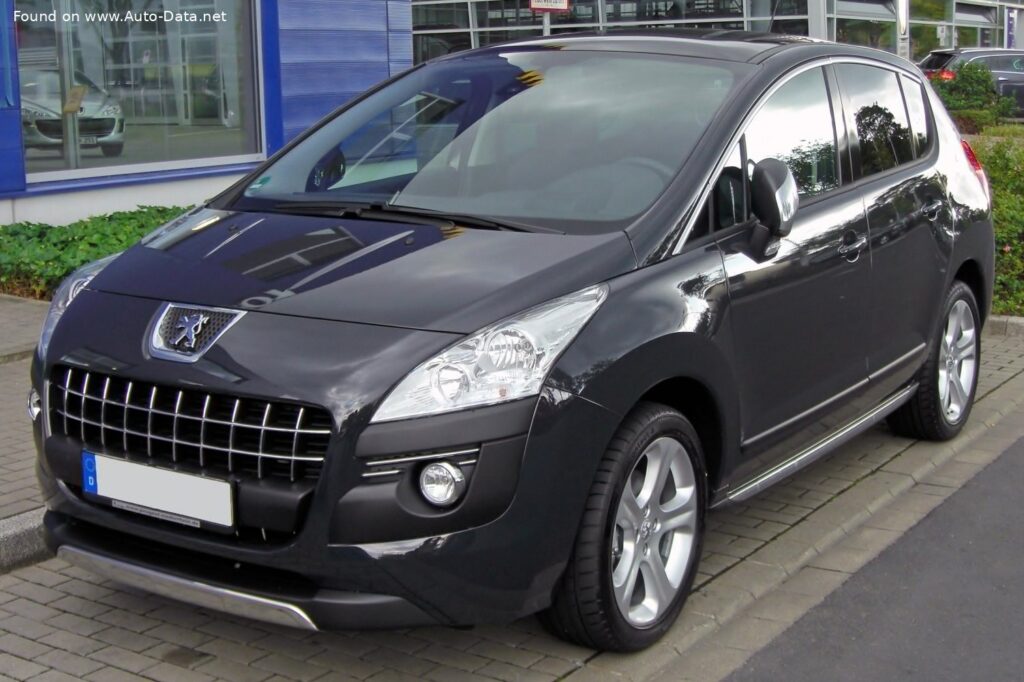
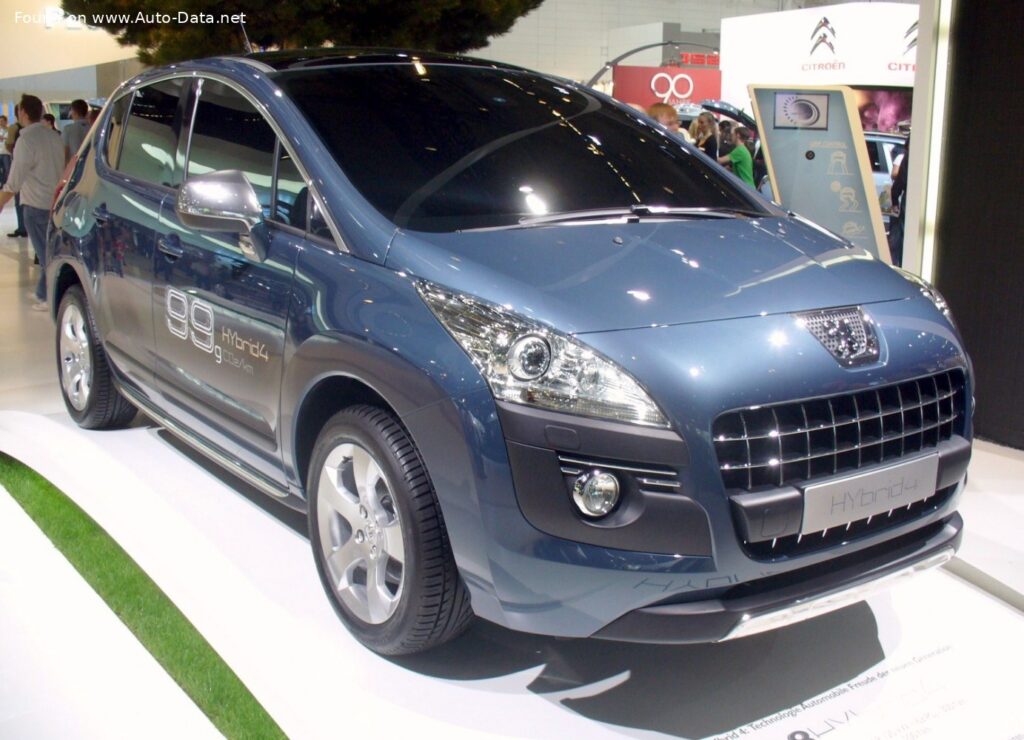
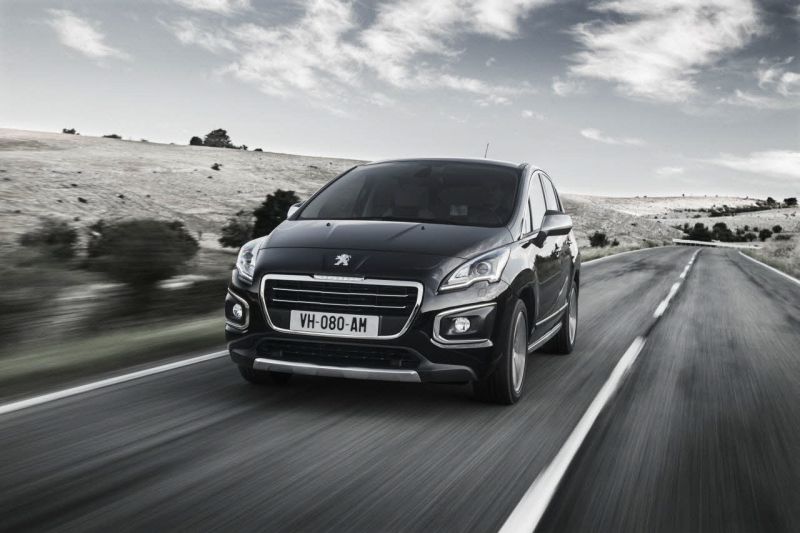
<p>The Peugeot 3008 I (Phase II, 2013) maintained the distinctive silhouette of the original model while incorporating several aesthetic enhancements. Classified as an SUV, its design truly blurred the lines between a traditional SUV, an MPV (Multi-Purpose Vehicle), and a hatchback, offering a unique blend of practicality and style. The Phase II facelift introduced a revised front fascia with new headlights, a redesigned grille, and updated bumper styling, giving the 3008 a more contemporary and assertive look that aligned with Peugeot’s evolving design language. The vehicle features five doors and comfortably seats five occupants, emphasizing its role as a versatile family hauler.</p>
<p>Dimensionally, the 3008 I (Phase II) measures 171.85 inches in length, 72.32 inches in width (83.19 inches including mirrors), and 64.37 inches in height, with a wheelbase of 102.87 inches. These dimensions contribute to a spacious interior and a commanding driving position, characteristic of a crossover. The trunk space is generous, offering 18.08 cubic feet (512 liters) with all seats in place, expanding to a substantial 56.64 cubic feet (1604 liters) when the rear seats are folded down, making it highly adaptable for various cargo needs. The fuel tank capacity is 15.85 US gallons (60 liters), providing an excellent driving range thanks to the diesel engine’s efficiency.</p>
<p>In terms of chassis and safety, the 3008 I (Phase II) utilized an independent McPherson strut front suspension with coil springs and an anti-roll bar, paired with an independent coil spring rear suspension. This setup aimed to provide a comfortable ride while maintaining competent handling characteristics. Braking duties were handled by ventilated discs at the front and solid discs at the rear, supported by an Anti-lock Braking System (ABS) as standard. The vehicle came equipped with 225/50 R17 or optional 235/45 R18 tires, mounted on 17 or 18-inch wheel rims, respectively. The steering system featured a rack and pinion setup, offering precise control and a minimum turning circle of 35.76 feet, aiding maneuverability in urban environments.</p>
<h3>Technical Specifications</h3>
<table border=”1″ style=”width:100%; border-collapse: collapse;”>
<tr>
<th style=”padding: 8px; text-align: left; background-color: #f2f2f2;”>Category</th>
<th style=”padding: 8px; text-align: left; background-color: #f2f2f2;”>Specification</th>
</tr>
<tr>
<td style=”padding: 8px; border: 1px solid #ddd;”>Brand</td>
<td style=”padding: 8px; border: 1px solid #ddd;”>Peugeot</td>
</tr>
<tr>
<td style=”padding: 8px; border: 1px solid #ddd;”>Model</td>
<td style=”padding: 8px; border: 1px solid #ddd;”>3008</td>
</tr>
<tr>
<td style=”padding: 8px; border: 1px solid #ddd;”>Generation</td>
<td style=”padding: 8px; border: 1px solid #ddd;”>3008 I (Phase II, 2013)</td>
</tr>
<tr>
<td style=”padding: 8px; border: 1px solid #ddd;”>Engine Type</td>
<td style=”padding: 8px; border: 1px solid #ddd;”>1.6 HDi (115 Hp) FAP</td>
</tr>
<tr>
<td style=”padding: 8px; border: 1px solid #ddd;”>Production Start</td>
<td style=”padding: 8px; border: 1px solid #ddd;”>2013 year</td>
</tr>
<tr>
<td style=”padding: 8px; border: 1px solid #ddd;”>Production End</td>
<td style=”padding: 8px; border: 1px solid #ddd;”>2015 year</td>
</tr>
<tr>
<td style=”padding: 8px; border: 1px solid #ddd;”>Body Type</td>
<td style=”padding: 8px; border: 1px solid #ddd;”>SUV</td>
</tr>
<tr>
<td style=”padding: 8px; border: 1px solid #ddd;”>Seats</td>
<td style=”padding: 8px; border: 1px solid #ddd;”>5</td>
</tr>
<tr>
<td style=”padding: 8px; border: 1px solid #ddd;”>Doors</td>
<td style=”padding: 8px; border: 1px solid #ddd;”>5</td>
</tr>
<tr>
<td style=”padding: 8px; border: 1px solid #ddd;”>Fuel Type</td>
<td style=”padding: 8px; border: 1px solid #ddd;”>Diesel</td>
</tr>
<tr>
<td style=”padding: 8px; border: 1px solid #ddd;”>Fuel Consumption (Urban)</td>
<td style=”padding: 8px; border: 1px solid #ddd;”>40.6 US mpg (5.8 l/100 km)</td>
</tr>
<tr>
<td style=”padding: 8px; border: 1px solid #ddd;”>Fuel Consumption (Extra Urban)</td>
<td style=”padding: 8px; border: 1px solid #ddd;”>53.5 – 56 US mpg (4.2-4.4 l/100 km)</td>
</tr>
<tr>
<td style=”padding: 8px; border: 1px solid #ddd;”>Fuel Consumption (Combined)</td>
<td style=”padding: 8px; border: 1px solid #ddd;”>48 – 49 US mpg (4.8-4.9 l/100 km)</td>
</tr>
<tr>
<td style=”padding: 8px; border: 1px solid #ddd;”>CO2 Emissions</td>
<td style=”padding: 8px; border: 1px solid #ddd;”>125-127 g/km</td>
</tr>
<tr>
<td style=”padding: 8px; border: 1px solid #ddd;”>Emission Standard</td>
<td style=”padding: 8px; border: 1px solid #ddd;”>Euro 5</td>
</tr>
<tr>
<td style=”padding: 8px; border: 1px solid #ddd;”>Acceleration 0-60 mph</td>
<td style=”padding: 8px; border: 1px solid #ddd;”>11.6 sec</td>
</tr>
<tr>
<td style=”padding: 8px; border: 1px solid #ddd;”>Maximum Speed</td>
<td style=”padding: 8px; border: 1px solid #ddd;”>112.47 mph (181 km/h)</td>
</tr>
<tr>
<td style=”padding: 8px; border: 1px solid #ddd;”>Power</td>
<td style=”padding: 8px; border: 1px solid #ddd;”>115 Hp @ 3600 rpm</td>
</tr>
<tr>
<td style=”padding: 8px; border: 1px solid #ddd;”>Power per liter</td>
<td style=”padding: 8px; border: 1px solid #ddd;”>73.7 Hp/l</td>
</tr>
<tr>
<td style=”padding: 8px; border: 1px solid #ddd;”>Torque</td>
<td style=”padding: 8px; border: 1px solid #ddd;”>199.14 lb.-ft. (270 Nm) @ 1750 rpm</td>
</tr>
<tr>
<td style=”padding: 8px; border: 1px solid #ddd;”>Engine Displacement</td>
<td style=”padding: 8px; border: 1px solid #ddd;”>1.6 liters (1560 cm<sup>3</sup> / 95.2 cu. in.)</td>
</tr>
<tr>
<td style=”padding: 8px; border: 1px solid #ddd;”>Number of Cylinders</td>
<td style=”padding: 8px; border: 1px solid #ddd;”>4, Inline</td>
</tr>
<tr>
<td style=”padding: 8px; border: 1px solid #ddd;”>Valves per Cylinder</td>
<td style=”padding: 8px; border: 1px solid #ddd;”>2</td>
</tr>
<tr>
<td style=”padding: 8px; border: 1px solid #ddd;”>Fuel Injection System</td>
<td style=”padding: 8px; border: 1px solid #ddd;”>Diesel Commonrail</td>
</tr>
<tr>
<td style=”padding: 8px; border: 1px solid #ddd;”>Engine Aspiration</td>
<td style=”padding: 8px; border: 1px solid #ddd;”>Turbocharger, Intercooler</td>
</tr>
<tr>
<td style=”padding: 8px; border: 1px solid #ddd;”>Engine Oil Capacity</td>
<td style=”padding: 8px; border: 1px solid #ddd;”>3.96 US qt (3.75 l)</td>
</tr>
<tr>
<td style=”padding: 8px; border: 1px solid #ddd;”>Particulate Filter</td>
<td style=”padding: 8px; border: 1px solid #ddd;”>Yes (FAP)</td>
</tr>
<tr>
<td style=”padding: 8px; border: 1px solid #ddd;”>Drivetrain Architecture</td>
<td style=”padding: 8px; border: 1px solid #ddd;”>Internal combustion engine drives front wheels</td>
</tr>
<tr>
<td style=”padding: 8px; border: 1px solid #ddd;”>Drive Wheel</td>
<td style=”padding: 8px; border: 1px solid #ddd;”>Front wheel drive</td>
</tr>
<tr>
<td style=”padding: 8px; border: 1px solid #ddd;”>Gearbox</td>
<td style=”padding: 8px; border: 1px solid #ddd;”>6 gears, manual transmission</td>
</tr>
<tr>
<td style=”padding: 8px; border: 1px solid #ddd;”>Kerb Weight</td>
<td style=”padding: 8px; border: 1px solid #ddd;”>3132.77 lbs (1421 kg)</td>
</tr>
<tr>
<td style=”padding: 8px; border: 1px solid #ddd;”>Max. Weight</td>
<td style=”padding: 8px; border: 1px solid #ddd;”>4475.38 lbs (2