Peugeot 3008 II (Phase I, 2016)
The Peugeot 3008 II (Phase I, 2016) represents a pivotal moment for the French automaker, marking a dramatic shift from its predecessor’s somewhat ambiguous MPV-SUV crossover identity to a fully-fledged, design-forward compact SUV. Unveiled in 2016, this second-generation 3008 quickly garnered critical acclaim, including the prestigious European Car of the Year award in 2017. While Peugeot models are not officially sold in the United States market, the 3008 II became an incredibly popular and influential model in Europe and other international markets, challenging established players with its bold styling, innovative interior, and efficient powertrains. The specific variant discussed here, the 1.2 PureTech (130 Hp) Automatic S&S, was a key offering in its initial phase of production from 2016 to 2018, demonstrating Peugeot’s commitment to downsizing and turbocharging for optimal balance of performance and fuel efficiency.
Positioned in the highly competitive compact SUV segment, the Peugeot 3008 II (Phase I, 2016) aimed to attract buyers looking for a vehicle that combined the practicality of an SUV with a premium feel, advanced technology, and a distinctive aesthetic. It was built on PSA Group’s EMP2 platform, which allowed for significant weight reduction and improved driving dynamics compared to the previous generation. This iteration of the 3008 was instrumental in redefining Peugeot’s brand image, showcasing a more assertive and sophisticated design language that would later influence other models in its lineup. Its success underscored a growing European demand for stylish and economical SUVs, a trend it masterfully capitalized upon.
Engine and Performance of the Peugeot 3008 II (Phase I, 2016)
Under the hood, the Peugeot 3008 II (Phase I, 2016) 1.2 PureTech (130 Hp) Automatic S&S variant featured a highly advanced and remarkably efficient gasoline engine. The heart of this model was a 1.2-liter (1199 cm³ or 73.17 cu. in.) turbocharged inline three-cylinder engine, designated by the code HNY EB2DTS. Despite its modest displacement, this PureTech engine was a technological marvel, delivering an impressive 130 horsepower at 5500 rpm. This translates to a specific output of 108.4 horsepower per liter, a testament to its sophisticated engineering, which included direct fuel injection and an intercooler working in conjunction with the turbocharger to maximize performance and efficiency.
Torque output was equally commendable, with 169.64 lb.-ft. (230 Nm) available at a remarkably low 1750 rpm. This low-end torque was crucial for providing responsive acceleration and a flexible driving experience, particularly in urban environments and during highway cruising. Power was routed to the front wheels via a smooth-shifting 6-speed automatic transmission, which further contributed to the vehicle’s refined character and ease of use. The combination of the responsive engine and automatic gearbox allowed the 3008 II to accelerate from 0 to 60 mph in a respectable 10 seconds, with a top speed of 116.82 mph (188 km/h).
Fuel efficiency was a major highlight for this powertrain, especially considering the vehicle’s SUV body style. The 1.2 PureTech engine, coupled with Peugeot’s Start & Stop system, achieved excellent economy figures: 37.3 – 36.8 US mpg in urban driving, an impressive 50 – 48 US mpg on the extra-urban cycle, and a combined average of 45.2 – 42.8 US mpg. These figures were highly competitive within its segment and contributed to lower running costs for owners. Furthermore, the engine met stringent Euro 6 emission standards, with CO2 emissions ranging from 120-127 g/km, reflecting Peugeot’s commitment to environmental responsibility.
Design and Features
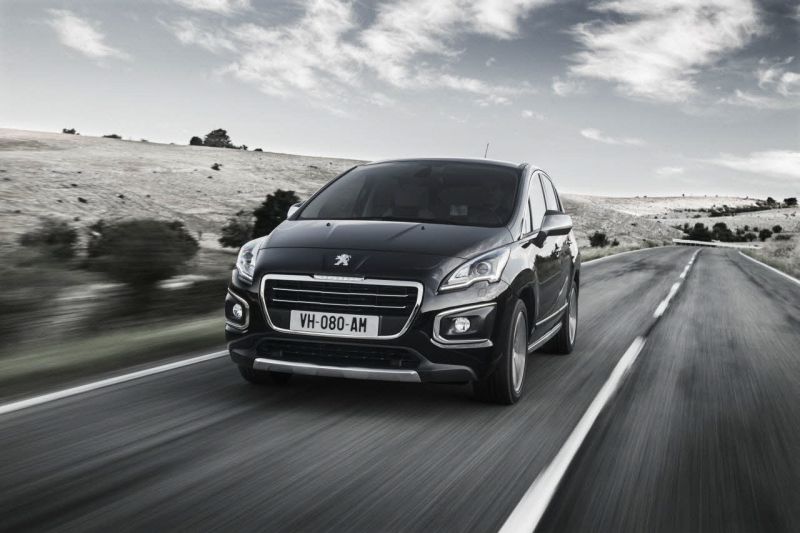
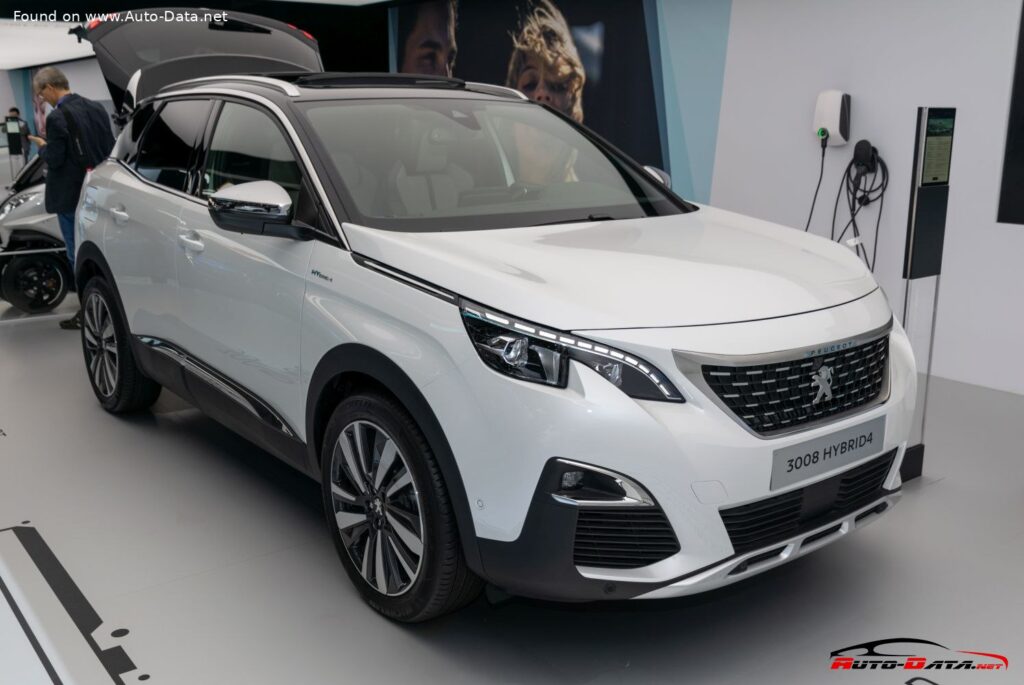
The design of the Peugeot 3008 II (Phase I, 2016) marked a radical departure from its first generation, adopting a much more assertive and contemporary SUV aesthetic. It featured a muscular, sculpted body with sharp lines, a prominent grille, and distinctive LED lighting signatures that gave it a premium and sophisticated road presence. The vehicle’s dimensions, including a length of 175.08 inches (4447 mm), a width of 72.48 inches (1841 mm), and a height of 63.58 inches (1615 mm), provided a commanding stance while maintaining maneuverability for urban driving. Its 8.62 inches (219 mm) of ground clearance was also beneficial for light off-road excursions or navigating challenging urban terrain.
Inside, the 3008 II introduced Peugeot’s innovative “i-Cockpit” design philosophy, which was a significant selling point. This included a compact steering wheel, a configurable 12.3-inch digital instrument cluster (head-up display), and a central touchscreen infotainment system angled towards the driver. The cabin materials and finish were elevated, giving the interior a truly premium feel that rivaled more expensive German competitors. Seating for five passengers was comfortable, and the SUV body offered significant practicality, with a minimum trunk space of 18.36 cu. ft. (520 liters) expandable to a generous 52.34 cu. ft. (1482 liters) with the rear seats folded down. This made it a highly versatile vehicle for families and individuals alike.
Safety and driver assistance features were also a strong focus. While specific advanced driver-assistance systems (ADAS) would vary by trim level, the 3008 II came standard with essential safety technologies such as ABS (Anti-lock Braking System). The robust construction and comprehensive airbag system contributed to its strong Euro NCAP safety ratings. Its front suspension utilized an independent McPherson strut design with coil springs and an anti-roll bar, while the rear featured a semi-independent setup with coil springs, providing a comfortable yet composed ride. The electric power steering offered precise control, enhancing the driving experience.
Technical Specifications
| Category | Specification |
|---|---|
| Brand | Peugeot |
| Model | 3008 II (Phase I, 2016) |
| Type (Engine) | 1.2 PureTech (130 Hp) Automatic S&S |
| Production Start | 2016 |
| Production End | 2018 |
| Body Type | SUV, 5 Doors, 5 Seats |
| Fuel Type | Petrol (Gasoline) |
| Engine Layout | Front, Transverse |
| Engine Model/Code | HNY EB2DTS |
| Engine Displacement | 1199 cm³ (73.17 cu. in.) |
| Number of Cylinders | 3, Inline |
| Number of Valves per Cylinder | 4 |
| Fuel Injection System | Direct Injection |
| Engine Aspiration | Turbocharger, Intercooler |
| Power | 130 Hp @ 5500 rpm |
| Power per Liter | 108.4 Hp/l |
| Torque | 169.64 lb.-ft. (230 Nm) @ 1750 rpm |
| Acceleration 0-60 mph | 10 seconds |
| Maximum Speed | 116.82 mph (188 km/h) |
| Fuel Consumption (Urban) | 37.3 – 36.8 US mpg (6.3-6.4 l/100 km) |
| Fuel Consumption (Extra-Urban) | 50 – 48 US mpg (4.7-4.9 l/100 km) |
| Fuel Consumption (Combined) | 45.2 – 42.8 US mpg (5.2-5.5 l/100 km) |
| CO2 Emissions | 120-127 g/km |
| Emission Standard | Euro 6 |
| Drivetrain Architecture | Front-wheel drive |
| Gearbox | 6-speed automatic transmission |
| Front Suspension | Independent, McPherson with coil spring and anti-roll bar |
| Rear Suspension | Semi-independent, coil spring |
| Front Brakes | Ventilated Discs |
| Rear Brakes | Disc |
| Assisting Systems | ABS (Anti-lock Braking System) |
| Steering Type | Steering rack and pinion, Electric Power Steering |
| Curb Weight | 2799.87 lbs. (1270 kg) |
| Max. Weight | 4254.92 lbs. (1930 kg) |
| Max Load | 1455.05 lbs. (660 kg) |
| Trunk Space (Min/Max) | 18.36 – 52.34 cu. ft. (520 – 1482 l) |
| Fuel Tank Capacity | 14 US gal (53 l) |
| Length | 175.08 in. (4447 mm) |
| Width (without mirrors) | 72.48 in. (1841 mm) |
| Width (including mirrors) | 82.6 in. (2098 mm) |
| Height | 63.58 in. (1615 mm) |
| Wheelbase | 105.31 in. (2675 mm) |
| Ground Clearance | 8.62 in. (219 mm) |
| Minimum Turning Circle | 35.01 ft. (10.67 m) |
| Tire Sizes | 215/65 R17; 225/55 R18; 205/55 R19 |
Legacy and Market Impact
The Peugeot 3008 II (Phase I, 2016) had a profound impact on Peugeot’s standing in the European and international automotive markets. Its transformation from an MPV-like crossover to a stylish SUV was a strategic masterstroke that perfectly aligned with shifting consumer preferences. The vehicle quickly became a best-seller for the brand, significantly boosting Peugeot’s sales and profitability during its production run from 2016 to 2018 and beyond into its subsequent phases. Its bold design, particularly the distinctive i-Cockpit interior, set new benchmarks for cabin aesthetics and user experience in the mainstream compact SUV segment.
In Europe, the 3008 II competed fiercely with established rivals such as the Nissan Qashqai, Volkswagen Tiguan, Renault Kadjar, and Hyundai Tucson. What set the Peugeot apart was its unique blend of French flair, perceived premium quality, and innovative technology, particularly its advanced and efficient PureTech gasoline and BlueHDi diesel engines. The 1.2 PureTech (130 Hp) Automatic S&S variant, in particular, was praised for its ability to deliver surprising performance and exceptional fuel economy from a small displacement engine, making it an attractive option for a wide range of buyers seeking a balance of power and running costs.
Its critical success, culminating in the European Car of the Year award in 2017, cemented its reputation as a segment leader and a benchmark for design and innovation. The 3008 II’s success also played a crucial role in revitalizing Peugeot’s brand image, showcasing its capability to produce stylish, high-quality, and technologically advanced vehicles. This model demonstrated that a mainstream brand could offer a truly premium experience, both in terms of design and driving dynamics, without necessarily carrying a premium price tag. The legacy of the Peugeot 3008 II is one of successful transformation, bold design, and a significant contribution to the evolving landscape of the compact SUV market.