Introduction to the Peugeot 3008 II (Phase I, 2016) 1.6 BlueHDi (120 Hp) Automatic S&S
The Peugeot 3008 II (Phase I, 2016) 1.6 BlueHDi (120 Hp) Automatic S&S represents a pivotal moment for the French automaker in the highly competitive compact SUV segment. Launched in 2016, this second-generation 3008 marked a significant departure from its predecessor’s more MPV-like crossover styling, embracing a bold, modern SUV aesthetic that resonated strongly with European consumers. While this specific diesel variant was not offered in the North American market, it was a cornerstone of Peugeot’s powertrain strategy in Europe, emphasizing fuel efficiency and lower emissions, critical factors for success in that region. This particular model, produced between 2016 and 2018, combined a robust diesel engine with an automatic transmission and Peugeot’s Start & Stop technology, aiming for an optimal balance of performance and economy. Its arrival heralded a new design language for Peugeot and quickly garnered critical acclaim, setting new benchmarks for the brand in terms of style, interior quality, and driving dynamics within its class.
Engine & Performance of the Peugeot 3008 II (Phase I, 2016) 1.6 BlueHDi (120 Hp) Automatic S&S
Powertrain and Efficiency
Under the hood, the Peugeot 3008 II (Phase I, 2016) 1.6 BlueHDi (120 Hp) Automatic S&S featured a 1.6-liter (1560 cm3 or 95.2 cu. in.) inline four-cylinder BlueHDi diesel engine, designated with the model code BHZ DV6FC. This engine was engineered for efficiency and compliance with strict European emission standards, specifically Euro 6. It utilized a common rail direct fuel injection system, complemented by a turbocharger and intercooler, to deliver a respectable output of 120 horsepower at 3500 rpm. Torque was a significant highlight for this diesel unit, peaking at 221.27 lb.-ft. (300 Nm) at a low 1750 rpm, providing strong pulling power characteristic of modern diesel engines.
Power was sent to the front wheels via a 6-speed automatic transmission, a popular choice for its smooth shifts and ease of driving in urban environments. The integration of a Start & Stop system further enhanced fuel economy by automatically shutting off the engine when the vehicle came to a halt and restarting it upon accelerator input. This technology, combined with a diesel particulate filter, contributed to the vehicle’s low CO2 emissions, ranging from 108 to 114 g/km.
Performance figures for this powertrain were geared towards practical, everyday usability rather than outright speed. The 3008 II 1.6 BlueHDi could accelerate from 0 to 60 mph in approximately 11 seconds, with a maximum speed of 114.95 mph (185 km/h). Where this model truly excelled was in its fuel economy. The combined cycle fuel consumption was rated between 4.2-4.4 liters per 100 kilometers, translating to an impressive 53.5 to 56 US mpg. Urban consumption was quoted at 50-48 US mpg, while extra-urban driving could yield up to 60.3 US mpg, underscoring its efficiency for longer journeys. This excellent fuel economy made it a highly attractive option for European drivers facing higher fuel prices and emission-based taxation.
Design & Features
Exterior and Interior Styling
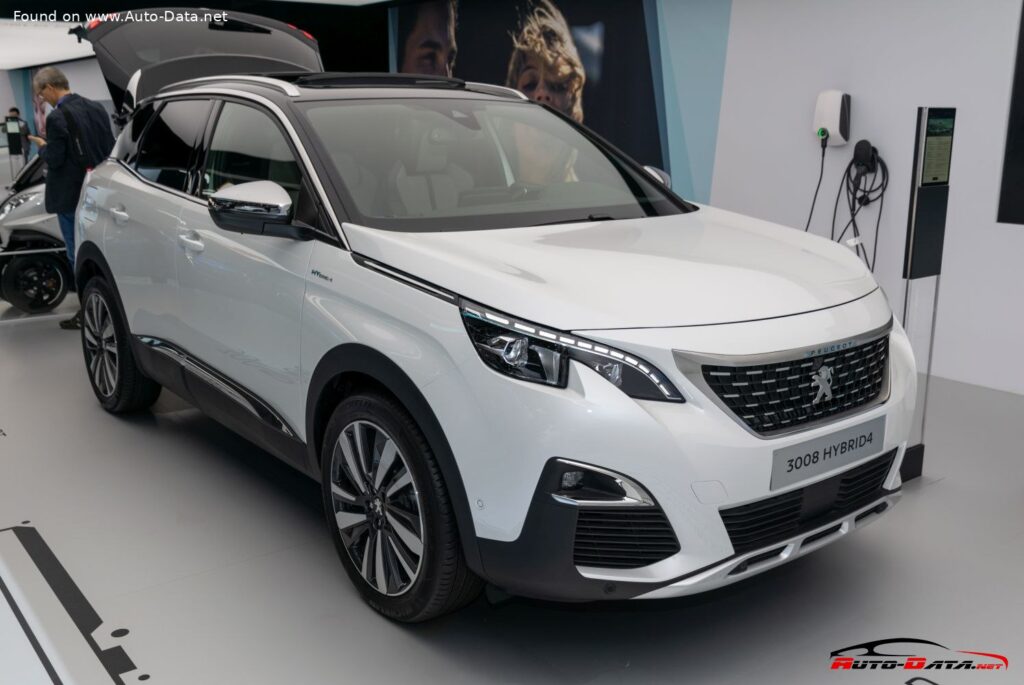
The second-generation Peugeot 3008 represented a radical shift in design philosophy. Moving away from the somewhat ambiguous crossover styling of its predecessor, the Peugeot 3008 II (Phase I, 2016) adopted a distinctly SUV-like silhouette, characterized by sharp lines, a bold front grille, and signature LED lighting elements. Its muscular proportions and elevated stance, with a ground clearance of 8.62 inches (219 mm), gave it a commanding presence on the road. The body type was a 5-door SUV, offering seating for five occupants and easy access to both front and rear compartments.
Inside, the 3008 II introduced Peugeot’s innovative ‘i-Cockpit’ design, which became a hallmark of the brand’s modern vehicles. This setup featured a compact steering wheel, a configurable 12.3-inch digital instrument cluster positioned above the wheel, and an 8-inch touchscreen infotainment system centrally mounted on the dashboard. The interior was praised for its upscale materials, premium feel, and thoughtful ergonomics, challenging established premium brands. The 5-seat configuration provided ample space for passengers, while the cargo area was highly versatile. Minimum trunk space stood at 18.36 cu. ft. (520 liters), which could expand significantly to 52.34 cu. ft. (1482 liters) with the rear seats folded down, making it practical for families and active lifestyles.
Chassis and Safety
The 3008 II was built on the PSA Group’s EMP2 platform, known for its modularity and contributing to a lighter kerb weight of 2899.08 lbs. (1315 kg) for this specific variant. This platform also allowed for sophisticated suspension tuning, featuring an independent McPherson strut setup with coil springs and an anti-roll bar at the front, and a semi-independent arrangement with coil springs at the rear. This configuration provided a comfortable ride while maintaining composed handling. Stopping power was managed by ventilated discs at the front and disc brakes at the rear, supported by an Anti-lock Braking System (ABS) for enhanced safety. Electric power steering offered precise control and ease of maneuverability, particularly in urban settings, with a minimum turning circle of 35.01 ft. (10.67 m).
Technical Specifications
| Category | Specification |
|---|---|
| Brand | Peugeot |
| Model | 3008 II (Phase I, 2016) |
| Type (Engine) | 1.6 BlueHDi (120 Hp) Automatic S&S |
| Start of Production | 2016 |
| End of Production | 2018 |
| Body Type | SUV |
| Seats | 5 |
| Doors | 5 |
| Fuel Type | Diesel |
| Engine Layout | Front, Transverse |
| Engine Model/Code | BHZ DV6FC |
| Engine Displacement | 1.6 liters (1560 cm3 / 95.2 cu. in.) |
| Number of Cylinders | 4, Inline |
| Number of Valves per Cylinder | 2 |
| Power | 120 Hp @ 3500 rpm |
| Torque | 221.27 lb.-ft. (300 Nm) @ 1750 rpm |
| Acceleration 0-60 mph | 11 seconds |
| Maximum Speed | 114.95 mph (185 km/h) |
| Fuel Consumption (Combined) | 53.5 – 56 US mpg (4.2-4.4 l/100 km) |
| CO2 Emissions | 108-114 g/km |
| Emission Standard | Euro 6 |
| Drivetrain Architecture | Front-wheel drive |
| Gearbox | 6 gears, automatic transmission |
| Kerb Weight | 2899.08 lbs. (1315 kg) |
| Max. Weight | 4387.2 lbs. (1990 kg) |
| Max Load | 1488.12 lbs. (675 kg) |
| Fuel Tank Capacity | 14 US gallons (53 liters) |
| Trunk Space (Min/Max) | 18.36 – 52.34 cu. ft. (520 – 1482 liters) |
| Length | 175.08 inches (4447 mm) |
| Width | 72.48 inches (1841 mm) |
| Height | 63.58 inches (1615 mm) |
| Wheelbase | 105.31 inches (2675 mm) |
| Ground Clearance | 8.62 inches (219 mm) |
| Tires Size | 215/65 R17; 225/55 R18; 205/55 R19 |
| Front Suspension | Independent, McPherson with coil spring and anti-roll bar |
| Rear Suspension | Semi-independent, coil spring |
| Front Brakes | Ventilated discs |
| Rear Brakes | Disc |
| Assisting Systems | ABS (Anti-lock braking system) |
| Power Steering | Electric Steering |
| Permitted Trailer Load with Brakes (12%) | 2866.01 lbs. (1300 kg) |
Legacy & Market Impact
The Peugeot 3008 II (Phase I, 2016), particularly with its efficient 1.6 BlueHDi engine and automatic transmission, carved out a significant legacy for Peugeot in the European market. Its bold redesign from a less defined crossover to a true SUV was a masterstroke, capturing the surging consumer demand for utility vehicles with distinctive styling. This strategic shift was immensely successful, leading to the 3008 being crowned the European Car of the Year in 2017, a testament to its compelling blend of design, practicality, and driving dynamics.
In its primary European market, the 3008 II faced formidable competition from established players such as the Nissan Qashqai, Volkswagen Tiguan, Renault Kadjar, and Skoda Karoq. However, Peugeot managed to differentiate the 3008 through its avant-garde interior (the i-Cockpit), perceived uplift in material quality, and a driving experience that balanced comfort with engaging handling. The 1.6 BlueHDi variant, with its excellent fuel economy and low CO2 emissions, was particularly well-suited to European driving conditions and taxation structures, making it a popular choice among private buyers and fleet operators alike. It offered a compelling blend of low running costs, sufficient performance for everyday use, and a refined driving experience, especially when paired with the automatic gearbox.
The success of the 3008 II not only boosted Peugeot’s sales and profitability but also solidified its reputation as a brand capable of producing stylish, high-quality, and technologically advanced vehicles that could compete effectively with both mainstream and semi-premium rivals. It spearheaded a design renaissance for Peugeot, influencing subsequent models and proving that the brand could innovate and lead in competitive segments. While this specific diesel configuration was never intended for the US market, its impact in Europe underscored the global diversity of automotive preferences and the importance of region-specific powertrain offerings. The 3008 II remains a benchmark for what a modern compact SUV should offer in terms of design, efficiency, and user experience.