Peugeot 3008 II (Phase I, 2016) 1.6 BlueHDi (120 Hp) S&S: A European Crossover Benchmark
The Peugeot 3008 II (Phase I, 2016) 1.6 BlueHDi (120 Hp) S&S represents a significant evolution in Peugeot’s design philosophy and market strategy, particularly within the highly competitive compact SUV segment in Europe. Launched in 2016, this second-generation 3008 marked a radical departure from its MPV-like predecessor, embracing a more assertive, SUV-oriented stance that resonated strongly with European consumers. While never officially sold in the United States, the 3008 II quickly established itself as a critical model for the French automaker, earning widespread acclaim for its distinctive styling, advanced technology, and impressive efficiency, particularly with its diesel powertrain options like the 1.6 BlueHDi. This specific variant, produced from 2016 to 2018, embodied Peugeot’s commitment to delivering a premium experience in a mainstream package, blending practicality with a touch of upscale sophistication.
The Rebirth of the 3008: A Design Revolution
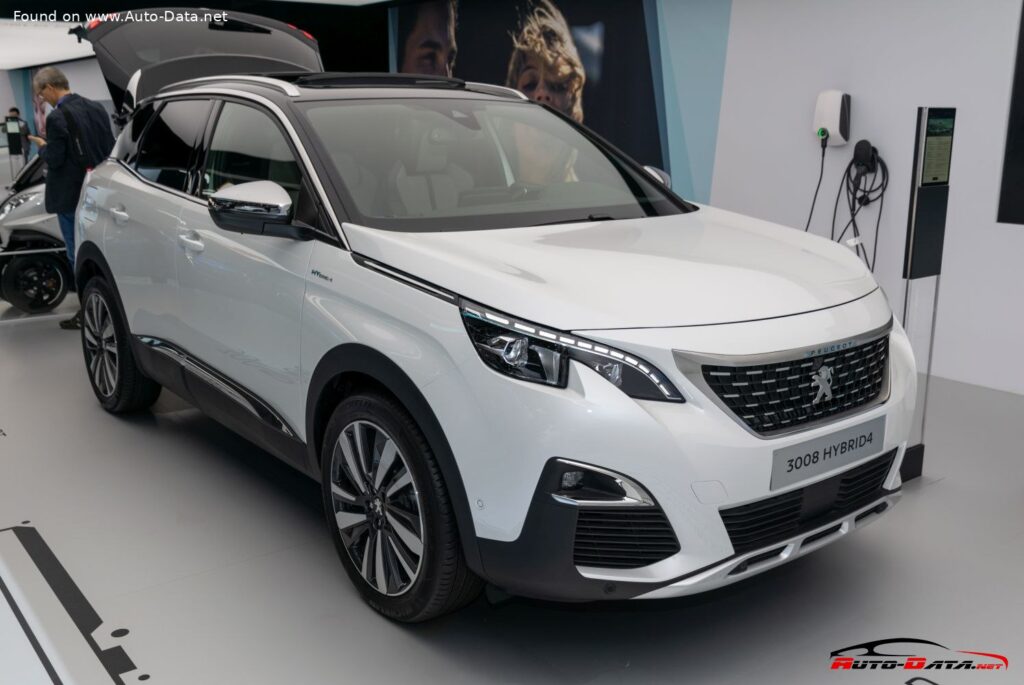
The first generation Peugeot 3008, while practical, was often criticized for its somewhat bland, crossover-MPV styling. With the Peugeot 3008 II (Phase I, 2016) 1.6 BlueHDi (120 Hp) S&S, Peugeot executed a complete overhaul, transforming the vehicle into a bona fide compact SUV. The design language adopted for the 3008 II was bold and futuristic, characterized by sharp lines, a prominent grille, and distinctive LED lighting signatures. This aggressive yet elegant aesthetic was a key factor in its immediate success, helping it stand out in a crowded market dominated by more conventionally styled rivals. The vehicle’s elevated ground clearance and robust cladding further cemented its SUV credentials, appealing to buyers looking for a vehicle with both urban sophistication and a hint of adventure.
Inside, the 3008 II introduced Peugeot’s second-generation i-Cockpit, a revolutionary cabin concept designed to enhance driver engagement and comfort. This setup featured a small, flattened steering wheel, a configurable 12.3-inch digital instrument cluster, and a central touchscreen infotainment system. The high-quality materials and thoughtful ergonomics contributed to an interior ambiance that felt genuinely premium, often compared favorably to vehicles from higher segments. The combination of striking exterior design and an innovative, upscale interior positioned the 3008 II as a trendsetter in its class.
Engine and Performance: Efficient Diesel Power
At the heart of the Peugeot 3008 II (Phase I, 2016) 1.6 BlueHDi (120 Hp) S&S lies a highly efficient 1.6-liter BlueHDi diesel engine, a staple of Peugeot’s European powertrain lineup. This inline four-cylinder engine, designated BHZ DV6FC, delivers a respectable 120 horsepower at 3500 rpm, coupled with a robust 221.27 lb.-ft. of torque available from a low 1750 rpm. This torque-rich delivery ensures a strong, responsive feel in everyday driving, making it well-suited for both city commutes and highway cruising across Europe.
The engine’s performance figures reflect its balanced nature: acceleration from 0 to 60 mph is achieved in a brisk 10.6 seconds, with a top speed of 117.44 mph. These numbers, while not outright sporty, are more than adequate for a family-oriented compact SUV. Crucially, the BlueHDi technology, combined with a standard Start & Stop system and a particulate filter, ensures remarkable fuel economy and low emissions. The combined fuel consumption is rated between 54.7 and 58.8 US mpg (4.0-4.3 l/100 km), with CO2 emissions ranging from 104-111 g/km, allowing it to comfortably meet stringent Euro 6 emission standards. This efficiency was a major draw for European consumers, where fuel costs and environmental regulations play a significant role in purchasing decisions. Power is sent to the front wheels via a smooth-shifting 6-speed manual transmission, emphasizing driver control and further aiding efficiency.
Design and Features: Form Meets Function
The body type of the Peugeot 3008 II is a five-door SUV, designed to accommodate five occupants comfortably. Its dimensions – 175.08 inches in length, 72.48 inches in width (82.6 inches including mirrors), and 63.58 inches in height – contribute to a commanding road presence while maintaining maneuverability. The generous 105.31-inch wheelbase provides ample interior space for both passengers and cargo.
The interior packaging is highly practical. The trunk offers a substantial 18.36 cubic feet (520 liters) of cargo space with the rear seats up, expanding to an impressive 52.34 cubic feet (1482 liters) when the rear seats are folded down. This flexibility makes the 3008 II a versatile choice for families and those needing to transport larger items. The SUV also boasts a healthy 8.62-inch ground clearance, providing confidence over varied terrain, and an impressive turning circle of just 35.01 feet, aiding urban navigation.
Key features for the 2016 model year included a strong emphasis on safety and driver assistance, standard with an Anti-lock Braking System (ABS) and electric power steering. The suspension setup features an independent McPherson strut system with coil springs and an anti-roll bar at the front, paired with a semi-independent coil spring rear suspension, striking a good balance between ride comfort and handling dynamics. Braking is handled by ventilated discs at the front and solid discs at the rear, providing confident stopping power.
Technical Specifications
| Category | Specification | US Equivalent (where applicable) |
|---|---|---|
| General Information | ||
| Brand | Peugeot | |
| Model | 3008 | |
| Generation | 3008 II (Phase I, 2016) | |
| Type (Engine) | 1.6 BlueHDi (120 Hp) S&S | |
| Start of production | 2016 year | |
| End of production | 2018 year | |
| Powertrain Architecture | Internal Combustion engine | |
| Body type | SUV | |
| Seats | 5 | |
| Doors | 5 | |
| Performance Specs | ||
| Fuel consumption (economy) – urban | 4.7-4.9 l/100 km | 50 – 48 US mpg |
| Fuel consumption (economy) – extra urban | 3.5-3.9 l/100 km | 67.2 – 60.3 US mpg |
| Fuel consumption (economy) – combined | 4.0-4.3 l/100 km | 58.8 – 54.7 US mpg |
| CO2 emissions | 104-111 g/km | |
| Fuel Type | Diesel | |
| Acceleration 0 – 100 km/h | 11.2-12.4 sec | |
| Acceleration 0 – 62 mph | 11.2-12.4 sec | |
| Acceleration 0 – 60 mph (Calculated) | 10.6 sec | |
| Maximum speed | 189 km/h | 117.44 mph |
| Emission standard | Euro 6 | |
| Weight-to-power ratio | 10.8 kg/Hp | 92.3 Hp/tonne |
| Weight-to-torque ratio | 4.3 kg/Nm | 230.8 Nm/tonne |
| Engine Specs | ||
| Power | 120 Hp @ 3500 rpm. | |
| Power per liter | 76.9 Hp/l | |
| Torque | 300 Nm @ 1750 rpm. | 221.27 lb.-ft. @ 1750 rpm. |
| Engine layout | Front, Transverse | |
| Engine Model/Code | BHZ DV6FC | |
| Engine displacement | 1560 cm3 | 1.6 Liters / 95.2 cu. in. |
| Number of cylinders | 4 | |
| Engine configuration | Inline | |
| Cylinder Bore | 75 mm | 2.95 in. |
| Piston Stroke | 88.3 mm | 3.48 in. |
| Number of valves per cylinder | 2 | |
| Fuel injection system | Diesel Commonrail | |
| Engine aspiration | Turbocharger, Intercooler | |
| Engine oil capacity | 3.75 l | 3.96 US qt |
| Engine systems | Start & Stop System, Particulate filter | |
| Space, Volume and Weights | ||
| Kerb Weight | 1300 kg | 2866.01 lbs. |
| Max. weight | 1970 kg | 4343.11 lbs. |
| Max load | 670 kg | 1477.1 lbs. |
| Trunk (boot) space – minimum | 520 l | 18.36 cu. ft. |
| Trunk (boot) space – maximum | 1482 l | 52.34 cu. ft. |
| Fuel tank capacity | 53 l | 14 US gal |
| Permitted trailer load with brakes (12%) | 1500 kg | 3306.93 lbs. |
| Dimensions | ||
| Length | 4447 mm | 175.08 in. |
| Width | 1841 mm | 72.48 in. |
| Width with mirrors folded | 1906 mm | 75.04 in. |
| Width including mirrors | 2098 mm | 82.6 in. |
| Height | 1615 mm | 63.58 in. |
| Wheelbase | 2675 mm | 105.31 in. |
| Front track | 1579-1601 mm | 62.17 – 63.03 in. |
| Rear (Back) track | 1587-1610 mm | 62.48 – 63.39 in. |
| Front overhang | 923 mm | 36.34 in. |
| Rear overhang | 849 mm | 33.43 in. |
| Ride height (ground clearance) | 219 mm | 8.62 in. |
| Minimum turning circle (turning diameter) | 10.67 m | 35.01 ft. |
| Approach angle | 20° | |
| Departure angle | 29° | |
| Drivetrain, Brakes and Suspension Specs | ||
| Drivetrain Architecture | The Internal combustion engine (ICE) drives the front wheels of the vehicle. | |
| Drive wheel | Front wheel drive | |
| Number of gears and type of gearbox | 6 gears, manual transmission | |
| Front suspension | Independent, type McPherson with coil spring and anti-roll bar | |
| Rear suspension | Semi-independent, coil spring | |
| Front brakes | Ventilated discs | |
| Rear brakes | Disc | |
| Assisting systems | ABS (Anti-lock braking system) | |
| Steering type | Steering rack and pinion | |
| Power steering | Electric Steering | |
| Tires size | 215/65 R17; 225/55 R18; 205/55 R19 | |
| Wheel rims size | 17; 18; 19 | |
Legacy and Market Impact in Europe
The Peugeot 3008 II (Phase I, 2016) 1.6 BlueHDi (120 Hp) S&S, and indeed the entire second-generation 3008 lineup, had a profound impact on Peugeot’s standing in the European automotive market. It was a critical model that spearheaded the brand’s move upmarket, challenging established players and elevating Peugeot’s reputation for design, quality, and technology. Its striking design and innovative i-Cockpit interior were widely praised, setting new benchmarks for aesthetics and ergonomics in the compact SUV class.
The 3008 II’s success was immediately recognized, culminating in it being crowned the European Car of the Year in 2017. This prestigious award underscored its significant achievements across various criteria, including design, comfort, safety, economy, handling, performance, functionality, and environmental requirements. For Peugeot, it was a testament to their bold strategy and a clear signal that they could compete effectively against premium European and Asian rivals.
In its primary markets, the 3008 II competed fiercely with popular models such as the Nissan Qashqai, Volkswagen Tiguan, Renault Kadjar, and Hyundai Tucson. What set the Peugeot apart was its unique blend of expressive styling, a genuinely distinct interior experience, and highly efficient powertrains like the 1.6 BlueHDi. This diesel variant, in particular, offered a compelling proposition for European buyers seeking a balance of strong torque, low running costs, and reduced environmental impact, especially for those who covered significant mileage.
The 3008 II’s legacy is one of transformation. It demonstrated Peugeot’s capability to reinvent itself and successfully navigate the global shift towards SUVs. Its success not only boosted Peugeot’s sales and brand image but also influenced subsequent models in the brand’s lineup, establishing a new design language and technological direction. Even after its initial production phase, the 3008 II continued to be a strong seller and a highly regarded vehicle, cementing its place as a pivotal model in Peugeot’s modern history and a benchmark in the European compact SUV segment.