Introduction: The Peugeot 3008 II (Phase II, 2020) 1.5 BlueHDi Automatic
The Peugeot 3008 II (Phase II, 2020) represents a significant refresh of Peugeot’s highly successful second-generation compact SUV, a model line that has garnered critical acclaim and strong sales in its primary European and international markets. While Peugeot vehicles are not widely available in the United States, the brand maintains a formidable presence globally, particularly in Europe, where the 3008 stands as a key competitor in the fiercely contested compact crossover segment. This particular iteration, produced from September 2020 to September 2023, features a refined 1.5-liter BlueHDi diesel engine paired with an efficient automatic transmission, emphasizing fuel economy and reduced emissions without compromising on modern SUV practicality and style.
The 3008 II (Phase II) builds upon the foundation of its award-winning predecessor, introducing updated styling cues, enhanced technology, and further powertrain refinements to keep it competitive. Positioned as a stylish and technologically advanced option for families and individuals seeking a versatile daily driver, this model offers a compelling blend of French design flair, a sophisticated interior, and responsible performance. Its role in the European market is critical, serving as a pillar of Peugeot’s strategy to capture market share against established rivals from Germany, Japan, and Korea.
Engine & Performance: The Efficient 1.5 BlueHDi Powertrain
At the heart of this Peugeot 3008 II (Phase II, 2020) variant is the 1.5-liter BlueHDi diesel engine, a testament to Peugeot’s commitment to advanced diesel technology. This inline four-cylinder unit, designated with engine code YHZ DV5RC, features a common rail fuel injection system and is boosted by a turbocharger with an intercooler, delivering a respectable 131 horsepower at 3750 rpm. Despite its relatively modest displacement of 1499 cubic centimeters (91.47 cubic inches), the engine generates a robust 221.27 lb.-ft. (300 Nm) of torque, available from a low 1750 rpm. This ample low-end torque is characteristic of modern diesels and contributes significantly to the vehicle’s responsive feel and ease of driving, particularly in urban environments and during highway cruising.
Power is channeled to the front wheels through a sophisticated 8-speed automatic transmission, which is optimized for smooth shifts and maximum efficiency. This powertrain configuration allows the 3008 to accelerate from 0 to 60 mph in a calculated 10.9 seconds (or 0-100 km/h in 11.5 seconds) and reach a top speed of 116.82 mph (188 km/h). While not a performance-oriented SUV, these figures are more than adequate for everyday driving needs.
Where the 1.5 BlueHDi truly shines is in its fuel economy and environmental performance. Adhering to the stringent Euro 6d-ISC-FCM emission standard, it incorporates a Start & Stop system and a particulate filter to minimize emissions. The combined fuel consumption (WLTP cycle) ranges from an impressive 39.2 to 48 US mpg (4.9-6 liters per 100 km), with CO2 emissions between 128-157 g/km. These figures highlight the engineering prowess behind modern diesel engines, offering a compelling blend of power, efficiency, and environmental responsibility, especially pertinent in markets where diesel remains a popular and practical choice. The vehicle also features a 17-liter (4.49 US gal) AdBlue tank, essential for its selective catalytic reduction (SCR) system to reduce nitrogen oxide emissions.
Design & Features: Modern Aesthetics and Practicality
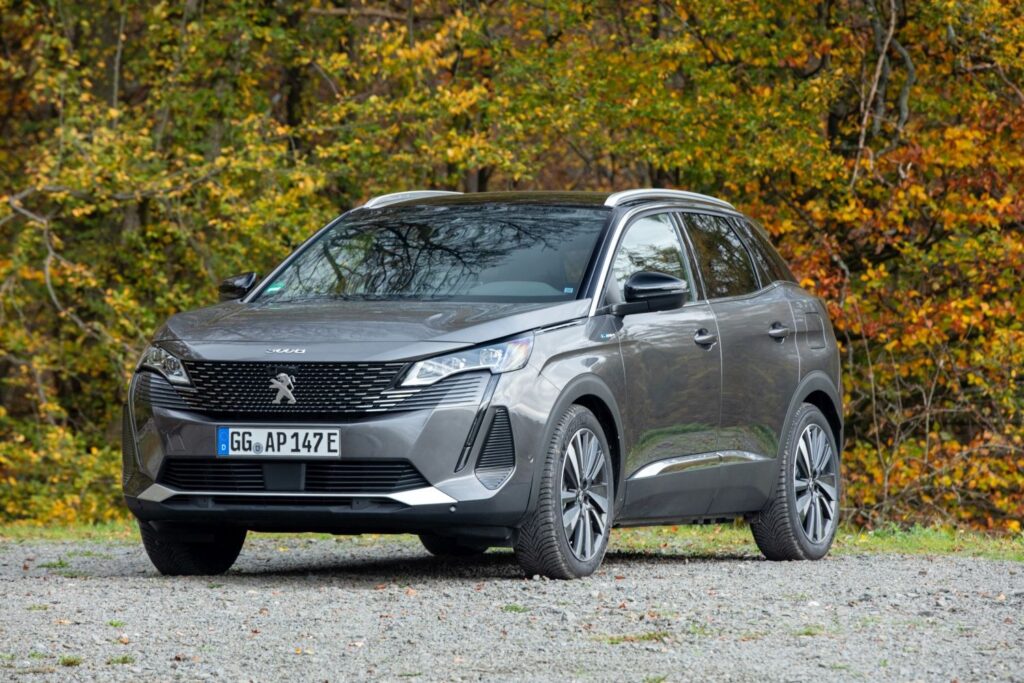
The Peugeot 3008 II (Phase II, 2020) is a 5-door, 5-seat SUV that masterfully blends contemporary design with ergonomic functionality. Its exterior refresh brought a more assertive front fascia, featuring a frameless grille, redesigned LED headlights with distinctive “fang” daytime running lights, and updated taillights. The overall silhouette remains sleek and dynamic, giving the 3008 a distinctive presence that sets it apart from many of its segment rivals. With a length of 175.08 inches (4447 mm), a width of 72.48 inches (1841 mm), and a height of 63.94 inches (1624 mm), it strikes a balance between urban maneuverability and interior spaciousness. The generous wheelbase of 105.31 inches (2675 mm) contributes to both passenger comfort and stable handling.
Inside, the 3008 continues to impress with Peugeot’s signature i-Cockpit layout, which features a compact steering wheel, a configurable 12.3-inch digital instrument cluster, and a central touchscreen infotainment system. This driver-focused design aims to provide an intuitive and engaging driving experience. Seating for five adults is comfortable, and the interior materials and finish are generally of a high standard, contributing to an upscale feel.
Practicality is a strong suit for the 3008. The trunk offers a minimum capacity of 18.36 cubic feet (520 liters), expanding to an ample 52.34 cubic feet (1482 liters) with the rear seats folded down, making it suitable for family trips or hauling larger items. The fuel tank capacity is 14 US gallons (53 liters), providing a decent range given the vehicle’s efficiency. With a ground clearance of 8.62 inches (219 mm) and respectable approach (20°) and departure (29°) angles, the 3008 offers more capability than many of its urban-focused competitors, even featuring a wading depth of 27.56 inches (700 mm). Assisting systems like ABS (Anti-lock braking system) are standard, ensuring safety and control. The vehicle rides on an independent McPherson front suspension and a semi-independent rear suspension, both with coil springs, designed to offer a comfortable yet composed ride.
Technical Specifications: Peugeot 3008 II (Phase II, 2020) 1.5 BlueHDi (131 Hp) Automatic
General Information |
|
| Brand | Peugeot |
| Model | 3008 |
| Generation | 3008 II (Phase II, 2020) |
| Type (Engine) | 1.5 BlueHDi (131 Hp) Automatic |
| Start of Production | September, 2020 |
| End of Production | September, 2023 |
| Powertrain Architecture | Internal Combustion engine |
| Body type | SUV |
| Seats | 5 |
| Doors | 5 |
Performance Specifications |
|
| Combined Fuel Consumption (WLTP) | 4.9-6 l/100 km (48 – 39.2 US mpg) |
| CO2 emissions (WLTP) | 128-157 g/km |
| Fuel Type | Diesel |
| Acceleration 0 – 60 mph (Calculated) | 10.9 sec |
| Acceleration 0 – 100 km/h | 11.5 sec |
| Maximum speed | 116.82 mph (188 km/h) |
| Emission standard | Euro 6d-ISC-FCM |
| Weight-to-power ratio | 10.9 kg/Hp (91.7 Hp/tonne) |
| Weight-to-torque ratio | 4.8 kg/Nm (209.9 Nm/tonne) |
Engine Specifications |
|
| Power | 131 Hp @ 3750 rpm |
| Power per liter | 87.4 Hp/l |
| Torque | 221.27 lb.-ft. (300 Nm) @ 1750 rpm |
| Engine layout | Front, Transverse |
| Engine Model/Code | YHZ DV5RC |
| Engine displacement | 1499 cm3 (91.47 cu. in.) |
| Number of cylinders | 4 |
| Engine configuration | Inline |
| Number of valves per cylinder | 4 |
| Fuel injection system | Diesel Commonrail |
| Engine aspiration | Turbocharger, Intercooler |
| Engine oil capacity | 4 l (4.23 US qt) |
| Engine systems | Start & Stop System, Particulate filter |
Space, Volume and Weights |
|
| Kerb Weight | 3150.41 lbs. (1429 kg) |
| Max. weight | 4409.25 lbs. (2000 kg) |
| Max load | 1258.84 lbs. (571 kg) |
| Trunk (boot) space – minimum | 18.36 cu. ft. (520 l) |
| Trunk (boot) space – maximum | 52.34 cu. ft. (1482 l) |
| Fuel tank capacity | 14 US gal (53 l) |
| AdBlue tank | 4.49 US gal (17 l) |
| Permitted trailer load with brakes (12%) | 2866.01 lbs. (1300 kg) |
| Permitted towbar download | 154.32 lbs. (70 kg) |
Dimensions |
|
| Length | 175.08 in. (4447 mm) |
| Width | 72.48 in. (1841 mm) |
| Width with mirrors folded | 75.04 in. (1906 mm) |
| Width including mirrors | 82.6 in. (2098 mm) |
| Height | 63.94 in. (1624 mm) |
| Wheelbase | 105.31 in. (2675 mm) |
| Front track | 62.17 – 63.03 in. (1579-1601 mm) |
| Rear (Back) track | 62.48 – 63.39 in. (1587-1610 mm) |
| Front overhang | 36.34 in. (923 mm) |
| Rear overhang | 33.43 in. (849 mm) |
| Ride height (ground clearance) | 8.62 in. (219 mm) |
| Minimum turning circle (turning diameter) | 35.1 ft. (10.7 m) |
| Approach angle | 20° |
| Departure angle | 29° |
| Wading depth | 27.56 in. (700 mm) |
Drivetrain, Brakes and Suspension Specifications |
|
| Drivetrain Architecture | The Internal combustion engine (ICE) drives the front wheels of the vehicle. |
| Drive wheel | Front wheel drive |
| Number of gears and type of gearbox | 8 gears, automatic transmission |
| Front suspension | Independent, type McPherson with coil spring and anti-roll bar |
| Rear suspension | Semi-independent, coil spring |
| Front brakes | Ventilated discs |
| Rear brakes | Disc |
| Assisting systems | ABS (Anti-lock braking system) |
| Steering type | Steering rack and pinion |
| Power steering | Electric Steering |
| Tire sizes | 215/65 R17 103V; 225/55 R18 102V; 205/55 R19 97V |
| Wheel rims size | 17; 18; 19 |
Legacy & Market Impact: The Enduring Appeal of the Peugeot 3008 II (Phase II, 2020)
The Peugeot 3008, particularly its second generation, has carved out a significant niche in the highly competitive European compact SUV market. The original second-generation 3008 was crowned European Car of the Year in 2017, a testament to its innovative design, practical interior, and engaging driving dynamics. The Phase II refresh, including the Peugeot 3008 II (Phase II, 2020) model, sought to maintain and enhance this reputation, ensuring its continued relevance against a wave of new and updated rivals.
In its primary markets, the 3008 competes head-on with a diverse array of vehicles such as the Volkswagen Tiguan, Nissan Qashqai, Hyundai Tucson, Kia Sportage, Ford Kuga (Escape in North America), and Skoda Karoq. Against these formidable opponents, the 3008 distinguishes itself with its bold, sculptural styling – a marked departure from the more conservative designs of some competitors. Its distinctive i-Cockpit interior also provides a unique selling proposition, offering a futuristic and driver-centric environment that has resonated with many buyers.
The 1.5 BlueHDi engine variant, in particular, plays a crucial role in the 3008’s market strategy by offering exceptional fuel efficiency and low running costs, which are highly valued by European consumers. This focus on efficiency, combined with its strong torque delivery and refined automatic transmission, makes it an attractive option for both city driving and long-distance journeys. Its compliance with the latest Euro 6d emissions standards also ensures its long-term viability in an increasingly regulated automotive landscape.
Overall, the Peugeot 3008 II (Phase II, 2020) with the 1.5 BlueHDi automatic powertrain is more than just a competent compact SUV; it is a statement of Peugeot’s modern design philosophy and engineering capability. It demonstrates how a brand can successfully blend distinctive aesthetics with practical functionality, advanced technology, and environmental responsibility. Its continued success in Europe and other global markets solidifies its legacy as a pivotal model for Peugeot, showcasing the brand’s ability to innovate and compete effectively on the international stage.