Peugeot 3008 II (Phase II, 2020) 1.6 (225 Hp) Plug-in Hybrid e-EAT8
The Peugeot 3008 II (Phase II, 2020) 1.6 (225 Hp) Plug-in Hybrid e-EAT8 represents a significant evolution in Peugeot’s compact SUV offering, specifically targeting the burgeoning European market for electrified vehicles. Launched in September 2020 as a refreshed version of the second-generation 3008, this model solidified Peugeot’s commitment to combining stylish design with advanced, efficient powertrains. Produced until September 2023, the Phase II update brought a sharpened aesthetic, enhanced technology, and, crucially, a highly competitive plug-in hybrid electric vehicle (PHEV) powertrain. Positioned as a versatile five-door, five-seat SUV, it aimed to offer the best of both worlds: the practicality and elevated driving position of an SUV, coupled with the environmental benefits and lower running costs of a plug-in hybrid. Its introduction was a strategic move by Peugeot to meet stringent European emissions regulations while providing consumers with a compelling option that blends performance, fuel economy, and a substantial all-electric range for daily commuting.
Engine and Performance of the Peugeot 3008 II (Phase II, 2020)
At the heart of the Peugeot 3008 II (Phase II, 2020) 1.6 (225 Hp) Plug-in Hybrid e-EAT8 lies a sophisticated powertrain architecture that seamlessly integrates a conventional internal combustion engine with an electric motor. The primary gasoline engine is a 1.6-liter (1598 cm³ or 97.52 cu. in.) turbocharged inline four-cylinder unit, designated EP6FADTXHPD. This engine alone produces a robust 181 horsepower at 6000 rpm and 221.27 lb.-ft. of torque at 3000 rpm. It features direct injection, a turbocharger with an intercooler, and a DOHC valvetrain, ensuring both efficiency and responsiveness.
Complementing the gasoline engine is an electric motor strategically placed between the combustion engine and the transmission. This electric motor contributes an additional 110 horsepower at 2500 rpm and a substantial 236.02 lb.-ft. of torque, available from a low 500 rpm up to 2500 rpm. The combined system output for the Peugeot 3008 II (Phase II, 2020) PHEV is an impressive 225 horsepower and a total system torque of 265.52 lb.-ft. This potent combination is managed by an advanced 8-speed e-EAT automatic transmission, which ensures smooth power delivery to the front wheels.
Performance figures reflect this blend of power and efficiency. The vehicle can accelerate from 0 to 60 mph in a swift 8.3 seconds, with a maximum speed reaching 139.81 mph. For its class, these are competitive numbers, allowing for confident overtaking and comfortable highway cruising. The plug-in hybrid system is powered by a lithium-ion battery pack with a gross capacity of 13.2 kWh and a net usable capacity of 10.4 kWh, positioned efficiently below the floor and under the rear seats. This battery enables a significant all-electric range of 36.66 to 38.53 miles (WLTP cycle), allowing many drivers to complete their daily commutes solely on electric power. In electric-only mode, the 3008 PHEV can reach a top speed of 83.89 mph.
Fuel economy is a standout feature, with a combined WLTP rating of 168 – 156.8 US mpg, translating to exceptionally low CO2 emissions of 31-34 g/km. Average energy consumption is rated at 24.94 – 25.91 kWh/100 mi, or an impressive 135 – 130 MPGe, underscoring its environmental credentials and compliance with Euro 6d emission standards. The drivetrain architecture is front-wheel drive, with both the ICE and electric motor driving the front wheels, capable of operating in full electric, hybrid, or charge-sustaining modes.
Design and Features
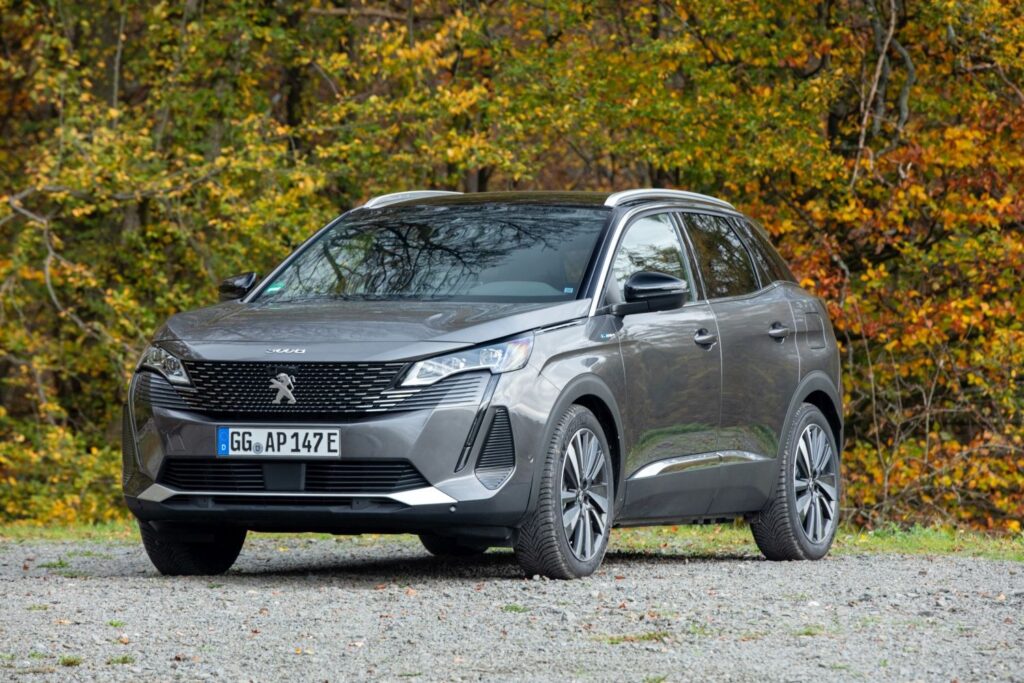
The Peugeot 3008 II (Phase II, 2020) SUV received a significant aesthetic refresh that enhanced its modern and distinctive appearance. As a five-door, five-seat compact SUV, it maintains a commanding road presence with its bold proportions and sharp lines. The Phase II update introduced a new frameless grille, redesigned headlights with “fang-like” daytime running lights, and updated taillights, giving it a more aggressive and contemporary look. Its dimensions are well-suited for both urban environments and longer journeys, measuring 175.08 inches in length, 72.48 inches in width (82.6 inches including mirrors), and 63.94 inches in height, with a wheelbase of 105.31 inches. The ground clearance of 8.62 inches further solidifies its SUV credentials, offering good visibility and capability over varied terrain.
Inside, the 3008 continued to feature Peugeot’s distinctive “i-Cockpit” design, which includes a compact steering wheel, a high-mounted 12.3-inch digital instrument cluster, and a central infotainment touchscreen (updated to a larger size in the Phase II). This ergonomic layout aims to enhance driver engagement and reduce distractions. While not explicitly detailed in the specifications, the 2020 refresh typically brought updated trim materials, advanced connectivity options, and a suite of driver-assistance systems. Standard features would include an Anti-lock Braking System (ABS), and modern safety expectations would imply additional systems like lane-keeping assist, adaptive cruise control, and blind-spot monitoring.
Practicality is a key strength of the 3008. It offers a minimum trunk (boot) space of 13.95 cu. ft. with the rear seats up, expanding to a generous 47.92 cu. ft. when the rear seats are folded down, providing ample cargo capacity for families or adventurers. The fuel tank capacity is 11.36 US gallons, which, combined with the electric range, offers excellent overall touring capability. The vehicle’s kerb weight stands at 3886.75 lbs., with a maximum permissible weight of 5004.49 lbs., allowing for a max load of 1117.74 lbs. It also boasts a permitted trailer load with brakes of 2755.78 lbs., making it a versatile option for light towing needs. The suspension setup features an independent McPherson type at the front and a semi-independent, coil spring system at the rear, tuned for a comfortable yet engaging ride. Stopping power is provided by ventilated discs at the front and disc brakes at the rear, supported by ABS.
Technical Specifications
| Category | Specification | Value |
|---|---|---|
General Information |
||
| Brand | Peugeot | |
| Model | 3008 | |
| Generation | 3008 II (Phase II, 2020) | |
| Type (Engine) | 1.6 (225 Hp) Plug-in Hybrid e-EAT8 | |
| Start of production | September, 2020 year | |
| End of production | September, 2023 year | |
| Powertrain Architecture | PHEV (Plug-in Hybrid Electric Vehicle) | |
| Body type | SUV | |
| Seats | 5 | |
| Doors | 5 | |
Performance Specs |
||
| Combined fuel consumption (WLTP) | 1.4-1.5 l/100 km | 168 – 156.8 US mpg |
| CO2 emissions (WLTP) | 31-34 g/km | |
| Fuel Type | Petrol / electricity | |
| Acceleration 0 – 60 mph | 8.3 sec | |
| Maximum speed | 225 km/h | 139.81 mph |
| Emission standard | Euro 6d | |
| Weight-to-power ratio | 7.8 kg/Hp, 127.6 Hp/tonne | |
| Weight-to-torque ratio | 4.9 kg/Nm, 204.2 Nm/tonne | |
Electric Cars and Hybrids Specs |
||
| Gross battery capacity | 13.2 kWh | |
| Net (usable) battery capacity | 10.4 kWh | |
| Battery technology | Lithium-ion (Li-Ion) | |
| Battery location | Below the floor, under the rear seats | |
| All-electric range (WLTP) | 59-62 km | 36.66 – 38.53 mi |
| Average Energy consumption (WLTP) | 15.5-16.1 kWh/100 km | 24.94 – 25.91 kWh/100 mi (135 – 130 MPGe) |
| Max speed (electric) | 135 km/h | 83.89 mph |
| Electric motor power | 110 Hp @ 2500 rpm | |
| Electric motor Torque | 320 Nm @ 500-2500 rpm | 236.02 lb.-ft. @ 500-2500 rpm |
| Electric motor location | Between the combustion engine and the transmission | |
| System power | 225 Hp | |
| System torque | 360 Nm | 265.52 lb.-ft. |
Internal Combustion Engine Specs |
||
| Power | 181 Hp @ 6000 rpm | |
| Power per litre | 113.3 Hp/l | |
| Torque | 300 Nm @ 3000 rpm | 221.27 lb.-ft. @ 3000 rpm |
| Engine layout | Front, Transverse | |
| Engine Model/Code | EP6FADTXHPD | |
| Engine displacement | 1598 cm³ | 97.52 cu. in. |
| Number of cylinders | 4 | |
| Engine configuration | Inline | |
| Cylinder Bore | 77 mm | 3.03 in. |
| Piston Stroke | 85.8 mm | 3.38 in. |
| Compression ratio | 10.2:1 | |
| Number of valves per cylinder | 4 | |
| Fuel injection system | Direct injection | |
| Engine aspiration | Turbocharger, Intercooler | |
| Valvetrain | DOHC | |
| Engine oil capacity | 4.25 l | 4.49 US qt |
| Engine systems | Start & Stop System, Particulate filter | |
Space, Volume and Weights |
||
| Kerb Weight | 1763 kg | 3886.75 lbs. |
| Max. weight | 2270 kg | 5004.49 lbs. |
| Max load | 507 kg | 1117.74 lbs. |
| Trunk (boot) space – minimum | 395 l | 13.95 cu. ft. |
| Trunk (boot) space – maximum | 1357 l | 47.92 cu. ft. |
| Fuel tank capacity | 43 l | 11.36 US gal |
| Max. roof load | 80 kg | 176.37 lbs. |
| Permitted trailer load with brakes (12%) | 1250 kg | 2755.78 lbs. |
| Permitted trailer load without brakes | 750 kg | 1653.47 lbs. |
| Permitted towbar download | 70 kg | 154.32 lbs. |
Dimensions |
||
| Length | 4447 mm | 175.08 in. |
| Width | 1841 mm | 72.48 in. |
| Width with mirrors folded | 1906 mm | 75.04 in. |
| Width including mirrors | 2098 mm | 82.6 in. |
| Height | 1624 mm | 63.94 in. |
| Wheelbase | 2675 mm | 105.31 in. |
| Front track | 1579-1601 mm | 62.17 – 63.03 in. |
| Rear (Back) track | 1587-1610 mm | 62.48 – 63.39 in. |
| Front overhang | 923 mm | 36.34 in. |
| Rear overhang | 849 mm | 33.43 in. |
| Ride height (ground clearance) | 219 mm | 8.62 in. |
| Minimum turning circle (turning diameter) | 10.7 m | 35.1 ft. |
| Approach angle | 20° | |
| Departure angle | 29° | |
| Wading depth | 700 mm | 27.56 in. |
Drivetrain, Brakes and Suspension Specs |
||
| Drivetrain Architecture | The Internal combustion engine (ICE) and electric motor drive the front wheels of the car with the ability to work in full electric or mixed mode. | |
| Drive wheel | Front wheel drive | |
| Number of gears and type of gearbox | 8 gears, automatic transmission e-EAT | |
| Front suspension | Independent type McPherson | |
| Rear suspension | Semi-independent, coil spring | |
| Front brakes | Ventilated discs | |
| Rear brakes | Disc | |
| Assisting systems | ABS (Anti-lock braking system) | |
| Steering type | Steering rack and pinion | |
| Power steering | Electric Steering | |
| Tires size | 225/55 R18; 205/55

| |