The Peugeot 3008 II (Phase II, 2020) 1.6 PureTech (181 Hp) Automatic: A European Compact SUV Refined
The
Peugeot 3008 II (Phase II, 2020)
represents a pivotal model in the French automaker’s lineup, particularly within the highly competitive compact SUV segment. Introduced in September 2020 as a significant mid-cycle refresh (Phase II) of the acclaimed second-generation 3008, this vehicle quickly solidified its position as a stylish, technologically advanced, and practical option for European consumers. Unlike many of its rivals, the 3008 II notably eschews a conventional, rugged SUV aesthetic in favor of a more sophisticated, almost futuristic design language, characterized by sharp lines, distinctive lighting signatures, and a premium cabin experience.
While the Peugeot brand has a limited presence in the United States market, the 3008 is a crucial player in Europe and other international markets, where it competes fiercely with established models from Volkswagen, Nissan, Hyundai, and Kia. This particular variant, powered by the efficient 1.6 PureTech engine delivering 181 horsepower and paired with a smooth automatic transmission, exemplifies Peugeot’s strategy of combining attractive design with modern, downsized turbocharged powertrains to offer a compelling blend of performance, fuel efficiency, and reduced emissions. Its production run from September 2020 to July 2021 highlights its role as an updated offering before further evolutions in the model’s lifecycle.
Engine & Performance of the Peugeot 3008 II (Phase II, 2020)
At the heart of this particular
Peugeot 3008 II (Phase II, 2020)
model is the 1.6-liter PureTech turbocharged inline-four gasoline engine, a powerplant renowned for its balance of spirited performance and commendable efficiency. With a displacement of 1598 cubic centimeters (97.52 cubic inches), this compact engine punches above its weight, delivering a robust 181 horsepower at 5500 rpm. This power output, combined with a healthy torque figure of 250 Newton-meters (184.39 lb.-ft.) available from a low 1750 rpm, ensures responsive acceleration and confident overtaking maneuvers. The engine’s “PureTech” designation signifies Peugeot’s commitment to advanced gasoline engine technology, incorporating direct fuel injection and a turbocharger with an intercooler to optimize combustion and boost performance while adhering to stringent emission standards like Euro 6d-ISC-FCM.
Power is seamlessly delivered to the front wheels via a sophisticated 8-speed automatic transmission, which contributes significantly to both the driving dynamics and the vehicle’s fuel economy. This transmission is expertly calibrated to provide smooth shifts and keep the engine within its optimal powerband. The vehicle’s performance figures are impressive for its class: it can accelerate from 0 to 60 mph in a swift 7.6 seconds, and reach a top speed of 137.94 mph (222 km/h).
Despite its energetic performance, the 1.6 PureTech engine remains remarkably fuel-efficient, especially when considering its SUV body style. According to WLTP (Worldwide Harmonized Light Vehicles Test Procedure) standards, the combined fuel consumption ranges from 6.5 to 7.8 liters per 100 kilometers, which translates to an impressive 36.2 to 30.2 US miles per gallon. CO2 emissions are also kept in check, ranging from 148 to 177 grams per kilometer, making it an environmentally conscious choice within its segment. The inclusion of a Start & Stop system and a particulate filter further enhances its efficiency and reduces its environmental footprint.
Design & Features
The
Peugeot 3008 II (Phase II, 2020)
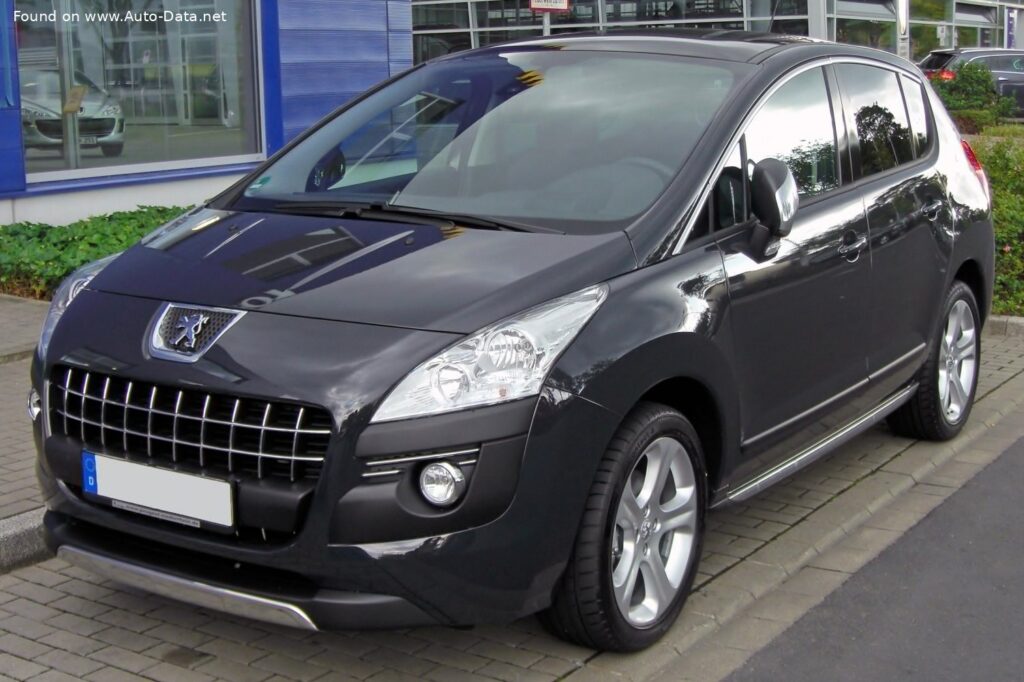
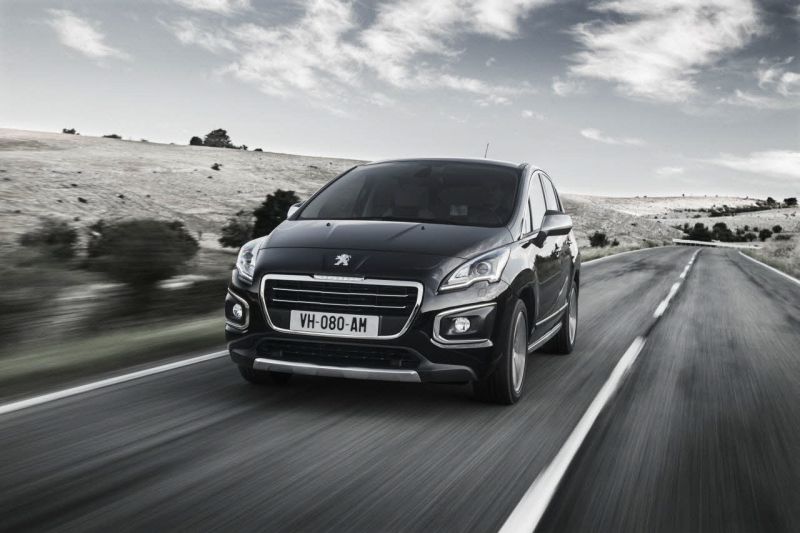
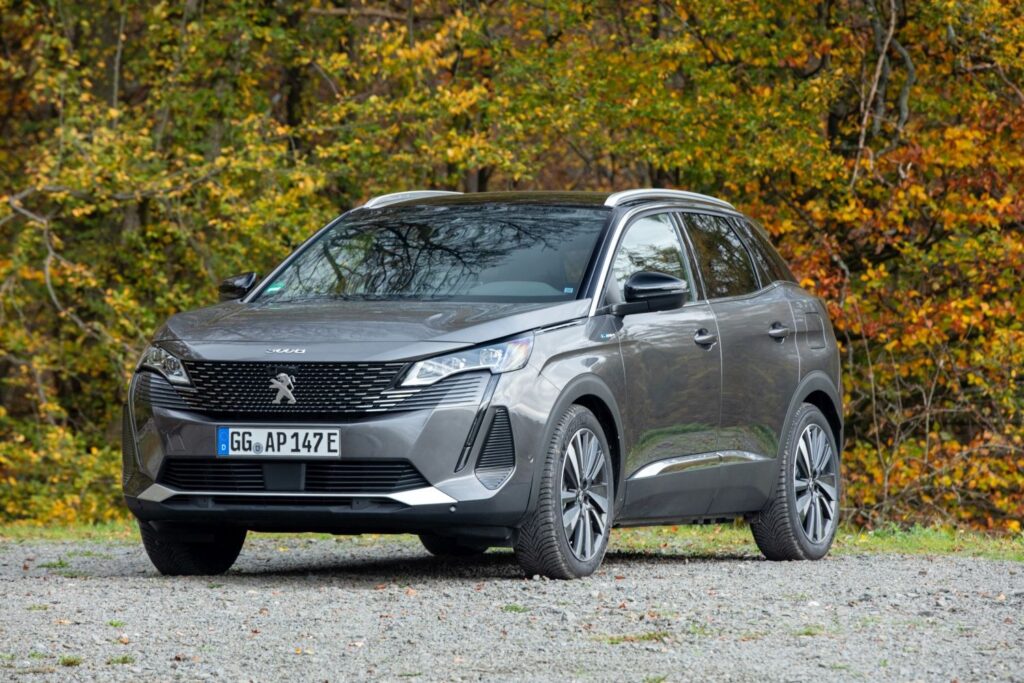
epitomizes Peugeot’s modern design philosophy, which has been instrumental in revitalizing the brand’s image. As a 5-door, 5-seat SUV, it blends practicality with a striking, almost concept-car-like aesthetic. The Phase II refresh brought several key updates, most notably a redesigned front fascia featuring a frameless grille that seamlessly integrates into the bodywork, new full LED headlights with distinctive “fang-like” daytime running lights, and updated taillights that incorporate Peugeot’s signature “three-claw” LED motif. These elements give the 3008 a strong and recognizable road presence.
Inside, the 3008 showcases Peugeot’s innovative i-Cockpit design, which aims to provide an intuitive and engaging driving experience. This setup typically includes a compact steering wheel, a configurable 12.3-inch digital instrument cluster positioned above the steering wheel (for a head-up display effect), and a central touchscreen infotainment system. The cabin materials are generally high-quality, with thoughtful touches and a sense of premium craftsmanship, distinguishing it from some of its more utilitarian competitors.
In terms of dimensions, the 3008 II is a well-proportioned compact SUV, measuring 175.08 inches (4447 mm) in length, 72.48 inches (1841 mm) in width (82.6 inches including mirrors), and 63.94 inches (1624 mm) in height. Its 105.31-inch (2675 mm) wheelbase provides a spacious interior for five occupants and a generous trunk capacity, ranging from 18.36 cubic feet (520 liters) with the rear seats up to 52.34 cubic feet (1482 liters) with them folded down. This flexibility makes it highly practical for families and active lifestyles.
Safety features are a priority in modern Peugeots, and the 3008 II is no exception. While specific active safety features are not detailed in the provided data, the platform typically supports a comprehensive suite of driver-assistance systems. Standard safety includes ABS (Anti-lock Braking System), and the vehicle’s robust construction and multiple airbags contribute to its overall safety ratings in European tests. The front suspension employs an independent McPherson strut design with coil springs and an anti-roll bar, while the rear uses a semi-independent setup with coil springs, providing a comfortable yet composed ride. The steering is an electric rack and pinion system, offering precise and effortless maneuverability.
Technical Specifications
|
General Information |
|
| Brand | Peugeot |
| Model | 3008 |
| Generation | 3008 II (Phase II, 2020) |
| Type (Engine) | 1.6 PureTech (181 Hp) Automatic |
| Start of production | September, 2020 |
| End of production | July, 2021 |
| Powertrain Architecture | Internal Combustion engine |
| Body type | SUV |
| Seats | 5 |
| Doors | 5 |
|
Performance Specs |
|
| Combined fuel consumption (WLTP) | 6.5-7.8 l/100 km (36.2 – 30.2 US mpg) |
| CO2 emissions (WLTP) | 148-177 g/km |
| Fuel Type | Petrol (Gasoline) |
| Acceleration 0 – 60 mph | 7.6 sec |
| Maximum speed | 222 km/h (137.94 mph) |
| Emission standard | Euro 6d-ISC-FCM |
| Weight-to-power ratio | 7.9 kg/Hp (126.7 Hp/tonne) |
| Weight-to-torque ratio | 5.7 kg/Nm (174.9 Nm/tonne) |
|
Engine Specs |
|
| Power | 181 Hp @ 5500 rpm |
| Power per liter | 113.3 Hp/l |
| Torque | 250 Nm @ 1750 rpm (184.39 lb.-ft. @ 1750 rpm) |
| Engine layout | Front, Transverse |
| Engine Model/Code | 5GF EP6FADTXD |
| Engine displacement | 1598 cm3 (97.52 cu. in.) |
| Number of cylinders | 4 |
| Engine configuration | Inline |
| Number of valves per cylinder | 4 |
| Fuel injection system | Direct injection |
| Engine aspiration | Turbocharger, Intercooler |
| Engine oil capacity | 4.25 l (4.49 US qt) |
| Engine systems | Start & Stop System, Particulate filter |
|
Space, Volume and Weights |
|
| Kerb Weight | 1429 kg (3150.41 lbs.) |
| Max. weight | 1970 kg (4343.11 lbs.) |
| Max load | 541 kg (1192.7 lbs.) |
| Trunk (boot) space – minimum | 520 l (18.36 cu. ft.) |
| Trunk (boot) space – maximum | 1482 l (52.34 cu. ft.) |
| Fuel tank capacity | 53 l (14 US gal) |
| Permitted trailer load with brakes (12%) | 1500 kg (3306.93 lbs.) |
| Permitted towbar download | 70 kg (154.32 lbs.) |
|
Dimensions |
|
| Length | 4447 mm (175.08 in.) |
| Width | 1841 mm (72.48 in.) |
| Width including mirrors | 2098 mm (82.6 in.) |
| Height | 1624 mm (63.94 in.) |
| Wheelbase | 2675 mm (105.31 in.) |
| Front track | 1579-1601 mm (62.17 – 63.03 in.) |
| Rear (Back) track | 1587-1610 mm (62.48 – 63.39 in.) |
| Front overhang | 923 mm (36.34 in.) |
| Rear overhang | 849 mm (33.43 in.) |
| Ride height (ground clearance) | 219 mm (8.62 in.) |
| Minimum turning circle (turning diameter) | 10.7 m (35.1 ft.) |
| Approach angle | 20° |
| Departure angle | 29° |
| Wading depth | 700 mm (27.56 in.) |
|
Drivetrain, Brakes and Suspension Specs |
|
| Drivetrain Architecture | The Internal combustion engine (ICE) drives the front wheels of the vehicle. |
| Drive wheel | Front wheel drive |
| Number of gears and type of gearbox | 8 gears, automatic transmission |
| Front suspension | Independent, type McPherson with coil spring and anti-roll bar |
| Rear suspension | Semi-independent, coil spring |
| Front brakes | Ventilated discs |
| Rear brakes | Disc |
| Assisting systems | ABS (Anti-lock braking system) |
| Steering type | Steering rack and pinion |
| Power steering | Electric Steering |
| Tires size | 215/65 R17 103V; 225/55 R18 102V; 205/55 R19 97V |
| Wheel rims size | 17; 18; 19 |
Legacy & Market Impact
The
Peugeot 3008 II (Phase II, 2020)
, and indeed the entire second generation, has been a resounding success for Peugeot, particularly in the European market. It arrived at a time when the compact SUV segment was experiencing explosive growth, and its distinctive styling, premium interior, and efficient powertrains allowed it to stand out from a crowded field. The 3008 II has been consistently praised for its striking design, which bravely departed from the often conservative aesthetics of its competitors. This bold approach, combined with the innovative i-Cockpit, helped redefine what consumers could expect from a mainstream compact SUV.
In Europe, the 3008 II competes against a formidable array of rivals, including the Volkswagen Tiguan, Nissan Qashqai, Hyundai Tucson, Kia Sportage, and Ford Kuga (Escape in the US). Its success against these well-established models is a testament to Peugeot’s ability to offer a compelling package that blends French flair with modern engineering. The 1.6 PureTech (181 Hp) Automatic variant, in particular, offered a strong performance-to-efficiency ratio, making it an attractive option for buyers seeking a dynamic yet economical daily driver.
The 3008 II’s impact extends beyond sales figures; it has significantly elevated Peugeot’s brand perception, positioning the company as a credible premium contender in the mainstream market. Its success paved the way for other similarly styled and technologically advanced models in the Peugeot lineup, cementing the brand’s reputation for innovative design and driver-focused interiors. While its presence in the North American market is absent, its influence on global automotive design trends and its strong performance in its primary markets underscore its importance as a benchmark for modern compact SUVs. The Phase II update ensured the 3008 remained fresh and competitive, incorporating the latest technological advancements and design cues to maintain its strong appeal throughout its production cycle.