The Peugeot 3008 III (Phase I, 2023) 1.6 (195 Hp) Plug-in Hybrid e-DCS: A Deep Dive into Stellantis’s Electrified SUV Strategy
The Peugeot 3008 III (Phase I, 2023) represents the third generation of Peugeot’s highly successful compact crossover SUV, a crucial model in the European market. Launched in June 2024 as a 2024 model year vehicle, this iteration signifies a significant leap forward in design, technology, and powertrain electrification for the French marque. While not directly available in the United States market, the 3008 has carved out a strong niche in Europe and other international markets, competing fiercely in the C-segment SUV category. This particular variant, the Peugeot 3008 III (Phase I, 2023) 1.6 (195 Hp) Plug-in Hybrid e-DCS, stands out with its advanced Plug-in Hybrid Electric Vehicle (PHEV) architecture, blending a potent internal combustion engine with an electric motor to deliver a compelling combination of performance and remarkable fuel efficiency, aligning perfectly with contemporary environmental regulations and consumer demands for sustainable mobility.
Engine and Performance: The Electrified Core of the Peugeot 3008 III (Phase I, 2023)
At the heart of the Peugeot 3008 III (Phase I, 2023) 1.6 (195 Hp) Plug-in Hybrid e-DCS lies a sophisticated powertrain that exemplifies modern hybrid engineering. The system combines a 1.6-liter (1598 cm3 or 97.52 cu. in.) inline four-cylinder gasoline engine, designated 5G11, with a powerful electric motor. The internal combustion engine (ICE) is a turbocharged, intercooled unit featuring direct injection and four valves per cylinder, producing a robust 150 horsepower at 5500 rpm and 221.27 lb.-ft. (300 Nm) of torque at a low 2000 rpm. This engine is designed for both spirited performance and efficiency, featuring a Start & Stop system and a particulate filter to meet stringent Euro 6e emission standards.
Complementing the gasoline engine is a synchronous electric motor, strategically positioned between the combustion engine and the transmission. This electric motor contributes a substantial 125 horsepower at 9000 rpm and 87.03 lb.-ft. (118 Nm) of torque across a broad range of 300-7320 rpm. The combined efforts of these two power sources result in a total system output of 195 horsepower. Power is delivered to the front wheels via a smooth and efficient 7-speed automatic e-DCS transmission. This drivetrain architecture allows for flexible operation in full electric, hybrid, or internal combustion modes, optimizing power delivery and fuel consumption.
Performance figures for the Peugeot 3008 III (Phase I, 2023) 1.6 (195 Hp) Plug-in Hybrid e-DCS are impressive for its segment. It accelerates from 0 to 60 mph in an estimated 7.4 seconds (0-100 km/h in 7.8 seconds) and boasts a top speed of 136.7 mph (220 km/h). However, its most striking attribute is its fuel economy. The WLTP combined fuel consumption rating is an astonishing 261.3 US mpg (0.9 l/100 km), translating to an equally remarkable 111.1 km/l. This exceptional efficiency is largely due to its plug-in hybrid capability, allowing for significant electric-only driving. The vehicle emits a very low 19-21 g/km of CO2, underscoring its environmental credentials.
Design and Features: A Bold Statement and Practicality
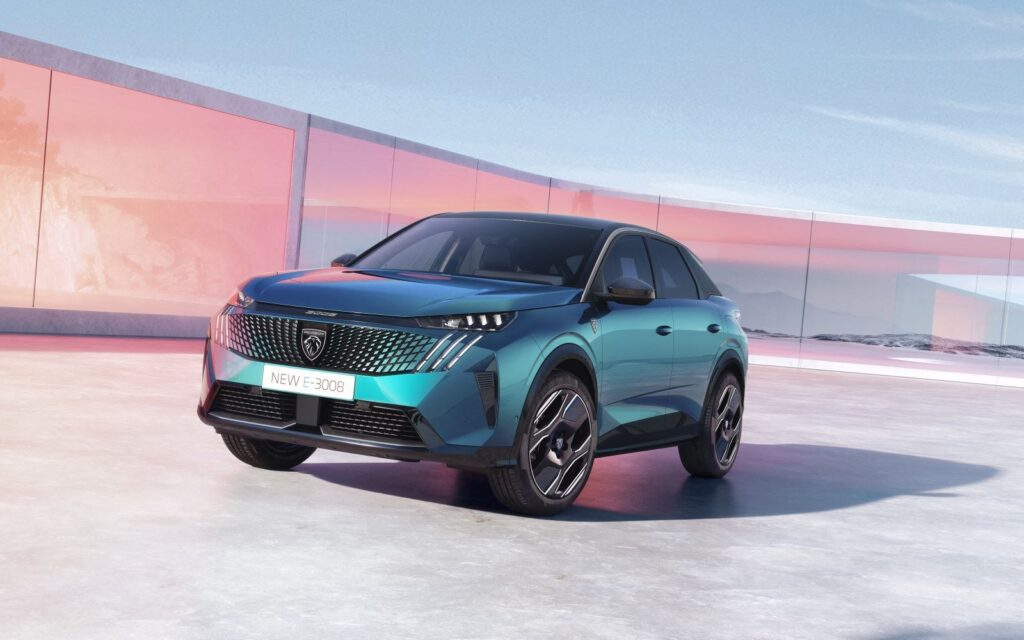
The Peugeot 3008 III (Phase I, 2023) maintains its identity as a five-door, five-seat SUV, but with a thoroughly modernized aesthetic. Peugeot has continued its tradition of bold and distinctive design, incorporating sharp lines, a prominent grille, and signature LED lighting elements that give the 3008 a futuristic and assertive road presence. The third generation pushes the boundaries further, likely adopting Peugeot’s new design language seen in other recent models, characterized by a more coupe-like profile and a focus on aerodynamic efficiency.
Dimensionally, the 3008 III measures 178.82 inches (4542 mm) in length, 74.61 inches (1895 mm) in width (82.99 inches or 2108 mm including mirrors), and 64.61 inches (1641 mm) in height, with a generous wheelbase of 107.83 inches (2739 mm). These dimensions contribute to a spacious cabin and a substantial road presence. The ground clearance of 7.8 inches (198 mm) provides a degree of off-road capability, typical for a compact SUV, complemented by approach and departure angles of 18.7° and 25.7° respectively. The minimum turning circle is a respectable 34.78 feet (10.6 m), aiding maneuverability in urban environments.
Inside, the 3008 III is expected to feature Peugeot’s latest i-Cockpit® philosophy, which typically includes a compact steering wheel, a head-up digital instrument cluster, and a large central touchscreen infotainment system. While specific interior features are not detailed in the provided data, a modern SUV of this caliber would typically offer advanced connectivity, premium materials, and a host of driver-assistance systems. Practicality is a strong suit, with a minimum trunk space of 18.36 cu. ft. (520 liters), expanding to an impressive 52.27 cu. ft. (1480 liters) with the rear seats folded, catering to families and their cargo needs. The vehicle also has a substantial maximum load capacity of 1135.38 lbs (515 kg) and a permitted trailer load with brakes of 3417.17 lbs (1550 kg).
Technical Specifications: Peugeot 3008 III (Phase I, 2023) 1.6 (195 Hp) Plug-in Hybrid e-DCS
| Category | Specification |
|---|---|
| General Information | |
| Brand | Peugeot |
| Model | 3008 |
| Generation | 3008 III (Phase I, 2023) |
| Type (Engine) | 1.6 (195 Hp) Plug-in Hybrid e-DCS |
| Start of Production | June, 2024 |
| Powertrain Architecture | PHEV (Plug-in Hybrid Electric Vehicle) |
| Body type | SUV |
| Seats | 5 |
| Doors | 5 |
| Performance Specs | |
| Combined Fuel Consumption (WLTP) | 0.9 l/100 km (261.3 US mpg) |
| CO2 Emissions (WLTP) | 19-21 g/km |
| Fuel Type | Petrol / Electricity |
| Acceleration 0 – 60 mph | 7.4 sec (Calculated by Auto-Data.net) |
| Acceleration 0 – 100 km/h | 7.8 sec |
| Maximum Speed | 136.7 mph (220 km/h) |
| Emission Standard | Euro 6e |
| Weight-to-Power Ratio | 9.8 kg/Hp, 102.4 Hp/tonne |
| Weight-to-Torque Ratio | 6.4 kg/Nm, 157.5 Nm/tonne |
| Electric Cars and Hybrids Specs | |
| Gross Battery Capacity | 17.9 kWh |
| Battery Voltage | 360 V |
| Battery Technology | Lithium nickel manganese cobalt oxides (Li-NMC) |
| Battery Weight | 352.74 lbs (160 kg) |
| All-Electric Range (WLTP) | 52.82 – 54.06 miles (85-87 km) |
| Charging Ports | Specific type not publicly disclosed in data |
| Electric Motor 1 Power | 125 Hp @ 9000 rpm |
| Electric Motor Torque | 87.03 lb.-ft. (118 Nm) @ 300-7320 rpm |
| Electric Motor Location | Between the combustion engine and the transmission |
| Electric Motor Type | Synchronous |
| System Power | 195 Hp |
| Internal Combustion Engine Specs | |
| Power | 150 Hp @ 5500 rpm |
| Power per Liter | 93.9 Hp/l |
| Torque | 221.27 lb.-ft. (300 Nm) @ 2000 rpm |
| Engine Layout | Front, Transverse |
| Engine Model/Code | 5G11 |
| Engine Displacement | 1.6 liters (1598 cm3 / 97.52 cu. in.) |
| Number of Cylinders | 4 |
| Engine Configuration | Inline |
| Number of Valves per Cylinder | 4 |
| Fuel Injection System | Direct Injection |
| Engine Aspiration | Turbocharger, Intercooler |
| Engine Systems | Start & Stop System, Particulate Filter |
| Space, Volume and Weights | |
| Kerb Weight | 4199.81 lbs (1905 kg) |
| Max. Weight (GVWR) | 5335.19 lbs (2420 kg) |
| Max Load | 1135.38 lbs (515 kg) |
| Trunk (Boot) Space – Minimum | 18.36 cu. ft. (520 l) |
| Trunk (Boot) Space – Maximum | 52.27 cu. ft. (1480 l) |
| Fuel Tank Capacity | 14.53 US gal (55 l) |
| Permitted Trailer Load with Brakes (12%) | 3417.17 lbs (1550 kg) |
| Dimensions | |
| Length | 178.82 in. (4542 mm) |
| Width | 74.61 in. (1895 mm) |
| Width with Mirrors Folded | 76.14 in. (1934 mm) |
| Width Including Mirrors | 82.99 in. (2108 mm) |
| Height | 64.61 in. (1641 mm) |
| Wheelbase | 107.83 in. (2739 mm) |
| Front Track | 64.17 in. (1630 mm) |
| Rear (Back) Track | 64.41 in. (1636 mm) |
| Front Overhang | 37.01 in. (940 mm) |
| Rear Overhang | 33.98 in. (863 mm) |
| Ride Height (Ground Clearance) | 7.8 in. (198 mm) |
| Minimum Turning Circle (Turning Diameter) | 34.78 ft. (10.6 m) |
| Approach Angle | 18.7° |
| Departure Angle | 25.7° |
| Drivetrain, Brakes and Suspension Specs | |
| Drivetrain Architecture | PHEV (Internal combustion engine and electric motor drive the front wheels, capable of full electric or mixed mode) |
| Drive Wheel | Front Wheel Drive |
| Number of Gears and Type of Gearbox | 7 gears, automatic transmission e-DCS |
| Front Suspension | Independent type McPherson |
| Rear Suspension | Torsion |
| Front Brakes | Disc, 365×37 mm |
| Rear Brakes | Disc, 356×26 mm |
| Assisting Systems | ABS (Anti-lock braking system) |
| Steering Type | Steering rack and pinion |
| Power Steering | Electric Steering |
| Tires Size | 235/55 R19 105V; 235/50 R20 104V |
| Wheel Rims Size | 19; 20 |
Legacy and Market Impact: The Peugeot 3008 in the Global Landscape
The Peugeot 3008 has been a cornerstone of Peugeot’s success, particularly since its significant redesign into an SUV for its second generation. The Peugeot 3008 III (Phase I, 2023) 1.6 (195 Hp) Plug-in Hybrid e-DCS builds upon this legacy, aiming to solidify its position as a segment leader in a fiercely competitive market. In Europe, the 3008 competes against a formidable array of rivals, including the Nissan Qashqai, Volkswagen Tiguan, Hyundai Tucson, Kia Sportage, and Ford Kuga (known as the Escape in North America). What sets the 3008 apart is its distinctive styling, a strong emphasis on interior design and technology (the i-Cockpit® being a prime example), and increasingly, its advanced electrified powertrains.
The introduction of a potent PHEV variant like the 1.6 (195 Hp) Plug-in Hybrid e-DCS is crucial for Peugeot’s market impact. With a substantial 17.9 kWh gross battery capacity providing an all-electric range of 52.82 to 54.06 miles (85-87 km) (WLTP), this model offers genuine electric commuting capabilities for many drivers, significantly reducing daily fuel consumption and emissions. This positions the 3008 as an attractive option for environmentally conscious buyers and those seeking lower running costs, especially in regions with incentives for low-emission vehicles.
Peugeot, as part of the Stellantis group, is heavily invested in electrification, and the 3008 III PHEV is a testament to this strategy. It showcases the brand’s ability to integrate advanced hybrid technology into a popular and stylish package, offering a bridge between traditional internal combustion engines and full battery electric vehicles. Its impressive fuel economy, coupled with strong performance and a modern, feature-rich interior, ensures that the Peugeot 3008 III (Phase I, 2023) 1.6 (195 Hp) Plug-in Hybrid e-DCS will continue to be a significant player in the global compact SUV market, reinforcing Peugeot’s reputation for innovation and distinctive automotive design.